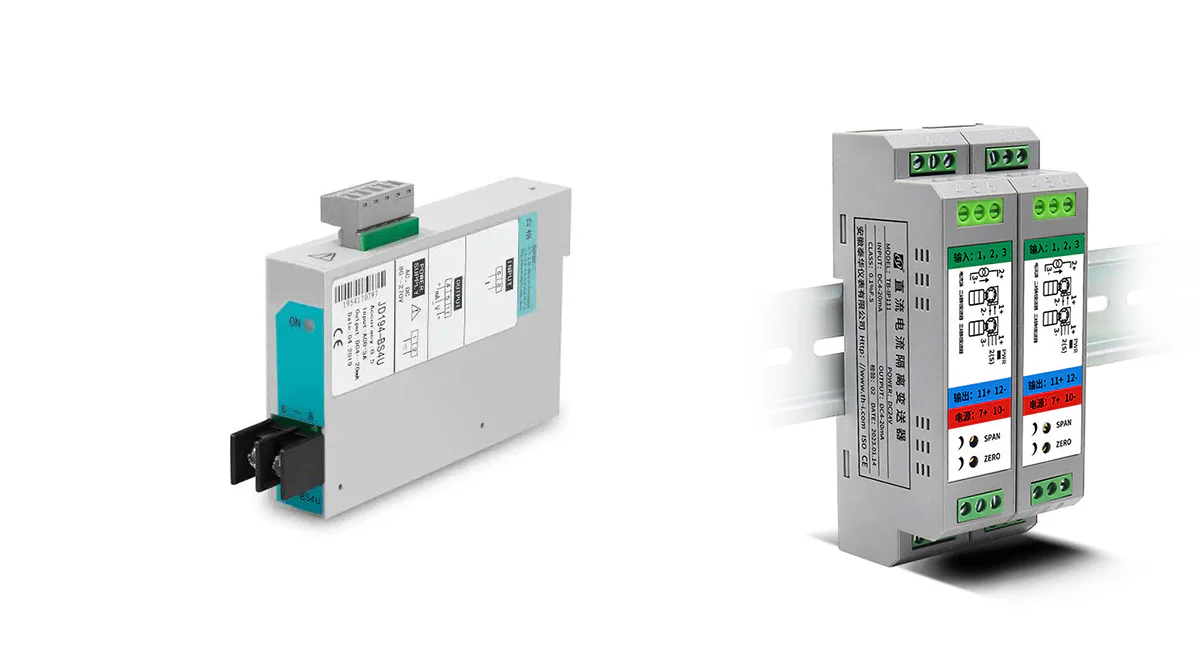
How to Choose the Right Voltage Transmitter for Industrial Applications in 2026
In an era of fluctuating energy costs and evolving industrial demands, selecting a high-performance voltage transmitter has become critical for...

Home » Products » Power Monitoring Control » Three Phase Voltage Transmitter with RS485 Modbus
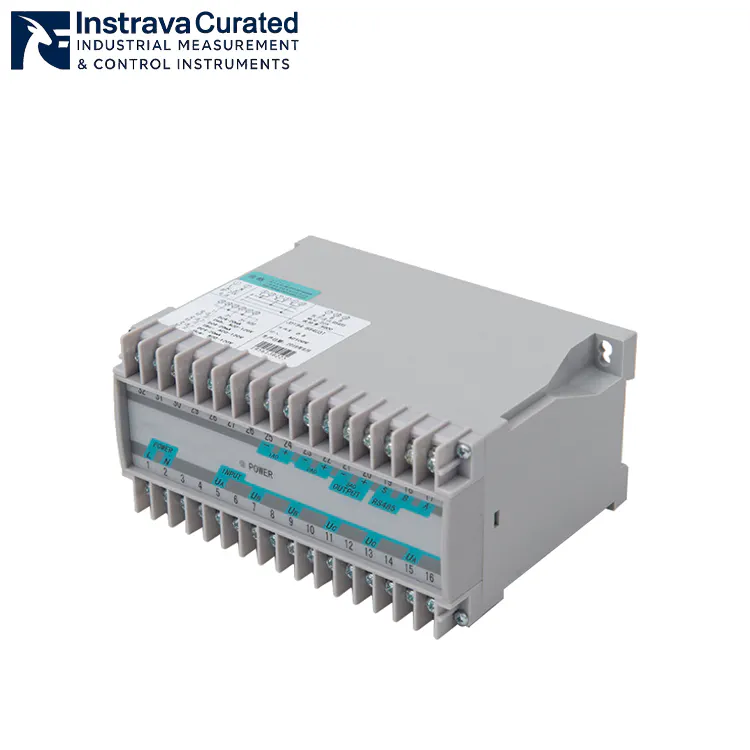
Instrava Curated Instruments — Precision Three Phase Voltage Measurement You Can Depend On
At Instrava, we go beyond simply supplying instruments. Through our Curated Instruments approach, each three phase voltage transmitter is carefully selected from trusted manufacturers—ensuring accuracy, durability, and consistent performance in complex electrical systems.
This three phase voltage transmitter with RS485 Modbus communication is designed for precise measurement and isolated signal transmission, providing reliable data for industrial automation, energy monitoring, and smart power systems.
With our Optimized Solutions philosophy, we help customers implement measurement technologies that improve efficiency, enhance system visibility, and support long-term operational stability.
Power Monitoring & Control Description
High-Precision Three Phase Voltage Transmitter for Power Systems
Engineered for industrial-grade performance, this three phase AC voltage transmitter measures multi-phase voltage signals and converts them into standard analog outputs (4–20mA / 0–10V) or digital signals via RS485 Modbus RTU.
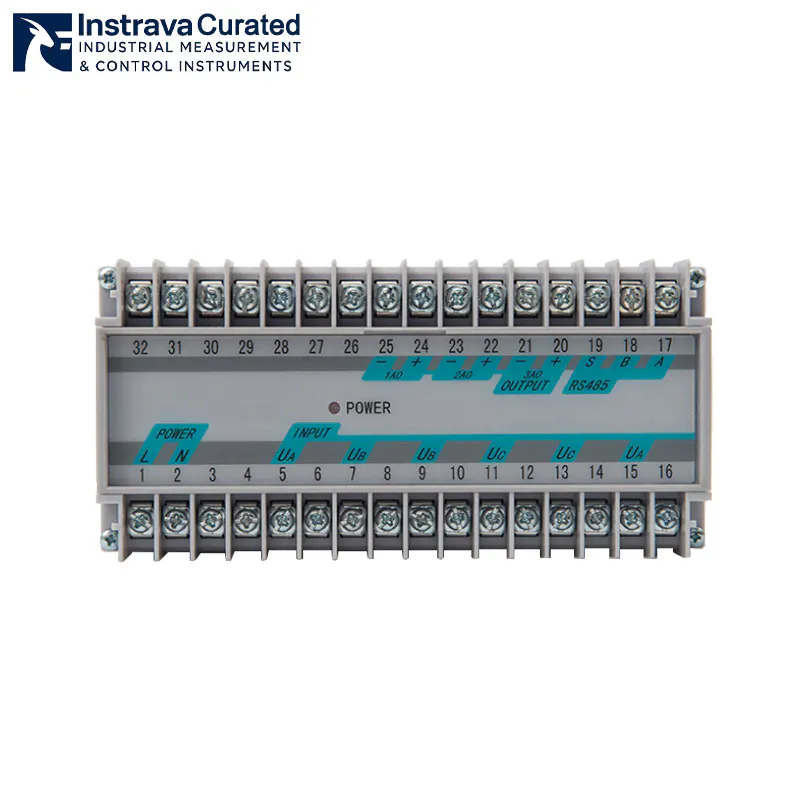
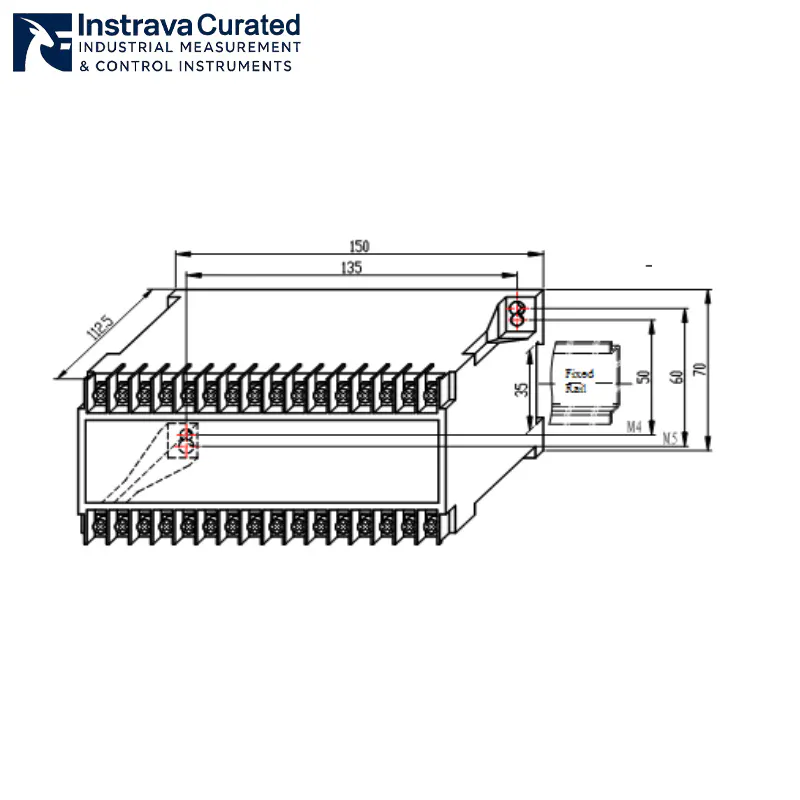
Engineered for Harsh Environments & Smart Monitoring Networks
This RS485 Modbus three phase voltage transmitter is built to deliver stable performance under demanding industrial conditions while supporting digital transformation.
Power Monitoring & Control Parameter
| Parameter | Specification |
|---|---|
| Accuracy | ±0.5% |
| Response Time | ≤400ms |
| Input Voltage | 100V / 220V / 380V (Three Phase) |
| Frequency | 45–65Hz |
| Overload Capacity | Continuous 1.2Un, Instantaneous 2Un/1min |
| Power Consumption | ≤5VA |
| Power Supply | AC/DC 80–270V, DC 19–50V |
| Absorption Power | ≤0.5VA per phase |
| Output Signal | 4–20mA / 0–5V / 0–10V / 0–20mA |
| Output Load | Current ≤510Ω, Voltage ≥20kΩ |
| Output Ripple | ≤2× basic error |
| Communication | RS485, Modbus RTU, 2-wire, up to 9600bps |
| Operating Temperature | -40°C to 70°C |
| Storage Temperature | -40°C to 85°C |
| Humidity | ≤93%RH |
| Insulation | ≥2kVAC |
| Installation | Panel / DIN Rail |
| Altitude | ≤2500m |
Instrava OEM/ODM
Reliable Instruments. Solutions That Fit Your Application.
Instrava is focused on delivering reliable industrial solutions through carefully curated products, application-driven optimization, and flexible customization. We select proven instruments from trusted manufacturers to ensure consistent quality, optimize solutions based on real working conditions to solve practical challenges, and provide tailored configurations to meet specific application needs.
By combining selection expertise with application understanding, Instrava helps customers reduce risk, improve efficiency, and achieve dependable results in complex industrial environments.

Related Product Recommendations
What is a three phase voltage transmitter and how does it work?
A three phase voltage transmitter is a device that measures the voltage of a three-phase electrical system and converts it into standardized output signals such as 4–20mA, 0–10V, or digital communication signals.
It continuously monitors all three phases (L1, L2, L3) and provides real-time data for control systems, enabling accurate voltage tracking and system protection.
Why is a three phase voltage transmitter important in power monitoring systems?
Three phase systems are widely used in industrial and data center environments due to their efficiency and stability. A voltage transmitter ensures continuous monitoring of voltage levels across all phases, helping detect imbalances, overvoltage, or undervoltage conditions.
This improves system reliability, protects equipment, and supports stable operation.
What are the typical output signals of a three phase voltage transmitter?
Three phase voltage transmitters typically provide:
Analog outputs are commonly used for PLC/DCS systems, while digital outputs enable integration with SCADA, BMS, or DCIM platforms.
Where are three phase voltage transmitters used?
They are widely used in:
In these applications, they provide critical voltage data for monitoring, control, and optimization.
How does a three phase voltage transmitter improve system reliability?
By continuously monitoring voltage across all three phases, the transmitter can detect abnormalities such as phase imbalance, voltage dips, or surges.
This allows operators to take corrective actions before equipment is affected, reducing the risk of downtime and extending the lifespan of electrical assets.
What is the difference between a three phase voltage transmitter and a voltage meter?
A voltage meter typically displays voltage values locally and is used for basic measurement.
A three phase voltage transmitter, however, converts voltage data into standardized signals that can be transmitted to control and monitoring systems.
This makes transmitters more suitable for automated systems, remote monitoring, and data-driven environments such as AI data centers.
In an era of fluctuating energy costs and evolving industrial demands, selecting a high-performance voltage transmitter has become critical for...
April 2026 is not just another milestone—it marks the moment when industrial instrumentation shifts from experimentation to execution.For years, the...
Built on Consistency, Not Claims
We specialize in industrial analysis and detection, with a clear understanding of real-world operating environments and requirements.
Every instrument is evaluated based on performance, stability, and application suitability—not just specifications or pricing.
We work with trusted manufacturers to ensure stable supply, consistent quality, and dependable delivery.
Our recommendations are grounded in application understanding, helping customers avoid common issues and achieve reliable results.
Instrava is built to reduce uncertainty—so every decision you make is clearer, safer, and more reliable.