







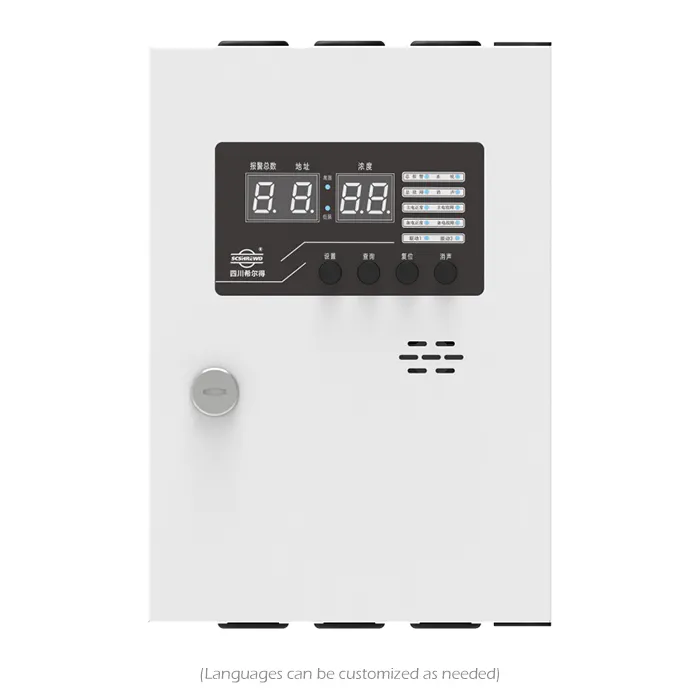
Contrôleurs d'alarme gaz
Accueil » Contrôleurs d'alarme gaz
Gas alarm controllers are essential safety devices used to monitor and manage gas detector systems in industrial and commercial environments. When a hazardous gas level is detected, the controller processes sensor signals and triggers alarms, notifications, and safety actions to protect people, equipment, and facilities.
At Instrava, we offer a versatile range of gas alarm controllers designed for accuracy, reliability, and integration with advanced gas detection systems. Our controllers support multiple sensor inputs, clear real‑time displays, configurable alarm thresholds, and flexible communication protocols to ensure rapid response and maximum safety.
Gas alarm controllers are the central units in a gas detection system that receive electrical signals from gas sensors and analyze them to determine gas concentration levels. Once preset thresholds are exceeded, controllers activate audible and visual alarms, relay outputs, and safety control actions such as ventilation, shutdown, or alert notification.
Gas alarm controllers are widely used in industries where combustible, toxic, or oxygen‑depleting gases pose safety risks.
Industrial gas alarm controllers typically offer the following:
✔ Multiple Sensor Inputs – Support for single or multiple gas detector channels
✔ Real‑Time Display – Clear LCD/LED display of gas concentration
✔ Adjustable Alarm Levels – User‑configurable threshold settings
✔ Audible & Visual Alarms – Beepers, buzzers, and warning lights
✔ Relay Outputs – For ventilation control and shutdown systems
✔ Communication Interfaces – Modbus, 4‑20 mA, RS‑485
✔ Fault Detection – Sensor fault and wiring integrity checks
✔ Rugged Industrial Design – Reliable operation in harsh environments
Different industrial applications require controllers with specific capabilities. Common types include:
Designed for monitoring a single gas detector input. Ideal for smaller installations or focused gas monitoring.
✔ Simple and cost‑effective
✔ Easy setup
✔ Suitable for single hazard zones
Support multiple gas detector inputs (e.g., 2, 4, 8, 16 channels), ideal for large facilities or complex systems.
✔ Centralized monitoring
✔ Individual alarm thresholds per channel
✔ Integrated relay outputs
Controller with advanced digital processing, offering precise readings, trend analysis, and better noise immunity.
✔ Accurate digital signal processing
✔ Enhanced stability
✔ Advanced diagnostics
These controllers support network communication protocols such as Modbus RTU/ TCP for integration with PLC, SCADA, or building automation systems.
✔ Centralized data access
✔ Remote monitoring & control
✔ Industrial automation compatibility
A typical gas alarm system functions as follows:
Sensor Detection: Gas sensors (electrochemical, catalytic, infrared) detect presence and concentration of gases.
Signal Transmission: Sensors send electrical signals to the controller.
Data Processing: Controller processes signals and compares readings with alarm thresholds.
Alarm Activation: If a limit is exceeded, audible and visual warnings are triggered.
Control Output: Relay outputs activate ventilation, shutdown, or safety interlocks.
This cycle ensures rapid detection and response to prevent hazardous incidents.
Gas alarm controllers are used in a wide range of sectors:
Protect personnel from combustible and toxic gas leaks.
Monitor hydrocarbon and H2S levels in pipelines, platforms, and refineries.
Ensure safe atmospheric conditions in enclosed workspaces.
Detect methane, chlorine, and oxygen‑deficient environments.
Monitor gas emissions and ensure worker safety.
Install in boiler rooms, parking garages, and indoor facilities for safety.
Selecting the right controller requires consideration of:
🔹 Number of Sensor Inputs Needed – Single vs multi‑channel systems
🔹 Communication Requirements – Local display vs network integration
🔹 Alarm Output Types – Relay, 4‑20 mA, digital interfaces
🔹 Certification & Compliance – Explosion‑proof/ hazardous area ratings
🔹 Conditions environnementales – Temperature, humidity, dust exposure
🔹 Display & Interface Needs – Digital screens, keypad programming
A well‑matched controller improves safety, reduces false alarms, and enables seamless automation.
Industrial facilities frequently operate in environments where hazardous gases may be present. Combustible gases, toxic gases, and oxygen imbalances can lead to severe safety risks, including explosions, poisoning, and equipment damage. To mitigate these risks, companies rely on advanced gas detection systems designed to continuously monitor gas concentrations in the workplace.
At the center of these systems is the Contrôleur d'alarme gaz, a critical device that manages and supervises multiple gas detectors installed across a facility. By receiving real-time signals from gas sensors, analyzing gas concentration levels, and triggering alarms when thresholds are exceeded, the gas alarm controller serves as the central control hub of industrial gas monitoring systems.
This comprehensive guide explores everything you need to know about gas alarm controllers, including their working principles, features, applications, advantages, and how to select the right controller for industrial safety systems.
A Contrôleur d'alarme gaz is an electronic control unit designed to monitor and manage signals from multiple fixed gas detectors within a gas detection system. The controller processes gas concentration signals, displays real-time readings, and activates alarms or safety actions when hazardous conditions are detected.
Gas alarm controllers are widely used in environments where hazardous gases may accumulate, including:
Oil and gas facilities
Chemical processing plants
Petrochemical refineries
Power generation plants
Wastewater treatment facilities
Industrial manufacturing plants
Mining and metal processing operations
The controller enables centralized monitoring of multiple gas detection points, allowing operators to quickly identify gas leaks and respond to potential hazards.
Gas alarm controllers function as the central processing unit of a gas detection system. They receive signals from field gas detectors, analyze the readings, and activate alarms or control systems when necessary.
Gas detectors installed in hazardous areas continuously measure the concentration of specific gases. These detectors use different sensing technologies depending on the gas type, including:
Catalytic combustion sensors
Electrochemical sensors
Infrared sensors
Semiconductor sensors
Photoionization detectors (PID)
Each detector measures gas concentration and converts the measurement into an electrical signal.
Once a gas detector measures gas concentration levels, the signal is transmitted to the gas alarm controller. Common industrial signal transmission methods include:
4–20 mA analog signals
RS485 Modbus communication
Digital communication protocols
Wireless communication (in modern systems)
The controller continuously receives and interprets these signals.
The controller processes incoming signals and compares them with predefined alarm thresholds. Most systems support multiple alarm levels, such as:
Low alarm threshold
High alarm threshold
Over-range alarm
Sensor fault alarm
This multi-stage alarm logic allows early warnings before gas concentrations reach dangerous levels.
When gas concentrations exceed preset limits, the controller immediately activates safety responses, including:
Audible alarms (buzzers or sirens)
Visual alarms (flashing lights or indicators)
Relay outputs to activate external equipment
Signals to plant monitoring systems
This rapid alarm response helps prevent accidents and ensures timely intervention.
Industrial gas alarm controllers incorporate a range of advanced features designed to enhance monitoring capabilities, improve reliability, and simplify system management.
Modern controllers support multiple detection channels, allowing them to connect with numerous gas detectors simultaneously. Depending on the system configuration, controllers may support:
4 channels
8 channels
16 channels
32 channels
64 channels or more
This scalability makes gas alarm controllers suitable for both small facilities and large industrial plants.
Gas alarm controllers provide real-time monitoring through digital displays, typically using LCD or LED screens. Operators can view gas concentration readings for each detection channel directly from the control panel.
Advanced systems may also include graphical displays or touchscreen interfaces for easier operation.
Controllers allow operators to configure alarm thresholds according to safety regulations or operational requirements. Multi-level alarms provide early warnings before hazardous gas concentrations become critical.
Many gas alarm controllers include built-in data logging functions, enabling them to record:
Alarm events
Gas concentration trends
System faults
Detector status
These records are valuable for safety audits, compliance inspections, and incident investigations.
Gas alarm controllers often integrate with plant automation platforms using communication protocols such as:
Modbus RTU
Modbus TCP/IP
RS485 communication
Ethernet networking
4–20 mA output signals
Integration allows gas monitoring data to be transmitted to SCADA systems, PLCs, and distributed control systems (DCS) for centralized plant monitoring.
Gas alarm controllers can monitor a wide variety of gases depending on the detectors connected to the system.
Combustible gases are flammable and can cause explosions if they accumulate in confined spaces. Common combustible gases monitored include:
Méthane (CH₄)
Propane (C₃H₈)
Hydrogen (H₂)
Butane (C₄H₁₀)
Gas alarm controllers help detect combustible gases before they reach explosive concentrations.
Toxic gases pose significant health risks even at low concentrations. Common toxic gases monitored include:
Hydrogen sulfide (H₂S)
Carbon monoxide (CO)
Chlorine (Cl₂)
Ammonia (NH₃)
Sulfur dioxide (SO₂)
Continuous monitoring helps prevent toxic exposure and workplace injuries.
Oxygen levels must remain within safe limits for human respiration. Gas alarm controllers monitor:
Déficience en oxygène
Oxygen enrichment
Oxygen monitoring is especially important in confined spaces or enclosed industrial environments.
VOCs are commonly found in chemical processing, painting operations, and solvent-based manufacturing processes. Gas alarm controllers help detect these compounds and maintain safe air quality.
Gas alarm controllers are essential safety devices across many industries where hazardous gases may be present.
Oil and gas facilities rely heavily on gas detection systems to monitor flammable and toxic gases. Gas alarm controllers help prevent explosions, fires, and toxic exposure.
Chemical manufacturing processes often involve volatile substances. Gas alarm controllers provide continuous monitoring to ensure safe operating conditions.
Power plants use gas monitoring systems to detect hydrogen leaks in turbine generators and other combustible gases used in plant operations.
Wastewater treatment processes can generate hazardous gases such as methane and hydrogen sulfide. Gas alarm controllers help protect workers and equipment.
Manufacturing plants using solvents, fuels, or compressed gases require gas monitoring systems to maintain workplace safety.
Installing a gas alarm controller provides several important benefits for industrial facilities.
Continuous gas monitoring helps identify hazardous conditions before they escalate into serious incidents.
Multi-level alarms provide early warnings, allowing operators to take preventive action.
Gas alarm controllers enable centralized monitoring of multiple gas detectors from a single control panel.
Controllers can automatically activate ventilation systems, emergency shutdowns, or safety equipment.
Many industrial safety regulations require gas detection systems. Gas alarm controllers help organizations meet regulatory requirements.
Selecting the correct gas alarm controller requires careful consideration of system requirements and operational conditions.
Key factors include:
Ensure the controller supports the number of gas detectors required for the facility.
Verify compatibility with existing industrial systems such as PLC, SCADA, or DCS.
Check whether the controller provides sufficient relay outputs for alarms and safety equipment.
A clear and intuitive interface improves system operation and maintenance.
Choose a controller that allows additional detectors to be added as monitoring requirements grow.
Ensure the controller meets relevant safety standards and certifications for industrial environments.
Industrial gas monitoring technology continues to evolve with new advancements in automation and digital connectivity.
Emerging trends include:
Wireless gas detection networks
IoT-enabled gas monitoring systems
Cloud-based monitoring platforms
Remote diagnostics and predictive maintenance
Smart alarm management systems
These technologies allow operators to monitor gas detection systems remotely and improve predictive safety management.
A Contrôleur d'alarme gaz is a vital component of modern industrial gas detection systems. By receiving and processing signals from multiple gas detectors, the controller enables centralized monitoring, rapid alarm activation, and automated safety responses.
Industries that operate in hazardous environments depend on reliable gas alarm controllers to protect personnel, equipment, and facilities from the dangers of combustible gases, toxic gases, and oxygen imbalance.
As industrial safety systems continue to evolve, gas alarm controllers will play an increasingly important role in integrated safety management, digital monitoring, and intelligent industrial automation.
A gas alarm controller is the central monitoring unit in a fixed gas detection system. It receives signals from multiple gas detectors, analyzes gas concentration levels, and activates alarms when hazardous gas levels exceed preset safety thresholds. Gas alarm controllers are widely used in industrial environments to monitor combustible gases, toxic gases, and oxygen levels.
The main purpose of a gas alarm controller is to continuously monitor gas concentrations and trigger alarms when dangerous levels are detected. It ensures workplace safety by providing early warning of gas leaks and activating safety responses such as ventilation systems, emergency shutdowns, or audible and visual alarms.
A gas alarm controller works by receiving signals from gas detectors installed in different areas of a facility. These signals, typically transmitted through 4–20 mA outputs or digital communication protocols, represent real-time gas concentration levels. The controller compares the readings with preset alarm thresholds and triggers alerts if the levels exceed safe limits.
The number of gas detectors a controller can support depends on its design and configuration. Most industrial gas alarm controllers support 4, 8, 16, 32, or even more than 100 detection channels, allowing them to monitor multiple gas detection points across large facilities.
Gas alarm controllers can monitor a wide range of gases depending on the connected detectors, including:
Combustible gases such as methane, propane, and hydrogen
Toxic gases such as hydrogen sulfide, carbon monoxide, and chlorine
Oxygen levels for detecting oxygen deficiency or enrichment
Composés organiques volatils (COV)
A gas detector is a sensing device that measures the concentration of gas in the environment. A gas alarm controller, on the other hand, receives signals from multiple detectors and manages the overall gas monitoring system by displaying readings, triggering alarms, and controlling safety equipment.
Gas alarm controllers are commonly used in industries where hazardous gases may be present, including:
Oil and gas facilities
Chemical and petrochemical plants
Power generation plants
Wastewater treatment facilities
Manufacturing factories
Mining and metal processing industries
Modern gas alarm controllers often support multiple industrial communication protocols, such as:
Modbus RTU
Modbus TCP/IP
RS485 communication
Ethernet connectivity
4–20 mA analog outputs
These protocols allow integration with SCADA, PLC, and DCS systems.
Most gas alarm controllers support multiple alarm levels, including:
Low alarm level (early warning)
High alarm level (dangerous concentration)
Over-range alarm (extremely high concentration)
Fault alarm (sensor or system failure)
Multi-level alarms help ensure timely safety responses.
Yes. Many modern gas alarm controllers are designed to integrate with SCADA systems, PLCs, and distributed control systems (DCS). This allows centralized monitoring of gas detection data across industrial facilities and enables remote system management.
A multi-channel gas alarm controller is designed to monitor several gas detectors simultaneously. Each channel corresponds to a specific gas detector installed in the facility. Multi-channel systems allow centralized monitoring of large industrial areas.
Gas alarm controllers improve workplace safety by providing continuous gas monitoring, early warning alarms, and automated safety responses. This helps prevent accidents such as explosions, toxic exposure, and oxygen deficiency incidents in hazardous environments.
In many industries, gas detection systems including gas alarm controllers are required to comply with occupational safety regulations and industrial safety standards. Installing a reliable gas monitoring system helps organizations meet regulatory requirements and maintain safe working conditions.
When selecting a gas alarm controller, important factors include:
Number of supported detection channels
Compatibility with gas detectors
Communication protocol support
Alarm relay outputs
System expandability
Industrial certifications and reliability
Choosing the right controller ensures effective gas monitoring and long-term system performance.
Fixed gas detection systems are permanently installed monitoring systems designed to continuously detect gases in industrial environments. They typically include gas detectors and a gas alarm controller.
Portable gas detectors, in contrast, are handheld or wearable devices used by workers to monitor gas exposure during specific tasks or inspections.
Choisir Instrava, c'est s'associer à un fabricant d'instruments industriels axé sur l'ingénierie, la fiabilité, la conformité et la coopération à long terme.
Fabrication axée sur l'ingénierie
Nous concevons et fabriquons des instruments de mesure et de contrôle pour des applications industrielles, en mettant l'accent sur la précision, la stabilité et la qualité constante.
OEM et personnalisation des applications
Nous soutenons la coopération OEM et ODM, en offrant une configuration flexible et une personnalisation basée sur l'application pour répondre aux exigences spécifiques du système et du projet.
Qualité et conformité certifiée
Tous les instruments sont soumis à des tests d'étalonnage et de fonctionnement et sont développés conformément aux normes industrielles reconnues et aux normes de certification des exportations.
Portefeuille de produits intégrés
Notre gamme de produits couvre les mesures de gaz, de qualité de l'eau, de débit, de pression et de niveau, ce qui permet aux clients d'obtenir des solutions compatibles auprès d'un seul fabricant.
Assistance technique à long terme
Nous fournissons une assistance technique tout au long du cycle de vie du produit, ce qui favorise un fonctionnement stable et des partenariats industriels à long terme.


Instrava
Directeur de magasin
Meilleur partenaire
Comment puis-je vous aider aujourd'hui ?