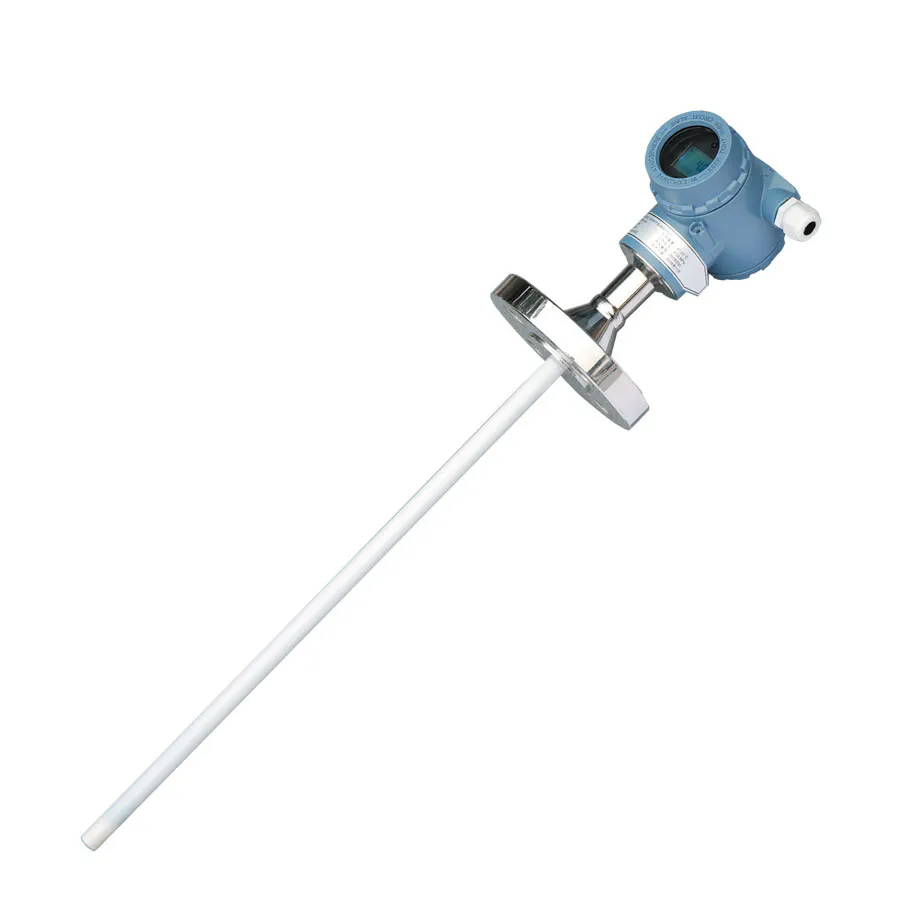

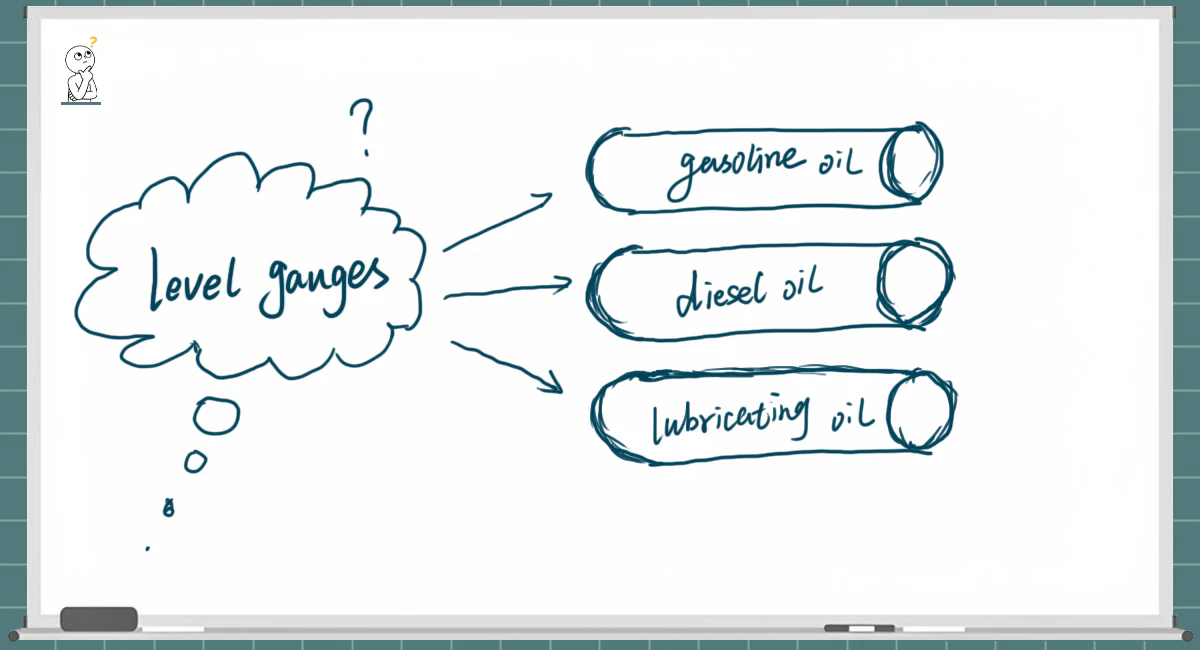
Какой тип уровнемера можно использовать для резервуаров для хранения бензина, дизельного топлива и смазочных масел?
Why Liquid Level Measurement Is Critical in Oil Storage Applications
Liquid level measurement in petroleum and industrial oil storage systems is a critical part of process automation, inventory management, environmental protection, and operational safety. In fuel depots, refineries, power generation facilities, and industrial lubrication systems, inaccurate level monitoring can lead to overflow accidents, vapor hazards, production interruptions, and equipment damage.
Because gasoline, diesel, and lubricating oils have very different physical and chemical properties, selecting the correct level measurement technology requires understanding not only the liquid itself, but also the engineering environment, safety standards, and long-term maintenance conditions.
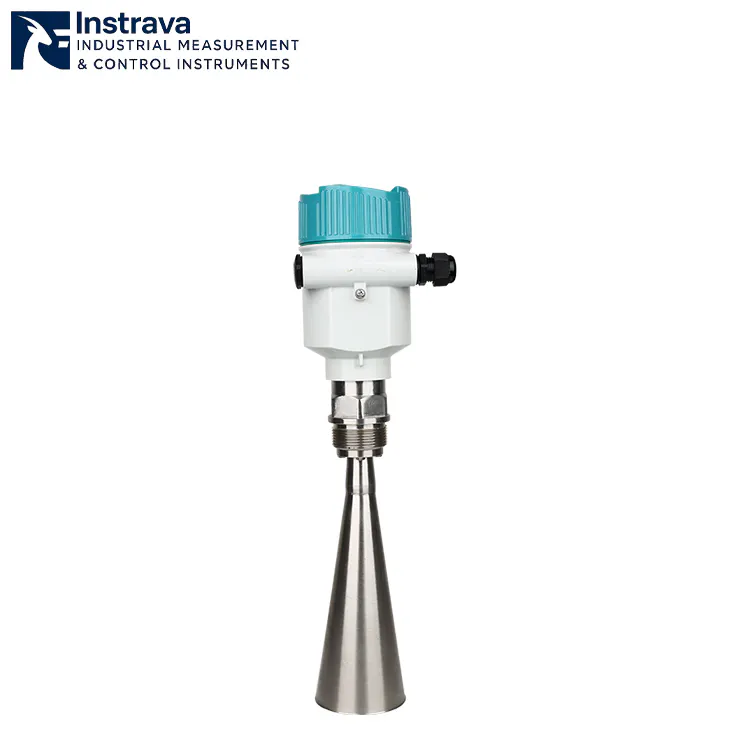
Among modern level measurement technologies, 80GHz FMCW radar level gauges have become one of the most competitive solutions for hydrocarbon storage applications due to their high accuracy, explosion-proof capability, and low maintenance requirements.
Typical industrial radar level gauge specifications include:
- Measuring range: 0.08m to 120m
- Accuracy up to ±1 mm
- Минимальная диэлектрическая проницаемость ≥ 2
- Process temperature range: -40°C to 1000°C (custom models)
- Pressure range: -0.1 to 2 MPa
- Explosion-proof certification: Ex d ia IIC T6
- IP67 environmental protection
Unlike many traditional technologies, radar level gauges are largely unaffected by:
- Density variation
- Колебания температуры
- Pressure changes
- Vapor
- Smoke
- Condensation
- Light foam
- Surface buildup
They can also be externally installed on plastic tanks, reducing tank penetration requirements and simplifying maintenance.
Gasoline Storage Tank Characteristics and Suitable Level Gauges
Engineering Context
Gasoline is commonly stored in:
- Gas stations
- Refinery product tanks
- Petrochemical terminals
- Fuel distribution facilities
- Emergency backup fuel systems
These storage environments often involve:
- Highly volatile hydrocarbons
- Flammable vapor accumulation
- Underground or closed tanks
- Strict explosion-proof requirements
- Continuous inventory monitoring
Gasoline tanks therefore require highly reliable, non-contact, and intrinsically safe level measurement systems.
Technical Characteristics of Gasoline
Gasoline is composed mainly of light hydrocarbons with the following characteristics:
- Extremely flammable
- High volatility
- Strong vapor generation
- Low viscosity
- Rapid evaporation
- Sensitive to temperature variation
- Low dielectric constant
One major challenge in gasoline measurement is vapor formation inside the tank. Traditional contact-based technologies may suffer from contamination, mechanical wear, or inaccurate readings due to vapor condensation.
Risk Analysis of Catastrophic Gasoline Tank Failure
Research presented in the paper Risk Analysis in Handling and Storage of Petroleum Products by Guarascio Massimo, Lombardi Mara, and Massi Federica from Sapienza University of Rome highlights the major accidental scenarios associated with catastrophic gasoline tank failures.
Because gasoline is highly volatile and produces large amounts of flammable vapor, leakage incidents may rapidly escalate into severe fire or explosion events after atmospheric release and ignition.
The study identifies three major hazardous scenarios.
Pool Fire
A pool fire occurs when leaked gasoline accumulates in a confined or open area and ignites. Due to gasoline’s rapid evaporation rate and low flash point, thermal radiation can spread quickly across surrounding equipment and infrastructure.
Pool fires are particularly dangerous in:
- Резервуарные парки
- Fuel transfer stations
- Loading and unloading terminals
- Underground gasoline storage systems
Flash Fire
A flash fire is caused by delayed ignition of a flammable gasoline vapor cloud generated after leakage.
This phenomenon becomes especially hazardous when:
- Vapor accumulates in semi-confined areas
- Ventilation is insufficient
- Ignition sources are not immediately isolated
Unlike pool fires, flash fires can propagate rapidly through vapor dispersion zones, creating significant risks to personnel and nearby equipment.
Unconfined Vapor Cloud Explosion (UVCE)
UVCE refers to the explosion of a dispersed gasoline vapor cloud in an unconfined environment.
The severity of the explosion depends on:
- Vapor concentration
- Температура окружающей среды
- Атмосферное давление
- Ignition timing
- Dispersion conditions
Gasoline storage tanks therefore require:
- Reliable overfill prevention
- Continuous level monitoring
- Explosion-proof instrumentation
- Real-time alarm systems
- Stable non-contact measurement technologies
In modern petroleum storage facilities, radar level gauges are increasingly considered part of the plant’s overall risk reduction architecture rather than only inventory measurement instruments.
Industry Standards and Safety Requirements
Gasoline storage systems typically follow standards such as:
- API 2350 for overfill prevention
- IECEx explosion protection standards
- ATEX hazardous area requirements
- SIL functional safety requirements
- NFPA fuel storage regulations
Because gasoline vapors can form explosive atmospheres, the selected level gauge must support explosion-proof certifications such as:
- Ex d ia IIC T6
- Intrinsically safe operation
- IP67 or higher protection rating
Problems and Limitations of Traditional Level Technologies
Float Level Gauges
Traditional float systems may experience:
- Mechanical wear
- Залипание поплавка
- Vapor-induced inaccuracies
- Frequent maintenance
Ультразвуковые датчики уровня
Ultrasonic technologies are sensitive to:
- Vapor layers
- Колебания температуры
- Condensation
- Foam interference
Дифференциальные преобразователи давления
These systems are affected by:
- Density variation
- Temperature compensation issues
- Calibration drift
Gasoline storage environments therefore expose the limitations of contact and density-dependent measurement methods.
Why 80GHz Radar Level Gauges Are Preferred for Gasoline
Современный 80GHz FMCW radar level gauges provide a non-contact measurement architecture ideal for volatile hydrocarbons.
Высокая точность
The technology supports:
- Сверхвысокая точность до ±1 мм
- Stable long-distance measurement
- Reliable signal focusing
This is especially important for inventory management and custody transfer applications.
Excellent Performance in Vapor Environments
Unlike ultrasonic systems, radar signals are largely unaffected by:
- Vapor
- Smoke
- Condensation
- Light foam
- Pressure variation
- Колебания температуры
This makes radar highly reliable in gasoline storage tanks.
Explosion-Proof Safety
Industrial radar level gauges support:
- Ex d ia IIC T6 explosion-proof certification
- Hazardous area installation
- Safe operation in flammable environments
This is essential for gasoline applications.
Гибкая установка
Radar level gauges can:
- Be mounted externally
- Work on plastic tanks
- Reduce tank penetration requirements
- Minimize maintenance access
Diesel Storage Tank Characteristics and Suitable Level Gauges
Engineering Context
Diesel is commonly stored in:
- Generator fuel tanks
- Industrial fuel depots
- Marine fuel systems
- Mining machinery facilities
- Construction equipment stations
Compared with gasoline, diesel is less volatile but often stored in larger tanks with harsher industrial conditions.
Technical Characteristics of Diesel
Diesel fuel has:
- Lower volatility
- Higher viscosity
- Lower evaporation rate
- Moderate dielectric constant
- Possible sludge formation
- Wax precipitation under low temperature
Diesel storage tanks may also contain:
- Condensation water
- Sediment accumulation
- Internal contamination
Environmental Risk Assessment of Diesel Fuel Tanks
Compared with gasoline, diesel fuel presents lower volatility and reduced explosion probability, which significantly changes the environmental and operational risk profile of diesel storage systems.
According to the study Environmental Risk Assessment of a Diesel Fuel Tank: A Case Study, diesel storage facilities were evaluated against regulatory and environmental protection requirements, particularly those associated with Major Accident Prevention regulations.
The assessment concluded that the analyzed diesel fuel tank installation was classified as a non-classified facility and therefore did not require emergency documentation procedures under the applicable regulatory framework.
Operational Risk Acceptability
The risk assessment methodologies used in the study demonstrated that the operational risks associated with the diesel storage tank remained within acceptable limits.
Even under a worst-case leakage scenario involving maximum diesel release from a transport tank, the environmental impact remained acceptable across evaluated environmental factors.
This lower-risk profile is primarily related to diesel fuel characteristics such as:
- Lower vapor pressure
- Reduced volatility
- Higher flash point
- Slower vapor dispersion behavior
Engineering Implications for Level Measurement
Although diesel presents lower explosion risk than gasoline, industrial diesel storage systems still require:
- Reliable leak prevention
- Accurate inventory control
- Continuous operational monitoring
- Stable performance under contamination and sludge conditions
This is particularly important in:
- Backup generator systems
- Marine fuel storage
- Mining operations
- Industrial fuel depots
Because diesel tanks often operate in harsh industrial environments with sediment buildup and temperature variation, non-contact radar level gauges provide long-term advantages in measurement stability and maintenance reduction.
Problems and Limitations of Traditional Technologies
Traditional contact sensors can suffer from:
- Coating buildup
- Sludge contamination
- Mechanical degradation
Differential pressure systems may experience:
- Density-related inaccuracies
- Temperature compensation problems
Why Radar Level Gauges Work Well for Diesel
80GHz radar technology offers strong performance because it:
- Is unaffected by density changes
- Handles sludge and buildup better
- Operates without contact
- Maintains stable readings despite temperature variation
The narrow beam angle of high-frequency radar also improves measurement reliability in:
- Tall tanks
- Narrow chambers
- Tanks with internal obstructions
Lubricating Oil Tank Characteristics and Suitable Level Gauges
Engineering Context
Lubricating oils are widely used in:
- Гидравлические системы
- CNC machinery
- Industrial gearboxes
- Turbine lubrication systems
- Heavy machinery maintenance stations
Unlike gasoline and diesel, lubricating oils prioritize viscosity stability and contamination control.
Technical Characteristics of Lubricating Oil
Lubricating oils typically have:
- High viscosity
- Low volatility
- Strong adhesion properties
- Oxidation instability over time
- Potential additive separation
- Surface residue formation
Some lubricants may also operate under:
- Высокая температура
- High pressure
- Continuous circulation conditions
Problems and Limitations
Contact measurement technologies may encounter:
- Probe coating
- Sensor fouling
- Mechanical sticking
- Увеличение частоты технического обслуживания
In viscous oils, float movement may become unstable over time.
Why Radar Level Gauges Are Suitable for Lubricating Oil
Radar technology is particularly suitable because it:
- Does not contact the oil
- Is unaffected by viscosity
- Resists buildup influence
- Requires minimal maintenance
For high-temperature lubrication systems, radar gauges can also support:
- Process temperatures up to 1000°C (custom versions)
This enables deployment in:
- Сталелитейные заводы
- Turbine systems
- Thermal process industries
Why 80GHz FMCW Radar Is Becoming the Preferred Oil Tank Level Measurement Technology
Technical Association
The adoption of Industry 4.0 and smart tank monitoring systems has increased demand for:
- High-precision digital measurement
- Удаленный мониторинг
- Предиктивное обслуживание
- Asset management integration
- Industrial Ethernet compatibility
Radar level gauges integrate easily with:
- PLC systems
- SCADA platforms
- DCS architectures
- Industrial IoT monitoring systems
Architecture Logic in Modern Tank Monitoring Systems
Modern radar level measurement systems are no longer isolated field instruments. They increasingly function as part of integrated intelligent storage architectures.
A typical oil storage monitoring architecture may include:
- Радарные уровнемеры
- High-level alarm systems
- Safety PLCs
- Remote telemetry units
- Облачные платформы мониторинга
- Predictive maintenance software
Because radar level gauges provide continuous non-contact measurement with high stability, they improve both operational reliability and process safety.
In hazardous fuel storage facilities, this architecture supports:
- Leak prevention
- Overfill protection
- Видимость запасов в режиме реального времени
- Reduced manual inspection
- Improved emergency response capability
Continuous Industry Development
Compared with older technologies, modern radar systems provide:
- Снижение затрат на техническое обслуживание
- Longer service life
- Better environmental adaptability
- Improved measurement stability
- Safer operation in hazardous environments
As fuel storage facilities move toward digitalization and intelligent asset management, non-contact radar level measurement is increasingly becoming the long-term engineering standard for gasoline, diesel, and lubricating oil storage tanks.
Почему стоит выбрать Instrava
Построение на последовательности, а не на утверждениях
Ориентирован на промышленное применение
Мы специализируемся на промышленном анализе и обнаружении, четко понимая реальные условия эксплуатации и требования.
Строгие критерии отбора продукции
Каждый инструмент оценивается по производительности, стабильности и пригодности к применению, а не только по техническим характеристикам или цене.
Надежность поставок и постоянство качества
Мы работаем с проверенными производителями, чтобы обеспечить стабильные поставки, неизменное качество и надежную доставку.
Практическая поддержка, основанная на опыте
Наши рекомендации основаны на понимании особенностей применения, что помогает клиентам избегать распространенных проблем и добиваться надежных результатов.
Instrava создана для снижения неопределенности, поэтому каждое ваше решение будет более четким, безопасным и надежным.