
Deliver the appropriate optical analysis to each purchasing customer
Home » Optical Analysis
When searching for optical analysis in the vast Chinese market, do you find yourself spending endless hours vetting suppliers?
Trying to figure out who actually has the robust engineering strength, whose products deliver real quality, and which manufacturers hold the proper certifications? Are you struggling to identify which factories offer the best cost-performance, who possesses true customization capabilities, or who can handle comprehensive project designs? And when faced with massive price discrepancies for the exact same specifications, how do you even begin to choose?
Instrava is the curated supply partner here to solve all these challenges for you
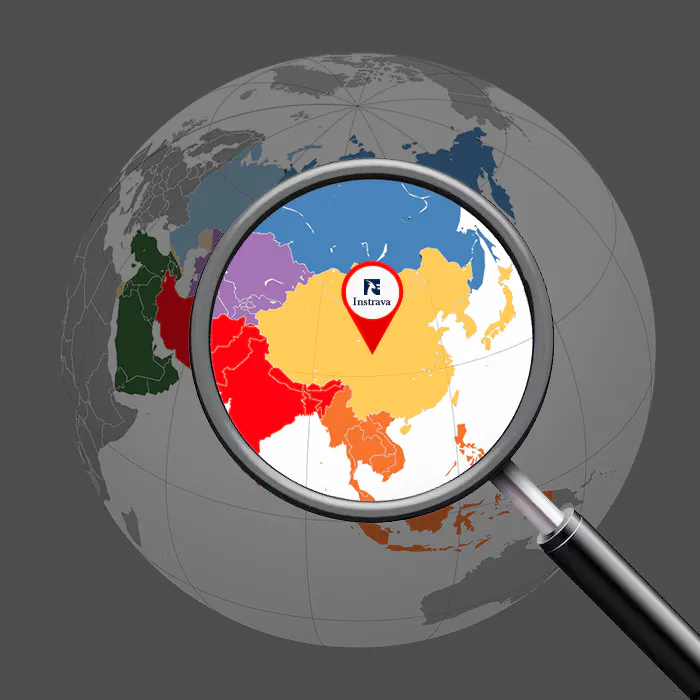
Whether you are an EPC contractor, OEM equipment manufacturer, industrial distributor, or specialized system integrator—or an R&D and procurement manager in demanding sectors like Oil & Gas, Petrochemicals, Chemicals, Pharmaceuticals, or Advanced Environmental Monitoring—we stand firmly in your shoes. We navigate the complex Chinese supply chain on your behalf, ensuring you source the most suitable optical analytical instruments and secure the ideal high-precision analysis and monitoring solutions for your exact needs.
Product quality is fundamental to our long-term development.
Every factory evaluation is a rigorous and meticulous process. Those that stand out from numerous competitors possess 10-30 years of manufacturing experience and the ability to handle complex operating conditions.
| Assessment Category | Key Evaluation Items | Status |
|---|---|---|
| Manufacturing Capability Assessment | Production capacity, manufacturing equipment, assembly process, machining capability | ✓ |
| Engineering & Customization Capability | R&D team, OEM/ODM support, custom design, engineering response | ✓ |
| Quality Management System Verification | ISO 9001, quality procedures, incoming inspection, process control, final inspection | ✓ |
| Production & Testing Facility Inspection | Calibration equipment, pressure testing, functional testing, production environment | ✓ |
| International Certification Review | CE, ATEX, IECEx, SIL, RoHS and other applicable certifications | ✓ |
| Export & Project Experience Assessment | International projects, export markets, project references, documentation experience | ✓ |
| Delivery Performance Review | Production planning, lead time stability, on-time delivery record | ✓ |
| Technical Documentation Capability | Datasheets, manuals, drawings, certificates, calibration reports | ✓ |
| After-sales Support Evaluation | Technical support, spare parts, warranty, application assistance | ✓ |
Instrava's Commitment to You
Every manufacturing partner is evaluated through our standardized supplier qualification process before being included in the Instrava sourcing network. The assessment focuses on manufacturing capability, engineering expertise, quality control, delivery reliability, and long-term service support.(Refer to the table on the left.)
Once our cumulative cooperation volume reaches USD 50,000, we are pleased to offer a 10% quality retention clause. You will only need to release the final 10% balance after the products have arrived and successfully passed your quality verification. This is our commitment to the premium quality of Instrava products.
Contact Instrava today to begin your risk-free procurement journey.
Optical Analysis Solutions
Optical analytical instruments are critical tools used to measure and monitor chemical compositions and component concentrations within process streams, gas emissions, and laboratory environments. Different media phases, background matrix interferences, trace-level detection limits, and stringent regulatory compliance demand the application of diverse optical technologies.
One Analytical Need, Multiple Technological Choices
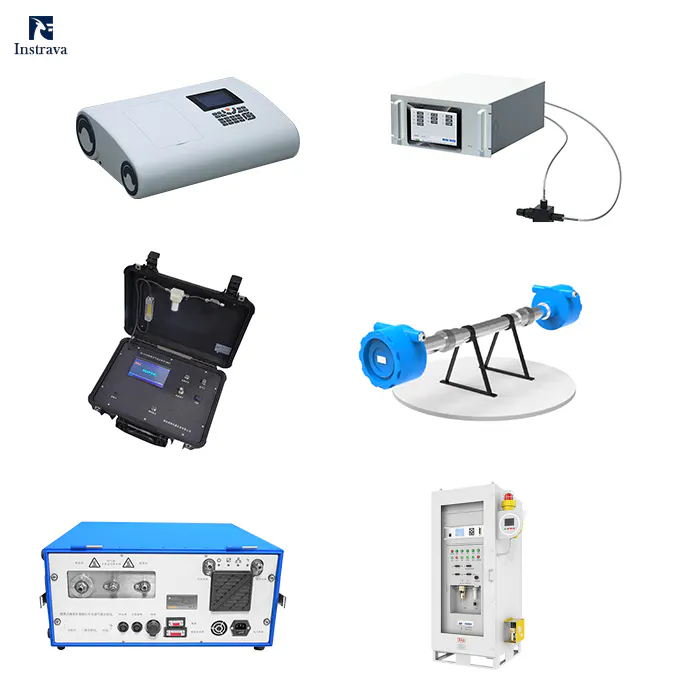
Different application scenarios and target components require distinct optical principles. That is why our comprehensive portfolio covers a wide range of sophisticated technologies—including infrared gas analyzers, UV optical analyzers, laser gas analyzers, and spectroscopic analyzers. This diversity empowers researchers, system integrators, and engineers to select the most optimal high-precision optical monitoring solution, rather than being restricted to a single product line.
Measurement Principle | TDLAS (Laser Gas Analysis)
Communication | RS485 (standard) / RS232 (optional)
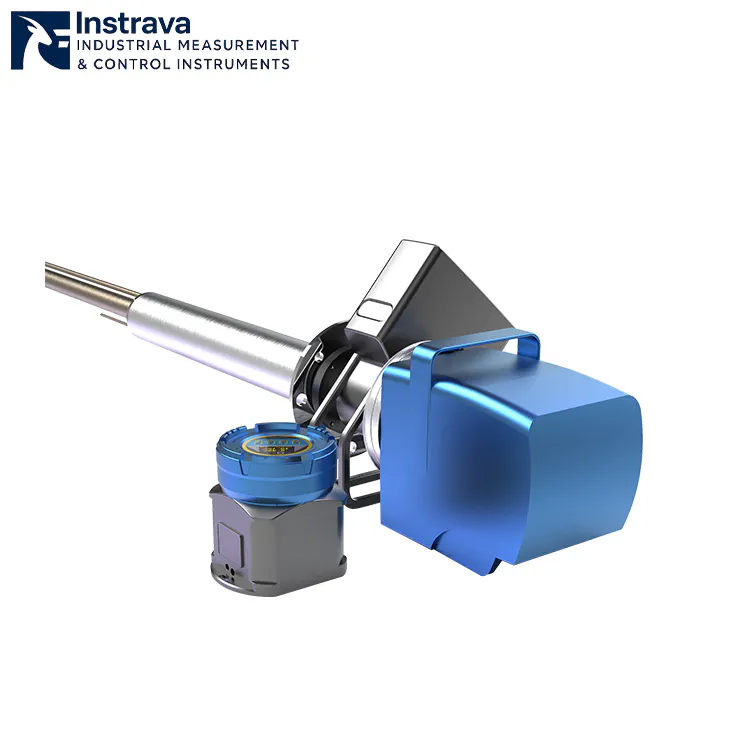
Measured Gases | O₂, CO, HF, H₂O, HCl, NH₃ (configurable)
Analog Output | 4–20 mA / 0–20 mA (switchable)
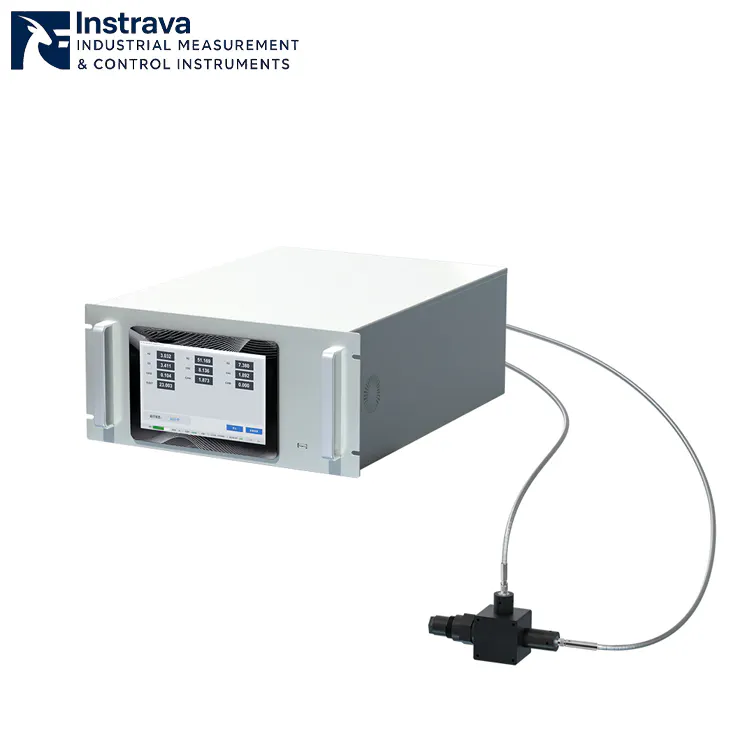
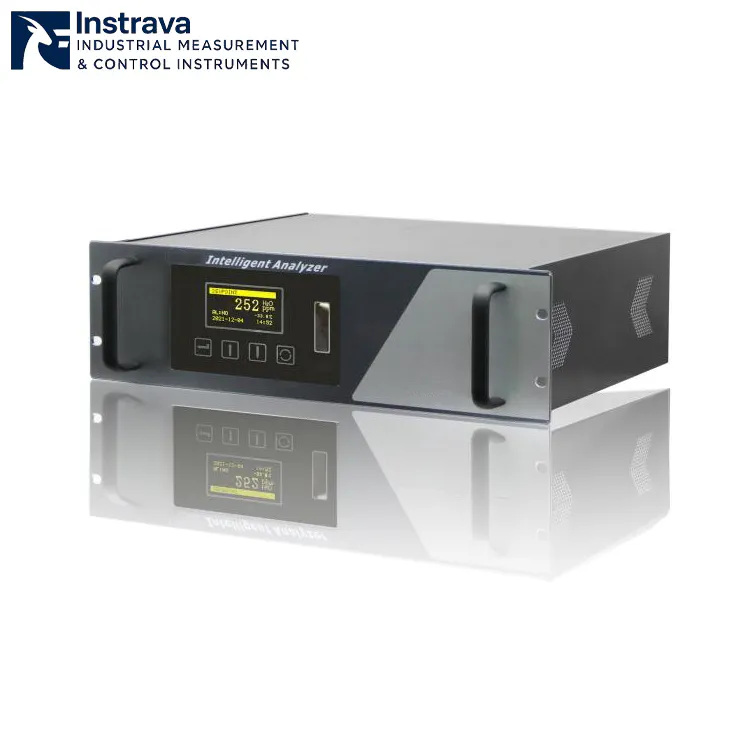
Measured Gases H₂, N₂, O₂, CO, CO₂, CH₄, C₂H₂, C₂H₄, C₃H₆
Measurement Range 0–100% (customizable)
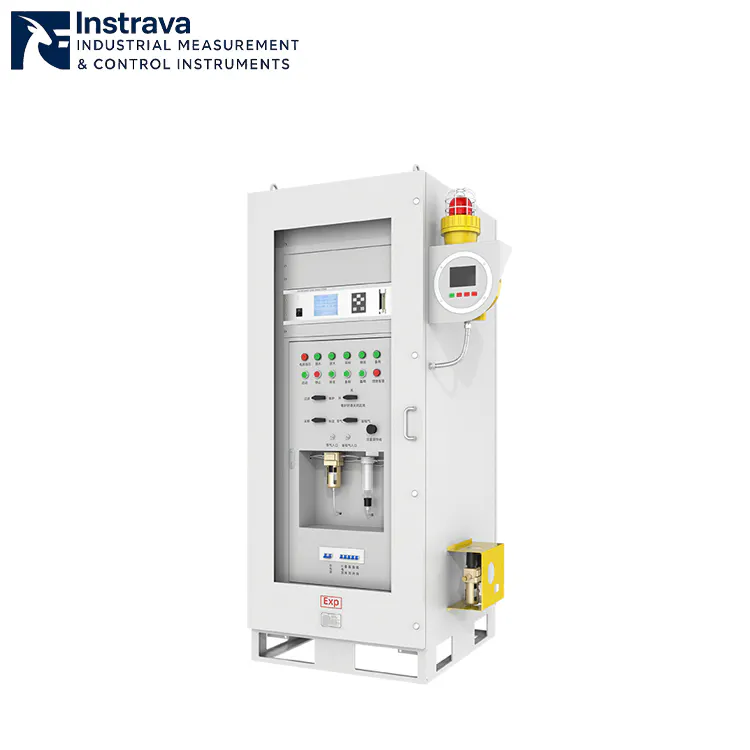
Measured Gases | CO, CO₂, CH₄, H₂, O₂, C₂H₂, C₂H₄, CnHm*, Calorific Value
Measurement Principle | NDIR (CO, CO₂, CH₄, hydrocarbons), TCD (H₂), ECD (O₂)
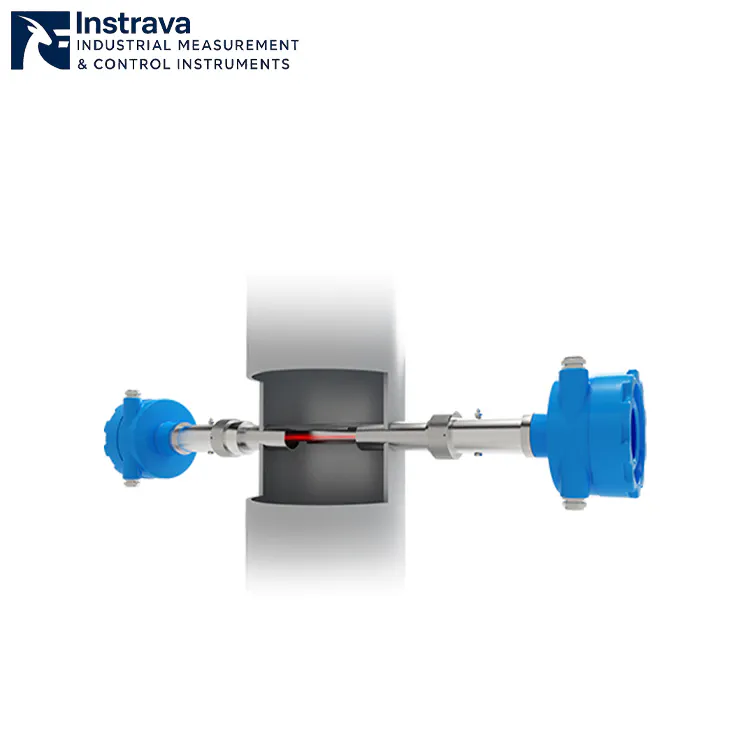
Measured Gases | O₂, CO, CO₂, CH₄ (optional)
Explosion-Proof Rating | Ex d II C T6
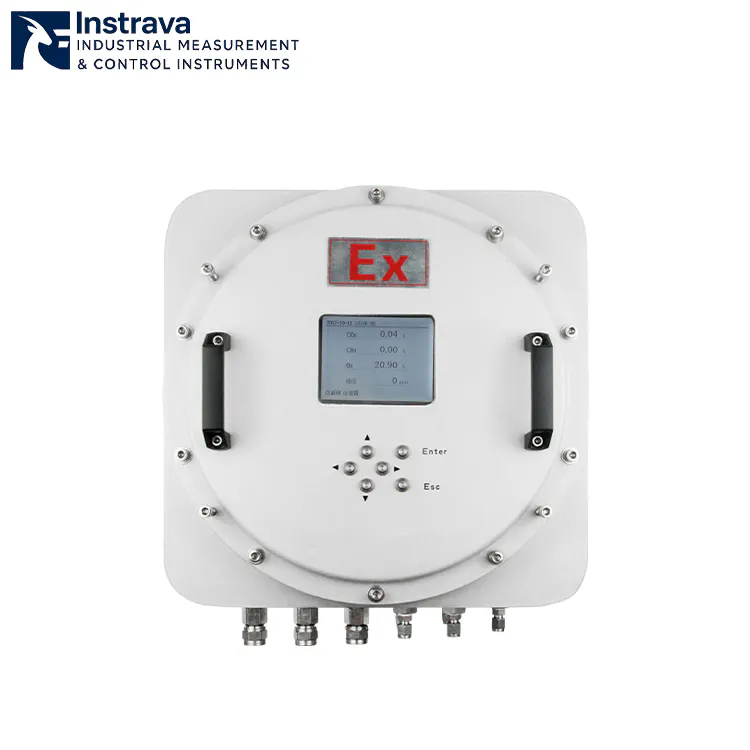
O₂, CO, CO₂, H₂S, CH₄, H₂O
ppm to 100% (customizable)
Optical Analysis-FAQ
Why do optical analysis instruments sometimes produce inconsistent readings in highly turbid water?
In highly turbid water, suspended particles scatter and absorb light in unpredictable ways. This can distort the optical signal path and lead to measurement variability. Sensor design, wavelength selection, and signal filtering algorithms are critical for maintaining stability in such environments.
How does optical path contamination influence measurement accuracy?
Deposits on optical windows reduce light transmission and alter the signal detected by the sensor. Even thin biofilms or mineral scaling can significantly change the optical response, which is why routine cleaning or automatic wiper systems are commonly used in continuous monitoring applications.
Why is wavelength selection important in optical analysis systems?
Different substances absorb or scatter light at specific wavelengths. Selecting the appropriate wavelength allows the analyzer to isolate the target parameter while minimizing interference from other compounds in the sample matrix.
How do optical sensors distinguish between dissolved substances and suspended particles?
Optical systems use different measurement principles to differentiate these effects. Absorption-based analyzers target dissolved compounds, while turbidity sensors measure light scattering caused by particles. Advanced instruments combine multiple wavelengths or detection angles to improve selectivity.
What are the main causes of long-term drift in optical analysis instruments?
Long-term drift may result from optical component aging, fouling on sensor surfaces, changes in light source intensity, or gradual degradation of detector sensitivity. Periodic verification against laboratory measurements helps maintain measurement confidence.
How does ambient light influence optical measurements?
External light sources can introduce noise into optical detection systems. Industrial optical analyzers are typically designed with shielding, modulated light sources, and signal filtering techniques to minimize interference from ambient lighting.
Why can optical dissolved oxygen sensors maintain longer maintenance intervals than electrochemical sensors?
Optical dissolved oxygen sensors rely on luminescence quenching rather than oxygen-consuming chemical reactions. Because they do not consume oxygen during measurement, they typically experience slower drift and require fewer membrane replacements.
Can optical analysis replace laboratory chemical analysis completely?
Online optical analysis provides rapid and continuous monitoring, but laboratory methods remain essential for validation, calibration reference, and detailed chemical characterization. In most industrial systems, online sensors and laboratory testing complement each other.
How do optical analyzers handle complex water matrices with multiple interfering compounds?
Advanced analyzers may use multi-wavelength detection, algorithm-based compensation, or calibration models to isolate target signals. However, in highly complex matrices, measurement uncertainty can still increase.
Why do optical analyzers sometimes show delayed response during sudden concentration changes?
Response delay can occur due to sample flow conditions, mixing dynamics, or optical sensor stabilization time. Ensuring adequate flow and proper sensor placement improves real-time measurement responsiveness.
What is the role of automatic cleaning systems in optical monitoring installations?
Automatic cleaning systems such as mechanical wipers, air blast systems, or ultrasonic cleaning reduce fouling on optical windows. These systems significantly extend maintenance intervals in wastewater or biological environments.
How does temperature variation influence optical measurement systems?
Temperature can affect both the optical properties of the sample and the performance of light sources and detectors. Many analyzers include internal temperature compensation to maintain measurement stability across varying process conditions.
Why are optical analyzers commonly used for continuous environmental monitoring?
Optical instruments allow rapid, non-destructive measurements and can operate continuously with minimal reagent consumption. This makes them well suited for long-term monitoring in water treatment plants and environmental monitoring stations.
What determines the long-term reliability of an optical analysis system?
Reliability depends on optical component durability, sensor material resistance to fouling, proper installation, and consistent maintenance practices. System design that allows easy cleaning and calibration significantly improves long-term stability.
Why Trust Instrava?
We select manufacturers from a neutral, impartial standpoint, always with your best interests in mind.
Our very existence depends on helping you source the products that are the perfect fit for your needs.
Based in China, we are able to conduct on-site inspections of production environments and product quality firsthand.
We help you avoid intermediaries posing as factories.
We facilitate smoother after-sales support, eliminating time zone issues and the delays often associated with dealing directly with factories.
Our multilingual team ensures effective communication.
For a trading startup, every interaction with a client is a precious opportunity—a sign that you are willing to place your trust in us and give us the chance to prove ourselves.
In the digital age, while information is easily accessible, misconceptions often cloud the trust between people.
Instrava relies entirely on trust; it is our core philosophy and the foundation of our existence in society. It is the fundamental basis for our long-term growth and our commitment to serving the community.
Please place your trust in us.