
Instrava: Delivering precision-sourced cold formers for modern manufacturers
Home » Cold Heading Machine
Investing in a cold former is a critical strategic decision that shapes long-term production capability
Cold heading machine requirements inherently vary by industry, with each manufacturer tailored to specific production priorities.
For Fastener OEMs: Aiming to maximize product scaling, accelerate output capacity, and handle highly diversified custom orders with high efficiency.
For Fastener Distributors: Seeking to transition into self-owned manufacturing, enrich their product lineup, and de-risk supply chains from global volatility.
For Mission-Critical Sectors (Automotive, Oil & Gas, Rail, Wind):High strength, high consistency, long fatigue life, requirements for highly consistent production, etc.
For manufacturers across all other industries: Instrava is in your corner. Our mission is to guide you to the perfect-fit solutions tailored precisely to your needs.”
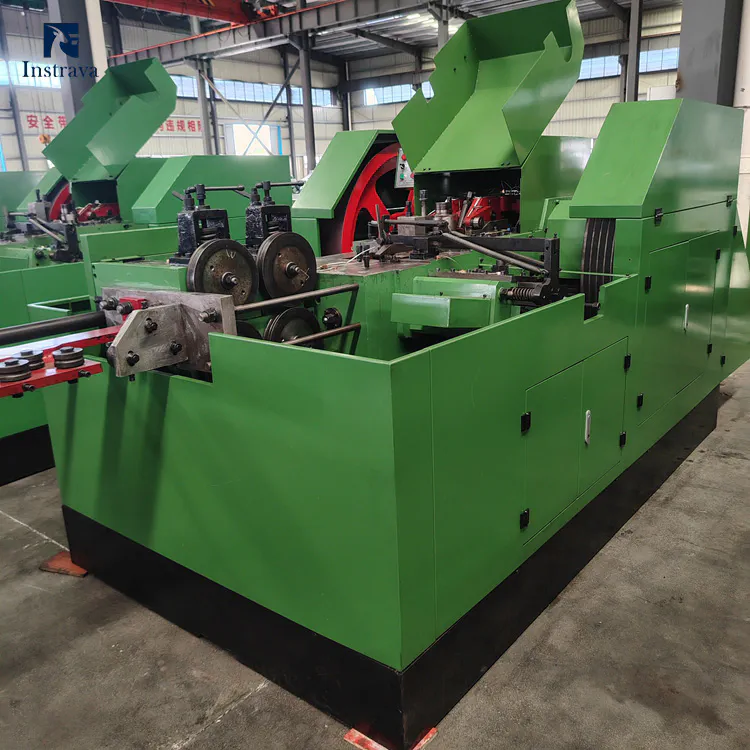
As global manufacturing advances toward higher precision, automation, and productivity, fasteners remain essential components across industries ranging from automotive and construction to renewable energy and aerospace.
Choosing the right cold heading machine is no longer just about production capacity—it is about achieving consistent quality, maximizing material utilization, reducing production costs, and supporting long-term manufacturing competitiveness.
What Determines the Performance of a Cold Heading Machine?
The performance of a cold heading machine directly affects production consistency, manufacturing efficiency, tooling life, and product quality. When evaluating a machine, manufacturers should focus on several critical technical capabilities rather than production speed alone.
Key Performance Factors
| Performance Factor | Why It Matters |
|---|---|
| Forming Accuracy | Ensures dimensional consistency and minimizes product variation. |
| Production Speed | Increases output while maintaining stable quality. |
| Machine Rigidity | Reduces vibration and improves forming precision. |
| Material Compatibility | Supports carbon steel, alloy steel, stainless steel, aluminum, copper, titanium, and other materials. |
| Multi-Station Forming | Enables complex parts to be formed in a single production cycle. |
| Tooling Compatibility | Simplifies tooling replacement and shortens setup time. |
| Automation Level | Reduces labor requirements and improves production efficiency. |
| Energy Efficiency | Lowers operating costs during long production runs. |
| Machine Reliability | Minimizes downtime and ensures continuous operation. |
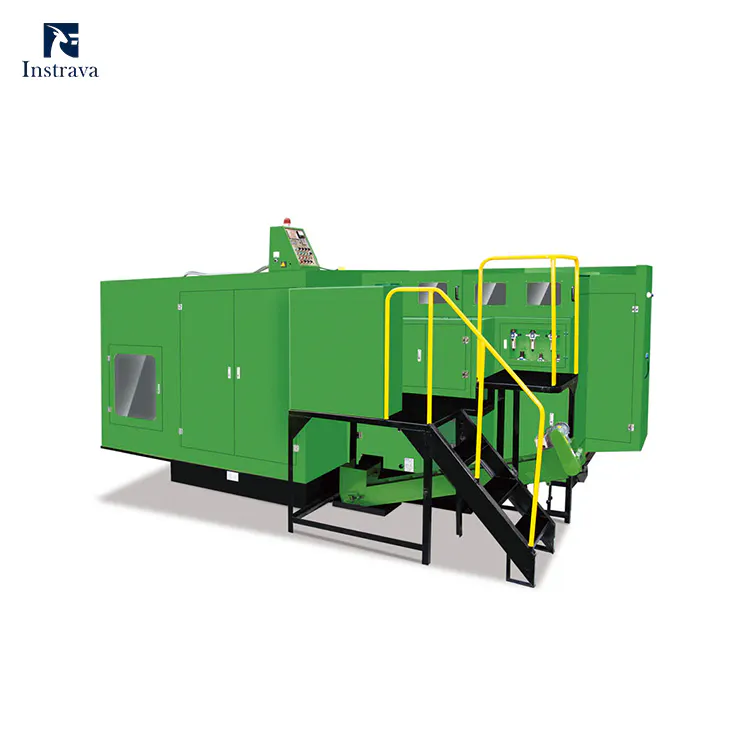
Need Help Selecting the Right Cold Heading Machine?
Share your product requirements with us. Our engineers will recommend a suitable cold heading solution based on your part design, material, size, and production requirements.
How to Choose the Right Cold Heading Machine
Selecting the right cold heading machine starts with understanding your products—not just your industry. Follow these five key steps to identify the most suitable machine for your manufacturing requirements.
Define Your Product
- Hex Bolt
- Flange Bolt
- Wood Screw
- Self-Tapping Screw
- Wheel Bolt
- Ball Stud
- Rivet
- Pin
Determine Product Size
- M2 – M5
- M6 – M10
- M12 – M20
- M24+
Identify Material
- Carbon Steel
- Alloy Steel
- SS304
- SS316
- Aluminum
- Copper
- Titanium
Evaluate Complexity
- Standard Screws
- Hex Bolts
- Flange Bolts
- Stud Bolts
- Wheel Bolts
- Ball Studs
Select Machine
- One Die Two Blow
- Two Die Four Blow
- 5-Station Former
- 6-Station Former
- Parts Former
Industry Applications
Different industries require different fastener designs, materials, and quality standards. Choosing the appropriate cold heading machine depends on product requirements rather than the industry alone.
Automotive
Wheel Bolts
Ball Studs
Construction
Structural Bolts
Oil & Gas
Heavy Hex Bolts
Railway
Track Bolts
Wind Energy
Foundation Bolts
Solar
Mounting Screws
Furniture
Confirmat Screws
Electronics
Connector Pins
Medical
Titanium Components
Aerospace
Lock Bolts
Frequently Asked Questions About Multi-Station Cold Forming
Learn how multi-station cold forming technology improves fastener production efficiency, product quality, and manufacturing flexibility.
A multi-station cold forming machine is an advanced cold heading system that uses multiple forming stations to progressively shape metal wire into complex components without heating the material. Each station performs specific operations such as cutting, upsetting, extrusion, and shaping.
Multi-station cold forming provides higher production speed, better material utilization, reduced waste, improved dimensional consistency, and lower cost per part for high-volume fastener manufacturing.
Multi-station cold forming is commonly used for automotive bolts, wheel bolts, engine bolts, flange bolts, stud bolts, screws, rivets, pins, and precision cold forged components.
The number of forming stations determines the complexity of parts that can be produced. More stations allow additional forming operations to be completed in one production cycle, making it possible to manufacture more complex components.
Cold forming improves product quality through better metal grain flow, higher mechanical strength, improved dimensional consistency, and stable repeatability in mass production.
Yes. Multi-station cold forming machines can process stainless steel 304, stainless steel 316, carbon steel, alloy steel, aluminum, copper, and titanium alloys with suitable tooling and lubrication systems.
The required number of stations depends on product geometry, forming operations, material properties, diameter, length ratio, and production volume.
Multi-station cold forming machines are widely used in automotive, construction, oil and gas, railway, wind energy, solar, electronics, medical, and aerospace industries.
For high-volume production, cold forming can reduce manufacturing costs by increasing output, minimizing material waste, reducing machining operations, and improving production efficiency.
Manufacturers should evaluate product size range, material type, production capacity, part complexity, machine accuracy, tooling support, automation requirements, and after-sales service.