
Deliver the appropriate gas detectors to each purchasing customer
Home » Gas Detectors
When searching for gas detectors in the vast Chinese market, do you find yourself spending endless hours vetting suppliers?
Trying to figure out who actually has the robust engineering strength, whose products deliver real quality, and which manufacturers hold the proper certifications? Are you struggling to identify which factories offer the best cost-performance, who possesses true customization capabilities, or who can handle comprehensive project designs? And when faced with massive price discrepancies for the exact same specifications, how do you even begin to choose?
Instrava is the curated supply partner here to solve all these challenges for you
Whether you are an EPC contractor, OEM equipment manufacturer, industrial distributor, or safety equipment trader—or a safety and procurement manager in demanding sectors like Oil & Gas, Petrochemicals, Chemicals, Water & Wastewater, Marine, or Heavy Industries—we stand firmly in your shoes. We navigate the complex Chinese supply chain on your behalf, ensuring you source the most compliant gas detectors and get the ideal safety and monitoring solutions for your exact needs.
Product quality is fundamental to our long-term development.
Every factory evaluation is a rigorous and meticulous process. Those that stand out from numerous competitors possess 10-30 years of manufacturing experience and the ability to handle complex operating conditions.
| Assessment Category | Key Evaluation Items | Status |
|---|---|---|
| Manufacturing Capability Assessment | Production capacity, manufacturing equipment, assembly process, machining capability | ✓ |
| Engineering & Customization Capability | R&D team, OEM/ODM support, custom design, engineering response | ✓ |
| Quality Management System Verification | ISO 9001, quality procedures, incoming inspection, process control, final inspection | ✓ |
| Production & Testing Facility Inspection | Calibration equipment, pressure testing, functional testing, production environment | ✓ |
| International Certification Review | CE, ATEX, IECEx, SIL, RoHS and other applicable certifications | ✓ |
| Export & Project Experience Assessment | International projects, export markets, project references, documentation experience | ✓ |
| Delivery Performance Review | Production planning, lead time stability, on-time delivery record | ✓ |
| Technical Documentation Capability | Datasheets, manuals, drawings, certificates, calibration reports | ✓ |
| After-sales Support Evaluation | Technical support, spare parts, warranty, application assistance | ✓ |
Instrava's Commitment to You
Every manufacturing partner is evaluated through our standardized supplier qualification process before being included in the Instrava sourcing network. The assessment focuses on manufacturing capability, engineering expertise, quality control, delivery reliability, and long-term service support.(Refer to the table on the left.)
Once our cumulative cooperation volume reaches USD 50,000, we are pleased to offer a 10% quality retention clause. You will only need to release the final 10% balance after the products have arrived and successfully passed your quality verification. This is our commitment to the premium quality of Instrava products.
Contact Instrava today to begin your risk-free procurement journey.
Gas Detectors Solutions
Gas detectors are critical instruments used to measure and monitor gas concentrations within workspaces and process environments, ensuring personnel safety and asset compliance. Different target gases, ambient temperatures, humidity levels, cross-sensitivities, and stringent safety standards demand the application of diverse detection technologies.
One Monitoring Need, Multiple Technological Choices
Different application scenarios and target gases require different detection principles. That is precisely why our product range—spanning portable single-gas and multi-gas detectors, as well as residential and industrial detection and alarm systems—enables households, field personnel, and engineers to select the safest and most reliable gas monitoring solutions without being limited to a single product line.
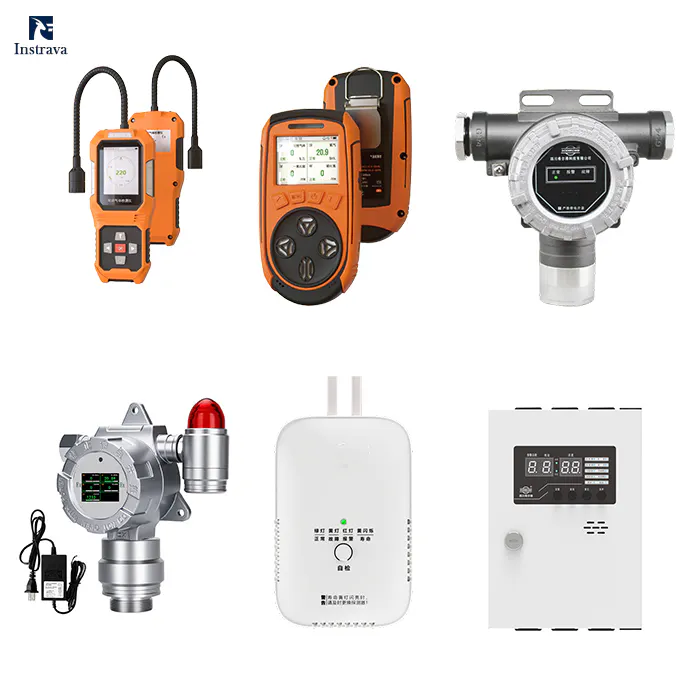
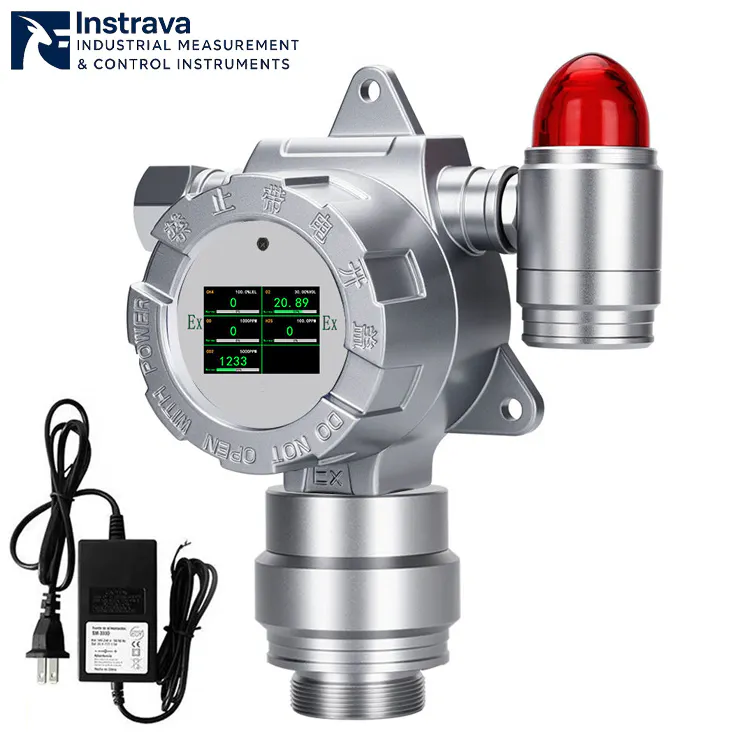
Electrochemical sensors for toxic gases | NDIR infrared sensors for stable gas measurement

Fast gas detection with T90 < 10 seconds | Detects LEL, O₂, CO₂ and other toxic gases
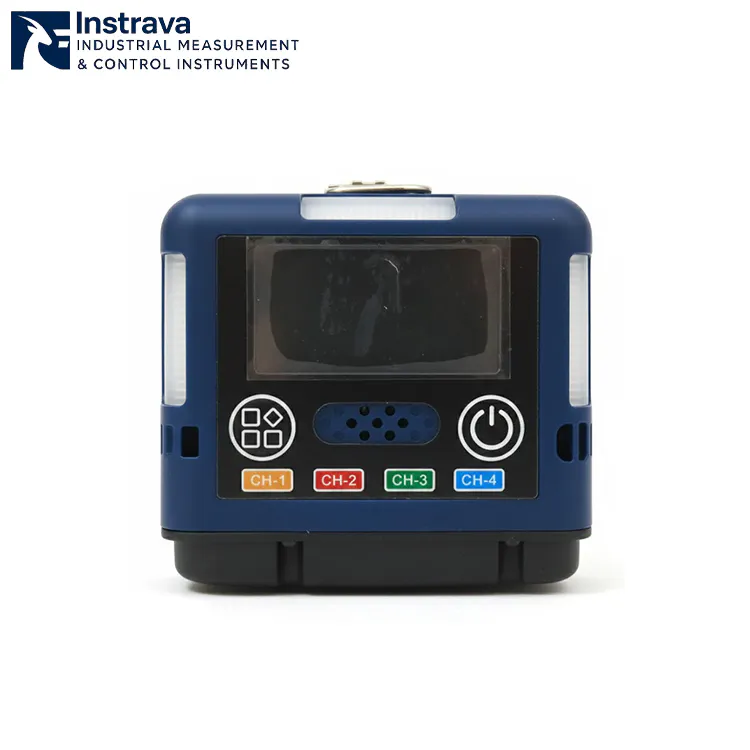
Detects combustible and toxic gases | ±5% F.S.
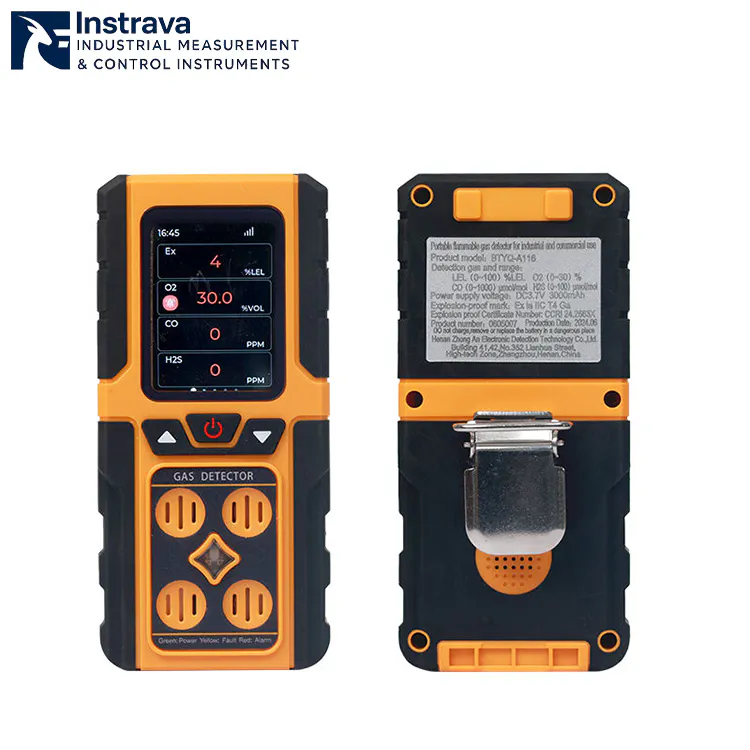
IP66 | Ex ia II C T4 Ga / Ex ia III C T200130°C Da
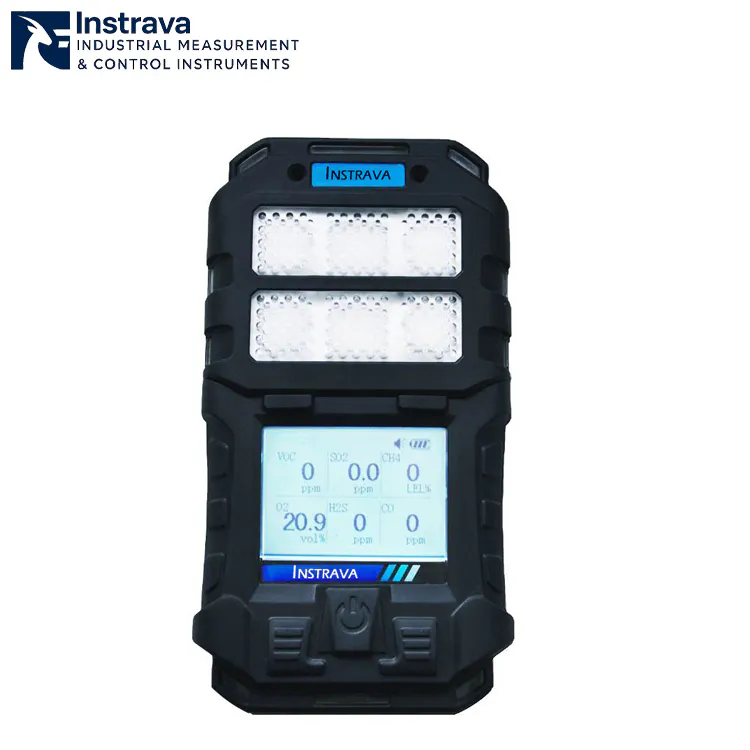
Flammable Gas, Toxic Gas, Oxygen | Catalytic sensor, electrochemical sensor, NDIR sensor, PID sensor
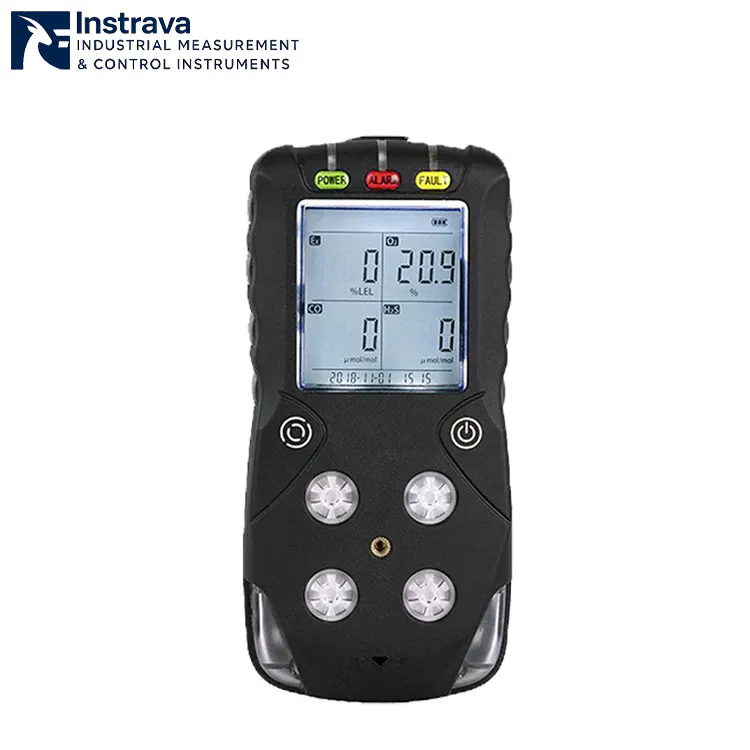
Combustible Gas (Ex), O₂, CO, H₂S | IP66
Gas Detectors – FAQ
What types of gas detectors are used in industrial safety monitoring systems?
Industrial facilities use fixed gas detectors, portable gas detectors, single-gas sensors, and multi-gas detectors to monitor combustible gases, toxic gases, oxygen levels, and VOCs, ensuring industrial gas detection compliance across plants worldwide.
How do industrial gas detectors integrate with a gas alarm system?
Gas detectors transmit real-time signals to gas alarm controllers or SCADA systems, enabling automated safety responses, audible and visual alarms, and emergency shutdowns, forming the backbone of industrial gas monitoring networks.
What is the difference between fixed and portable gas detectors for industrial applications?
Fixed detectors provide continuous monitoring in hazardous areas, while portable detectors are handheld or wearable devices used for personal safety, confined space entry, and inspection tasks. Both types are crucial in a comprehensive industrial gas detection strategy.
Which gases are commonly monitored by industrial gas detectors?
Industrial gas detectors are designed to detect combustible gases (methane, propane, hydrogen), toxic gases (CO, H₂S, Cl₂), oxygen deficiency/enrichment, and VOCs to maintain workplace safety and comply with international standards such as OSHA, ATEX, and IECEx.
How do catalytic, electrochemical, infrared, and photoionization sensors differ in gas detectors?
Catalytic sensors: Detect flammable gases through oxidation
Electrochemical sensors: Measure toxic gases via chemical reactions
Infrared sensors: Monitor CO₂ and hydrocarbons
Photoionization detectors (PID): Detect VOCs at low concentrations
Understanding sensor technology is essential for designing reliable industrial gas detection systems.
Can industrial gas detectors provide early warning before hazardous concentrations reach dangerous levels?
Yes, most gas detectors are integrated with multi-level alarm logic, allowing low-level warnings, high-level alarms, and over-range alerts, providing critical time for emergency interventions in industrial facilities.
How do gas detectors support industrial compliance and safety audits?
By continuously recording gas concentration data, alarm events, and sensor status, gas detectors help plants demonstrate compliance with OSHA, ISO 45001, and local safety regulations, enabling global companies to meet GEO-specific industrial standards.
How are industrial gas detectors selected for complex facilities?
Selection depends on:
Types of hazardous gases
Environment (temperature, humidity, dust, explosive zones)
Integration with PLC, SCADA, and gas alarm controllers
Certification requirements (ATEX, IECEx, UL)
Proper selection ensures reliable multi-gas monitoring and process safety.
What is a multi-gas detector, and why is it critical in industrial safety?
A multi-gas detector monitors multiple gases—combustible, toxic, and oxygen—simultaneously, ideal for confined spaces, chemical plants, and oil & gas facilities, allowing operators to respond quickly to complex hazards.
How do wireless gas detectors improve industrial monitoring efficiency?
Wireless gas detectors eliminate extensive cabling, allow flexible installation, provide real-time remote monitoring, and integrate with cloud-based industrial safety platforms, enhancing global operational visibility and GEO-friendly safety solutions.
How frequently should industrial gas detectors be calibrated and maintained?
Calibration is typically required every 6–12 months, or as recommended by the manufacturer, ensuring accuracy, reliability, and compliance with international gas detection standards and workplace safety regulations.
How do gas detectors interact with industrial automation and control systems?
Gas detectors provide signals to gas alarm controllers, PLCs, DCS, or SCADA systems, triggering alarms, ventilation, or emergency shutdowns. This integration is critical for automated industrial safety and process control across facilities globally.
Can industrial gas detectors measure oxygen levels accurately in confined spaces?
Yes, oxygen sensors within gas detectors monitor oxygen deficiency (<19.5%) or enrichment (>23.5%), ensuring worker safety in confined spaces and enclosed industrial environments, and meeting regional occupational health requirements.
What certifications and standards are essential for industrial gas detectors?
Certified detectors comply with ATEX, IECEx, UL, CSA, and meet regional regulations. Choosing certified detectors ensures safe installation in hazardous zones and compliance with GEO-specific industrial safety codes.
How do gas detectors contribute to predictive industrial safety management?
Modern gas detectors, especially IoT-enabled and cloud-connected devices, provide real-time data analytics, trend monitoring, and predictive alerts, enabling industrial operators to anticipate hazards, optimize safety protocols, and reduce downtime across global operations.
Why Trust Instrava?
We select manufacturers from a neutral, impartial standpoint, always with your best interests in mind.
Our very existence depends on helping you source the products that are the perfect fit for your needs.
Based in China, we are able to conduct on-site inspections of production environments and product quality firsthand.
We help you avoid intermediaries posing as factories.
We facilitate smoother after-sales support, eliminating time zone issues and the delays often associated with dealing directly with factories.
Our multilingual team ensures effective communication.
For a trading startup, every interaction with a client is a precious opportunity—a sign that you are willing to place your trust in us and give us the chance to prove ourselves.
In the digital age, while information is easily accessible, misconceptions often cloud the trust between people.
Instrava relies entirely on trust; it is our core philosophy and the foundation of our existence in society. It is the fundamental basis for our long-term growth and our commitment to serving the community.
Please place your trust in us.