
الصفحة الرئيسية » الحلول » كيفية حل تحديات مقياس مستوى البروبان في أنظمة التخزين المضغوط
كيفية حل تحديات مقياس مستوى البروبان في أنظمة التخزين المضغوط
Why Propane Level Measurement Requires a Different Engineering Approach
Propane is widely used in LPG storage, industrial fuel systems, and energy distribution networks. Unlike atmospheric liquid storage, propane is stored in a pressurized liquefied state, where liquid and vapor phases coexist dynamically inside a closed vessel.
This means level measurement is not only about detecting liquid height, but also about handling:
- Pressure-varying density
- Vapor-liquid equilibrium
- Rapid thermodynamic changes
- Explosion risk environments
Because of this, propane storage is classified as a high-risk, hazardous-area application, requiring robust instrumentation with explosion-proof design and stable measurement under pressure and temperature fluctuations.
Engineering Characteristics of Liquid Propane
Typical Storage Pressure Range of Propane
Propane is stored as a liquefied gas under pressure. The pressure is directly related to temperature:
- At -10°C: approximately 2.5–3 bar
- At 0°C: approximately 4 bar
- At 20°C (ambient storage condition): approximately 8–10 bar
- At 40°C: approximately 13–15 bar
- At 50°C (high ambient / hot climate condition): up to 17–18 bar
👉 Therefore, typical industrial propane storage tanks operate in the range of:
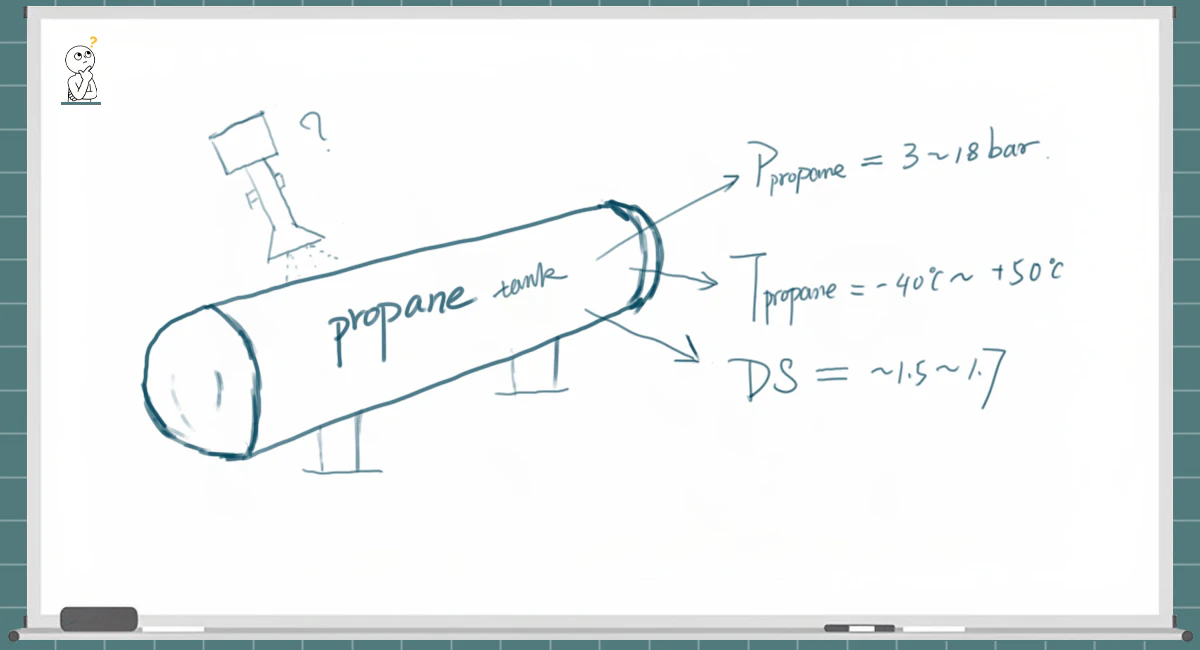
~3 bar to 18 bar (0.3 MPa to 1.8 MPa)
This pressure range defines the mechanical and sealing requirements for any level measurement instrument installed on the tank.
Dielectric Constant of Liquid Propane
Liquid propane has a low dielectric constant, which directly affects radar signal reflection quality.
- Dielectric constant (εr) of liquid propane:
approximately 1.5 – 1.7
For comparison:
- Water: ~80
- Diesel: ~2.1–2.5
- Gasoline: ~1.8–2.2
👉 This low dielectric property means:
- Weak reflection signals
- Higher sensitivity to measurement technique
- Requirement for high-frequency radar or guided wave systems
Temperature Range and Phase Behavior of Propane
Propane’s thermodynamic behavior strongly affects pressure and density stability.
Key temperature points:
- Boiling point at atmospheric pressure: -42°C
- Typical storage operating range: -40°C to +50°C
- Critical temperature: 96.7°C
However, in real storage systems:
- Below -20°C → reduced vapor pressure, more stable density
- -10°C to 40°C → normal industrial storage range
- Above 40–50°C → rapid pressure increase and safety risk escalation
Pressure and Temperature Sensitivity Zone
Propane becomes particularly sensitive in the following region:
High Sensitivity Operating Zone
- درجة الحرارة: 10°C – 50°C
- الضغط 5 bar – 18 bar
In this region:
- Small temperature changes cause large pressure changes
- Vapor-liquid equilibrium shifts rapidly
- Density changes significantly
- Measurement drift risk increases
👉 This is the most critical zone for level measurement accuracy.
Key Engineering Challenges in Propane Level Measurement
Vapor-Liquid Phase Instability
Inside propane tanks:
- Liquid and vapor phases continuously balance
- Tank pressure changes immediately affect liquid density
- Measurement reference conditions are unstable
This makes simple hydrostatic or mechanical measurement unreliable.
Pressure Vessel Constraints
Because propane tanks operate as pressure vessels (typically up to ~18 bar), level instruments must:
- Maintain long-term sealing integrity
- Resist cyclic pressure loading
- Avoid leakage at process connections
- Comply with pressure vessel regulations (e.g., ASME / EN standards)
Explosion and Safety Risk
Propane is classified as:
- Highly flammable gas (LPG category)
- Low ignition energy fuel
- High explosion expansion potential
Risk scenarios include:
- Vapor cloud explosion
- Flash fire
- BLEVE (Boiling Liquid Expanding Vapor Explosion)
Therefore, instrumentation must be:
- Explosion-proof (Ex d / Ex ia)
- Intrinsically safe
- Certified for hazardous zones (Zone 1 / Zone 2)
Suitable Level Measurement Technologies for Propane Tanks
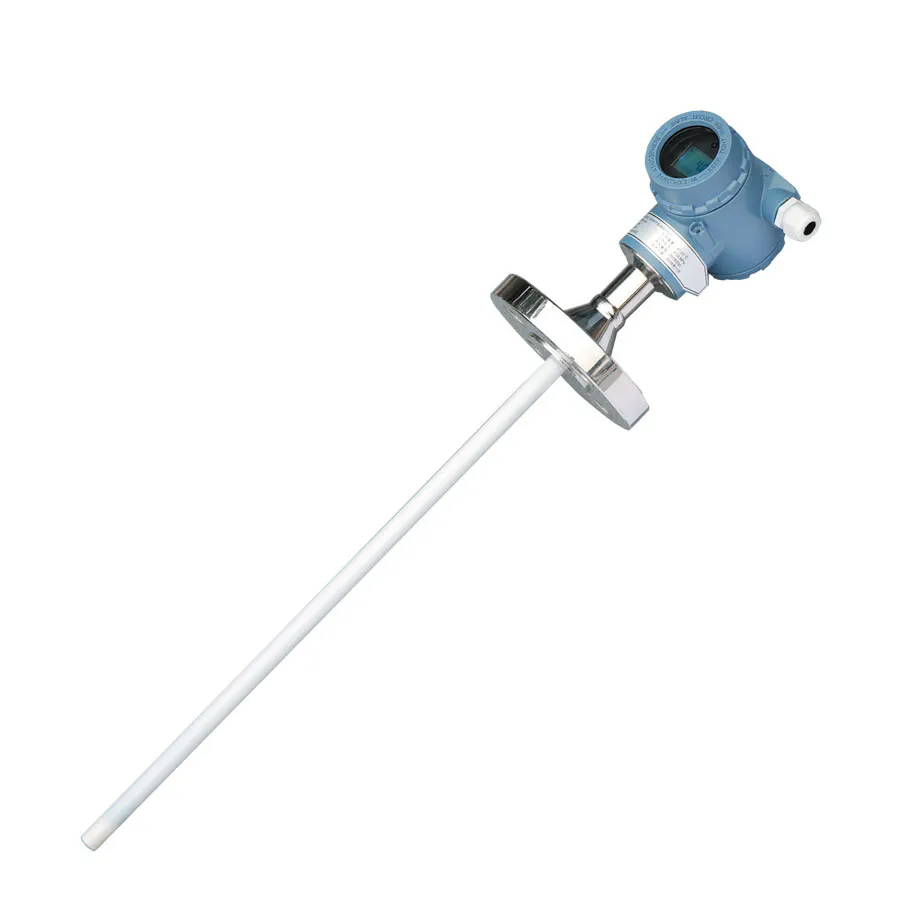
1. Guided Wave Radar (GWR) – Most Stable Solution
Why GWR Works Well
Guided wave radar is one of the most reliable technologies for propane because the microwave signal travels along a probe, not through vapor space.
This avoids:
- Vapor interference
- Pressure-related signal distortion
- Foam and turbulence effects
Required Technical Characteristics
A propane GWR system must support:
- Pressure resistance: ≥ 18 bar
- Temperature range: -40°C to +150°C (typical industrial design margin)
- Low dielectric operation: εr ≥ 1.4 capability
- Explosion-proof certification (Ex d / Ex ia)
- Corrosion-resistant probe materials (316L, Hastelloy optional)
المزايا
- Very stable under pressure fluctuation
- High accuracy in low dielectric liquids
- Minimal vapor influence
- Suitable for horizontal LPG bullets and vertical tanks
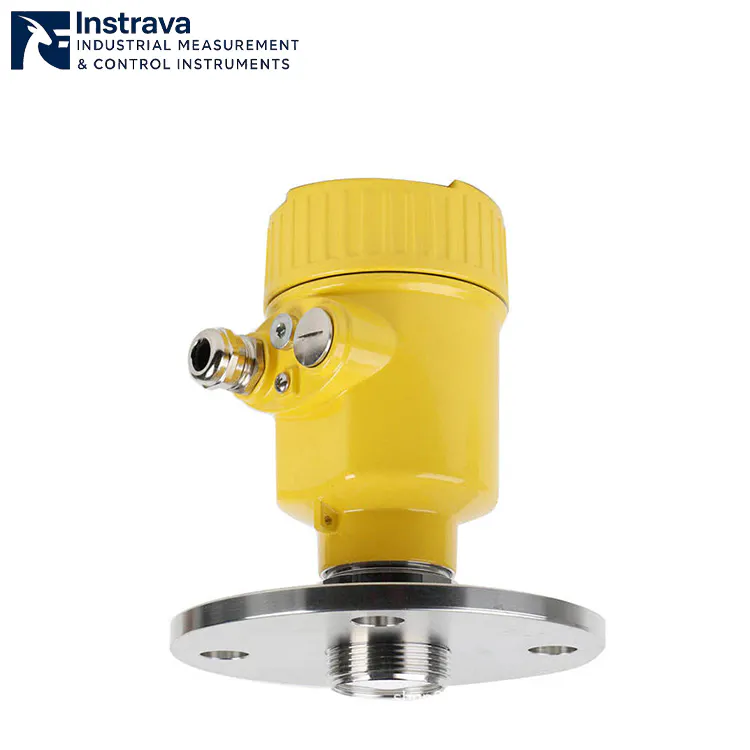
2. 80GHz FMCW Radar Level Gauges – Non-Contact Solution
Why High-Frequency Radar Is Increasingly Used
80GHz radar provides:
- Narrow beam angle (~3–4°)
- High signal concentration
- Strong echo resolution
- Reduced interference from internal tank structures
Performance Requirements for Propane
To be suitable for propane tanks, radar must handle:
- Pressure: up to ~18 bar (via process isolation design)
- Temperature: -40°C to +50°C typical operating range
- Dielectric constant: ≥ 1.5 detection capability
المزايا
- No contact with liquid
- No internal wear
- الحد الأدنى من الصيانة
- Suitable for large LPG storage tanks
- Easy integration into digital monitoring systems
3. Differential Pressure (DP) Measurement
مبدأ العمل
Level is calculated from hydrostatic pressure:
P = ρgh
Limitations in Propane Systems
DP systems are affected by:
- Density variation due to temperature (ρ changes with T)
- Calibration drift under pressure cycling
- Condensation in impulse lines
- Maintenance complexity
Therefore, DP is increasingly used as a backup rather than primary solution.
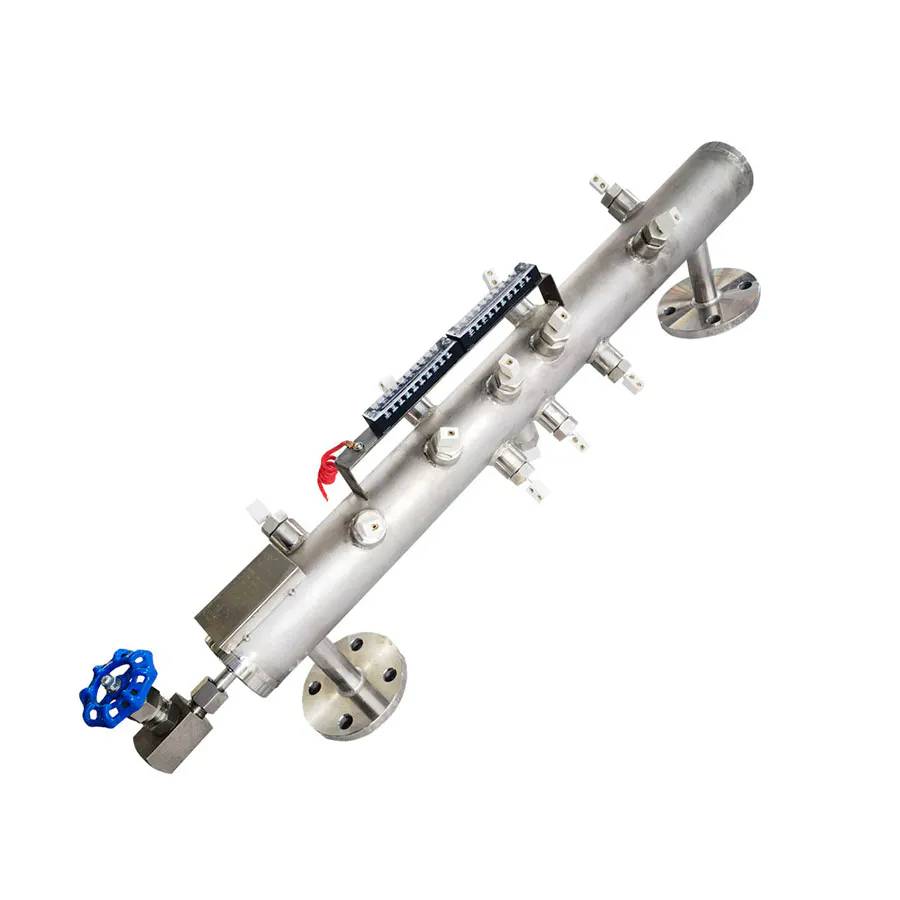
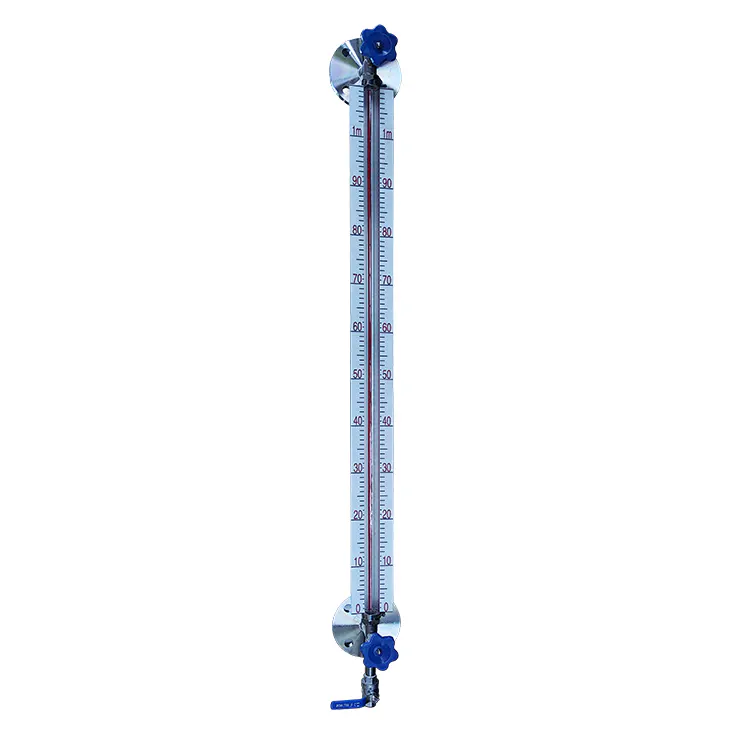
4. Magnetic Level Indicators (Local Display)
These are commonly used for:
- Visual inspection
- Redundant safety indication
- Operator-side verification
القيود:
- No digital integration capability
- Mechanical wear under pressure cycling
- Not suitable as sole measurement system
System-Level Architecture for Propane Storage
Modern propane storage systems typically use a layered architecture:
- Primary: 80GHz radar or GWR level transmitter
- Secondary: magnetic level indicator
- Safety layer: high-level switch (independent SIL device)
- Control layer: PLC / DCS system
- Monitoring layer: SCADA / IIoT platform
This architecture supports:
- Overfill prevention
- Leak detection response
- المراقبة عن بُعد
- الصيانة التنبؤية
Conclusion: Engineering Logic of Propane Level Measurement
Propane storage is a high-pressure, low-dielectric, thermodynamically unstable system, typically operating in:
- الضغط 3–18 bar
- درجة الحرارة: -40°C to +50°C
- Dielectric constant: ~1.5–1.7
These characteristics determine that traditional level measurement technologies struggle with accuracy and reliability.
Therefore, modern propane storage systems increasingly rely on:
- Guided Wave Radar (most stable for pressurized tanks)
- 80GHz FMCW Radar (best non-contact solution)
Together, these technologies form the backbone of safe, automated, and digitally integrated LPG storage systems in Industry 4.0 environments.
لماذا تختار إنسترافا
مبني على الاتساق وليس على الادعاءات
التركيز على التطبيقات الصناعية
نحن متخصصون في التحليل والكشف الصناعي، مع فهم واضح لبيئات ومتطلبات التشغيل في العالم الحقيقي.
معايير اختيار المنتج الصارمة
يتم تقييم كل أداة على أساس الأداء والثبات وملاءمة التطبيق - وليس فقط المواصفات أو الأسعار.
توريد موثوق به واتساق الجودة
نحن نعمل مع مصنعين موثوق بهم لضمان استقرار الإمدادات، والجودة الثابتة، والتسليم الموثوق به.
الدعم العملي القائم على الخبرة
ترتكز توصياتنا على فهم التطبيق، مما يساعد العملاء على تجنب المشكلات الشائعة وتحقيق نتائج موثوقة.
تم تصميم إنسترافا لتقليل عدم اليقين - بحيث يكون كل قرار تتخذه أكثر وضوحًا وأمانًا وموثوقية.