
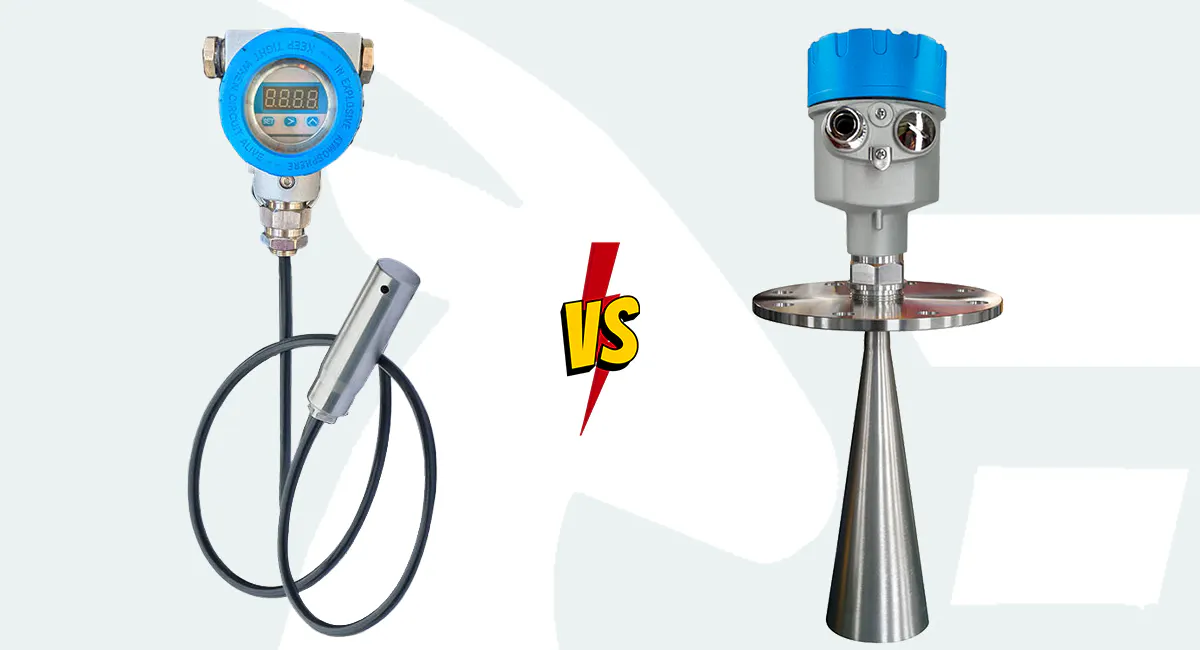
مقياس المستوى الهيدروستاتيكي مقابل مقياس المستوى الراداري: مقارنة فنية
مقدمة
تُستخدم مقاييس المستوى الهيدروستاتيكي ومقاييس المستوى الراداري على نطاق واسع في أنظمة قياس المستوى الصناعي. على الرغم من أن كلا الجهازين مصمم لمراقبة مستويات السوائل في الخزانات والأوعية، إلا أنهما يعتمدان على مبادئ قياس مختلفة تمامًا.
من من منظور هندسي وصناعي، يتطلب الاختيار بين مقياس المستوى الهيدروستاتيكي ومقياس المستوى الراداري فهمًا واضحًا لطرق عملهما ومزاياهما وحدودهما. تقدم هذه المقالة مقارنة متعمقة لمساعدة المستخدمين على اختيار مقياس المستوى الأنسب للتطبيقات الصناعية المختلفة.
مبدأ العمل
مقياس المستوى الهيدروستاتيكي
A مقياس المستوى الهيدروستاتيكي يقيس مستوى السائل بناءً على الضغط. يستشعر الجهاز الضغط الهيدروستاتيكي الناتج عن ارتفاع عمود السائل. يتناسب الضغط المقيس طرديًا مع كثافة السائل وارتفاع المستوى.
هذا النوع من مقاييس المستوى هو جهاز قياس تلامسي ويتم تركيبه عادةً في قاع الخزان أو مغمور في الوسط. ويستخدم عادة في الماء والوقود والسوائل الكيميائية والسوائل الأخرى ذات الكثافة المستقرة نسبياً.
مقياس مستوى الرادار
مقاييس مستوى الرادار استخدام الإشارات الكهرومغناطيسية بالموجات الدقيقة لقياس المسافة من الهوائي إلى سطح السائل. يتم حساب المستوى باستخدام تقنية زمن الرحلة.
الرادار هو طريقة قياس غير تلامسية ولا يتأثر تقريبًا بالتغيرات في درجة الحرارة أو الضغط أو البخار أو تركيبة الغاز داخل الخزان. وهذا يجعل مقاييس مستوى الرادار مثالية لبيئات العمليات القاسية أو المعقدة.
الاختلافات الرئيسية
| البند | مقياس المستوى الهيدروستاتيكي | مقياس مستوى الرادار |
|---|---|---|
| طريقة القياس | نوع جهة الاتصال | نوع عدم الاتصال |
| إشارة الإخراج | قائم على الضغط | على أساس المسافة |
| تأثير الكثافة | نعم | لا يوجد |
| تحمّل درجات الحرارة العالية | محدودة | ممتاز |
| ملاءمة الضغط العالي | محدودة | ممتاز |
| مقاومة البخار والرغوة | جيد | ممتاز |
| موضع التركيب | مثبتة في الأسفل | مثبتة في الأعلى |
| الصيانة | التنظيف الدوري | منخفضة جداً |
مقارنة المزايا
مزايا مقياس المستوى الهيدروستاتيكي
هيكل بسيط وتقنية ناضجة
تكلفة أولية أقل
سهولة التركيب
مناسبة للخزانات الصغيرة والمتوسطة
إخراج مستقر للسوائل النظيفة
غالبًا ما تكون مقاييس المستوى الهيدروستاتيكية مفضلة في مشاريع تصنيع المعدات الأصلية حيثما كانت الحلول الاقتصادية والعملية مطلوبة.
مزايا مقياس مستوى الرادار
مدى قياس طويل
دقة عالية
موثوقية ممتازة
مناسبة لدرجات الحرارة والضغط العاليين
يعمل مع الوسائط المسببة للتآكل والمتطايرة
الحد الأدنى من الصيانة
من وجهة نظر الشركة المصنعة، تمثل مقاييس المستوى الرادارية حلولاً متطورة لقياس المستوى للعمليات الصناعية الحرجة.
التطبيقات النموذجية
تناسب مقاييس المستوى الهيدروستاتيكي:
خزانات المياه
خزانات مياه الصرف الصحي
أوعية الضغط الجوي
صهاريج تخزين السوائل النظيفة
مقاييس مستوى الرادار مناسبة لـ:
المفاعلات الكيميائية
الغلايات والخزانات ذات درجات الحرارة العالية
أوعية مضغوطة
الخزانات ذات البخار الثقيل أو البخار أو التقليب
مقارنة بيئة التطبيق
| حالة البيئة | مقياس المستوى الهيدروستاتيكي | مقياس مستوى الرادار |
|---|---|---|
| السوائل النظيفة | أداء ممتاز | أداء ممتاز |
| الوسائط المسببة للتآكل | جيد مع اختيار المواد المناسبة | ممتاز، بدون تلامس |
| عملية درجة الحرارة العالية | ملاءمة محدودة | الحل المثالي |
| الخزانات المضغوطة | يقتصر على نطاقات الضغط المنخفض | مناسب تماماً |
| الخزانات ذات البخار الثقيل | قد تصبح الإشارة غير مستقرة | لا يوجد تأثير |
| رغوة على سطح سائل | يمكن أن تتسبب في حدوث أخطاء في القراءة | مستقر للغاية |
| تغير الكثافة السائلة | يؤثر بشكل مباشر على القياس | لم تتأثر |
| الخزانات المتربة أو المتسخة | يتطلب تنظيفاً دورياً | موثوقية عالية |
| القنوات المفتوحة أو الحفر | مناسب جداً | مناسبة ولكن بتكلفة أعلى |
| القياس بعيد المدى | تقل الدقة مع انخفاض العمق | ممتاز للمدى البعيد |
| الأسطح المحرضة | مستقرة بشكل عام | مستقر للغاية |
| المناطق الخطرة | مناسب مع الحماية | ممتاز مع تصميم Ex |
اعتبارات الاختيار
عند اختيار مقياس مستوى، يجب على المستخدمين تقييم ما يلي:
درجة حرارة العملية والضغط
وجود بخار أو رغوة
ثبات كثافة السائل
متطلبات ارتفاع الخزان والمدى
دقة القياس المطلوبة
من من منظور الشركة المصنعة للمعدات الأصلية، تعتبر مقاييس المستوى الهيدروستاتيكية مثالية للتطبيقات التقليدية، بينما يوصى بشدة باستخدام مقاييس المستوى الرادارية في البيئات الصعبة أو الحرجة للسلامة.
مقارنة متطلبات التثبيت
| عامل التثبيت | مقياس المستوى الهيدروستاتيكي | مقياس مستوى الرادار |
|---|---|---|
| موضع التركيب | يجب تركيبها في قاع الخزان أو غمرها في السائل | مثبتة في أعلى الخزان |
| اتصال العملية | تتطلب وصلة ضغط ملولبة أو شفة ملولبة | شفة أو خيط قياسي للهوائي |
| اتصال متوسط | التلامس المباشر مع السائل | لا يوجد تلامس مع الوسيط |
| متطلبات الكابلات | كابل إشارة إلى نظام التحكم | كابل إشارة إلى نظام التحكم |
| تأثير العوائق | الحد الأدنى | يجب تجنب العوائق الداخلية |
| تأثير درجة الحرارة | يؤثر على دقة قراءة الضغط | تقريباً لا يوجد تأثير |
| تأثير الضغط | يقتصر على الضغط المنخفض | مناسب للضغط العالي |
| تأثير البخار | يمكن أن يؤثر على الاستقرار | لا يوجد تأثير على القياس |
| الوصول إلى الصيانة | يلزم الوصول إلى الأسفل | سهولة الوصول للأعلى |
الخاتمة
تلعب كل من مقاييس المستوى الهيدروستاتيكي ومقاييس المستوى الراداري أدوارًا مهمة في قياس المستوى الصناعي. ويوفر مقياس المستوى الهيدروستاتيكي حلاً بسيطًا وفعالاً من حيث التكلفة لظروف المعالجة المستقرة. ويوفر مقياس المستوى الراداري أداءً فائقًا وموثوقية عالية للتطبيقات الصناعية المعقدة.
من خلال فهم هذه الاختلافات الفنية والتشاور مع مصنعي مقاييس المستوى ذوي الخبرة، يمكن للمستخدمين القيام بأفضل اختيار طويل الأجل لمشاريعهم المحددة.