
الصفحة الرئيسية » التكنولوجيا » تقنية الرادار في مستشعرات مستوى الرادار
تقنية الرادار في مستشعرات مستوى الرادار
مقدمة
Radar technology is one of the core sensing technologies driving modern industrial level measurement. Unlike traditional contact-based measurement methods, radar technology uses microwave electromagnetic waves to perform non-contact distance detection, allowing level sensors to operate reliably under high temperature, high pressure, vapor, foam, condensation, and dusty industrial conditions.
The true value of radar level sensors does not come from the instrument itself, but from the continuous evolution of radar microwave technology. Different radar frequencies, antenna structures, signal processing methods, and microwave focusing technologies directly determine the sensor’s measurement capability, anti-interference performance, blind zone size, and environmental adaptability.
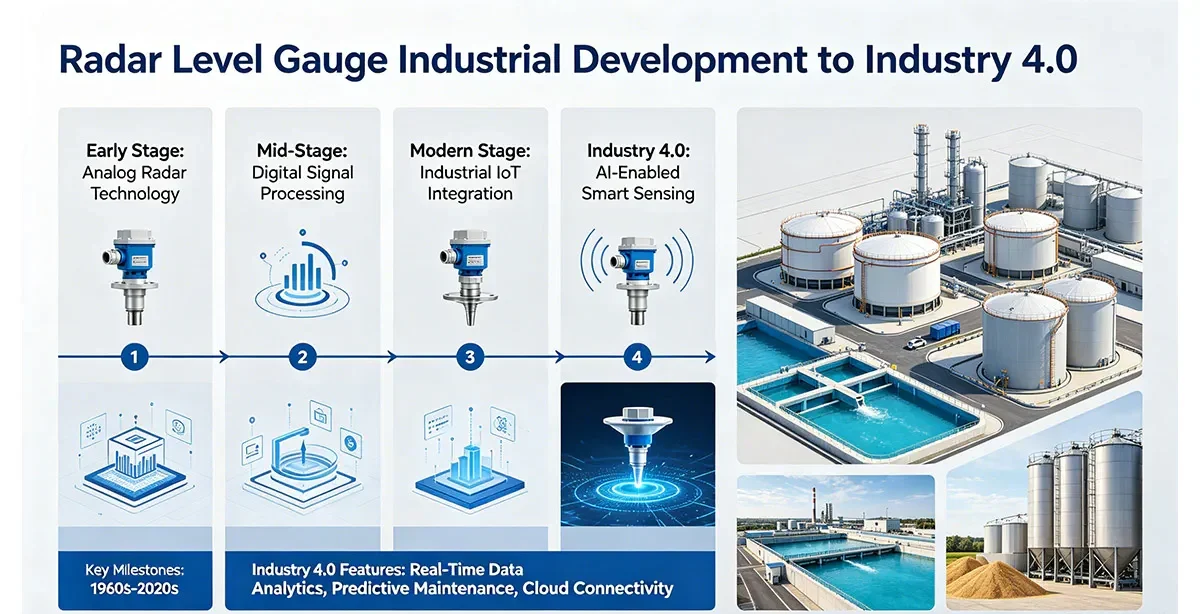
As radar technology has evolved from early low-frequency microwave systems to today’s high-frequency 80 GHz and 120 GHz radar architectures, industrial level sensing has entered a new stage of intelligent high-resolution measurement.
1. History and Development of Radar Technology
Radar technology originated from electromagnetic wave research in the late 19th century. During World War II, radar systems were rapidly developed for military detection and navigation applications. Microwave transmission, antenna design, and radio signal processing technologies advanced significantly during this period.
After the war, engineers gradually recognized that radar microwave reflection principles could also be used for industrial distance and level measurement.
Early industrial radar systems introduced in the 1960s and 1970s mainly used relatively low microwave frequencies and large horn antennas. Although these systems provided stable long-distance measurement, they had limited resolution and poor obstacle suppression capability.
The development of semiconductor electronics and microwave integrated circuits in the 1980s and 1990s enabled industrial radar sensors to become more compact and commercially practical. Companies such as سيمنز, فيجا, إيمرسون, و إندريس+هاوزر played major roles in advancing intelligent radar level sensing technologies.
The industry later evolved from traditional 6 GHz and 26 GHz radar technologies toward modern 80 GHz and emerging 120 GHz high-frequency radar systems. This transition fundamentally improved:
- قدرة تركيز الحزمة الضوئية
- دقة الإشارة
- تجنب العوائق
- قياس الخزان الصغير
- تقليل المناطق العمياء
- الكشف عن الصدى الضعيف
At the same time, higher-frequency radar technologies introduced new engineering challenges related to condensation, antenna contamination, and microwave attenuation.
2. Core Technical Principle of Radar Technology
Radar level sensing technology operates based on microwave electromagnetic wave reflection.
The radar sensor emits high-frequency microwave signals toward the material surface. When the microwave signal reaches the medium surface, part of the signal energy is reflected back to the antenna. The system analyzes the reflected signal characteristics to calculate the distance between the antenna and the target surface.
The basic radar ranging principle is:
d=ct/2
أين:
- d = distance
- c = سرعة الضوء
- t = microwave signal travel time
The measured distance is then converted into level information according to tank geometry or reference calibration.
Modern radar level sensors mainly utilize:
- Pulse radar technology
- FMCW radar technology
- High-frequency microwave transmission
- Digital signal processing (DSP)
- Intelligent echo analysis algorithms
Among these technologies, microwave frequency has become one of the most important factors determining overall radar performance.
3. Frequency Evolution of Radar Technology
The evolution of radar frequency technology directly changed the performance characteristics of radar level sensors.
Different frequencies produce different microwave beam angles, penetration capabilities, signal focusing performance, and environmental sensitivities.
4. 26 GHz Radar Technology
26 GHz radar technology was widely used for many years in industrial level measurement and remains important in difficult process conditions.
زاوية الشعاع النموذجية:
- حوالي 8°–10°
ونظرًا لأن زاوية الحزمة واسعة نسبيًا، فإن الرادار الذي يعمل على تردد 26 جيجاهرتز يوفر قدرة اختراق أقوى للموجات الدقيقة.
تُظهر هذه التقنية أداءً جيدًا في البيئات التي تتضمن:
- بخار كثيف
- التكثف
- رغوة
- Process buildup
- Sticky media
The lower microwave frequency makes the radar less sensitive to antenna surface contamination such as:
- قطرات الماء
- Condensation crystals
- Material coating
- Antenna fouling
وذلك لأن الموجات الدقيقة ذات الترددات المنخفضة أقل عرضة للامتصاص أو التشتت بفعل الطبقات السطحية الرقيقة.
Technical Advantages of 26 GHz Radar
قدرة اختراق قوية
يمكن للرادار الذي يعمل على تردد 26 جيجاهرتز أن يخترق بشكل أفضل:
- البخار
- التكثف
- طبقات الرغوة
making it suitable for difficult process vessels.
تحمل أكبر لتلوث الهوائي
تظل إشارة الرادار مستقرة نسبيًا حتى في الحالات التالية:
- يتكثف الماء على الهوائي
- تتراكم المواد اللاصقة
- Process crystallization occurs
وهذا يعزز الاستقرار التشغيلي على المدى الطويل.
Technical Limitations of 26 GHz Radar
The relatively large beam angle also introduces limitations.
نظرًا لأن حزمة الموجات الدقيقة تنتشر على نطاق أوسع، فإن الرادار يتأثر بسهولة أكبر بما يلي:
- جدران الخزان
- Internal ladders
- المحرضون
- الأنابيب
- الدعامات الهيكلية
This can produce false echoes and unstable readings in narrow or complex vessels.
بالإضافة إلى ذلك:
- Blind zones are generally larger
- Small tank measurement is more difficult
- Obstacle suppression capability is weaker
5. 80 GHz and 120 GHz Radar Technology
Modern radar technology has evolved toward much higher microwave frequencies, especially 80 GHz and the latest 120 GHz radar systems.
زاوية الشعاع النموذجية:
- حوالي 1°–4°
تسمح الموجات الدقيقة ذات الترددات العالية بتركيز الحزمة بشكل ضيق للغاية.
هذا يتحسن بشكل كبير:
- Target accuracy
- Echo resolution
- تجنب العوائق
- Small target detection
The narrow microwave beam enables radar sensors to “look” directly at the target surface while avoiding surrounding structures.
Technical Advantages of 80 GHz / 120 GHz Radar
زوايا شعاع ضيقة للغاية
يمكن للرادار عالي التردد تجنب ما يلي بسهولة:
- المحرضون
- الأنابيب الداخلية
- Tank supports
- Vessel obstacles
This greatly improves measurement reliability in complex tanks.
مناطق عمياء صغيرة جدًا
يتيح الرادار ذو التردد العالي تقليص حجم المناطق الميتة بالقرب من الهوائي.
وهذا يسمح بذلك:
- حجم خزان أكبر قابل للاستخدام
- تحسينات في تطبيقات الخزانات الصغيرة
- Better top-mounted installation flexibility
قدرة قوية على مقاومة التداخل
The focused microwave beam reduces unwanted reflections from surrounding structures.
هذا يتحسن:
- Signal clarity
- Echo discrimination
- الكشف عن الانعكاس الضعيف
- قدرة قياس الغبار
يُظهر الرادار عالي التردد أداءً ممتازًا بشكل خاص في تطبيقات المواد البودرية والصلبة السائبة.
6. Technical Challenges of High-Frequency Radar
Although 80 GHz and 120 GHz radar technologies provide major performance advantages, they also introduce new engineering challenges.
High-frequency microwaves are significantly more sensitive to antenna surface conditions.
Sensitivity to Condensation and Water Films
يمكن بسهولة:
- ممتص
- متفرقة
- مُخفَّف
بواسطة طبقات سطحية رقيقة مثل:
- قطرات الماء
- أغشية التكثيف
- بقايا متبلورة
- تراكم المواد اللزجة
This occurs because higher-frequency microwaves interact more strongly with small surface irregularities and moisture layers.
As a result, antenna contamination becomes much more critical in high-frequency radar systems.
Increased Antenna Surface Requirements
Modern 80 GHz and 120 GHz radar systems require:
- Cleaner antenna surfaces
- Better condensation control
- Improved antenna materials
- Optimized sealing structures
to maintain long-term measurement stability.
7. How Radar Frequency Technology Enables Instrument Functions
Radar frequency technology directly determines the capabilities of radar level sensors.
Lower Frequency Radar Enables Stronger Environmental Tolerance
26 GHz radar technology enables:
- Better steam penetration
- Stronger condensation resistance
- Improved foam tolerance
- Better dirty process adaptability
This makes it suitable for harsh process industries.
High-Frequency Radar Enables Precision Measurement
80 GHz and 120 GHz radar technologies enable:
- Ultra-narrow beam focusing
- Small blind zones
- High-resolution echo analysis
- Complex tank obstacle avoidance
This significantly improves intelligent measurement capability.
DSP and Intelligent Algorithms Enable Stable Signal Processing
Modern radar systems combine microwave technology with:
- Digital signal processing
- قمع الصدى الزائف
- Dynamic gain adjustment
- Intelligent filtering
- تحسين الإشارات التكيفي
These technologies greatly improve operational stability under complex industrial conditions.
8. Industry 4.0 Evolution of Radar Technology
In the Industry 4.0 era, radar technology itself has undergone major technological evolution.
لم تعد عملية التحديث تقتصر على قدرات الاتصال فحسب، بل تشمل بنية الاستشعار الراداري بأكملها.
Evolution Toward Intelligent Microwave Processing
Modern radar systems now integrate:
- High-speed DSP chips
- FPGA processing architectures
- Real-time echo computation
- تحليل الإشارات بمساعدة الذكاء الاصطناعي
This allows radar sensors to dynamically optimize measurement quality.
AI-Based Echo Recognition Technology
Modern radar technologies increasingly use intelligent algorithms capable of:
- Identifying false echoes
- Learning tank reflection characteristics
- Automatically suppressing interference
- Improving unstable surface measurement
AI-assisted radar analysis is becoming especially important for:
- الأسطح الرغوية
- السوائل المضطربة
- المواد المسحوقة
- المواد الصلبة السائبة غير المنتظمة
التكامل بين السحابة وإنترنت الأشياء الصناعية
Modern radar technologies now support:
- التشخيص عن بُعد
- مراقبة السحابة
- حوسبة الحافة
- أنظمة التوأم الرقمي
- الصيانة التنبؤية
تتطور مستشعرات الرادار من أجهزة قائمة بذاتها لتصبح عقد بيانات صناعية ذكية.
9. Future Development Trends of Radar Technology
Future radar technologies will continue evolving toward:
- أنظمة الموجات الدقيقة ذات الترددات العالية
- AI-driven signal optimization
- Autonomous diagnostics
- Self-calibration technologies
- ذكاء الحافة
- Wireless radar sensing
- تكامل التوأم الرقمي
قد تتمكن أنظمة الرادار المستقبلية من التكيف ديناميكيًا:
- طاقة الميكروويف
- كسب الإشارة
- تصفية الصدى
- Frequency response
according to changing process conditions.
AI-assisted radar technologies may eventually allow sensors to autonomously learn tank environments and continuously optimize measurement performance without manual configuration.
الخاتمة
The evolution of radar level sensors is fundamentally driven by the evolution of radar microwave technology itself.
Different radar frequencies directly determine:
- Beam angle
- Penetration capability
- Blind zone size
- إزالة العوائق
- القدرة على التكيف مع البيئة
- استقرار الإشارة
26 GHz radar technology remains valuable for harsh process environments involving vapor, condensation, and antenna contamination, while 80 GHz and emerging 120 GHz radar technologies provide superior focusing capability, smaller blind zones, and stronger anti-interference performance.
As Industry 4.0 technologies continue advancing, radar sensing technology is rapidly evolving toward intelligent, AI-assisted, high-frequency sensing architectures capable of delivering highly stable and autonomous industrial level measurement.
What is radar technology in radar level sensors?
Radar level sensors use microwave electromagnetic waves to measure the distance between the sensor antenna and the material surface. The sensor transmits high-frequency radar signals and analyzes the reflected echoes to calculate level information without direct contact with the medium.
What is the difference between 26GHz and 80GHz radar technology?
26GHz radar technology provides stronger penetration through vapor, condensation, and foam, making it suitable for harsh process conditions. However, its wider beam angle makes it more sensitive to internal tank obstacles.
80GHz radar technology offers much narrower beam angles, smaller blind zones, and stronger anti-interference capability, allowing more accurate measurement in narrow tanks and complex vessel structures.
Why are 120GHz radar level sensors becoming important?
120GHz radar technology provides even higher signal resolution and narrower beam focusing than 80GHz systems. This enables highly precise level measurement in small tanks, difficult geometries, and applications requiring extremely accurate echo discrimination.
However, higher-frequency radar systems are also more sensitive to condensation, water films, and antenna contamination.
Why do high-frequency radar sensors have smaller beam angles?
Higher microwave frequencies produce shorter wavelengths, allowing radar antennas to focus microwave energy more tightly. This creates narrower beam angles, which improve obstacle avoidance, reduce false echoes, and enhance measurement accuracy in complex industrial tanks.
What industrial problems can radar technology solve?
Radar technology helps solve many industrial measurement challenges, including:
Vapor interference
الأسطح المغطاة بالرغوة
Dusty environments
العمليات ذات درجات الحرارة العالية
أوعية الضغط العالي
Tank overflow prevention
Pump dry-running protection
Complex silo measurement
Its non-contact measurement capability also reduces maintenance and improves long-term operational reliability.
How is radar technology evolving in the Industry 4.0 era?
Modern radar technologies are evolving from simple measurement systems into intelligent sensing platforms. Industry 4.0 radar systems now integrate:
AI-assisted echo analysis
Digital signal processing (DSP)
الاتصال السحابي
Predictive diagnostics
حوسبة الحافة
المراقبة عن بُعد
تكامل التوأم الرقمي
Future radar technologies are expected to become increasingly autonomous, self-optimizing, and capable of intelligent real-time process adaptation.
لماذا تثق في Instrava؟
نختار الشركات المصنعة من منطلق محايد ونزيه، مع مراعاة مصلحتك دائمًا.
يعتمد وجودنا ذاته على مساعدتكم في العثور على المنتجات التي تناسب احتياجاتكم تمامًا.
ونظرًا لوجود مقرنا في الصين، فإننا قادرون على إجراء عمليات تفتيش ميدانية لبيئات الإنتاج وجودة المنتجات بشكل مباشر.
نحن نساعدك على تجنب الوسطاء الذين يتظاهرون بأنهم مصانع.
نحن نسهل تقديم دعم ما بعد البيع بشكل أكثر سلاسة، مما يزيل مشاكل الفارق الزمني والتأخيرات التي غالبًا ما ترتبط بالتعامل المباشر مع المصانع.
يضمن فريقنا متعدد اللغات التواصل الفعال.
بالنسبة لشركة ناشئة في مجال التداول، يمثل كل تفاعل مع العميل فرصة ثمينة — فهو دليل على استعدادك لوضع ثقتك فينا ومنحنا الفرصة لإثبات جدارتنا.
في العصر الرقمي، ورغم سهولة الوصول إلى المعلومات، غالبًا ما تؤدي المفاهيم الخاطئة إلى إضعاف الثقة بين الناس.
تعتمد «إنسترافا» كليًّا على الثقة؛ فهي فلسفتنا الأساسية وأساس وجودنا في المجتمع. وهي الركيزة الأساسية لنمونا على المدى الطويل والتزامنا بخدمة المجتمع.
نرجو أن تضعوا ثقتكم فينا.