







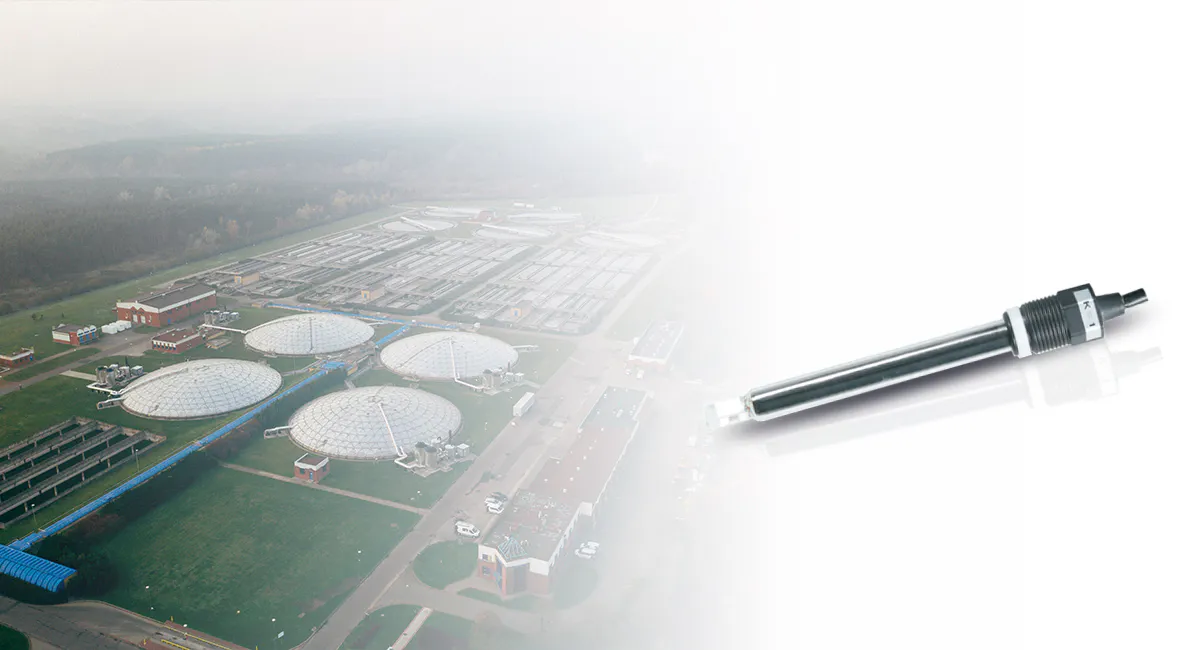
Conductivity and TDS Sensors in Industrial Liquid Monitoring
From Indicator Value to Process Intelligence
Conductivity and Total Dissolved Solids (TDS) are among the most frequently measured parameters in industrial liquid systems.
However, in modern process environments, these measurements are no longer treated as simple indicators of water quality.
Instead, conductivity and TDS sensors are increasingly used as process intelligence tools—providing continuous insight into chemical concentration, system balance, and operational efficiency across a wide range of industries.
This article explores conductivity and TDS measurement from a process control and decision-making perspective, rather than a basic introduction to sensor principles.
Why Conductivity and TDS Measurement Has Become Process-Critical
In industrial systems, dissolved solids directly influence:
Scaling and corrosion risk
Chemical dosing efficiency
Product quality consistency
Equipment lifespan and maintenance cycles
As processes become more automated and resource efficiency becomes a priority, conductivity and TDS sensors enable operators to detect changes early, rather than react after problems appear.
Conductivity vs. TDS: Operational Implications in Real Systems
From a control standpoint, conductivity and TDS represent the same system behavior in different forms.
Conductivity provides:
Direct, real-time electrical response
High sensitivity to ionic concentration changes
Strong suitability for control loops
TDS provides:
A mass-based representation of dissolved solids
Easier interpretation for operators and reporting
Indirect calculation based on conductivity
Understanding how these two values are used operationally is more important than how they are calculated.
When Conductivity Becomes a Control Signal
In industrial automation, conductivity is often linked directly to control actions such as:
Blowdown control in boilers and cooling towers
Chemical concentration adjustment
Water reuse quality thresholds
Once conductivity data drives control decisions, measurement stability and repeatability become more important than isolated accuracy.
📊 Chart 1: Typical Conductivity and TDS Control Ranges by Application
Judgment Statement:
Different industrial applications require fundamentally different conductivity and TDS control ranges and response characteristics.
Chart Data (for visualization):
| Application Area | Conductivity Range (µS/cm) | Approx. TDS Range (mg/L) | Control Focus |
|---|---|---|---|
| Boiler feedwater | 0.1 – 30 | < 20 | Scaling prevention |
| Cooling tower blowdown | 500 – 5000 | 300 – 3000 | Cycle of concentration control |
| Industrial process water | 50 – 2000 | 30 – 1200 | Process consistency |
| Wastewater reuse | 500 – 8000 | 300 – 5000 | Salt load management |
| Desalination (RO permeate) | 5 – 100 | 3 – 60 | Membrane performance monitoring |
Explanation:
This comparison demonstrates why sensor selection must be application-specific. Industrial systems emphasize trend reliability and response behavior rather than a single universal measurement range.
Signal Stability in Harsh Process Conditions
Conductivity and TDS sensors are often exposed to:
High temperature
Chemical cleaning cycles
Rapid concentration shifts
Fouling and scaling environments
If sensor output drifts or becomes noisy, automated systems may respond incorrectly—leading to excessive blowdown, chemical waste, or unstable product quality.
Industrial-grade sensors are therefore designed to maintain stable electrical contact and temperature compensation over long operating periods.
📊 Chart 2: Common Sources of Conductivity Measurement Deviation
Judgment Statement:
Most conductivity and TDS measurement deviations are caused by process conditions rather than sensor electronics.
Chart Data:
| Deviation Source | Typical Signal Effect | Operational Consequence |
|---|---|---|
| Electrode fouling | Gradual reading increase | Overestimated TDS |
| Temperature fluctuation | Baseline shift | Incorrect control actions |
| Air entrainment | Signal noise | Control loop instability |
| Scaling on electrodes | Reduced sensitivity | Delayed response to concentration |
| Incorrect cell constant | Systematic measurement error | Long-term process inefficiency |
Explanation:
By recognizing these influences, engineers can focus on long-term trend behavior rather than reacting to short-term fluctuations.
Online Conductivity Sensors vs. Periodic Sampling
Laboratory analysis remains useful for validation, but it cannot replace online conductivity and TDS sensors in dynamic systems.
Online measurement provides:
Continuous trend visibility
Immediate response to process changes
Integration with PLC and DCS systems
In process control, continuity of data is often more valuable than sporadic precision.
Integration with Multi-Parameter Liquid Analysis Systems
Conductivity and TDS sensors are increasingly deployed as part of integrated liquid analyzer platforms, alongside:
pH and ORP sensors
Turbidity sensors
Residual chlorine sensors
This multi-parameter approach enables:
Cross-correlation of water quality changes
Smarter alarm logic
Reduced false alarms caused by single-parameter drift
Selecting Conductivity and TDS Sensors for Industrial Use
Industrial users should evaluate sensors based on:
Long-term signal stability
Temperature compensation accuracy
Resistance to fouling and scaling
Maintenance frequency
Compatibility with industrial transmitters and networks
The goal is not simply measurement—but predictable, controllable process behavior.
Final Perspective
Conductivity and TDS sensors are no longer passive monitoring tools.
They are core instruments in industrial liquid management, enabling early detection, efficient control, and long-term system stability.
In modern industrial environments, reliable conductivity measurement is not about numbers—it is about confidence in every control decision.