
Power Monitoring & Control
Home » Power Monitoring Control
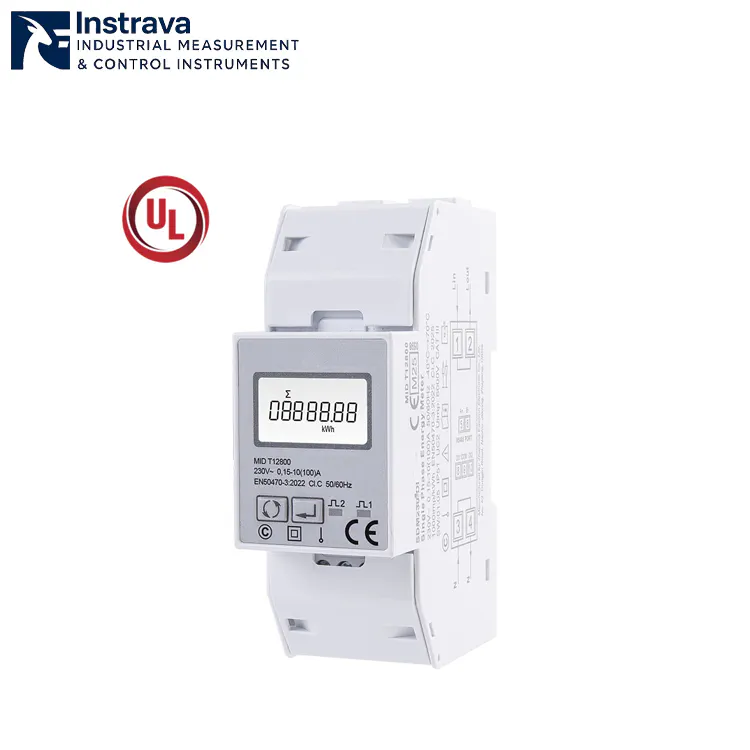
1P2W,100A | Multi-function Meter
Digital Input & Modbus RTU
- Data Center, AI Infrastructure, Power Distribution, Energy Monitoring
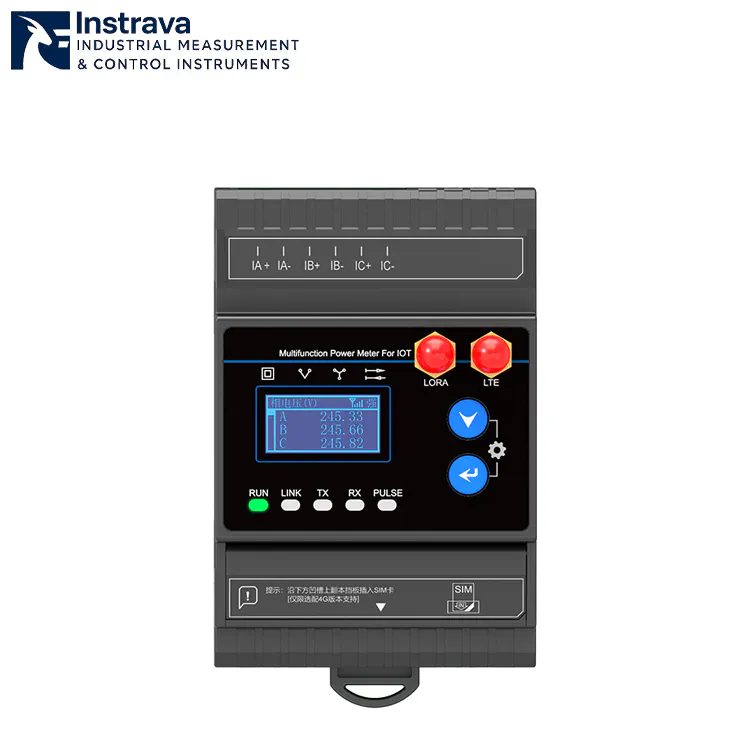
Connection Mode : 3 Phase 4 Wire 3 Phase 3 Wire
Communication : Standard 1 RS485, 4G/LoRa/LAN optional
Support Modbus RTU, Modbus TCP, HTTP, MQTT, IEC104,DL/T645-2007 etc (DLMS, Bacnet is available for customized model)
- Data Center, AI Infrastructure, Power Distribution, Industrial Power System, Energy Monitoring
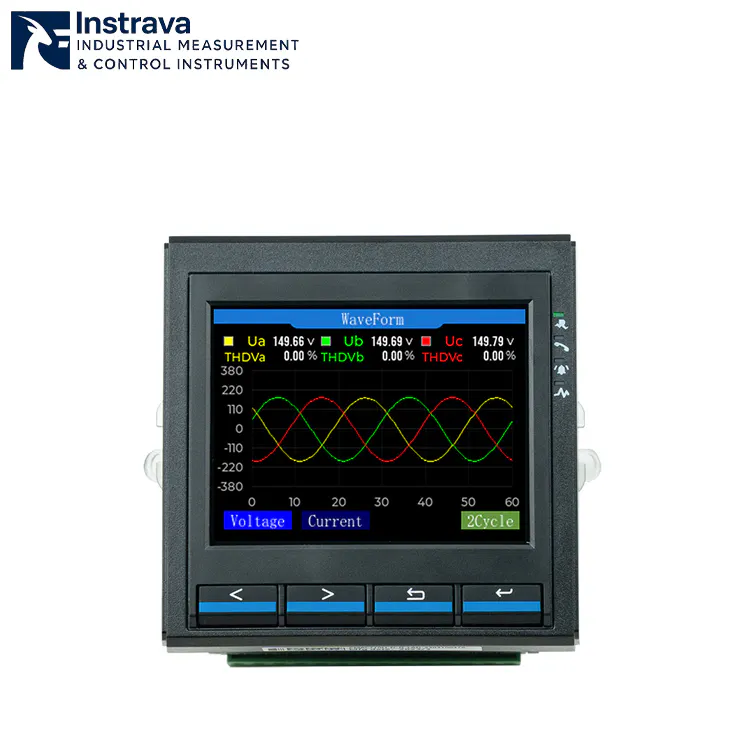
Accuracy : Class 0.2S / 0.5S
Communication : Modbus RTU, Modbus TCP
- Data Center, AI Infrastructure, Power Distribution, Power Quality Monitoring, Energy Monitoring
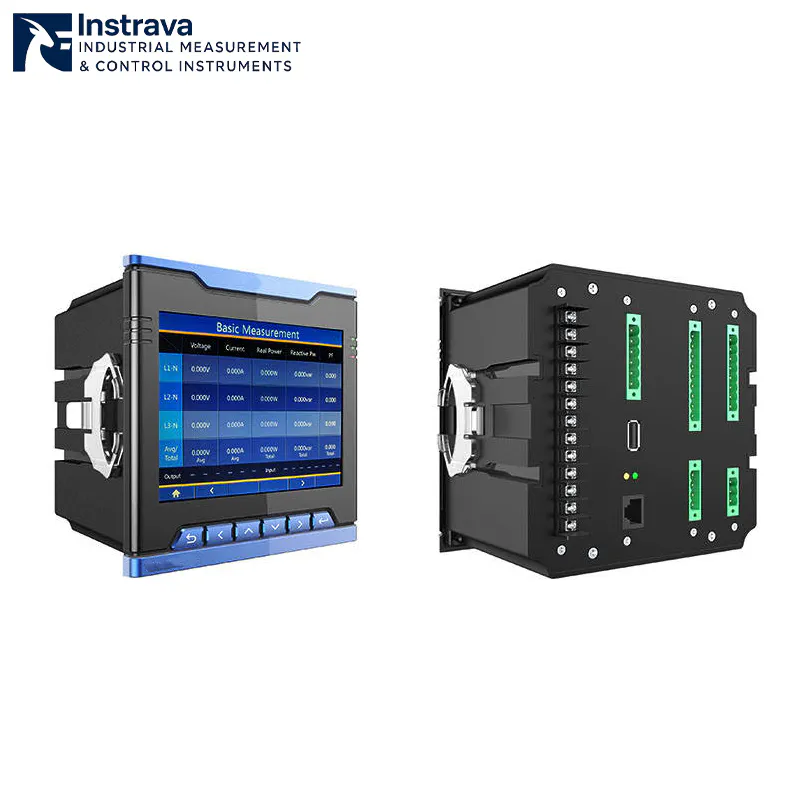
Accuracy : Voltage/Current: ±0.1%; Power: ±0.2%; Frequency: ±0.005Hz
Communication: RS485 (Modbus RTU), Ethernet (Modbus TCP / IEC61850 optional)
- Data Center, AI Infrastructure, Power Distribution, Power Quality Monitoring, Real-time Monitoring
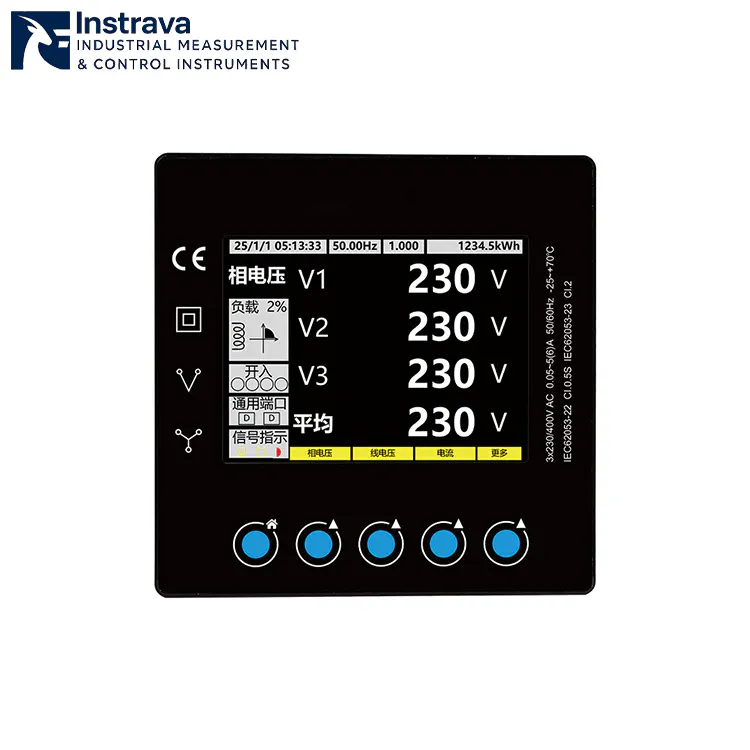
Accuracy: Voltage/Current: ±0.2%; Power: ±1%; Frequency: ±0.2%
Communication : RS485 (Modbus RTU), Ethernet (Modbus TCP)
- Data Center, AI Infrastructure, Power Distribution, Industrial Power System, Power Quality Monitoring, Energy Monitoring, Real-time Monitoring
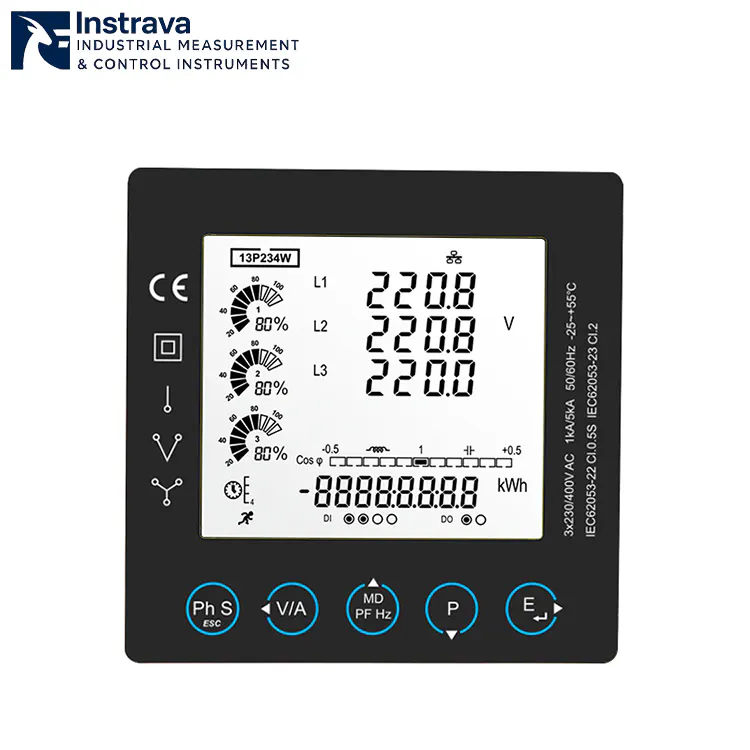
Accuracy : Power: ±1%, Voltage/Current: ±0.5%, Frequency: ±0.2%
Communication : RS485, Modbus RTU
- Data Center, AI Infrastructure, Power Distribution, Industrial Power System, Power Quality Monitoring, Energy Monitoring, Real-time Monitoring
Powering the Intelligence: Advanced Power Monitoring & Control for AI Data Centers
Executive Summary
In the era of Generative AI and Exascale computing, power is no longer just a utility—it is the ultimate constraint on scaling. As GPU-intensive workloads (NVIDIA H100/B200 clusters) push rack densities from 10kW to over 100kW, Power Monitoring & Control (PMC) has evolved from a basic measurement tool into the “Nervous System” of digital infrastructure. This guide explores the critical instruments ensuring the stability, efficiency, and resilience of the AI revolution.
1. Defining the “Nervous System”: What is PMC?
Power Monitoring & Control is an integrated ecosystem of high-precision hardware and AI-driven software designed to:
- Synchronous Monitoring: Real-time tracking of voltage, current, power factor, and harmonics.
- Predictive Diagnostics: Identifying power quality anomalies before they trigger system-wide failures.
- Closed-Loop Automation: Enabling intelligent load shedding and autonomous UPS transitions.
2. Core Infrastructure: The 6 Pillars of Power Intelligence
To manage the volatile power demands of AI clusters, data centers rely on six categories of specialized instrumentation:
| Device Category | Primary Function | The “AI Data Center” Context |
|---|---|---|
| 1. Power Quality Analyzer | Captures transients, sags, and THD (Total Harmonic Distortion). | GPU clusters create massive non-linear loads; analyzers prevent these from “polluting” the grid and crashing servers. |
| 2. Smart Energy Meter | Precision kWh measurement (Class 0.2S accuracy) + IoT connectivity. | Provides the granular data needed to calculate PUE (Power Usage Effectiveness) at the individual rack level. |
| 3. Current & Voltage Transmitter | Converts raw electrical signals into 4-20mA/RS485/Ethernet outputs. | The critical bridge between physical high-voltage busbars and sensitive digital control systems. |
| 4. Wireless Busbar Temp Sensor | 24/7 monitoring of distribution joints for overheating. | High-density AI racks draw extreme current; temperature monitoring is the first line of defense against electrical fires. |
| 5. Insulation Monitoring (IMD) | Detects leakage or ground faults in ungrounded (IT) systems. | Essential for high-reliability AI environments where “first fault” must not cause a shutdown. |
| 6. UPS & PDM Modules | Monitors battery health and distribution status. | Acts as the “Heart” that maintains blood flow (electricity) during grid instability or outages. |
3. System Architecture: From Physical Signals to AI Insight
A modern power system is structured in a three-tier hierarchy, mirroring the human anatomy:
- The Sensory Layer (Data Acquisition): Smart meters, IMDs, and temperature sensors “feel” the electrical environment.
- The Communication Layer (The Spine): Modbus, Ethernet/IP, and Cloud gateways transmit high-frequency data.
- The Intelligence Layer (The Brain): SCADA and AI-driven DCIM (Data Center Infrastructure Management) platforms analyze patterns and execute commands.
4. The Synergy: How AI Optimizes its Own Power
Ironically, AI is the best tool for managing AI power needs.
- Predictive Maintenance: Using Machine Learning (ML) to identify the “signature” of a failing transformer 30 days before it blows.
- Dynamic Load Balancing: AI predicts “GPU bursts” and pre-cools the facility or adjusts UPS reserves accordingly.
- Anomaly Detection: Instantly distinguishing between a normal power spike and a dangerous short circuit.
5. Strategic Importance: Why PMC is a Competitive Advantage
- Maximized Uptime: Eliminating the “Silent Killer” (Power Quality issues) that leads to server restarts.
- ESG & Sustainability: Accurate carbon tracking to meet regulatory and investor demands for “Green AI.”
- CapEx Optimization: By knowing exactly how much power is used, operators can avoid over-provisioning infrastructure, saving millions in hardware costs.
💡 SEO-Optimized FAQ
Q: Why is high-precision (Class 0.2S) metering necessary for AI? A: AI data centers operate on razor-thin margins. A 1% error in measurement can lead to thousands of dollars in billing discrepancies or missed PUE targets.
Q: Can power monitoring prevent “Thermal Runaway” in high-density racks? A: Yes. By integrating busbar temperature sensors with power draw data, the system can throttle AI workloads if a specific power node exceeds safe thermal limits.
Q: Is cloud integration secure for power monitoring? A: Modern systems use encrypted IoT gateways and localized edge computing to ensure that control remains secure even when data is sent to the cloud for analysis.
Conclusion
In the AI-driven economy, electricity is more than a cost—it is the fuel for innovation. Building a high-performance Data Center without an intelligent Power Monitoring & Control system is like driving a supercar without a dashboard. Organizations that prioritize power intelligence will achieve higher reliability, lower costs, and a sustainable path to the future of computation.
Power Monitoring & Control for AI & Data Centers-FAQ
What is power monitoring in a data center?
Power monitoring in a data center refers to the continuous measurement and analysis of electrical parameters such as voltage, current, power consumption, energy usage, and power quality. It provides real-time visibility into how electricity is distributed and consumed across critical systems like servers, UPS, and cooling infrastructure.
By using intelligent instrumentation, operators can ensure stable operation, optimize energy efficiency, and prevent electrical failures.
Why is power monitoring critical for AI workloads?
AI workloads require high-density computing power, which leads to extreme energy consumption and sensitivity to power fluctuations. Even minor voltage instability or harmonic distortion can impact GPU performance or cause system interruptions.
Power monitoring ensures stable energy delivery, supports load balancing, and enables predictive maintenance—making it essential for reliable AI infrastructure.
What is PUE and how can it be improved?
PUE (Power Usage Effectiveness) is a key metric that measures data center energy efficiency, calculated as:
PUE = Total Facility Energy / IT Equipment Energy
Improvement strategies include:
- Optimizing cooling systems (especially liquid cooling)
- Deploying real-time energy monitoring
- Reducing power losses in distribution systems
- Using high-efficiency UPS and power equipment
Lower PUE means better energy efficiency and reduced operational cost.
What causes poor power quality in industrial and data center environments?
Poor power quality is typically caused by:
- Non-linear loads (e.g., servers, variable frequency drives)
- Harmonics and electrical noise
- Voltage sags, swells, or transients
- Improper grounding or wiring
- Overloaded circuits
These issues can lead to overheating, equipment malfunction, and reduced lifespan of electrical systems.
What is a power quality analyzer used for?
A power quality analyzer is used to measure and analyze electrical disturbances such as harmonics, voltage fluctuations, frequency variations, and transient events.
In data centers, it helps identify hidden power issues, ensure compliance with standards, and support long-term system optimization through continuous monitoring.
What is the difference between a smart meter and a power meter?
A power meter typically measures basic electrical parameters such as voltage, current, and power.
A smart energy meter goes further by enabling:
- Real-time data communication
- Remote monitoring and control
- Energy analytics and reporting
Smart meters are more suitable for integrated energy management systems.
How does AI improve power monitoring systems?
AI enhances power monitoring by enabling:
- Predictive maintenance through anomaly detection
- Load forecasting and optimization
- Automated fault diagnosis
- Real-time energy optimization
This transforms traditional monitoring into intelligent, self-optimizing systems.
What is a busbar temperature monitoring system?
A busbar temperature monitoring system continuously measures the temperature of electrical busbars using sensors installed along the distribution lines.
It detects overheating caused by high current loads, poor connections, or insulation degradation.
Why is busbar temperature monitoring important in data centers?
Busbars carry large electrical loads in data centers. Overheating can lead to:
- Equipment failure
- Fire risks
- Unplanned downtime
Real-time monitoring ensures early detection of abnormal temperature rise, improving safety and reliability.
What is an insulation monitoring device (IMD)?
An insulation monitoring device continuously measures the insulation resistance of ungrounded (IT) electrical systems.
It detects leakage currents and insulation faults before they become critical failures.
Where are insulation monitoring devices used?
IMDs are commonly used in:
- Data centers
- Hospitals and critical care facilities
- Industrial automation systems
- Renewable energy systems
They are essential where uninterrupted operation and safety are critical.
What is UPS monitoring in a data center?
UPS monitoring involves tracking the performance and health of uninterruptible power supply systems, including battery status, load levels, input/output conditions, and alarms.
It ensures backup power systems are always ready to operate.
How does UPS monitoring improve reliability?
UPS monitoring enables:
- Early detection of battery degradation
- Prevention of unexpected power failures
- Real-time alerts and diagnostics
- Scheduled maintenance planning
This significantly reduces the risk of downtime during power interruptions.
What is the role of current and voltage transmitters?
Current and voltage transmitters convert electrical signals into standardized outputs for monitoring and control systems.
They provide accurate, real-time data for energy management, automation systems, and safety protection.
How do power monitoring systems reduce downtime?
Power monitoring systems reduce downtime by:
- Detecting anomalies before failures occur
- Enabling predictive maintenance
- Providing real-time alerts
- Supporting faster fault diagnosis
This proactive approach minimizes unexpected outages and improves system reliability.
What is DCIM and how does it relate to power monitoring?
DCIM (Data Center Infrastructure Management) is a platform that integrates monitoring and management of all data center resources, including power, cooling, and IT systems.
Power monitoring is a core component of DCIM, providing the data needed for visualization, optimization, and decision-making.
How does power monitoring support ESG and sustainability goals?
Power monitoring helps organizations:
- Track and reduce energy consumption
- Improve energy efficiency (lower PUE)
- Reduce carbon emissions
- Enable data-driven sustainability reporting
It is a key enabler for ESG compliance and green data center initiatives.
What are the key components of a power monitoring system?
A complete system typically includes:
- Power quality analyzers
- Energy meters
- Current and voltage transmitters
- UPS monitoring systems
- Busbar temperature sensors
- Insulation monitoring devices
- Communication gateways and software platforms
Can power monitoring systems be integrated with cloud platforms?
Yes, modern power monitoring systems support integration with cloud platforms via IoT gateways and communication protocols such as Modbus, BACnet, and MQTT.
This enables remote monitoring, data analytics, and centralized management across multiple sites.
What is the future of power monitoring in AI-driven infrastructure?
The future of power monitoring is intelligent, connected, and predictive. Key trends include:
- AI-driven analytics and automation
- Integration with digital twins
- Real-time optimization of energy usage
- Edge and cloud-based monitoring systems
As AI infrastructure continues to scale, power monitoring will evolve from a passive system into an active decision-making layer for efficiency and reliability.
Why Choose Instrava
Built on Consistency, Not Claims
Focused on Industrial Applications
We specialize in industrial analysis and detection, with a clear understanding of real-world operating environments and requirements.
Strict Product Selection Criteria
Every instrument is evaluated based on performance, stability, and application suitability—not just specifications or pricing.
Reliable Supply & Quality Consistency
We work with trusted manufacturers to ensure stable supply, consistent quality, and dependable delivery.
Practical, Experience-Based Support
Our recommendations are grounded in application understanding, helping customers avoid common issues and achieve reliable results.
Instrava is built to reduce uncertainty—so every decision you make is clearer, safer, and more reliable.