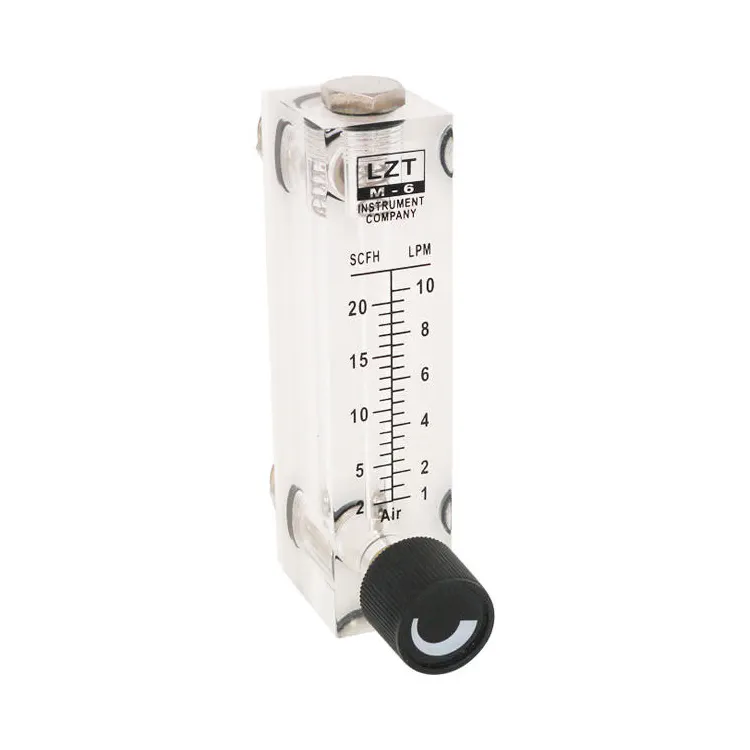
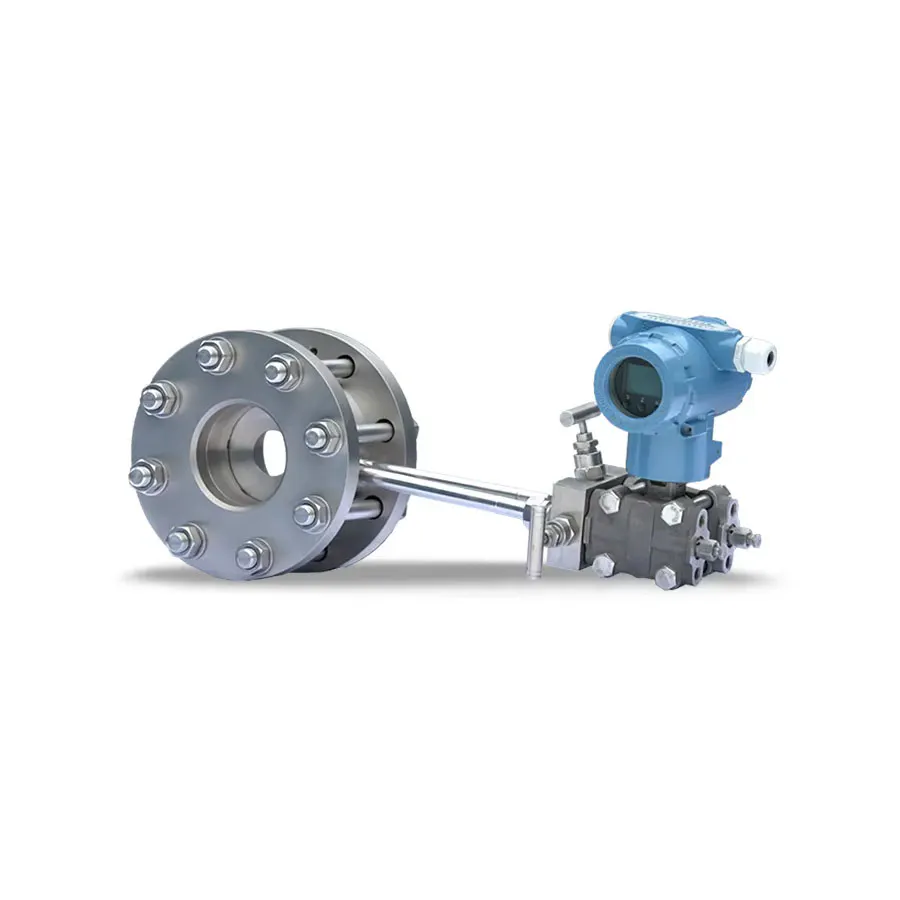
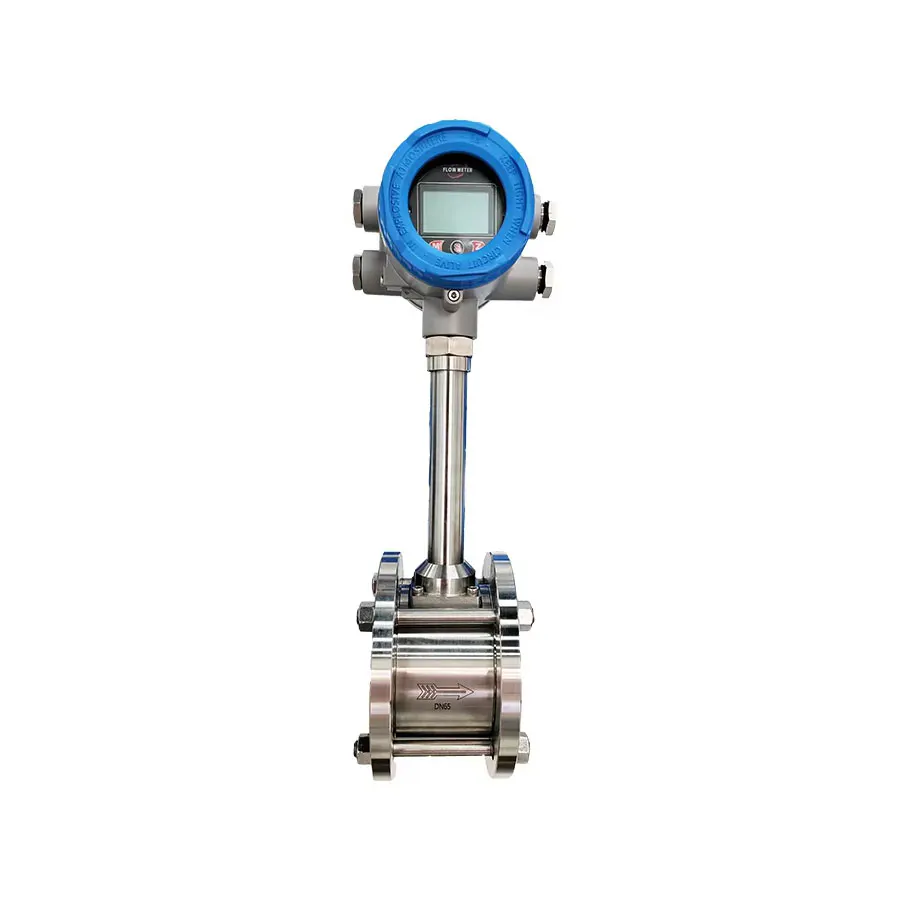
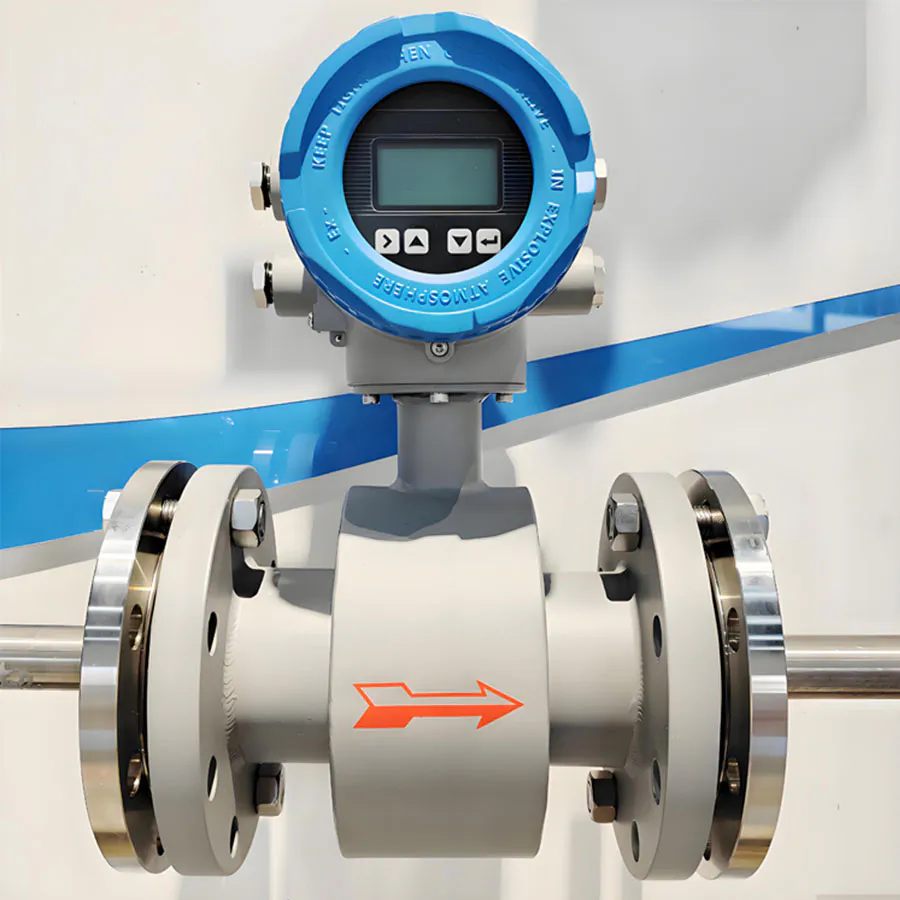
Metal Tube Float Flowmeter

The Metal Tube Float Flowmeter is a variable area flow measurement instrument composed of a measuring tube, float, indicator, and process connections.
With its compact structure, wide measuring range, and easy installation, it has been widely applied in industrial process control systems for the measurement of liquids, gases, and steam, especially in low flow velocity and small flow rate applications.

The metal tube float flowmeter is available in local indication type and intelligent remote transmission type.

  • Local type provides pointer indication for instantaneous flow measurement.

  • Intelligent type features pointer indication combined with an LCD display, showing instantaneous flow and totalized flow, and supports high and low limit alarm outputs, pulse output, standard two-wire 4–20 mA current output, and HART communication protocol.

คำอธิบายเครื่องวัดอัตราการไหล  

Metal Tube Flow Meter-Features

  • Simple and Robust Design – The metal tube rotameter features a compact structure with excellent stability and long-term reliability, ensuring consistent performance in demanding industrial environments.

  • Independent of Medium Properties – Accurate flow measurement is maintained regardless of the medium’s conductivity, dielectric constant, or other physical and chemical properties.

  • Versatile Application – Suitable for a wide range of media, including corrosive, toxic, and explosive substances, making it ideal for diverse industrial processes.

  • Multi-Media Measurement – Capable of measuring interfaces or levels of two different media with varying densities, providing flexible process monitoring.

  • Advanced Signal and Display Options – Supports two-wire 4–20 mA output and digital LED display (0.56” or 0.8”), enabling local reading and easy integration with automated control systems.

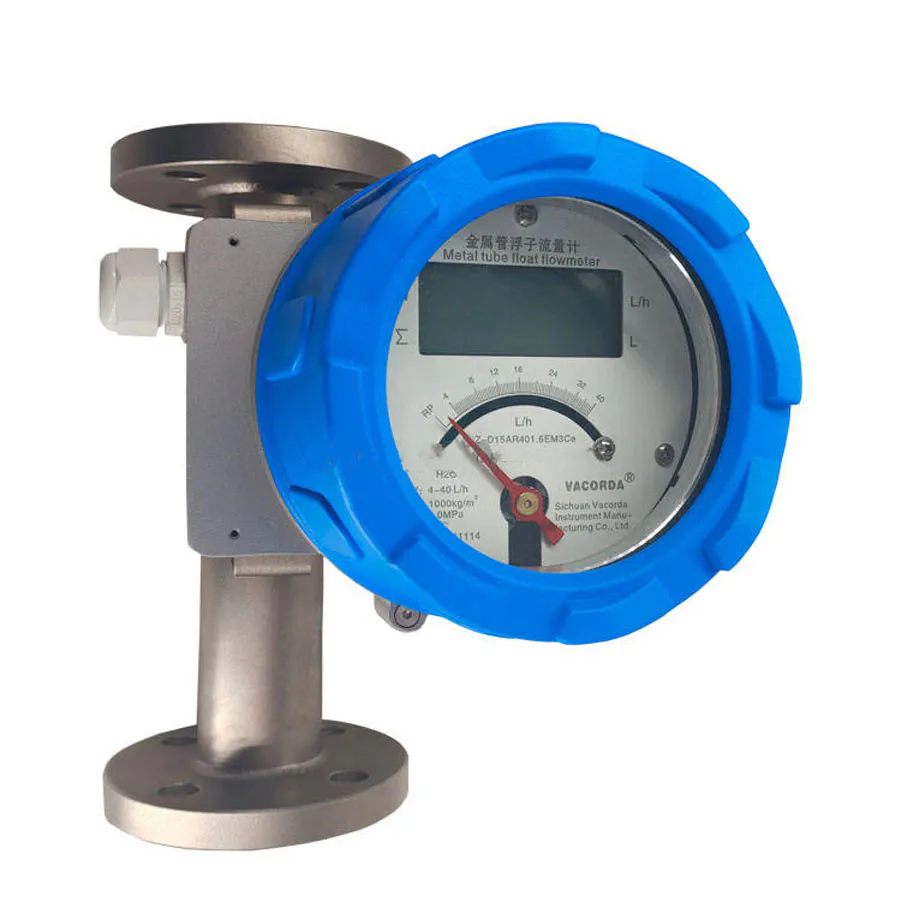
This image shows a metal tube variable area flow meter, with detailed display featuring a blue outer casing and indicators, designed for precise flow measurement.
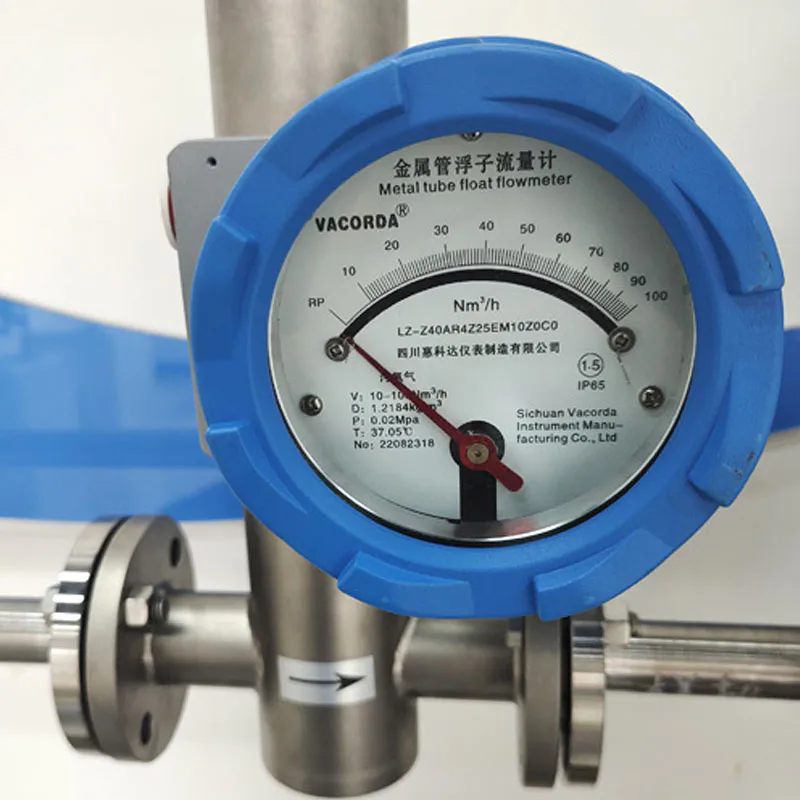
This image shows multiple flow meters installed in a piping system, featuring blue outer casings and digital displays, providing accurate readings of liquid flow (e.g., water).

Metal Tube Flowmeter-Applications

ด้วย excellent performance, high reliability, and cost-effective solution, the metal tube float flowmeter is widely used in:

  • Petroleum and chemical industries

  • Steel and metallurgical processes

  • Power generation and energy systems

  • Light industry and food processing

  • การผลิตยา

  • การบำบัดน้ำและน้ำเสีย

By selecting different wetted materials, the flowmeter is suitable for non-corrosive, corrosive, and highly corrosive media, meeting the demands of various industrial applications.

Rotary Flow Meter-Working Principle

The metal tube float flowmeter measures flow based on the variable area principle. The float rises or falls inside the tapered tube until the upward hydrodynamic force balances the weight minus buoyancy:

Ff = Cd × 0.5 × ρ × v2 × A
Fg = (ρf – ρ) × V × g

At equilibrium, the flow rate Q is proportional to the float’s position:

Q = K × Aeffective × √[ 2 × (ρf – ρ) × V × g / ρ ]

Key Points:

  • Works for liquids, gases, and steam
  • Suitable for low flow rates and small ranges
  • Stable and accurate under industrial conditions
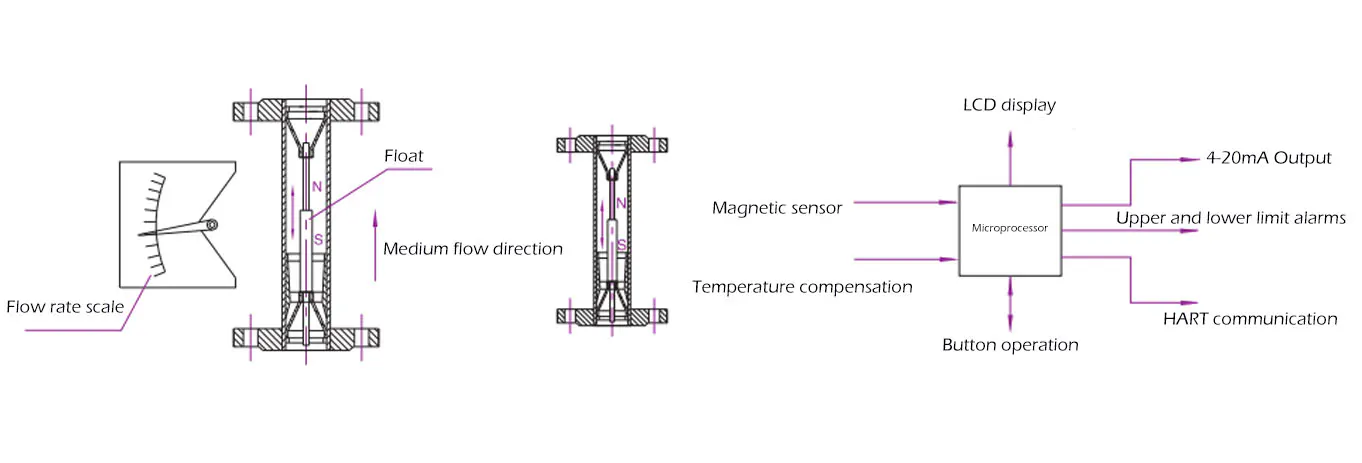
This image shows a schematic diagram of a flowmeter, illustrating key components such as the float, flow rate scale, magnetic sensor, temperature compensation, LCD display, HART communication, and button operation, suitable for liquid metal flow measurement.
Rotary flow meter showing external appearance and internal structure of float-based flow measurement.

Rotary Flowmeter-Flexible Installation Structures

According to different process connection requirements, the metal tube float flowmeter is available in multiple measuring tube configurations, including:

  • Bottom inlet – top outlet

  • Bottom inlet – side outlet

  • Side inlet – side outlet

  • Right inlet – left outlet

  • Left inlet – right outlet

  • Top inlet – bottom outlet

Users can select the appropriate structure to meet specific installation and process requirements.

พารามิเตอร์ของเครื่องวัดอัตราการไหล  

Measuring rangeWater:1-150000L/H(20℃)
Air: 0.7~3000m3/h (20℃, 0.1013MPa)
Measuring range proportionStandard: 10:1
Accuracy classStandard:1.5, 2.5; Special: 1.0
Pressure ratingStandard & sanitary one:DN15~DN50≤4.0MPa; DN80~DN200≤2.5MPa
Special one:DN15~DN25≤42MPa;DN50~DN100≤16MPa
Jacket one: 1.6MPa
Pressure loss7kPa~70kPa
Medium temperatureStandard:-70℃~+180℃; PTFE:-50℃~+100℃(Change frequently is not allowed)
Environment temperatureRemote type: -40℃~+85℃ (LCD display:  -35℃~+70℃)
Local needle indicator: -40℃~+100℃
Connection typeFlange; Sanitary tri-clamp
Jacket connectionDN15/PN1.6MPa or 1/2” ANSI 150LB RF or φ12mm tube
Flange StandardStandard: GB/T 9119-2010, HG20592, ASME/ANSI B 16.5, DIN2501, SH3406
Food type: SMS, DIN 11851, Tri-clamp
Wiring connectionM20×1.5; 1/2NPT female thread
แหล่งจ่ายไฟStandard: 24VDC two-line 4~20mA(12VDC~32VDC)
AC type:85~260VAC
Battery type:3.6V lithium battery(2-3 years lifetime)
Loading resistance featureTwo-line: max loading resistance 500Ω(24VDC)
Multi-line: max loading resistance 500Ω
Warning signal outputReed pipe warning switch output, upper limit and lower limit flow warning(contact capacity 250V 0.05A or 24VDC 0.2A)
LCD displayInstant flow display scope:0~99999
Total flow display scope: 0~99999999
Protection gradeIP65, IP67
Explosion-proof gradeExia II CT6Ga   Exd II BT6Gb
Installation Height:Standard height: 250mm for DN15-DN200; High pressure type: 300mm for size > DN80

อินสตราวา OEM/ODM

เครื่องมือที่เชื่อถือได้. โซลูชันที่เหมาะกับงานของคุณ.

Instrava มุ่งเน้นในการนำเสนอโซลูชันอุตสาหกรรมที่เชื่อถือได้ ผ่านผลิตภัณฑ์ที่คัดสรรมาอย่างพิถีพิถัน การปรับแต่งให้เหมาะสมกับการใช้งาน และการปรับแต่งที่ยืดหยุ่น เราเลือกเครื่องมือที่ผ่านการพิสูจน์แล้วจากผู้ผลิตที่เชื่อถือได้ เพื่อให้มั่นใจในคุณภาพที่สม่ำเสมอ ปรับโซลูชันให้เหมาะสมตามสภาพการทำงานจริงเพื่อแก้ไขปัญหาที่เกิดขึ้นจริง และให้การกำหนดค่าที่ปรับแต่งได้เพื่อตอบสนองความต้องการเฉพาะของการใช้งาน.

ด้วยการผสานความเชี่ยวชาญในการคัดเลือกเข้ากับความเข้าใจในการประยุกต์ใช้งาน Instrava ช่วยให้ลูกค้าลดความเสี่ยง เพิ่มประสิทธิภาพ และบรรลุผลลัพธ์ที่เชื่อถือได้ในสภาพแวดล้อมอุตสาหกรรมที่ซับซ้อน.

เป็นสัญลักษณ์ของความไว้วางใจและการเริ่มต้นของความร่วมมือระยะยาว

คำแนะนำสินค้าที่เกี่ยวข้อง  

A metal tube float flowmeter operates on the variable area flow measurement principle, where the flow rate is determined by the equilibrium position of a float inside a vertically mounted, tapered metal measuring tube.

The float reaches a stable position when the following forces are balanced:

  • Upward force generated by fluid flow

  • Gravity acting on the float

  • Buoyancy force of the medium

  • Drag force related to fluid density and viscosity

Therefore, the measurement result directly depends on:

  • Medium density

  • Medium viscosity

  • Flow regime (laminar or transitional)

  • Float geometry and mass

This is why metal tube float flowmeters are factory-calibrated for a specific medium and operating condition, and recalibration or correction is required if the process conditions change.

Metal tube float flowmeters are technically suitable for stable, continuous flow measurement under harsh process conditions, but they are not universal instruments.

Suitable Conditions:

  • High pressure systems: up to 25–40 MPa

  • High temperature processes: up to 300–450°C

  • Corrosive fluids: with proper material or lining

  • Steam, gas, and liquid applications

  • Low to medium flow rates with stable flow

Unsuitable or Limited Conditions:

  • Strongly pulsating flow

  • Highly unstable density or viscosity

  • Applications requiring very high accuracy (< ±0.5%)

  • Rapidly changing process conditions

  • Severe vibration without proper damping

From an engineering standpoint, correct application matching is more critical than the flowmeter model itself.

The typical accuracy of a metal tube float flowmeter is ±1.0% to ±1.5% of full scale (FS) under rated conditions.

Accuracy Influencing Factors:

  1. Medium Density Deviation
    Any deviation from the calibrated density will cause proportional flow error.

  2. Viscosity Change
    Increased viscosity increases drag force, causing the float to rise higher than expected.

  3. Installation Conditions

    • Must be installed vertically

    • Straight pipe lengths upstream improve stability

  4. Temperature & Pressure Variation
    Extreme changes may alter medium properties and affect readings.

In practical industrial applications, metal tube float flowmeters are used for process indication, monitoring, and control, not custody transfer.

Material selection directly determines safety, service life, and measurement stability.

Common Material Configurations:

Process MediumRecommended Tube MaterialFloat Material
Water / SteamSS304 / SS316SS316
Corrosive acidsSS316L + PTFE liningPTFE / Hastelloy
AlkalisSS316LAlloy / PTFE
HydrocarbonsSS316SS316
High-temperature steamAlloy steelAlloy steel

Incorrect material selection may lead to:

  • Float sticking

  • Chamber corrosion

  • Measurement drift

  • Safety risks

From a procurement perspective, material compatibility confirmation is mandatory before ordering.

Modern metal tube float flowmeters use ชุดเชื่อมต่อแม่เหล็ก to transmit float position to external devices without process penetration.

Signal Options:

  • 4–20 mA two-wire transmitter

  • Local mechanical pointer

  • Digital LED display

  • Limit switches (SPST / SPDT)

Signal Reliability:

  • No direct contact with the medium

  • Immune to vibration and temperature fluctuations

  • Long-term stability for PLC and DCS integration

การใช้งานทั่วไปประกอบด้วย:

  • Flow interlocks

  • Low / high flow alarms

  • Simple closed-loop control

Metal tube flowmeters are preferred when signal stability and mechanical robustness are more important than ultra-high accuracy.

Based on field feedback, the most frequent procurement errors include:

  1. Selecting flow range too close to maximum operating flow
    → Causes float saturation and poor resolution

  2. Ignoring medium density and viscosity
    → Results in systematic measurement error

  3. Using standard materials for corrosive media
    → Leads to premature failure

  4. Assuming metal tube flowmeters are maintenance-free
    → Periodic inspection is still required in dirty media

  5. Using them in highly fluctuating flow systems
    → Leads to unstable readings

A properly selected metal tube float flowmeter should operate reliably for 10–15 years with minimal intervention.

ทำไมต้องเลือก Instrava

สร้างบนความสม่ำเสมอ ไม่ใช่คำกล่าวอ้าง

มุ่งเน้นการใช้งานในอุตสาหกรรม

เราเชี่ยวชาญด้านการวิเคราะห์และตรวจจับในอุตสาหกรรม โดยมีความเข้าใจอย่างชัดเจนเกี่ยวกับสภาพแวดล้อมการทำงานจริงและความต้องการต่างๆ.

เกณฑ์การคัดเลือกผลิตภัณฑ์อย่างเข้มงวด

ทุกเครื่องมือได้รับการประเมินตามประสิทธิภาพ, ความเสถียร, และความเหมาะสมในการนำไปใช้—ไม่ใช่เพียงแค่ข้อมูลจำเพาะหรือราคา.

การจัดหาที่เชื่อถือได้และความสม่ำเสมอของคุณภาพ

เราทำงานร่วมกับผู้ผลิตที่เชื่อถือได้เพื่อให้แน่ใจว่ามีปริมาณการจัดหาที่เสถียร คุณภาพที่สม่ำเสมอ และการจัดส่งที่น่าเชื่อถือ.

การสนับสนุนที่ปฏิบัติได้จริงและอิงจากประสบการณ์

คำแนะนำของเราได้รับการสนับสนุนจากความเข้าใจในการใช้งานจริง ช่วยให้ลูกค้าหลีกเลี่ยงปัญหาทั่วไปและบรรลุผลลัพธ์ที่เชื่อถือได้.

Instrava ถูกสร้างขึ้นเพื่อลดความไม่แน่นอน—เพื่อให้ทุกการตัดสินใจของคุณชัดเจน ปลอดภัย และน่าเชื่อถือมากขึ้น.

ฉากการวัดอุตสาหกรรมที่แสดงคนงานกำลังใช้เครื่องมือวัดความแม่นยำในการวัดและทำเครื่องหมายวัสดุบนโต๊ะทำงาน ซึ่งแสดงให้เห็นถึงการประยุกต์ใช้เครื่องมือวัดในทางปฏิบัติในการผลิตและการแปรรูป.

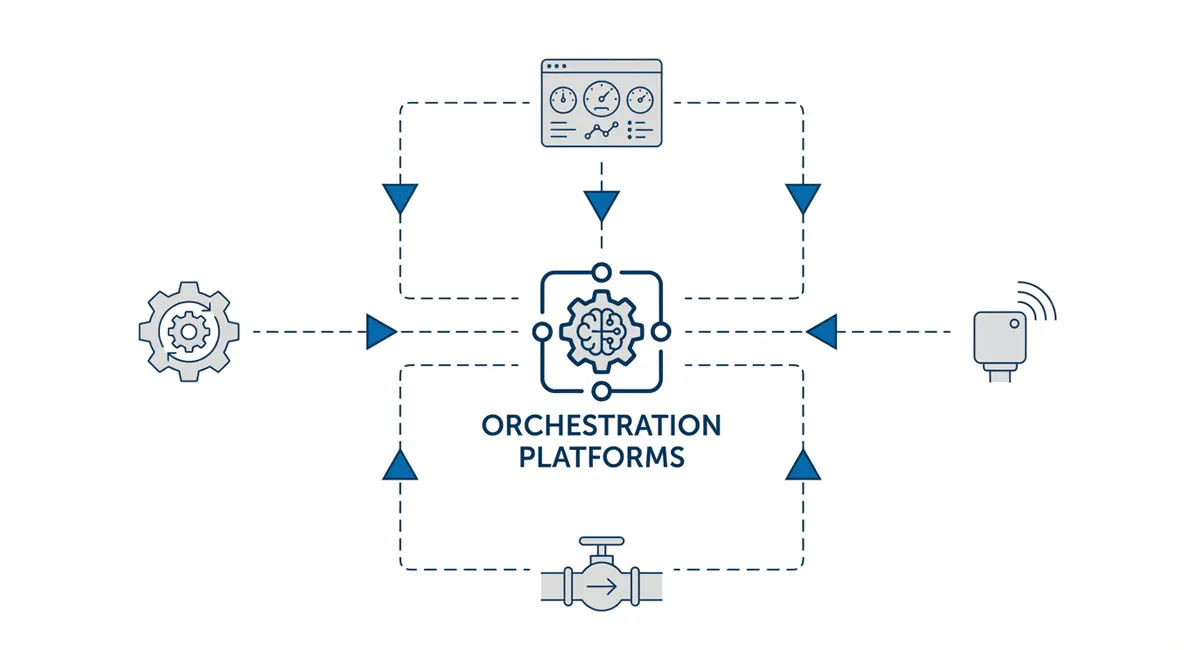
เครื่องมือวัดกำลังเปลี่ยนไปสู่แพลตฟอร์มการประสานงาน: ความหมายสำหรับระบบอุตสาหกรรม

  • โดย อินสตราวา
  • เม.ย. 3, 2026

บทนำ เครื่องมือวัดอุตสาหกรรมกำลังเผชิญกับการเปลี่ยนแปลงพื้นฐาน. ตามแบบดั้งเดิม เครื่องมือวัดเช่นเซ็นเซอร์, ตัวส่งสัญญาณ, และตัววิเคราะห์ ทำงานเป็นอุปกรณ์อิสระ...


  • อ่าน 2 นาที

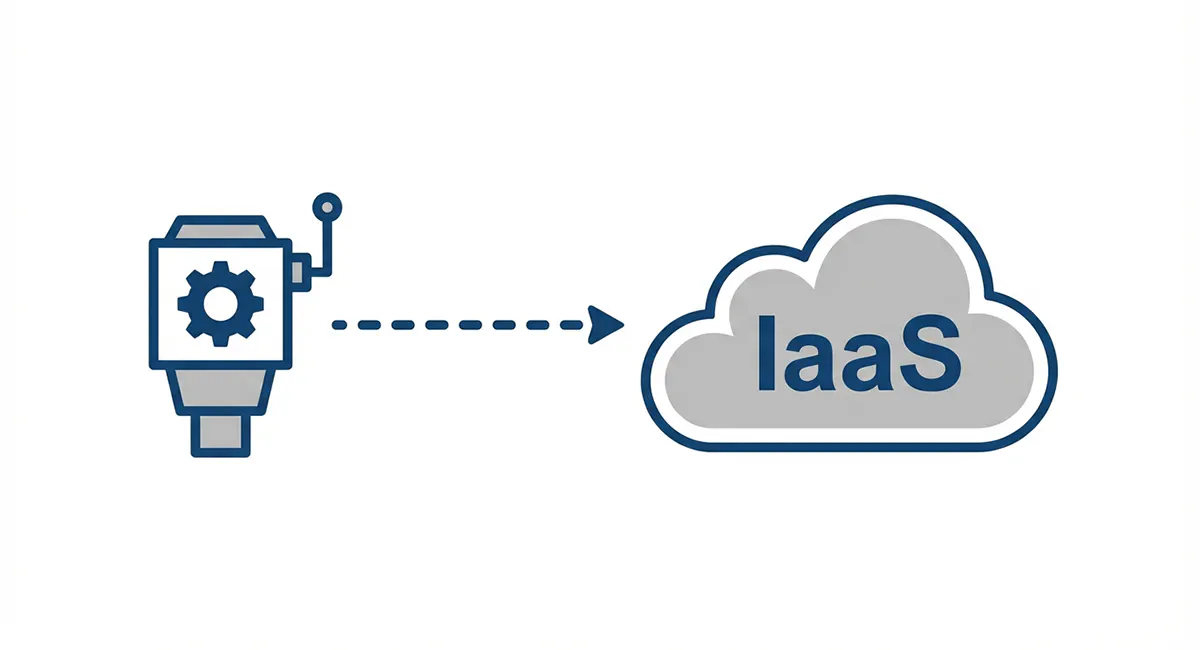
อะไรคือ “เครื่องมือเป็นบริการ” ในระบบอัตโนมัติอุตสาหกรรม?

  • โดย อินสตราวา
  • เม.ย. 3, 2026

เครื่องมือวัดอุตสาหกรรมกำลังเผชิญกับการเปลี่ยนแปลงพื้นฐานครั้งสำคัญ ในอดีต เครื่องมือวัดมักถูกนำไปใช้เป็นอุปกรณ์ฮาร์ดแวร์แบบสแตนด์อโลน—ติดตั้ง ปรับเทียบ และบำรุงรักษาเพื่อ...

  • 1 นาทีในการอ่าน

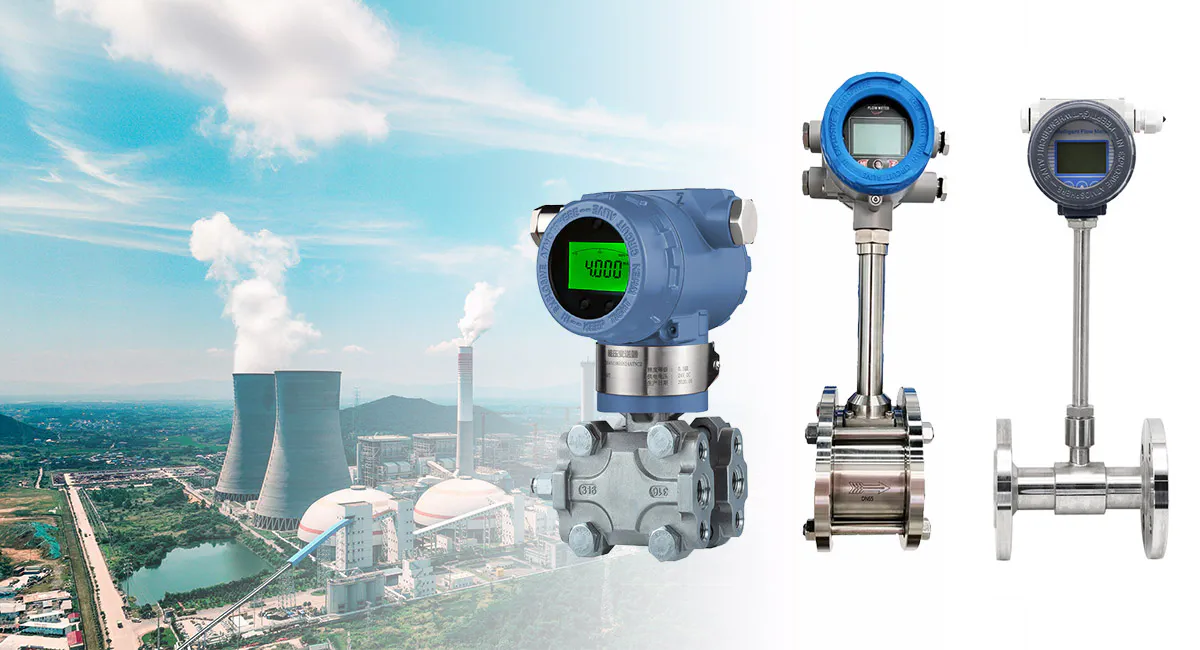
ความแตกต่างระหว่างความร้อน, วอร์เท็กซ์, และความดันต่าง: วิธีเลือกเทคโนโลยีการวัดปริมาณการไหลที่เหมาะสม

  • โดย อินสตราวา
  • ก.พ. 25, 2026

การเลือกเครื่องวัดอัตราการไหลไม่ได้ขึ้นอยู่กับค่าความแม่นยำเพียงอย่างเดียว ในอุตสาหกรรม ความท้าทายที่แท้จริงประกอบด้วย: อัตราการไหลที่เปลี่ยนแปลง ความดัน...
  • 1 นาทีในการอ่าน
หน้าแรก
ผลิตภัณฑ์
Whatsapp
ติดต่อ