
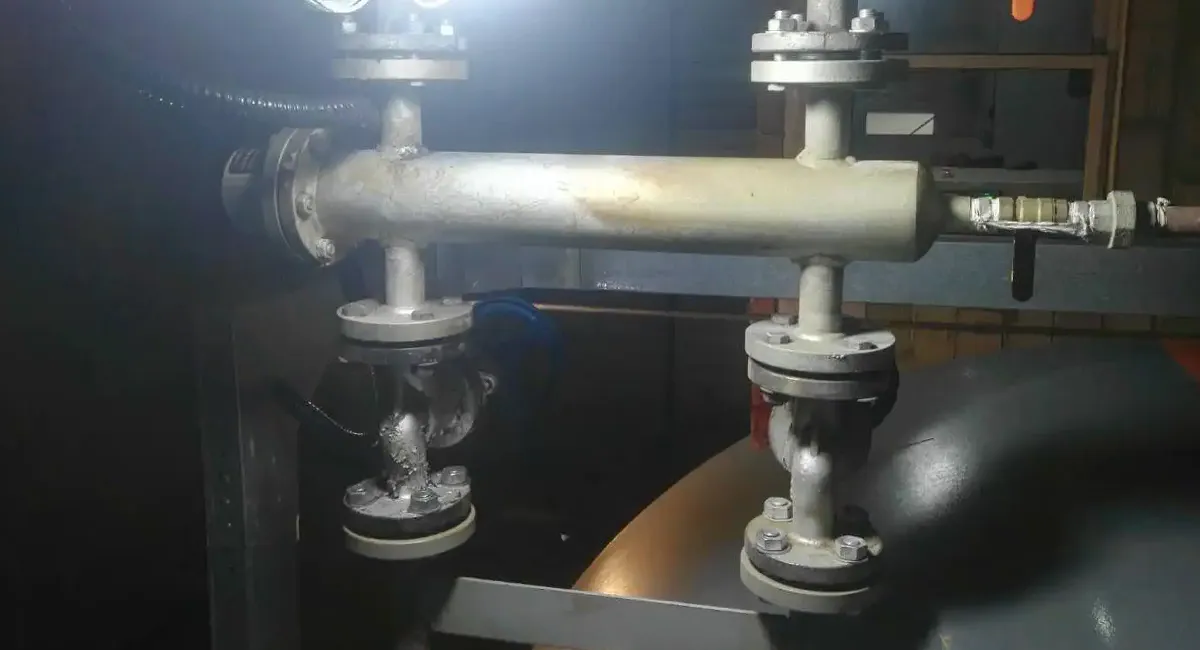
เซ็นเซอร์ระดับอิเล็กโทรด: วิวัฒนาการ เทคโนโลยีหลัก และขอบเขตของ IoT ในอุตสาหกรรม
Electrode level sensors (also known as conductivity level switches or rod-type level switches) are time-tested, highly reliable, and cost-effective instruments used for point level detection in conductive liquids.
Below is an in-depth technical analysis covering their operating principles, technological evolution, industry applications, theoretical advancements, and future outlook in the era of Industry 4.0 and Artificial Intelligence.
1. Operating Principle, Evolution, and Technological Logic
① Operating Principle
The electrode level sensor operates on the principle of electrical conductivity. It utilizes the liquid itself as a conductor to complete an electrical circuit.
Circuit Closure: When a conductive liquid comes into contact with the metal electrode rod, an electrical circuit is closed between the electrode, the liquid, and the container wall (or a dedicated reference/ground electrode).
Signal Triggering: A controller applies a low-voltage Alternating Current (AC) to the electrode. When the liquid submerges the rod, the current flows through, and the controller detects this change, triggering a switching output (e.g., to activate a pump or sound an alarm).
② Evolutionary History and Rationales
The development of level measurement has progressed from manual monitoring to mechanical systems, and ultimately to solid-state electronics:
1.Manual Visual Inspection (Dipsticks / Sight Glasses)

2.Mechanical Float Switches (Prone to mechanical wear and jamming)

3.Direct Current (DC) Electrode Switches (Suffered severe electrolysis & corrosion)

4.Modern High-Frequency AC Electrode Sensors (No moving parts, anti-coating, corrosion-resistant)
Why did it evolve this way?
Elimination of Mechanical Fatigue: Traditional float switches rely on moving parts, which frequently jam or experience spring fatigue when exposed to viscous, debris-laden, or scaling liquids. Electrode sensors eliminated moving parts entirely, achieving solid-state reliability.
Overcoming Chemical Electrolysis: Early electrode sensors utilized Direct Current (DC). This caused a localized chemical reaction (electrolysis) in the liquid, leading to gas bubble accumulation (polarization effect) and accelerated electrode degradation. Modern sensors utilize high-frequency Alternating Current (AC). By rapidly switching the current direction, they prevent polarization and chemical corrosion.
Adapting to Harsher Environments: Industrial progression demanded sensors that could withstand high temperatures, extreme pressures, and corrosive chemical agents. Consequently, materials evolved from basic metals to exotic alloys (Titanium, Hastelloy) and advanced insulation coatings like PTFE (Teflon).
2. Core Technologies Detailed Explanation
An industrial electrode level sensor is much more than a simple metal rod; its efficacy relies on several sophisticated core technologies designed to ensure long-term precision in challenging process liquids.
Technology 1: AC Excitation & Anti-Polarization
Detail: The integrated controller features a variable-frequency AC generator that supplies a weak AC voltage (typically 6V to 24V AC, at frequencies ranging from tens of Hz to several kHz) to the electrode. Because the current direction alternates rapidly, positive and negative ions in the liquid do not accumulate at the probe’s surface. This completely eliminates electrochemical corrosion and passivation, ensuring stable measurement accuracy over time.
Technology 2: Anti-Coating & Adaptive Impedance Algorithms
Detail: When measuring viscous liquids (e.g., wastewater, slurries), a residual layer of liquid often clings to the electrode even after the liquid level drops (known as coating). Standard sensors misinterpret this as a high level. Modern sensors employ phase-sensitive detection หรือ dynamic threshold impedance algorithms. These systems distinguish between the high-current, low-resistance signature of a true liquid immersion and the low-current, high-resistance signature of a residual coating, thereby eliminating false alarms.
Technology 3: Multi-Point Integrated Packaging & High-Performance Insulation
Detail: Multiple electrode rods of varying lengths can be bundled into a single compact probe assembly to monitor several level points (e.g., High-High, High, Low, Low-Low alarms). The engineering challenge lies in ensuring the insulation materials (such as PEEK or PTFE) between the electrodes and the mounting flange do not experience creep, structural leakage, or electrical breakdown under high pressures (e.g., up to 4.0 MPa) and high temperatures (e.g., up to 200°C).
3. Industry Problems Solved by Core Technologies
① Environmental & Water Treatment Industry (Industrial & Municipal Wastewater)
The Concrete Problem: Wastewater contains high concentrations of grease, suspended solids, hair, chemicals, and sludge. Mechanical float switches become entangled or jammed by grease, while ultrasonic level sensors suffer from interference caused by surface foam and steam.
The Solution: Electrode sensors leverage multi-point integration and anti-coating technologies. Even if the water surface is blanketed by thick foam or the rod is covered in sludge, the adaptive impedance algorithm accurately identifies the true liquid baseline. Because there are no moving components, mechanical jamming is entirely prevented.
② Boilers & Steam Systems (Steam Drum Level Control)
The Concrete Problem: Industrial boiler drums represent extreme environments characterized by high temperatures (>200°C), high pressures (>1.6 MPa), and violent boiling or flashing. Standard electronic level sensors fail under these conditions, and glass sight gauges risk catastrophic bursting and lack electronic signal output capabilities.
The Solution: Specialized boiler electrode level switches utilizing high-vacuum ceramic-to-metal sealing and AC excitation insert directly into the steam drum. They withstand extreme thermodynamic stress and utilize advanced multi-electrode logic to filter out turbulence, delivering reliable high/low water alarms to prevent dry-boiling explosions.
③ Food, Beverage, and Pharmaceutical Industries
The Concrete Problem: These sectors require production equipment to undergo rigorous Clean-in-Place (CIP) and Sterilization-in-Place (SIP) routines. Level sensors must feature zero sanitary dead zones (to prevent bacterial growth) and withstand aggressive acid/alkali wash cycles at temperatures exceeding 130°C.
The Solution: The core technology utilizes hygienic, ultra-smooth finishes (316L Stainless Steel/Titanium) with full PTFE encapsulation. The completely sealed, crevice-free design complies with strict sanitary mandates. Furthermore, because it detects conductivity thresholds, the system can distinguish between product and rinse water, optimizing production changeovers.
4. Theoretical Upgrades, New Product Developments, and Solutions
① Applied Theoretical Upgrade: RF Admittance & Complex Impedance Analysis
Conventional electrode sensors focus solely on the electrical resistance ($R$) of the liquid. By expanding the mathematical framework to Complex Impedance—which accounts for both Resistance ($R$) and Capacitance ($C$)—the technology elevates into High-Frequency RF Admittance.
Utilizing the admittance equation:
(where $Y$ is admittance, $G$ is conductance, $\omega$ is angular frequency, and $C$ is capacitance), the sensor quantifies both current amplitude and phase angle.
② Resulting New Product Categories: Multi-Frequency Intelligent Anti-Coating Level Switches / Multi-Phase Interface Electrode Probes
Applying this theory enables the engineering of next-generation intelligent level switches featuring wire-break self-diagnostics, extreme material-coating tolerance, and multi-phase electrical conductivity profiling capable of identifying complex oil-water interfaces.
③ Advanced Engineering Problems Solved
The Ultra-Viscosity Challenge: This upgrade solves false-triggering issues caused by highly adherent, viscous materials such as liquid honey, chocolate paste, heavy crude oil, and concentrated chemical sludges.
Functional Safety (SIL2/SIL3 Certification): If a conventional electrode breaks or its wire disconnects, the control system remains blind to the failure. New RF admittance-driven devices execute high-frequency microwave loop checks to sense probe integrity in real time, fulfilling the rigorous self-diagnostic requirements of Safety Instrumented Systems (SIS) in the chemical sector.
5. Summary of Industry Challenges and Product Selection
Different operational landscapes necessitate distinct sensor specifications. The table below serves as an application-specific configuration guide:
| Industry Pain Points & Challenges | Recommended Product Type | Core Technical Parameters | Typical Specification Example |
High-Rise Buildings & Water Towers
· Long transmission distances
· Multiple control points required
· Limited budget, requires simple maintenance | Multi-Point Suspended Cable Electrode Level Meter | · Number of Electrodes: 1–5 (adjustable)
· Cable Material: PVC / Stainless Steel
· Sensitivity: Adjustable for low-conductivity pure water | · Measuring Range: 0.5m – 50m
· Sensitivity Threshold: 5kΩ – 100kΩ
· Output: Multi-channel relay switch |
Wastewater Treatment & Chemical Tanks
· Highly corrosive chemicals
· Surface foam and thick sludge coating | Corrosion-Proof Anti-Coating Rod Electrode | · Rod Material: 316L / Titanium / Hastelloy
· Insulation: Full PTFE (Teflon) sheath
· Coating Immunity: High | · Medium Temperature: -20°C ~ 120°C
· Process Pressure: Atmospheric ~ 1.0 MPa
· Protection Rating: IP68 |
Industrial Boilers & Steam Drums
· Extreme temperature & pressure
· Turbulent boiling, flashing water levels | High-Temp & High-Pressure Ceramic Electrode Switch | · Sealing Tech: High-vacuum ceramic-to-metal brazing
· Structural Rating: Extreme thermodynamic pressure
· Excitation: High-frequency AC | · Medium Temperature: ≤ 400°C
· Process Pressure: ≤ 21 MPa
· Electrode Material: Special heat-resistant steel |
Food & Pharmaceutical CIP Tanks
· High-temperature steam sterilization
· Strict hygienic regulations (zero dead zones) | Sanitary Integrated Multi-Point Electrode Sensor | · Surface Roughness: Ra < 0.8μm
· Process Connection: Tri-Clamp sanitary fitting
· Compliance: FDA / 3A | · Medium Temperature: -10°C ~ 145°C (SIP)
· Power Supply: 24V DC
· Output Protocol: IO-Link / PNP / NPN |
6. Industrial Evolution in the Era of Industry 4.0 and Artificial Intelligence
Under the momentum of Industry 4.0, the Internet of Things (IoT), and Artificial Intelligence, the electrode level sensor is transitioning from a basic hardware switch into an intelligent edge-computing node.
① Comprehensive Digitization and Wireless Connectivity
IO-Link and Fieldbus Integration: Modern sensors no longer output a binary “on/off” voltage. Through IO-Link, Modbus, or PROFINET protocols, they stream rich datasets back to the PLC, including real-time fluid conductivity values, internal electronics temperatures, and component lifecycle metrics.
Edge IoT Capabilities: Integrated with low-power communication standards like NB-IoT or LoRaWAN, electrode sensors deployed in municipal underground pipe networks or remote rural reservoirs can run on battery power for years, transmitting level data directly to cloud platforms.
② AI-Driven Predictive Maintenance
Scaling and Corrosion Forecasting: By incorporating AI algorithms at the edge, the microcontroller tracks minor, long-term baseline drifts in conductivity across the electrode’s surface. The onboard AI can calculate degradation curves and send an alert: “Based on current mineral scaling rates, this electrode will reach an error state in 45 days. Please schedule a cleaning cycle.”
Media Fingerprinting and Self-Adaptation: Machine learning models can analyze the dynamic curve of conductivity changes as a fluid makes contact with the probe. The sensor autonomously recognizes whether the passing medium is water, milk, chemical foam, or CIP cleaning solution, adjusting its switching thresholds dynamically without human intervention.
③ The Rise of the “Digital Twin”
In advanced Industry 4.0 production facilities, every high-grade electrode level sensor is paired with a cloud-based Digital Twin. This allows automation engineers to monitor the physical wear, scaling, and operating status of a probe deep inside a hazardous chemical reactor thousands of miles away. This digital transparency shifts facility management from reactive repairs to predictive uptime, working toward zero unplanned shutdowns.
Can electrode level sensors be used to measure the level of pure water or distilled water?
Generally, no. Electrode level sensors require the liquid to have a minimum electrical conductivity (usually $\ge 5\,\mu\text{S/cm}$ or $\ge 10\,\mu\text{S/cm}$ depending on the controller’s sensitivity). Pure water, distilled water, and deionized water are excellent insulators with extremely low conductivity. For these media, technologies like capacitance (RF Admittance), guided wave radar, or ultrasonic sensors are recommended.
Why does an electrode level sensor use AC voltage instead of DC voltage?
If Direct Current (DC) is applied to an electrode immersed in an electrolyte solution, it triggers electrolysis. This causes target ions to migrate, producing hydrogen/oxygen gas bubbles that coat the rod (polarization effect) and drastically increasing electrical resistance. Furthermore, DC accelerates galvanic corrosion, destroying the metal probe in a short time. Utilizing high-frequency Alternating Current (AC) constantly reverses the ion migration, eliminating polarization and protecting the electrode from chemical decay.
How do I prevent false triggers if the conductive liquid creates a lot of foam or splashing inside the tank?
Splashing and heavy foam can bridge the gap between electrodes or the tank wall, causing premature or false switching. This can be resolved via three methods:
Time-Delay Relays: Configure the controller to delay its output signal (e.g., by 2 to 5 seconds) so that brief splashes are ignored.
Slotted Stilling Wells: Install the electrode rods inside an open-ended pipe (stilling well) to shield them from surface turbulence and foam.
Sensitivity Adjustment: Lower the controller’s electrical sensitivity so it ignores the high-resistance foam but still triggers when submerged in the dense, low-resistance liquid.
Can an electrode level sensor be installed in a non-conductive plastic or fiberglass tank?
Yes, but with a critical modification. In a conductive metal tank, the tank wall itself acts as the common ground/reference electrode. In a plastic, fiberglass, or concrete tank, there is no conductive wall to complete the circuit. To solve this, you must install one additional electrode rod that is longer than all the others to serve as the dedicated Ground/Reference (COM) probe, ensuring the current has a path to return to the controller.
What is the maximum length an electrode rod can be, and can it be customized on-site?
For rigid rod-type electrodes, the practical limit is typically 2 to 3 meters; any longer, and the rods may bend, sway, or short-circuit against each other in turbulent tanks. For deeper vessels (up to 50 meters), cable-type (suspended) electrodes with heavy stainless steel weights are used instead. Standard rigid rods can easily be cut down to the desired length on-site during installation, provided you do not damage the insulation coating.
How does "Phase-Sensitive Detection" differentiate between true immersion and material coating?
When an electrode is fully immersed in liquid, the circuit behaves primarily as a pure resistor ($R$), and the current is perfectly in phase with the applied AC voltage. However, when the liquid drops and leaves behind a sticky residue (coating), the thin film creates a significant capacitive reactance ($C$), causing a phase shift between the voltage and current. Advanced controllers analyze this phase angle to immediately distinguish between a real liquid level and a deceptive residue layer.
ทำไมต้องไว้วางใจ Instrava?
เราคัดเลือกผู้ผลิตจากมุมมองที่เป็นกลางและไม่ลำเอียง โดยคำนึงถึงผลประโยชน์สูงสุดของคุณเสมอ.
การดำรงอยู่ของเราขึ้นอยู่กับความสามารถในการช่วยคุณหาผลิตภัณฑ์ที่ตรงกับความต้องการของคุณอย่างสมบูรณ์.
ตั้งอยู่ในประเทศจีน เราสามารถดำเนินการตรวจสอบสถานที่จริงของสภาพแวดล้อมการผลิตและคุณภาพของผลิตภัณฑ์ได้โดยตรง.
เราช่วยคุณหลีกเลี่ยงคนกลางที่แอบอ้างว่าเป็นโรงงาน.
เราอำนวยความสะดวกให้การสนับสนุนหลังการขายราบรื่นยิ่งขึ้น โดยขจัดปัญหาเรื่องเขตเวลาและลดความล่าช้าที่มักเกิดขึ้นจากการติดต่อกับโรงงานโดยตรง.
ทีมงานหลายภาษาของเราทำให้การสื่อสารมีประสิทธิภาพ.
สำหรับบริษัทสตาร์ทอัพในวงการเทรดดิ้ง การติดต่อสื่อสารทุกครั้งกับลูกค้าคือโอกาสอันมีค่า — เป็นสัญญาณที่แสดงว่าท่านพร้อมที่จะวางใจในเรา และให้โอกาสเราพิสูจน์ความสามารถของเรา.
ในยุคดิจิทัลนี้ แม้ข้อมูลจะเข้าถึงได้ง่าย แต่ความเข้าใจผิดมักทำให้ความเชื่อมั่นระหว่างผู้คนถูกบดบัง.
Instrava พึ่งพาความเชื่อมั่นอย่างเต็มที่; นี่คือปรัชญาหลักของเราและเป็นรากฐานของการดำรงอยู่ของเราในสังคม นี่คือพื้นฐานสำคัญสำหรับการเติบโตในระยะยาวของเรา และความมุ่งมั่นของเราในการให้บริการแก่ชุมชน.
กรุณาไว้วางใจในเรา.