
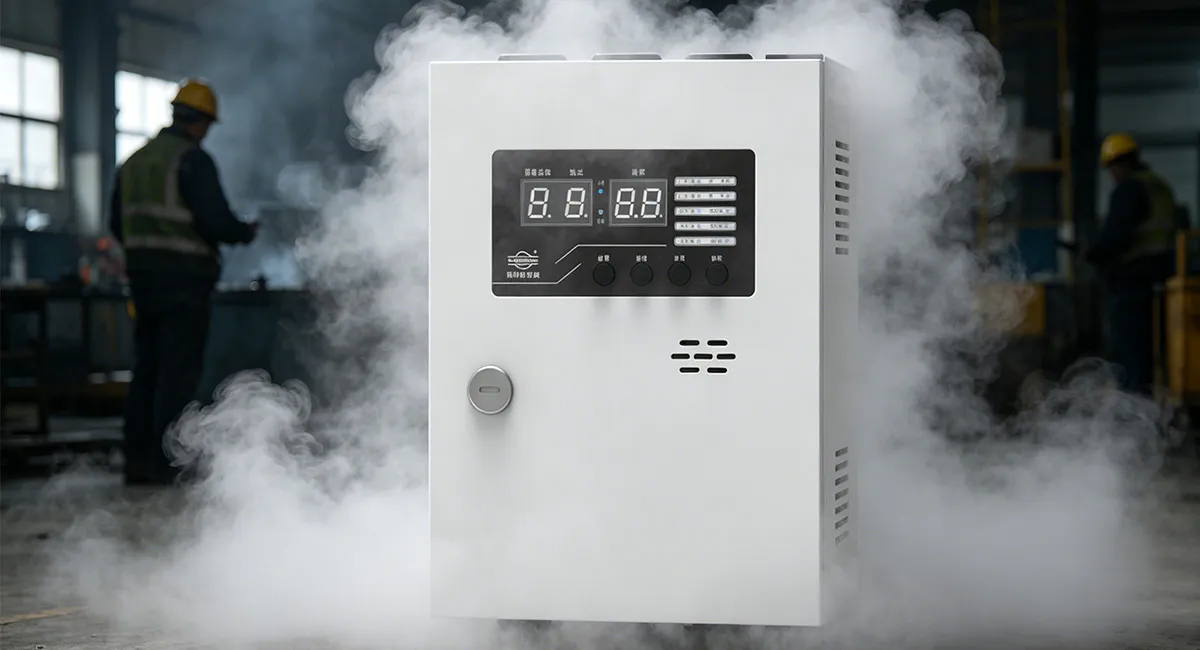
ตัวควบคุมสัญญาณเตือนแก๊สอุตสาหกรรม: สถาปัตยกรรมความปลอดภัยแบบรวมศูนย์และการปฏิบัติตามมาตรฐานสากล
1. Introduction: What is a Gas Alarm Controller?
An industrial ตัวควบคุมสัญญาณเตือนแก๊ส (also known as a gas detection control panel) serves as the centralized intelligence hub of a comprehensive facility safety system. While individual gas detectors act as the frontline sensory organs, the controller operates as the command center, continuously aggregating, processing, and interpreting analog (4-20mA) or digital (RS485 Modbus/HART) signals transmitted from remote sensor networks.
By analyzing real-time atmospheric data, these controllers automatically trigger multi-stage safety protocols when pre-set hazard thresholds are breached. Beyond displaying live gas concentrations across multiple channels simultaneously, a gas alarm controller executes critical localized mitigation strategies—such as activating industrial ventilation fans, shutting down main gas process valves, tripping electrical relays, and broadcasting high-decibel audible and visual site alerts. It bridges the gap between field-level detection and automated emergency response to protect both personnel and capital assets.
2. Overcoming Harsh Industrial Environments: 3 Traditional Challenges & Modern Solutions
In heavy industrial environments—such as petrochemical refineries, offshore drilling platforms, and chemical synthesis plants—gas alarm controllers are frequently installed in control rooms or specialized field enclosures that must withstand rigorous operational stress. Below are the three primary challenges faced by traditional control panels, along with the precise engineering mechanisms modern units employ to defeat them.
Challenge 1: Signal Degradation and Electromagnetic Interference (EMI) over Long Distances
The Problem: Large-scale industrial plants require remote gas detectors to be installed kilometers away from the central control room. Legacy controllers attempting to process weak analog signals over these extended distances suffer from severe voltage drops and are highly vulnerable to electromagnetic interference (EMI) generated by nearby high-voltage motors, variable frequency drives (VFDs), and heavy switchgear. This results in false alarms or delayed hazard responses.
The Solution: Modern gas alarm controllers incorporate isolated digital communication networks utilizing robust RS485 Modbus RTU or highway addressable remote transducer (HART) protocols. Advanced units feature built-in optoelectronic isolators and shielded differential signaling layers that reject high-frequency EMI. By employing intelligent digital filtering algorithms, modern controllers maintain absolute data integrity and sub-second signal refresh rates even across cable runs exceeding 1,200 meters.
Challenge 2: Control Loop Blindness during Peak Emergency Power Fluctuations
The Problem: During a catastrophic plant event (such as an explosion, lightning strike, or main grid failure), localized power surges or sudden dropouts commonly occur. Traditional controllers lacking robust power management systems can brown out, reset, or freeze exactly when active gas monitoring is most critical, leaving the facility entirely blind to migrating gas plumes.
The Solution: Industrial-grade control panels are engineered with redundant, hot-swappable dual-power supply architectures (e.g., simultaneous 85-265V AC and 24V DC inputs) linked to intelligent battery management modules. If primary AC power fails, the controller executes a seamless microsecond switchover to back-up uninterruptible power supply (UPS) systems without interrupting sensor excitation voltage or data logging loops, guaranteeing 100% operational uptime.
Challenge 3: Relay Contact Arcing and Enclosure Vulnerability in Hazardous Atmospheres
The Problem: When a gas leak occurs, a controller must trip physical relays to activate exhaust fans or isolate valves. In legacy designs, the electrical arcing generated inside standard mechanical relays poses an ignition risk if the controller itself is installed near a classified hazardous area. Furthermore, ambient corrosive gases (like chlorine or hydrogen sulfide) degrade internal circuitry over time.
The Solution: Modern controllers solve this by deploying hermetically sealed, explosion-proof components or solid-state relays (SSRs) with high galvanic isolation that eliminate physical sparking entirely. To protect against atmospheric corrosion, the internal printed circuit boards (PCBs) are treated with military-grade conformal coatings. The entire unit is housed within heavy-duty, corrosion-resistant cast aluminum or stainless steel enclosures rated to IP65/IP66 or certified explosion-proof (Ex d).
3. International Parameters, Certifications, and Industry-Specific Requirements
To satisfy strict global industrial asset protection standards, gas alarm controllers must match precise performance metrics and carry verified localized compliance marks.
Part A: Core Standard Parameters (Base Specifications)
| Parameter Type | Standard Baseline Range / Specification | Interface & Processing Technology |
| Channel Capacity | Modular Expansion: 1 to 64+ Channels | Dynamic Bus Topology / Split-Card Architecture |
| Signal Input Types | 3-Wire / 4-Wire 4-20mA (Analog) & RS485 Modbus (Digital) | Universal Configuration with Line-Fault Detection |
| เอาต์พุตรีเลย์ | Multiple Programmable Form C Relays (SPDT, 5A/250VAC) | Software-Assignable (Low, High, Fault, Over-range) |
| Display Interface | High-Definition Matrix TFT LCD or LED Segment Display | Real-Time Bar Graph, Concentration Unit, & Channel Status |
| Data Logging Capacity | $\ge$ 10,000 Alarm, Fault, and Calibration Events | Non-Volatile Flash Memory with USB Export Capabilities |
| System Latency | Response Processing Time $\le$ 1 second | High-Speed ARM Cortex Microprocessor |
Part B: Segmented Industry Applications & Specific Certifications
| Target Industry Vertical | Critical Functional Focus & Relay Configuration | Mandatory International Certifications |
| Oil & Gas / Refining | • High-current ESD (Emergency Shutdown) validation • Vote-logic configuration capability (e.g., 2oo3 logic) • Fail-safe relay loops for fire/gas system integration | • SIL 2 / SIL 3 Functional Safety (IEC 61508) • ATEX Zone 1 / Zone 2 (Ex d [ia Ga] IIC T6 Gb) • IECEx Certified Control Integrity |
| การแปรรูปทางเคมี | • High concentration math-averaging across zones • Multi-point ventilation interlocking arrays • Intrinsic safety barriers for toxic zone isolation | • Class I, Division 1 or 2, Groups B, C, D (UL/CSA) • CE Compliance & EN 50271 (Sil 1 Software verification) |
| Commercial HVAC & Parking | • Carbon Monoxide ($CO$) and $NO_x$ cycle-ventilation controls • Cost-effective daisy-chain digital bus loop architecture • Smart building BMS interface compatibility | • UL 2075 / UL 2017 Control Unit Standards • BACnet / Modbus TCP interface capability |
4. Instrava: Navigating Global Distribution and Regional Challenges as a Chinese Supplier
As a premier Chinese B2B brand specializing in industrial instrumentation, อินสตราวา focuses on delivering high-performance, compliant engineering solutions to international markets. Exporting safety-critical gas alarm controllers requires strict alignment with localized regulations to overcome cross-border deployment barriers.
Regional Market Barriers & Regulatory Frameworks
The European Market: Beyond basic CE markings, European operators require gas alarm controllers used in safety-related systems to conform to the ATEX Directive 2014/34/EU และ EN 50271 / EN 60079-29-1 for gas detection performance. Instrava handles this by certifying its panels through recognized European Notified Bodies, ensuring seamless custom clearance and structural compliance.
The North American Market: In the US and Canada, controllers must be approved as industrial control panels under UL 508A or certified for hazardous locations via UL 913 / CSA C22.2. This requires integrating specific, isolated intrinsic safety barriers inside the controller to prevent energy transfer to hazardous zone field sensors.
Global Harmonization: For developing industrial corridors across the Middle East, Southeast Asia, and South America, localized certifications like PESO (India), INMETRO (Brazil), or NEPSI (China) are often required. Securing baseline IECEx test reports accelerates the localized conversion process in these territories.
Operational Readiness Checklist for Global Deployment
To guarantee uncompromised system integration overseas, procurement agents and engineering teams must verify three core compliance factors before dispatch:
System Voltage and Electrical Grid Adaptation: Industrial grid configurations vary across regions (e.g., 110V AC @ 60Hz in North America vs. 230V AC @ 50Hz in Europe and Asia). Instrava configures its controllers with wide-range switching power supplies to natively handle global grid fluctuations without stress.
Functional Safety (SIL) Documentation: Modern B2B procurement mandates strict Risk Assessment compliance. Suppliers must provide comprehensive Safety Manuals, Failure Modes, Effects, and Diagnostic Analysis (FMEDA) data sheets to verify that the controller satisfies the required Safety Integrity Level (SIL 2/3) targets within the client’s local Safety Instrumented Systems (SIS).
HMI Localization and Software Hierarchy Architecture: Field technicians must be able to configure alarm matrix systems accurately during emergencies. Providing multi-language firmware options (including English, Spanish, French, and Arabic) alongside clear wiring schematics ensures smooth local commissioning and prevents critical human errors during setup.
ความแตกต่างระหว่างการเชื่อมต่อแบบอนาล็อก 4-20mA กับการเชื่อมต่อบัสดิจิทัล RS485 ในตัวควบคุมแก๊สคืออะไร?
การเชื่อมต่อแบบ 4-20mA ใช้สายเคเบิลเฉพาะสำหรับแต่ละตัวตรวจจับแต่ละตัว ซึ่งให้ความน่าเชื่อถือที่ยอดเยี่ยมและสัญญาณแบบจุดต่อจุดที่เฉพาะเจาะจง แต่ต้องการค่าใช้จ่ายในการเดินสายที่สูงกว่า การเชื่อมต่อ RS485 Modbus ช่วยให้เครื่องตรวจจับก๊าซหลายตัวสามารถเชื่อมต่อแบบเดซี่เชน (daisy-chain) บนสายเคเบิลคู่บิดเกลียวเส้นเดียวได้ ช่วยลดค่าใช้จ่ายในการติดตั้งและวัสดุอย่างมาก พร้อมทั้งให้ข้อมูลการวินิจฉัยขั้นสูงจากแต่ละโหนดเซ็นเซอร์.
"ตรรกะการลงคะแนน" (เช่น 2oo3) ในตัวควบคุมสัญญาณเตือนก๊าซอุตสาหกรรมคืออะไร และทำไมจึงใช้?
ตรรกะการลงคะแนนเสียงคือการกำหนดค่าซอฟต์แวร์หรือฮาร์ดแวร์ที่ใช้เพื่อป้องกันการแจ้งเตือนผิดพลาดที่มีค่าใช้จ่ายสูงในโรงงานผลิตที่สำคัญ ตัวอย่างเช่น ในระบบ “2oo3” (2-out-of-3) ผู้ควบคุมจะจัดการเซ็นเซอร์สามตัวในโซนเดียวกัน และจะสั่งให้ระบบปิดฉุกเฉินหนัก (ESD) ทำงานก็ต่อเมื่อเซ็นเซอร์อย่างน้อยสองตัวยืนยันพร้อมกันว่าระดับก๊าซได้ข้ามเกณฑ์อันตรายแล้ว.
ทำไมตัวควบคุมสัญญาณเตือนแก๊สจึงต้องมีรีเลย์ "Fault" และ "Alarm" แยกกัน?
รีเลย์ “Fault” เป็นตัวติดต่อแบบปลอดภัยเมื่อเกิดความผิดพลาด (fail-safe) ที่เปิดออกหากตัวควบคุมสูญเสียพลังงาน, เกิดความล้มเหลวของส่วนประกอบภายใน, หรือตรวจพบสายไฟที่ขาดซึ่งนำไปสู่เซ็นเซอร์ภาคสนาม รีเลย์ “Alarm” จะถูกกระตุ้นเฉพาะเมื่อเซ็นเซอร์ภาคสนามวัดความเข้มข้นของก๊าซอันตรายจริงเท่านั้น การแยกสัญญาณเหล่านี้ออกจากกันช่วยให้ผู้ปฏิบัติงานสามารถแยกแยะได้ทันทีระหว่างปัญหาการบำรุงรักษาทางเทคนิคกับเหตุฉุกเฉินด้านความปลอดภัยในชีวิต.
เครื่องควบคุมสัญญาณเตือนแก๊สสามารถกระตุ้นและจ่ายไฟให้กับเครื่องตรวจจับแก๊สระยะไกลได้โดยตรงหรือไม่?
ใช่. ตัวควบคุมสัญญาณเตือนแก๊สอุตสาหกรรมส่วนใหญ่มีโมดูลกระจายพลังงานไฟฟ้า DC ภายในที่ติดตั้งไว้แล้ว ซึ่งออกแบบมาเพื่อจ่ายพลังงานกระตุ้น 24V DC ที่เสถียรผ่านสายสัญญาณเพื่อควบคุมตัวส่งสัญญาณแก๊สแบบ 3 สายหรือ 4 สายมาตรฐาน ทำให้ไม่จำเป็นต้องมีแหล่งจ่ายไฟภาคสนามแยกต่างหากที่ตำแหน่งเซ็นเซอร์แต่ละตัว.
How does a Safety Integrity Level (SIL) rating apply to a gas alarm controller?
A SIL rating (such as SIL 2 or SIL 3) defines the statistical probability of a safety system failing on demand. A SIL 2 certified gas controller has undergone rigorous third-party testing to prove that its software architecture, internal components, and relay response loops meet strict low-probability-of-failure standards under extreme stress.
What is a "Fail-Safe" relay configuration on a gas control panel?
In a fail-safe configuration, the controller’s relay coil is kept continuously energized under normal, safe operating conditions. If the controller completely loses electrical power, the relay coil automatically drops out and changes state, immediately triggering back-up safety protocols or alerts to ensure the facility remains protected even during total power blackouts.
ทำไมต้องไว้วางใจ Instrava?
เราคัดเลือกผู้ผลิตจากมุมมองที่เป็นกลางและไม่ลำเอียง โดยคำนึงถึงผลประโยชน์สูงสุดของคุณเสมอ.
การดำรงอยู่ของเราขึ้นอยู่กับความสามารถในการช่วยคุณหาผลิตภัณฑ์ที่ตรงกับความต้องการของคุณอย่างสมบูรณ์.
ตั้งอยู่ในประเทศจีน เราสามารถดำเนินการตรวจสอบสถานที่จริงของสภาพแวดล้อมการผลิตและคุณภาพของผลิตภัณฑ์ได้โดยตรง.
เราช่วยคุณหลีกเลี่ยงคนกลางที่แอบอ้างว่าเป็นโรงงาน.
เราอำนวยความสะดวกให้การสนับสนุนหลังการขายราบรื่นยิ่งขึ้น โดยขจัดปัญหาเรื่องเขตเวลาและลดความล่าช้าที่มักเกิดขึ้นจากการติดต่อกับโรงงานโดยตรง.
ทีมงานหลายภาษาของเราทำให้การสื่อสารมีประสิทธิภาพ.
สำหรับบริษัทสตาร์ทอัพในวงการเทรดดิ้ง การติดต่อสื่อสารทุกครั้งกับลูกค้าคือโอกาสอันมีค่า — เป็นสัญญาณที่แสดงว่าท่านพร้อมที่จะวางใจในเรา และให้โอกาสเราพิสูจน์ความสามารถของเรา.
ในยุคดิจิทัลนี้ แม้ข้อมูลจะเข้าถึงได้ง่าย แต่ความเข้าใจผิดมักทำให้ความเชื่อมั่นระหว่างผู้คนถูกบดบัง.
Instrava พึ่งพาความเชื่อมั่นอย่างเต็มที่; นี่คือปรัชญาหลักของเราและเป็นรากฐานของการดำรงอยู่ของเราในสังคม นี่คือพื้นฐานสำคัญสำหรับการเติบโตในระยะยาวของเรา และความมุ่งมั่นของเราในการให้บริการแก่ชุมชน.
กรุณาไว้วางใจในเรา.