
-
By Instrava
-
02/22/2026
- 0 Comment
Industrial Level Switch Failure Analysis: Root Causes, Patterns, and Prevention Framework
Industrial level switch failures are rarely isolated incidents.
They follow identifiable patterns linked to material behavior, installation conditions, and sensing limitations.
Understanding these patterns allows engineers to move from reactive troubleshooting to predictive prevention.
This guide provides a structured failure analysis framework used in real industrial environments.
1. Classification of Level Switch Failures
Industrial level switch failures typically fall into three main categories:
A. False Positive (False High-Level Alarm)
Switch indicates material presence when level is below the probe.
B. False Negative (Missed Detection)
Switch fails to detect material when it is present.
C. Intermittent Switching Instability
Unstable signal output without actual level change.
Each category has distinct root causes.
Distribution of Failure Types in Industrial Applications
Occurrence (%)
No Data Found
False high-level alarms represent the most frequent industrial complaint, often linked to material buildup.
2. Root Cause Analysis Framework
Failure analysis should follow a structured path:
Step 1: Evaluate Material Behavior
Does the material coat surfaces?
Is moisture content variable?
Does density fluctuate?
Is bridging common?
Material behavior accounts for over 50% of industrial failures.
Step 2: Assess Sensing Principle Compatibility
Different technologies fail for different reasons:
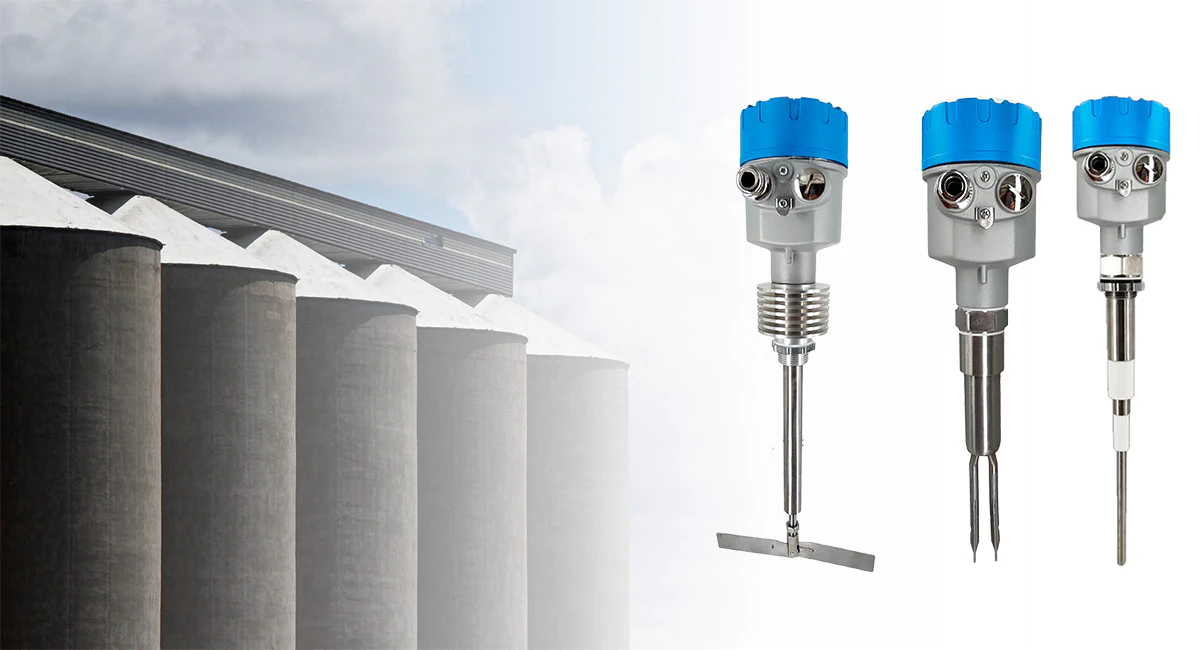
Capacitive switches → dielectric sensitivity, coating drift
Tuning fork switches → heavy buildup dampening vibration
Rotary paddle switches → mechanical obstruction or torque overload
RF admittance switches → improper calibration in extreme conductivity shifts
Failures often occur when the sensing principle is pushed beyond its boundary.
Root Cause Distribution by Category
No Data Found
Material interaction is the dominant driver, reinforcing the importance of correct technology selection.
3. Installation-Related Failures
Improper mounting location frequently leads to:
Material residue accumulation
Turbulence impact
Vibration interference
Dead zones causing delayed detection
Common installation mistakes include:
Mounting directly below filling inlet
Installing too close to agitators
Insufficient probe insertion depth
Poor grounding practices
Even a well-selected device can fail due to improper installation.
4. Environmental Stress Factors
Industrial environments introduce additional risk:
High humidity → condensation-triggered false alarms
Temperature swings → dielectric constant drift
Heavy vibration → intermittent switching
Electrical noise → unstable output
These are often misdiagnosed as “sensor defects.”
Failure Probability Over Operating Time
No Data Found
Failure risk increases progressively due to coating accumulation and environmental exposure, not sudden device malfunction.
6. Key Insight: Most Failures Are Systemic, Not Random
Industrial level switch failures typically reflect:
Application mismatch
Unaccounted material variability
Long-term buildup effects
Installation oversight
Rarely are they purely electronic defects.
Understanding this shifts the strategy from replacing devices to optimizing system alignment.
Conclusion: Reliability Is Engineered at the Selection Stage
Industrial level switch failure analysis reveals a consistent pattern:
The majority of failures originate from material interaction and installation conditions—not product malfunction.
By applying a structured analysis framework and aligning sensing technology with process behavior, engineers can significantly reduce false alarms, missed detection, and unplanned downtime.
Instrava works with industrial users to evaluate these boundaries early in the design stage—improving long-term level detection reliability across demanding applications.