







Brownfield Digitalization: How to Enable Seamless Instrument to Cloud Integration Without Replacing Existing Assets
Introduction: The Real Challenge of Industrial Digitalization
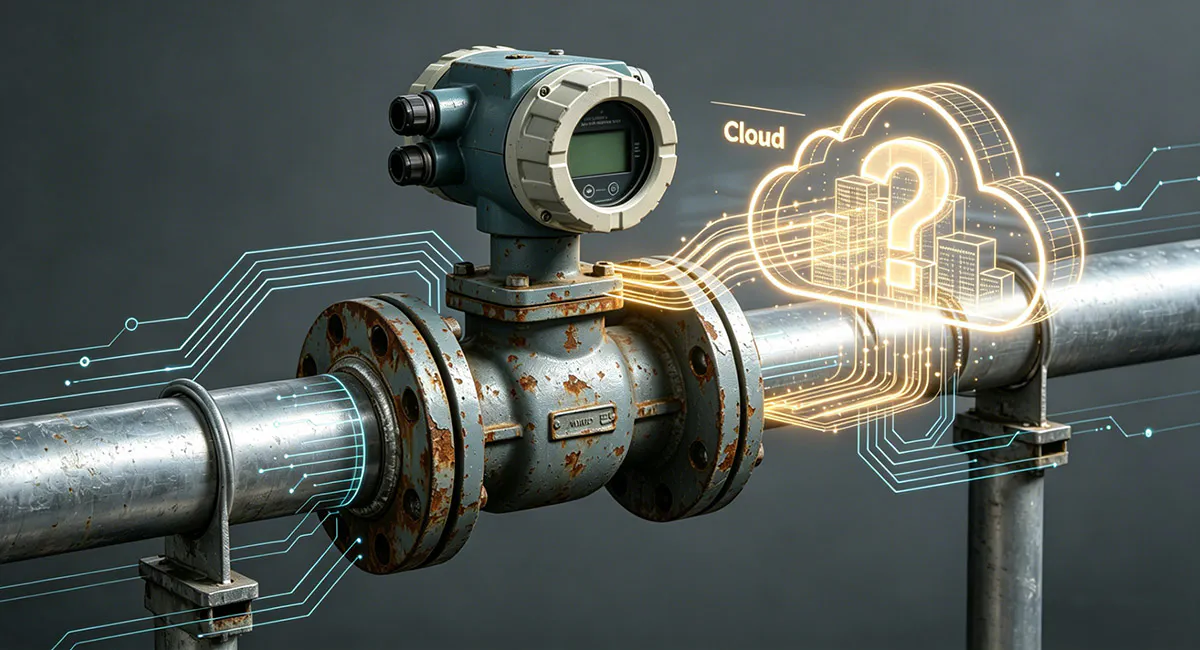
Industrial companies are under increasing pressure to digitize operations, improve efficiency, and enable data-driven decision-making. However, most facilities are not greenfield projects — they are brownfield environments filled with legacy instruments, analog signals, and multi-vendor systems.
Replacing all existing field instruments is costly, risky, and often unrealistic.
هذا هو المكان Brownfield Digitalization becomes critical:
the ability to transform existing infrastructure into connected, intelligent assets.
At the core of this transformation lies a key question:
👉 How can legacy instruments achieve seamless Instrument to Cloud integration without redesigning the entire system?
What is Brownfield Digitalization?
Brownfield Digitalization refers to the process of upgrading existing industrial assets — such as transmitters, sensors, and control systems — into digitally connected systems without replacing them.
Key Characteristics:
- No device replacement required
- Minimal or zero production downtime
- Compatibility with multi-vendor environments
- Incremental and scalable deployment
Unlike greenfield projects, brownfield digitalization focuses on maximizing existing asset value while enabling modern IIoT capabilities.
The Gap: Why Legacy Instruments Cannot Directly Connect to the Cloud
Most traditional instruments were never designed for cloud connectivity.
Typical limitations include:
- Output only 4–20mA analog signals
- Limited digital protocols (e.g., HART, Modbus RTU)
- No native support for:
- MQTT
- OPC UA
- واجهات برمجة تطبيقات REST APIs
As a result:
👉 Legacy devices lack northbound communication capabilities, making direct cloud integration impossible.
To bridge this gap, a new architectural layer is required.
Instrument to Cloud Architecture for Brownfield Environments
A practical and scalable approach is a three-layer architecture:
1. Field Layer (Existing Instruments)
- 4–20mA transmitters
- HART-enabled devices
- Modbus RTU equipment
2. Edge Layer (Key Enabler)
- Protocol conversion
- Data modeling
- Edge computing
- Secure connectivity
3. Cloud Layer (IIoT Platform)
- AWS IoT / Azure IoT / Private Cloud
- Data storage and visualization
- Remote device management
👉 The edge layer is where true “seamless integration” happens.
Step-by-Step Upgrade Path: From Signal to Cloud Intelligence
A successful Instrument to Cloud strategy is not a one-step upgrade — it is a structured journey.
Stage 1: Signal Acquisition
Capture data from existing signals:
- 4-20 مللي أمبير
- Digital I/O
- RS485 / مودبوس
Value:
Basic visibility into previously inaccessible data.
Stage 2: Smart Instrument Access
Unlock deeper device insights:
- HART communication
- Secondary variables
- Device diagnostics
Value:
Move from raw data to device-level intelligence.
Stage 3: Edge Integration
Introduce edge computing capabilities:
- Protocol conversion (Modbus → MQTT, HART → OPC UA)
- Data filtering and aggregation
- Store & forward (offline resilience)
Value:
Transform raw signals into structured, usable data.
Stage 4: Cloud Integration
Connect to IIoT platforms:
- MQTT / HTTPS / OPC UA
- Secure communication (TLS, certificates)
- Multi-site data aggregation
Value:
Centralized monitoring and remote operations.
Stage 5: Data Intelligence
Leverage advanced analytics:
- الصيانة التنبؤية
- Energy optimization
- Process optimization
Value:
Turn connectivity into measurable ROI.
What Makes Integration Truly “Seamless”?
Not all “cloud-connected” solutions are equal.
True seamless integration requires more than connectivity:
1. Protocol Standardization
Avoid proprietary lock-in with open standards like MQTT and OPC UA.
2. Data Structuring
Deliver contextualized data (value + unit + status), not raw registers.
3. Semantic Mapping
Map field data into cloud asset models automatically.
4. Reliability
Ensure:
- Local buffering
- Time synchronization
- Data integrity
5. Security
Implement:
- TLS encryption
- Device identity (X.509 certificates)
- Secure firmware updates
👉 Without these, integration remains fragmented and costly.
Brownfield Constraints: What Must Be Solved
Any viable solution must address real-world industrial constraints:
- No downtime allowed
- No replacement of existing instruments
- Multi-vendor compatibility
- Limited IT/OT integration resources
This is why edge-based approaches are essential.
Instrava Approach: Enabling Seamless Instrument to Cloud Integration
Instrava focuses on bridging the gap between legacy field instruments and modern IIoT platforms through intelligent edge integration.
تشمل القدرات الرئيسية ما يلي:
- Non-intrusive connection to existing instruments
- Multi-protocol support (4–20mA, HART, Modbus)
- Built-in protocol conversion to MQTT / OPC UA
- Structured data modeling for cloud readiness
- Secure and scalable edge connectivity
The result:
Existing instruments are transformed into cloud-ready assets — without replacement, redesign, or disruption.
Benefits of Brownfield Digitalization
Implementing a structured Instrument to Cloud strategy delivers measurable value:
- Reduced CAPEX (no large-scale replacement)
- Faster deployment cycles
- Improved asset visibility
- Predictive maintenance capabilities
- Scalable digital transformation roadmap
Conclusion: From Legacy Systems to Cloud Intelligence
Brownfield Digitalization is not about replacing the past —
it is about unlocking its hidden value.
By adopting a phased Instrument to Cloud approach, industrial operators can:
- Preserve existing investments
- Minimize risk
- Accelerate digital transformation
👉 The future of industrial connectivity is not built from scratch —
it is built by intelligently connecting what already exists.