





- بواسطة إنسترافا
- 01/21/2026
- 0 تعليق
Industry Applications of Venturi Flow Meter: Where Stability and Efficiency Matter Most
In industrial flow measurement, the venturi flow meter is often selected not because it is new or complex, but because it offers predictable performance under demanding conditions. While many discussions focus on accuracy or standards compliance, real-world applications reveal that venturi flow meters are chosen for reasons that go beyond specifications.
Across multiple industries, venturi flowmeter technology continues to play a critical role where flow stability, energy efficiency, and long-term reliability define success.
Why Venturi Flow Meters Are Application-Driven Instruments
Unlike some modern flow technologies designed for versatility, a venturi flow meter is inherently application-specific. Its value becomes most apparent in systems where flow conditions are stable, operating hours are long, and energy loss directly impacts operating cost.
Industries that rely on venturi flowmeters often prioritize:
Predictable pressure recovery
Long-term mechanical stability
Low sensitivity to fluid contamination
Minimal performance drift over time
These characteristics make venturi flow meters a strategic choice rather than a generic solution.
Water and Wastewater: Energy Efficiency at Scale
One of the most common applications of venturi flow meters is large-scale water and wastewater treatment. In these systems, flow rates are high, pipelines are large, and pumping energy represents a significant portion of operating cost.
Compared with orifice plates, venturi flowmeters reduce permanent pressure loss, directly lowering energy consumption. Over years of continuous operation, this efficiency translates into substantial cost savings.
Additionally, venturi flow meters tolerate suspended solids and gradual fouling better than many electronic flow meters, making them well suited for raw water and treated effluent measurement.
Power Generation: Stability Over Long Operating Cycles
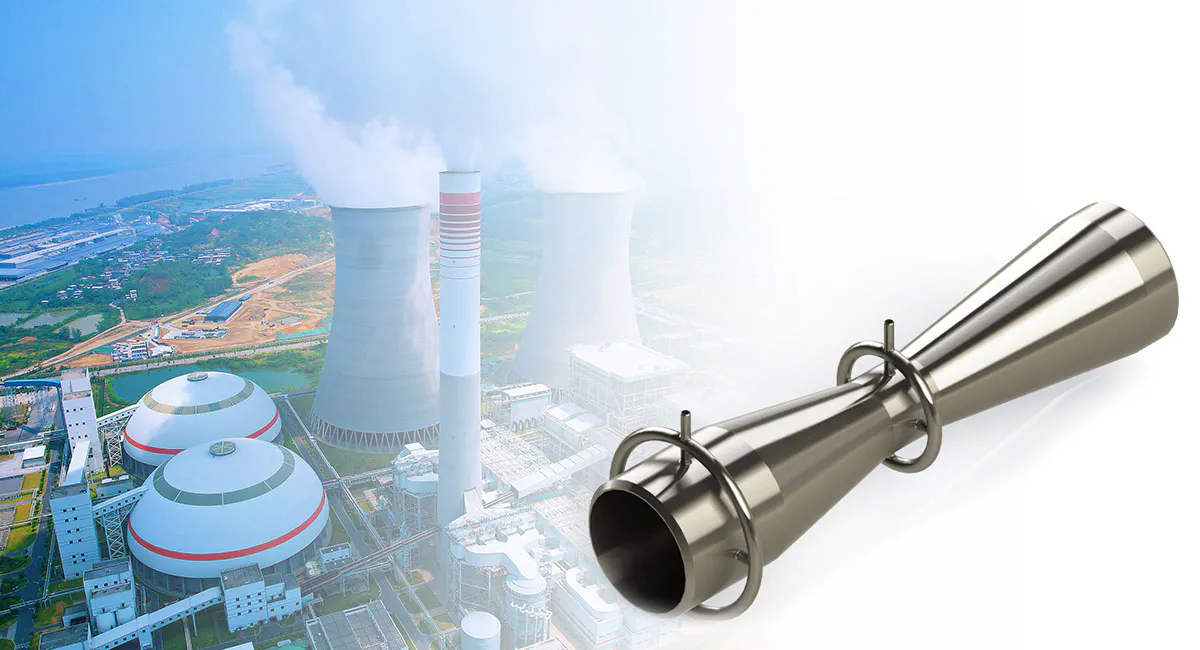
In power plants, flow measurement reliability often matters more than extreme accuracy. Venturi flow meters are widely used in cooling water, feedwater, and auxiliary systems because their mechanical simplicity supports stable measurement over long operating cycles.
Power generation environments favor venturi flowmeter designs due to:
Resistance to vibration
Minimal maintenance requirements
Consistent performance at high flow velocities
In these applications, venturi flow meters act as long-term assets rather than consumable components.
Oil and Gas: Robustness in Harsh Conditions
In oil and gas operations, especially in upstream and midstream facilities, flow measurement instruments are exposed to extreme pressure, temperature, and environmental stress.
Venturi flow meters are often selected for:
Wet gas and multiphase-tolerant systems
High-pressure pipelines
Remote installations with limited maintenance access
While not immune to all challenges, venturi flowmeters provide a passive and durable measurement approach that aligns with the industry’s emphasis on robustness and operational continuity.
Chemical Processing: Predictability Over Sensitivity
Chemical processing plants demand flow measurement solutions that remain predictable despite changes in fluid composition or operating conditions.
Venturi flow meters offer advantages in applications where:
Fluid properties vary gradually
Flow is continuous and stable
Measurement consistency is more important than rapid response
Compared with vortex or ultrasonic meters, venturi flowmeters are less sensitive to transient disturbances, making them a preferred option in many bulk chemical transfer systems.
HVAC and District Energy Systems: Managing Large Volumes
In district cooling, heating, and large HVAC networks, venturi flow meter technology supports efficient energy distribution. These systems require reliable measurement of large water volumes with minimal pressure loss.
Venturi flowmeters are commonly used in:
Chilled water distribution loops
District heating networks
Energy balancing and performance monitoring
Their ability to handle large pipe diameters while maintaining stable measurement makes them particularly attractive in infrastructure-scale projects.
Mining and Slurry Applications: Tolerance to Harsh Media
Mining operations present one of the most challenging environments for flow measurement. Abrasive slurries, suspended solids, and variable flow conditions limit the effectiveness of many flow meter technologies.
Venturi flow meters perform well in these applications because:
The smooth internal profile reduces erosion
Measurement accuracy degrades slowly rather than abruptly
Maintenance intervals are predictable
In slurry transport lines, venturi flowmeters often outperform orifice plates, which are highly sensitive to edge wear.
Food and Beverage: Cleanability and Reliability
In food and beverage processing, venturi flow meter applications focus on utility fluids such as water, steam, and cleaning solutions rather than direct product measurement.
These systems value:
Hygienic design compatibility
Repeatable flow measurement
Long service life
Venturi flowmeters are frequently installed in CIP and utility lines where reliability outweighs the need for advanced diagnostics.
Long-Term Cost Behavior Across Industries
One of the most overlooked aspects of venturi flow meter applications is long-term cost behavior. While initial investment is higher than some alternatives, venturi flowmeters often deliver lower total cost of ownership.
Key contributors include:
Reduced energy loss
Minimal recalibration requirements
Low replacement frequency
In industries with continuous operation, these factors significantly influence selection decisions.
Regional Application Trends
Global application patterns reveal how different regions leverage venturi flow meter strengths:
In Europe, energy efficiency regulations drive venturi adoption in water and HVAC systems
In the United States, standardization and long-term stability support widespread use in utilities and power generation
In the Middle East, venturi flowmeters are favored in large-scale infrastructure and oil and gas projects due to durability and reliability
These trends reinforce the application-specific nature of venturi flow meter selection.
Where Venturi Flow Meters Are Not the Best Fit
Despite their strengths, venturi flow meters are not universal solutions. Applications involving:
Very low flow rates
Rapid flow fluctuations
Limited installation space
may benefit from alternative technologies. Recognizing these boundaries is essential for proper application design.
Conclusion
The continued use of venturi flow meter technology across industries is not driven by tradition, but by alignment with real operational needs.
From water treatment to power generation, oil and gas, and district energy systems, venturi flowmeters deliver value where stability, efficiency, and durability matter more than advanced features.
Understanding these industry-specific application characteristics allows engineers and procurement teams to select venturi flow meters not as a default choice, but as a deliberate and informed decision.