
-
Par Instrava
-
01/10/2026
- 0 Commentaire
Systèmes intégrés de détection de gaz pour les installations pétrolières, gazières et chimiques
Les installations industrielles des secteurs du pétrole et du gaz et du traitement chimique sont confrontées à des défis complexes en matière de sécurité en raison des gaz inflammables, des émissions toxiques et des atmosphères déficientes en oxygène. Pour assurer la sécurité du personnel et la protection des processus, il est nécessaire d'adopter une stratégie complète de détection des gaz. En intégrant des détecteurs de gaz fixes et portables, les installations peuvent bénéficier d'une protection multicouche, d'une alerte précoce et d'une conformité aux normes de sécurité.
Instrava est un partenaire de confiance qui fournit des équipements, des solutions et des services pour les instruments de mesure et de contrôle industriels utilisés dans les applications critiques de sécurité et de contrôle des processus. En mettant l'accent sur la fiabilité, la communication et la collaboration, Instrava aide ses clients à surveiller les risques liés aux gaz tout en optimisant les processus opérationnels.
1. Pourquoi la détection intégrée des gaz est essentielle
Les détecteurs fixes surveillent en permanence les zones à haut risque, tandis que les détecteurs portables protègent le personnel lors d'opérations dynamiques telles que la maintenance, l'inspection et l'entrée dans des espaces confinés.
Les avantages d'un système intégré sont les suivants
-
Protection à plusieurs niveaux : Couverture de l'ensemble de la zone + surveillance personnelle
-
Détection précoce : Les détecteurs fixes déclenchent des alarmes avant que le personnel ne soit exposé
-
Redondance : Les détecteurs portables couvrent les zones non accessibles par les unités fixes.
-
Conformité réglementaire : Conforme aux normes OSHA, NFPA et EN
Exemple : Dans les usines chimiques, la combinaison de détecteurs de méthane fixes près des réservoirs et de détecteurs de CO portables pour le personnel d'entretien garantit une couverture complète et réduit les incidents évités de justesse.
2. Composants d'un système intégré de détection de gaz
| Composant | Fonction | Application industrielle | Exemple de produit Instrava |
|---|---|---|---|
| Détecteurs de gaz fixes | Surveillance continue de la zone | Réservoirs de stockage, pipelines, réacteurs | Détecteur de méthane LIE fixe Instrava |
| Détecteurs de gaz portables | Suivi personnel | Espaces confinés, maintenance | Moniteur de gaz portable Instrava |
| Panneaux de contrôle et d'alarme | Alarme et surveillance centralisées | Alertes à l'échelle de l'établissement | Interface SCADA Instrava |
| Enregistrement des données et analyse | Tendances historiques et maintenance prédictive | Analyse de la conformité et des incidents | Système d'enregistrement de données Instrava |
Aperçu : L'intégration de détecteurs fixes et portables améliore la couverture de sécurité et permet d'obtenir des informations exploitables à partir de données historiques et en temps réel.
3. Architecture et présentation du système
Surveillance de l'ensemble de la zone (détecteurs fixes)
-
Surveillance des zones à haut risque : réservoirs de stockage, réacteurs, cheminées d'aération et pipelines
-
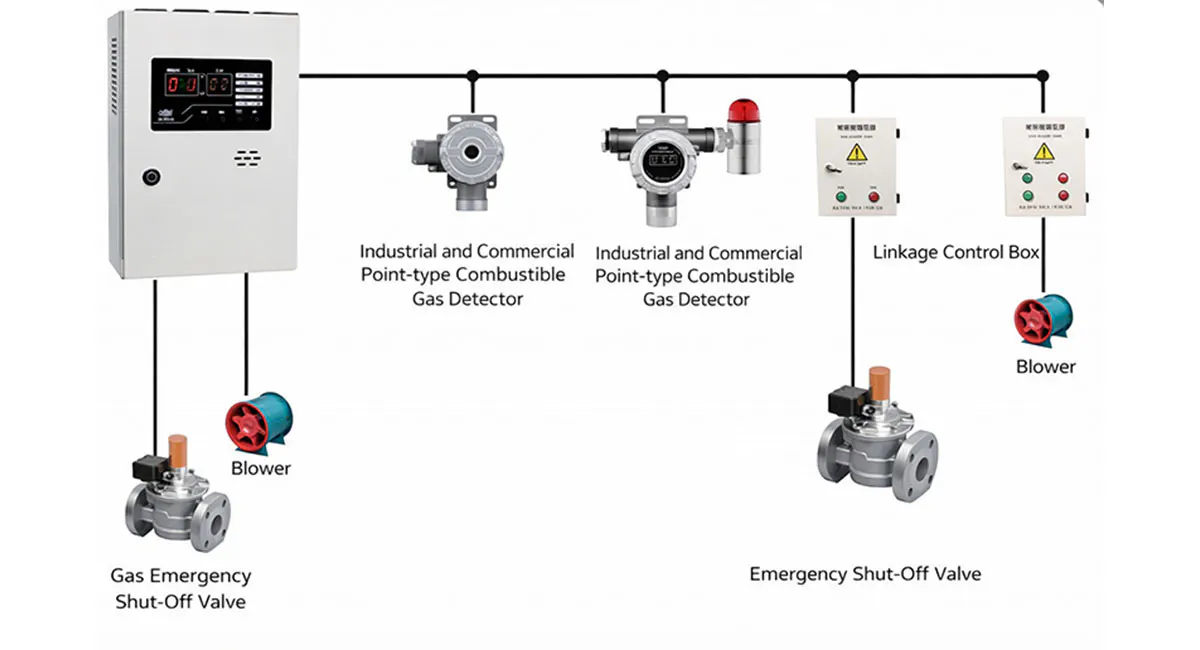
Intégrer les alarmes aux systèmes SCADA ou PLC pour des réponses automatisées
Surveillance personnelle (détecteurs portables)
-
Protéger le personnel lors des inspections, de la maintenance ou de l'entrée dans un espace confiné
-
Des dispositifs portables alertent l'utilisateur sur les niveaux de gaz dangereux en temps réel
Points d'intégration
-
Les systèmes SCADA/PLC centralisés combinent les données des détecteurs fixes et portables.
-
Les protocoles d'alarme déclenchent la ventilation, les arrêts d'urgence et les notifications.
-
Enregistrement des données historiques pour les audits de sécurité et la maintenance prédictive
4. Gestion des alarmes et réponse
| Type d'alarme | Déclencheur | Mesures recommandées |
|---|---|---|
| Alarme de zone | Détecteur fixe | Évacuer le personnel, activer la ventilation, avertir la salle de contrôle |
| Alarme personnelle | Détecteur portable | Évacuation immédiate des personnes, rapport au superviseur |
| Alarme combinée | Fixe + Portable | Arrêt complet de l'installation, activation de l'équipe d'intervention d'urgence |
Le système intégré d'Instrava permet des alertes en temps réel et des réponses automatisées, ce qui réduit le temps de réponse et minimise les risques.
5. Directives d'installation
-
Placement : Détecteurs fixes près des points d'accumulation de gaz ; détecteurs portables avec personnel
-
Hauteur : Gaz légers (méthane) → près du plafond ; gaz lourds (propane, CO2) → près du sol
-
Zones mortes : Éviter les coins non surveillés et les zones d'entretien
-
Visibilité de l'alarme : S'assurer que les alarmes sonores et visuelles atteignent tout le personnel
Exemple de tableau : Placement recommandé des détecteurs
| Localisation | Type de gaz | Type de détecteur | |
|---|---|---|---|
| Parc de stockage | Le méthane | LIE fixe | |
| Chaufferie | LE CO | Électrochimique fixe | |
| Corridor de pipelines | Le méthane | LIE portable | |
| Espace confiné | CO et méthane | Multi-gaz portable |
6. Entretien et étalonnage
| Tâche | Dispositif | Fréquence | Objectif |
|---|---|---|---|
| Test de résistance aux chocs | Fixe et portable | Hebdomadaire / Avant utilisation | Vérifier le fonctionnement des capteurs et des alarmes |
| Calibrage | Fixe et portable | 6-12 mois | Maintenir la précision des mesures |
| Remplacement du capteur | Fixe et portable | Selon les indications du fabricant | Prévenir les dérives et les défaillances des capteurs |
| Enregistrement des données | Système intégré | En continu | Conformité réglementaire et maintenance prédictive |
Meilleures pratiques :
-
Tenir des registres numériques de tous les événements liés à l'étalonnage et aux essais.
-
Vérification croisée des relevés des détecteurs fixes et portables
-
Programmation de la maintenance prédictive en fonction de l'utilisation des capteurs et des conditions environnementales
7. Exemple d'étude de cas
Scénario : Usine de traitement du pétrole et du gaz présentant un risque d'exposition au méthane et au CO.
-
Détecteurs fixes Instrava : Installés à proximité des réservoirs, des cheminées d'aération et des couloirs de pipelines
-
Détecteurs portables Instrava : Porté par le personnel d'entretien et d'inspection
-
Intégration du système : Alarmes reliées au système SCADA pour la ventilation automatique et les interventions d'urgence
-
Résultat : La détection précoce a permis d'éviter les fuites potentielles, d'améliorer la conformité et de renforcer la sécurité du personnel.
Point de données : Les systèmes intégrés utilisant les produits Instrava ont permis de réduire les incidents évités de justesse de 80% sur 3 ans.
8. Avantages de l'utilisation des systèmes Instrava
-
Couverture complète de la sécurité industrielle
-
Surveillance en temps réel et réponse automatisée aux alarmes
-
Grande fiabilité dans les environnements difficiles
-
Intégration transparente avec les systèmes SCADA et PLC
-
Approche de partenariat à long terme avec les OEM et les clients industriels
Instrava est un partenaire de confiance à long terme pour les clients et les partenaires OEM en Chine, aidant les installations à améliorer les processus et à garantir la sécurité.
9. Conclusion
Les systèmes intégrés de détection de gaz combinant des détecteurs fixes et portables sont essentiels pour des opérations sûres dans les usines pétrolières, gazières et chimiques. Les produits et solutions d'Instrava fournissent une surveillance fiable, des alarmes automatisées et des informations basées sur des données pour garantir la sécurité, la conformité et l'efficacité opérationnelle.