
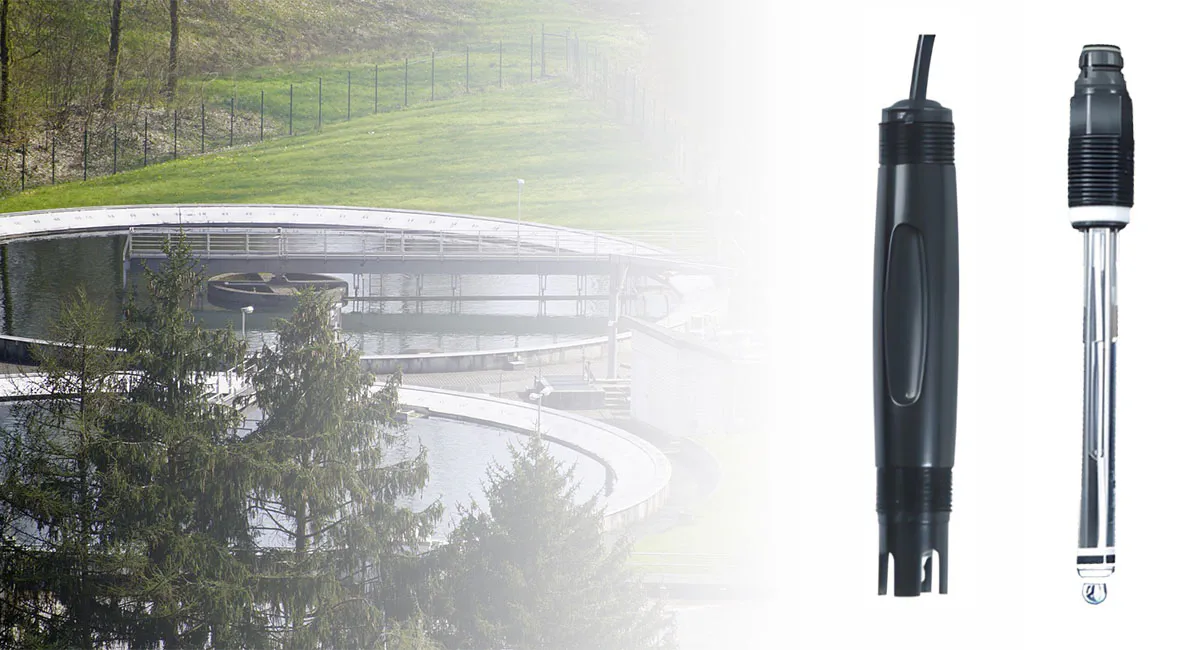
Capteurs de pH et de redox dans la commande numérique de processus
Comment les données de mesure deviennent-elles un facteur décisionnel dans les systèmes industriels modernes ?
De la mesure sur le terrain à la décision opérationnelle
Dans les architectures traditionnelles de contrôle des processus, les capteurs de pH et de potentiel d'oxydation-réduction (ORP) étaient considérés comme des instruments de terrain isolés. Leur rôle se limitait à fournir une valeur en temps réel à laquelle les opérateurs ou les contrôleurs réagissaient localement.
Cependant, les systèmes industriels modernes ont évolué vers des stratégies de contrôle connectées numériquement et fondées sur les données, dans lesquelles les données de mesure alimentent non seulement les boucles de régulation, mais aussi les algorithmes d'optimisation, les rapports de conformité et la planification de la maintenance.
Dans ce contexte, la valeur d'un Capteur pH ORP ne se définit plus uniquement par la précision.
Elle se caractérise par la stabilité du signal, la continuité des données et la fiabilité à long terme.
Pourquoi le contrôle numérique des processus place la barre plus haut pour les capteurs de pH et de redox
Les systèmes de commande numériques réagissent plus rapidement, intègrent davantage de variables et fonctionnent en continu.
De ce fait, elles amplifient aussi bien les bonnes données que les mauvaises.
Un signal stable améliore l'efficacité du contrôle.
Un signal instable propage des erreurs dans l'ensemble du système.
Dans les processus à commande numérique, une mauvaise qualité des signaux de pH et de potentiel d'oxydation-réduction (ORP) engendre un risque systémique plutôt qu'une simple erreur de mesure isolée.
Impact de la qualité du signal de pH et de potentiel d'oxydation-réduction (ORP) sur les performances de la régulation numérique
| État du signal | Niveau sonore typique | Comportement de la boucle de régulation | Conséquence opérationnelle |
|---|---|---|---|
| Signal stable | < ±2 mV de potentiel d'oxydoréduction (ORP) | Commande fluide | Dosage optimisé |
| Légers bruits | ±5 à 10 mV | Petite oscillation | Augmentation de la consommation de réactifs |
| Fort bruit | > ±20 mV | Chasse au contrôle | Instabilité du processus |
| Signal intermittent | Perte de données | Interruption de boucle | Intervention manuelle |
Les régulateurs numériques réagissent plus rapidement que les opérateurs humains. Lorsque le bruit du signal augmente, les régulateurs surcorrigent, ce qui entraîne des oscillations, une consommation excessive de produits chimiques et une lassitude face aux alarmes.
La stabilité du signal est plus importante que la précision instantanée
De nombreuses décisions en matière de sélection accordent encore la priorité à la “ précision de niveau laboratoire ”, alors que dans les processus en continu, répétabilité et stabilité avoir un impact opérationnel plus important.
Un capteur extrêmement précis mais dont la dérive est imprévisible introduit davantage d'incertitude qu'un capteur légèrement moins précis mais au comportement stable.
Cela est particulièrement vrai dans le cas d'un contrôle en boucle fermée, où les tendances et les écarts ont plus d'importance que les valeurs absolues.
Les données de tendance constituent le fondement de l'intelligence des processus
Les relevés instantanés permettent de répondre à la question suivante : “ Que se passe-t-il en ce moment ? ”
Réponses concernant les données de tendance : “ Le processus fonctionne-t-il normalement ? ”
Les systèmes numériques s'appuient sur l'analyse des tendances pour distinguer :
Perturbations du processus
Dégradation du capteur
Erreurs d'étalonnage
Sans contexte de tendance, les mesures du pH et du potentiel d'oxydation-réduction (ORP) ne permettent pas de prendre des décisions prédictives.
Intérêt opérationnel de la surveillance du pH et du potentiel d'oxydation-réduction (ORP) basée sur les tendances
| Perspective des données | Visibilité | Qualité de la décision | Résultats de la maintenance |
|---|---|---|---|
| Valeur immédiate uniquement | Faible | Réactif | Remplacement d'urgence |
| Tendances à court terme (en heures) | Moyen | Correctif | Étalonnage fréquent |
| Tendances à long terme (semaines/mois) | Haut | Prédictif | Maintenance programmée |
La surveillance basée sur les tendances permet aux ingénieurs d'intervenir avant qu'une défaillance des mesures n'ait des répercussions sur la stabilité du processus ou la conformité.
L'intégration numérique permet la maintenance prédictive
La maintenance prédictive ne repose pas uniquement sur des capteurs “ intelligents ”.
Cela nécessite des données cohérentes et de grande qualité sur le long terme.
Les capteurs de pH et de potentiel d'oxydation-réduction (ORP) intégrés numériquement permettent l'enregistrement en continu des paramètres suivants :
Évolution de la pente d'étalonnage
Dérive du décalage de référence
Modifications du temps de réponse
Ces indicateurs constituent la base des modèles prédictifs utilisés par les équipes de maintenance.
La maintenance prédictive repose davantage sur la continuité des données que sur des algorithmes sophistiqués.
Indicateurs d'état des capteurs utilisés dans la maintenance prédictive
| Indicateur | Plage normale | Tendance des écarts | Aperçu de la maintenance |
|---|---|---|---|
| Pente du pH | 95-105% | Baisse progressive | Vieillissement des électrodes |
| Valeur de référence de l'ORP | ±5 mV | Décalage progressif | Contamination de référence |
| Temps de réponse | <30 s | Retard croissant | Accumulation d'encrassement |
| Intervalle d'étalonnage | 30 à 90 jours | Raccourcissement du cycle | Dégradation accélérée |
Lorsque ces indicateurs font l'objet d'un suivi numérique, les interventions de maintenance deviennent des opérations planifiées plutôt que des interventions d'urgence.
L'intégration numérique permet de réduire les erreurs humaines et les pertes de données
L'enregistrement manuel des mesures entraîne une variabilité que les systèmes numériques permettent d'éliminer :
Interprétation de l'opérateur
Retards d'enregistrement
Erreurs de transcription
Les capteurs intégrés numériquement fournissent des flux de données continus directement aux systèmes de contrôle et d'information.
Dans les usines modernes, l'erreur humaine contribue davantage à l'incohérence des données que les limites des capteurs.
Mesure manuelle ou capteurs intégrés numériques ?
| Aspect | Approche manuelle | Intégration numérique |
|---|---|---|
| Cohérence des données | Dépend de l'opérateur | Contrôlé par le système |
| Traçabilité | Limitée | Piste d'audit complète |
| Réponse à l'alarme | Retardé | En temps réel |
| Rapport de conformité | Manuel | Automatisé |
L'intégration numérique améliore la traçabilité et réduit les risques opérationnels, en particulier dans les secteurs réglementés.
La normalisation est un facteur clé, souvent méconnu, permettant un contrôle évolutif
À mesure que les usines étendent ou reproduisent leurs processus sur différents sites, la normalisation des capteurs devient essentielle.
L'utilisation d'une plateforme unifiée de capteurs de pH et de potentiel d'oxydation-réduction (ORP) permet de simplifier :
Conception technique
Gestion des pièces de rechange
Formation et maintenance
Les plateformes de capteurs standardisées réduisent la complexité du cycle de vie dans les opérations multi-sites.
Avantages de la normalisation des capteurs de pH et de potentiel d'oxydation-réduction (ORP)
| Zone | Bénéfice |
|---|---|
| Interface électrique | Mise en service plus rapide |
| Protocole de communication | Intégration plus aisée au système |
| Procédure d'étalonnage | Réduction de l'effort de formation |
| Stock de pièces de rechange | Coût total réduit |
| Stratégie de maintenance | Des performances constantes |
La normalisation permet aux organisations de faire évoluer leurs systèmes de surveillance sans accroître la complexité opérationnelle.
De l'appareil de mesure à l'infrastructure décisionnelle
Dans les environnements à commande numérique, les capteurs de pH et de potentiel d'oxydation-réduction (ORP) ne sont plus de simples instruments passifs.
Ils font partie de l'infrastructure décisionnelle qui prend en charge :
Optimisation chimique
Stabilité du processus
Conformité réglementaire
Maintenance prédictive
Des données fiables permettent de prendre des décisions en toute confiance, tant au niveau opérationnel qu'au niveau de la direction.