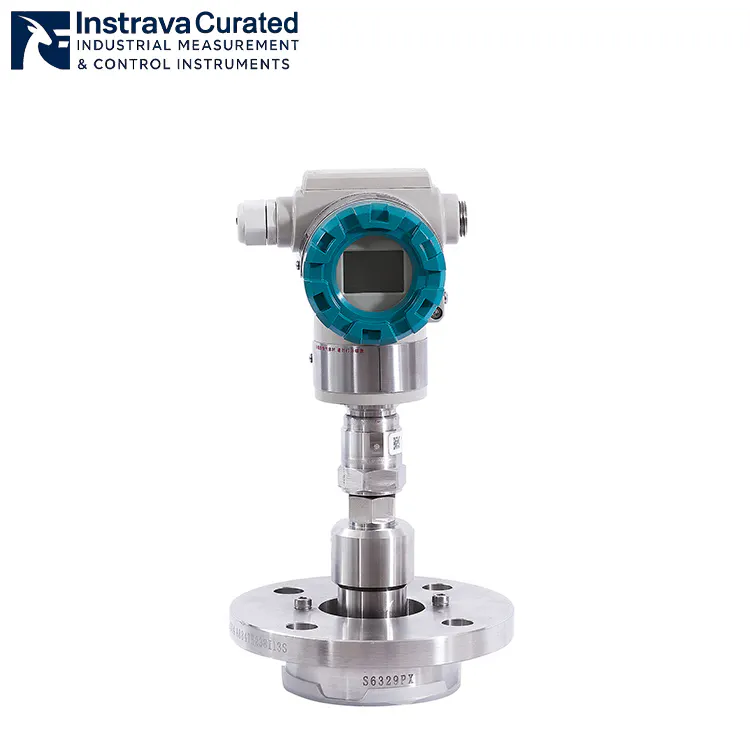

Accueil » Produits » Transmetteurs » Transmetteur de niveau à flotteur pour une mesure fiable du niveau de liquide
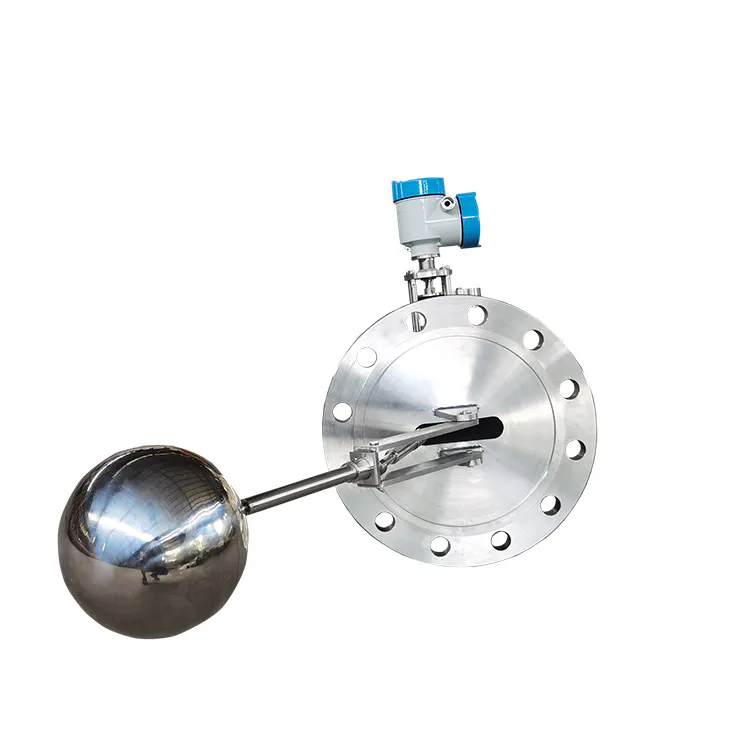
Transmetteur de niveau à flotteur pour une mesure fiable du niveau de liquide
The float level transmitter is a reliable and accurate level measurement instrument designed for continuous liquid level monitoring in industrial tanks, vessels, and process systems. By detecting liquid level changes through the movement of a float, the float level transmitter converts the mechanical displacement into a stable electrical output signal for process control and monitoring.
Float level transmitters are widely used due to their simple structure, stable performance, and adaptability to various liquids. With different material options and output signals, the float level transmitter is suitable for industrial applications requiring dependable level measurement under demanding operating conditions.

Transmetteurs et capteurs Description
Main Features of Float Level Transmitter
-
Stable and accurate liquid level measurement
-
Simple mechanical structure with high reliability
-
Suitable for various liquids and process media
-
Multiple output signal options (analog or digital)
-
Wide operating temperature and pressure range
-
Installation et entretien faciles
-
Customizable probe length and mounting options
-
Long service life with minimal maintenance
These features make the float level transmitter an ideal choice for continuous level monitoring in industrial environments.

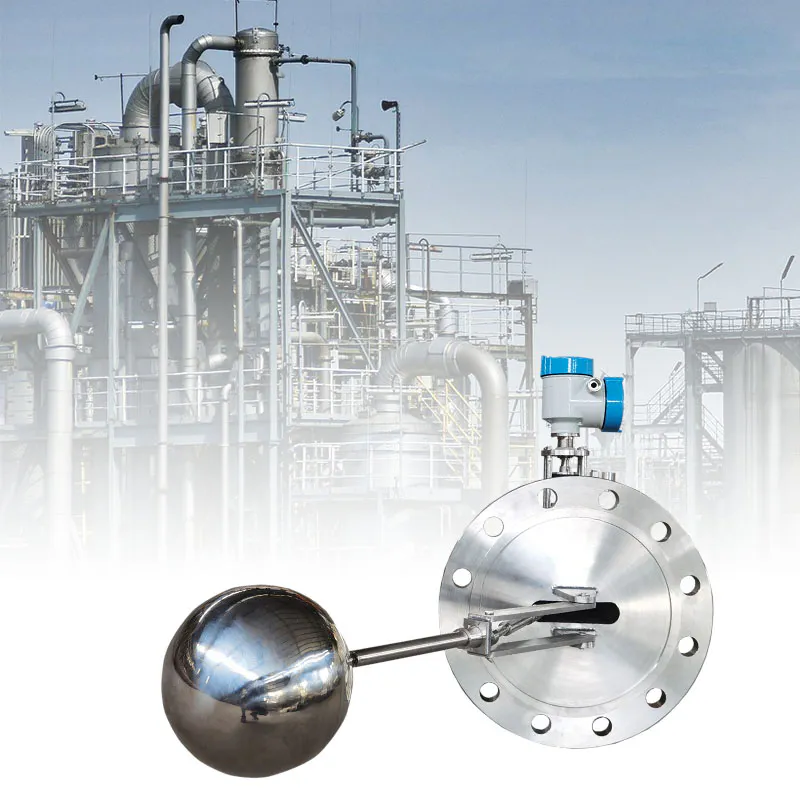
Typical Applications of Float Level Transmitters
Float level transmitters are commonly used in:
-
Réservoirs de stockage industriels
-
Chemical processing systems
-
Stations d'épuration des eaux et des eaux usées
-
Réservoirs de stockage d'huile et de carburant
-
Power generation facilities
-
Process control systems
The robust design of float level transmitters ensures reliable operation in both indoor and outdoor industrial applications.
Transmetteurs et capteurs Paramètres
| Objet | Spécifications |
|---|---|
| Modèle | INFLT114 |
| Measuring Function | Liquid level |
| Plage de mesure | Large-angle type: 450 – 1600 mm Small-angle type: 380 – 1200 mm |
| Précision de la mesure | ±1.5% of full scale (FS) |
| Tension d'alimentation | 24 V DC (12.7 – 27.2 V DC) |
| Signal de sortie | 4 – 20 mA DC |
| On-site Indication | Multi-parameter LCD display (intelligent) 0 – 100% (4 – 20 mA) moving coil display (analog type) |
| Protection contre les explosions | Flameproof: Ex d IIC T4 Intrinsically Safe: Ex ia IIC T4 |
| Classe de protection | IP67 |
| Température ambiante | –20 °C to +60 °C |
| Humidité ambiante | ≤ 95% RH |
| Process Medium Temperature | –40 °C to +225 °C (without heat sink) +225 °C to +450 °C (with heat sink) |
| Minimum Medium Density | ≥ 0.55 g/cm³ |
| Pression de service | 2.5 MPa / 4.0 MPa / 6.4 MPa |
| Raccordement au processus (bride) | Standard: DN250 PN, JB/T 82.2-94 (raised face) Special: DN200 PN, JB/T 82.2-94 (convex face) |
| Cable Entry (Outlet) | M20 × 1.5 (internal thread) |
| Electrical Enclosure | Die-cast aluminum alloy with powder coating |
| Float Maximum Running Angle | Small-angle type: 35° Large-angle type: 80° |
| Wetted Parts Material | Standard: 1Cr18Ni9Ti Optional: 316 / 316L |
Instrava OEM/ODM
Approvisionnement sur mesure et personnalisation : pour vous proposer exactement le produit dont vous avez besoin
En tant que fournisseur et partenaire d'approvisionnement de confiance, nous faisons le lien entre vos besoins spécifiques et les vastes capacités de production de la Chine.
Trouver le bon produit au sein d'une chaîne d'approvisionnement gigantesque peut s'avérer difficile. C'est là que nous intervenons.
En tant que fournisseur spécialisé dans le secteur industriel, notre valeur fondamentale est simple : Nous nous mettons à votre place pour vous aider à trouver les produits les mieux adaptés. Que vous soyez un Entreprise EPC nécessitant une conformité technique spécialisée, un Fabricant d'équipements OEM Vous recherchez une image de marque personnalisée, ou un distributeur industriel / négociant Afin de vous offrir un avantage concurrentiel, nous personnalisons et adaptons nos produits pour répondre précisément à vos besoins en matière d'approvisionnement.
Comment nous adaptons nos solutions à vos besoins en matière d'approvisionnement
À l'attention des entrepreneurs et ingénieurs spécialisés dans la performance énergétique (EPC) : Nous configurons sur mesure vos instruments et appareils afin qu’ils correspondent exactement à vos spécifications techniques : nous adaptons les raccords de process, les matériaux spéciaux et les protocoles de signal, et nous gérons les opérations d’étalonnage et de test réalisées par des tiers, afin de vous fournir des solutions prêtes à l’emploi.
À l'attention des fabricants d'équipements d'origine (OEM) : Nous proposons des services complets de personnalisation OEM/ODM, notamment la conception de boîtiers sur mesure, l'étiquetage, la personnalisation de la marque (marque de distributeur) et des spécifications techniques adaptées, afin d'assurer une intégration parfaite avec vos machines.
À l'attention des distributeurs et négociants industriels : Nous proposons des solutions personnalisées et flexibles en matière d'emballage, de gammes de produits et de paramètres techniques, afin de vous aider à différencier votre portefeuille de produits et à remporter davantage d'appels d'offres locaux.
Pourquoi faire appel à nous pour vos services d'approvisionnement sur mesure ?
Coordination technique centralisée : Vous n'avez pas besoin de faire appel à plusieurs usines. Nous traduisons vos spécifications techniques en plans de fabrication précis.
Garantie rigoureuse en matière de qualité et de conformité : Nous supervisons l'ensemble du processus de personnalisation et de production en Chine, afin de garantir que le produit final personnalisé soit conforme à vos normes et certifications locales.
Notre valeur fondamentale : Nous ne nous contentons pas de vendre ce qui se trouve en rayon. Nous recherchons, personnalisons et livrons le le produit le plus adapté et le plus rentable pour votre application spécifique.

Recommandations de produits connexes
À quoi sert un transmetteur de niveau à flotteur ?
Un transmetteur de niveau à flotteur est utilisé pour la mesure en continu du niveau de liquide dans les cuves industrielles, les réservoirs et les systèmes de traitement. Il convertit le mouvement d'un flotteur en un signal de sortie électrique destiné à la surveillance et au contrôle des processus.
Comment fonctionne un transmetteur de niveau à flotteur ?
Un transmetteur de niveau à flotteur fonctionne selon le principe de la flottabilité. Lorsque le niveau du liquide varie, le flotteur monte ou descend et transmet ce mouvement à un élément de détection, qui le convertit en un signal électrique, par exemple de 4 à 20 mA.
Quels types de liquides un transmetteur de niveau à flotteur peut-il mesurer ?
Les transmetteurs de niveau à flotteur permettent de mesurer une large gamme de liquides, notamment l'eau, les huiles, les carburants, les produits chimiques et d'autres fluides industriels, à condition que la densité du liquide et la compatibilité des matériaux soient adaptées aux matériaux du flotteur et de la tige.
Quels sont les signaux de sortie disponibles pour les transmetteurs de niveau à flotteur ?
Les signaux de sortie courants des transmetteurs de niveau à flotteur comprennent les signaux 4–20 mA, 0–10 V et les sorties tout ou rien. Des options de signaux personnalisées sont également disponibles pour répondre aux exigences spécifiques des systèmes de contrôle.
Les transmetteurs de niveau à flotteur peuvent-ils être personnalisés ?
Oui. Les transmetteurs de niveau à flotteur peuvent être personnalisés en termes de plage de mesure, de longueur de sonde, de choix des matériaux, de type de montage, de signal de sortie et d'indice de protection afin de s'adapter à différentes tailles de cuves et conditions de process.
Are float level transmitters suitable for harsh industrial environments?
Float level transmitters are designed for industrial use and can operate under high temperature, pressure, and corrosive conditions when proper materials and sealing options are selected. They are widely used in chemical, oil & gas, and power generation industries.
Pourquoi faire confiance à Instrava ?
Nous sélectionnons les fabricants en adoptant une approche neutre et impartiale, en gardant toujours à l'esprit vos intérêts.
Notre raison d'être consiste à vous aider à trouver les produits qui répondent parfaitement à vos besoins.
Étant implantés en Chine, nous sommes en mesure de mener des inspections sur place afin d'évaluer directement les conditions de production et la qualité des produits.
Nous vous aidons à éviter les intermédiaires qui se font passer pour des usines.
Nous facilitons un service après-vente plus fluide, en éliminant les problèmes liés aux décalages horaires et les retards souvent associés aux relations directes avec les usines.
Notre équipe multilingue garantit une communication efficace.
Pour une start-up spécialisée dans le trading, chaque interaction avec un client est une occasion précieuse : c’est le signe que vous êtes prêt à nous accorder votre confiance et à nous donner la chance de faire nos preuves.
À l'ère du numérique, alors que l'information est facilement accessible, les idées fausses viennent souvent entacher la confiance entre les gens.
Instrava repose entièrement sur la confiance ; c'est notre philosophie fondamentale et le fondement même de notre existence au sein de la société. C'est le pilier essentiel de notre croissance à long terme et de notre engagement au service de la communauté.
Nous vous prions de nous accorder votre confiance.