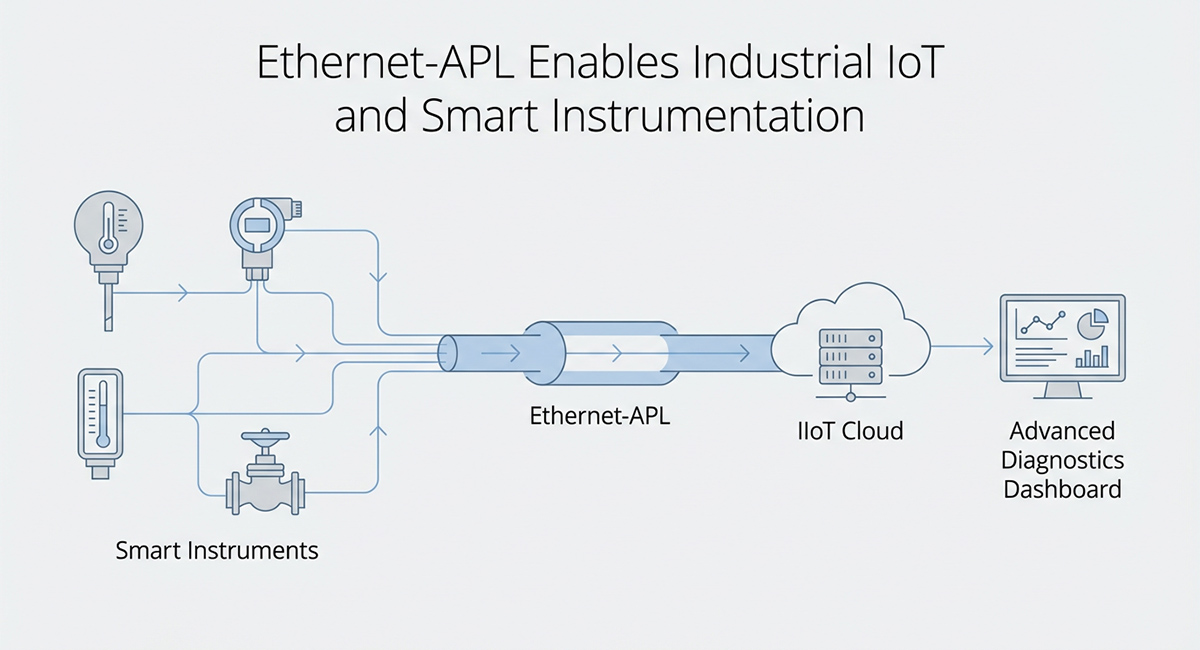
How Ethernet-APL Enables Industrial IoT and Smart Instrumentation
Industrial systems are rapidly evolving from isolated control environments into fully connected, data-driven ecosystems. At the center of this transformation...

Home » Products » Transmitters » Liquid Analyzers and Transmitters
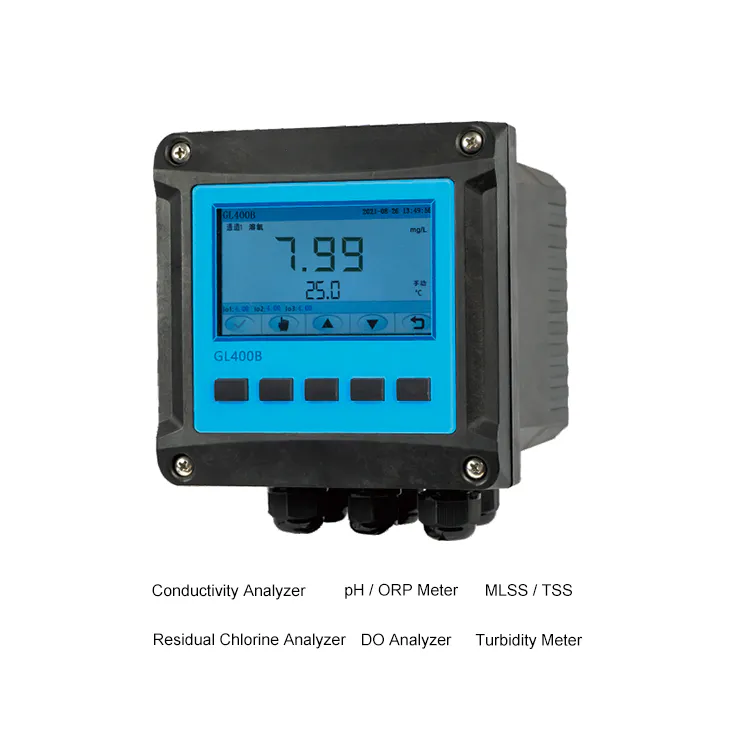
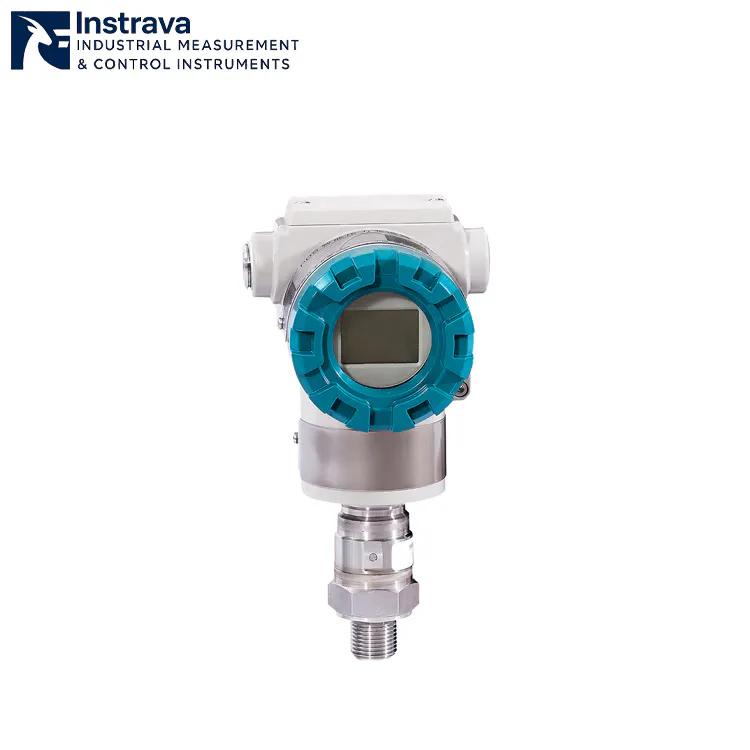
Instrava Liquid Analyzers and Transmitters are intelligent, multi-function analytical instruments designed for continuous monitoring and control of liquid process parameters.
With support for multiple sensor types and flexible output configurations, the system provides reliable, real-time analytical data for industrial processes where product quality, safety, and environmental compliance are critical.
The platform supports a wide range of analytical functions, including dissolved oxygen, sludge concentration, turbidity, residual chlorine, pH/ORP, and conductivity measurement—making it suitable for diverse industries and complex applications.
Transmitters & Sensors Description
Liquid Analyzers and Transmitters Supported Measurement Functions
The analyzer platform can be configured for different analytical measurements by selecting the appropriate sensor:
Dissolved Oxygen (DO) Analyzer
Sludge Concentration Meter
Turbidity Analyzer
Residual Chlorine Analyzer
pH / ORP Analyzer
Conductivity Analyzer
Each function operates independently while sharing a unified display, output, and diagnostic architecture.
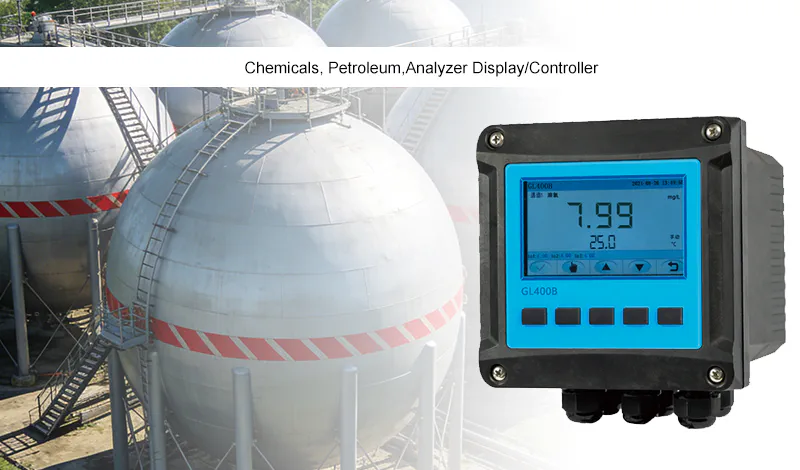
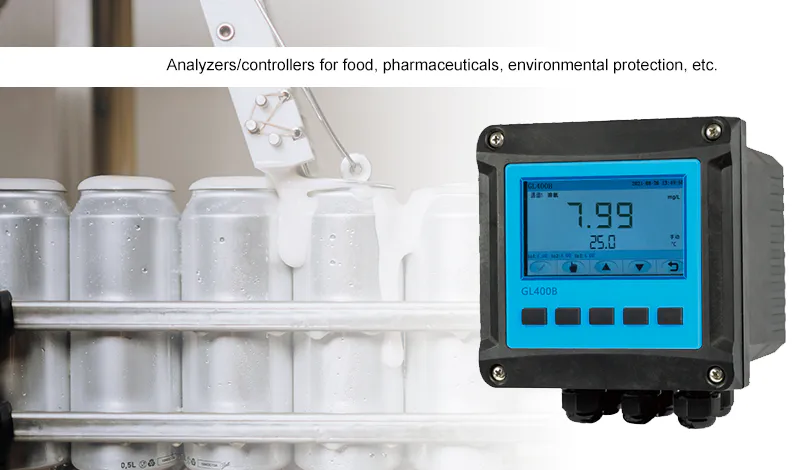
Transmitter & Analyzer Typical Industries & Applications
Liquid analyzers and transmitters are widely used in:
Oil & Gas and Petrochemical processing
Chemical and specialty chemical plants
Thermal power generation and new energy facilities
Food and beverage processing
Pharmaceutical manufacturing
Water and wastewater treatment
Environmental monitoring and protection systems
These instruments support both process control and regulatory compliance requirements.
Transmitter & Analyzer Features 1
Chinese color TFT LCD display with intuitive menu structure
Friendly user interface with guided calibration steps
Clear prompts reduce operator errors and commissioning time
Simultaneous display of main parameter, temperature, model name, time, output current, and system status
Real-time visualization improves situational awareness for operators
Programmable relay outputs for alarm control, hysteresis settings, and cleaning control
Flexible configuration supports site-specific control strategies

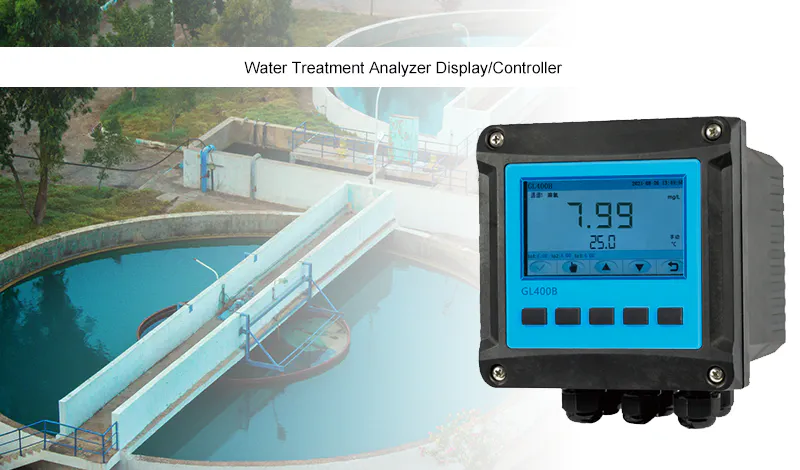
Transmitter & Analyzer Features 2
On-site calibration of output current
Output test function for current and relay verification, simplifying field commissioning
Automatic sensor scanning and fault diagnosis
Clear indication of abnormal parameters to support fast troubleshooting
Display
4.3” TFT color LCD (16:9), four-line display:
Model & Time
Measurement Value
Output Current & Relay Status
Key Operation Prompts
Analog Output
Isolated 4–20 mA outputs, up to 4 programmable channels (load ≤ 750 Ω)
Switch Output
4 relay outputs, 220 VAC / 3 A (normally open), programmable for upper/lower limit, delay, cleaning, high/low activation
Digital Communication
RS485 interface
Transmitters & Sensors Parameter
Analog output: Isolated 4–20 mA, up to 4 programmable channels (load ≤ 750 Ω)
Switch output: 4 programmable relay outputs (220 VAC, 3 A, normally open)
Digital communication: RS485
Power supply: 220 ±22 VAC, 50 ±0.5 Hz or 18–36 VDC
Power consumption: ≤ 10 W
Enclosure material: PA66-GF25, flame-retardant
Protection class: IP65
Dimensions (W × D × H): 150 × 170 × 150 mm
Installation options: Panel mount / cut-out (138 × 138 mm) / wall mount / pipe mount
Electrical interface: 4 × M20×1.5 + 2 × M18×1.5
Ambient temperature: 0 ~ 60 °C
Relative humidity: < 90% RH (non-condensing)
304 stainless steel instrument enclosure GA0350 / GA0201
201 stainless steel instrument enclosure GA0340
Instrument enclosure mounting pole GA0311
These accessories enhance protection and installation flexibility for harsh industrial environments.
Instrava OEM/ODM
We can arrange customized product manufacturing to meet your growth needs, identifying high-quality factories for both OEM and ODM projects.
We can facilitate the customization of specialized products based on your project requirements (such as power-related equipment, where we can engage Chinese design institutes for product development—subject to a separate fee).
We can tailor comprehensive project upgrade solutions to your facility’s needs (such as migrating traditional instrumentation to the cloud or upgrading to technologies like Ethernet-APL).
We can source precision measurement instruments to meet your laboratory’s requirements.
And much more…
Whatever your product needs may be, we will do our utmost to fulfill them.

Related Product Recommendations
Can one analyzer support multiple liquid parameters at the same time?
Yes. The Instrava liquid analyzer platform is designed as a multi-function analytical transmitter. By selecting the corresponding sensor, the same transmitter can be configured for pH/ORP, conductivity, turbidity, dissolved oxygen, residual chlorine, or sludge concentration measurement.
Each parameter is displayed, transmitted, and diagnosed independently.
Is the analyzer suitable for continuous operation in water treatment plants?
Yes. The analyzer is specifically designed for 24/7 continuous monitoring in water and wastewater treatment applications.
Its IP65 enclosure, isolated 4–20 mA outputs, and stable power design ensure reliable long-term operation in pump rooms, control panels, and outdoor cabinets.
How does the analyzer integrate with PLC or DCS systems?
The analyzer supports isolated 4–20 mA analog outputs and RS485 digital communication, making it compatible with most PLC, DCS, and SCADA systems used in water and chemical plants.
Relay outputs can also be used for alarm triggering, dosing control, or cleaning system activation.
Can the output current be calibrated on site?
Yes. Output calibration can be performed directly on site through the analyzer interface.
This allows engineers to verify and adjust the 4–20 mA signal without removing the instrument or using external calibration modules, significantly reducing commissioning time.
How does the analyzer help with troubleshooting and maintenance?
The system includes built-in diagnostic functions that scan connected sensors and indicate whether parameters are operating within normal ranges.
Output testing functions allow engineers to verify current outputs and relay actions, helping quickly locate issues during commissioning or maintenance.
Is the analyzer suitable for harsh chemical process environments?
Yes. The analyzer is widely used in chemical and petrochemical applications.
Its flame-retardant PA66-GF25 enclosure, wide power supply options, programmable alarms, and stable signal isolation make it suitable for environments with electrical noise, temperature variation, and long cable runs.
Why Trust Instrava?
We select manufacturers from a neutral, impartial standpoint, always with your best interests in mind.
Our very existence depends on helping you source the products that are the perfect fit for your needs.
Based in China, we are able to conduct on-site inspections of production environments and product quality firsthand.
We help you avoid intermediaries posing as factories.
We facilitate smoother after-sales support, eliminating time zone issues and the delays often associated with dealing directly with factories.
Our multilingual team ensures effective communication.
For a trading startup, every interaction with a client is a precious opportunity—a sign that you are willing to place your trust in us and give us the chance to prove ourselves.
In the digital age, while information is easily accessible, misconceptions often cloud the trust between people.
Instrava relies entirely on trust; it is our core philosophy and the foundation of our existence in society. It is the fundamental basis for our long-term growth and our commitment to serving the community.
Please place your trust in us.

Industrial systems are rapidly evolving from isolated control environments into fully connected, data-driven ecosystems. At the center of this transformation...
Industrial communication technologies have evolved significantly over the past decades. Traditional fieldbus systems such as PROFIBUS and Modbus have long...
As industrial systems move toward digitalization and intelligent automation, traditional field communication technologies are increasingly unable to meet the demands...

