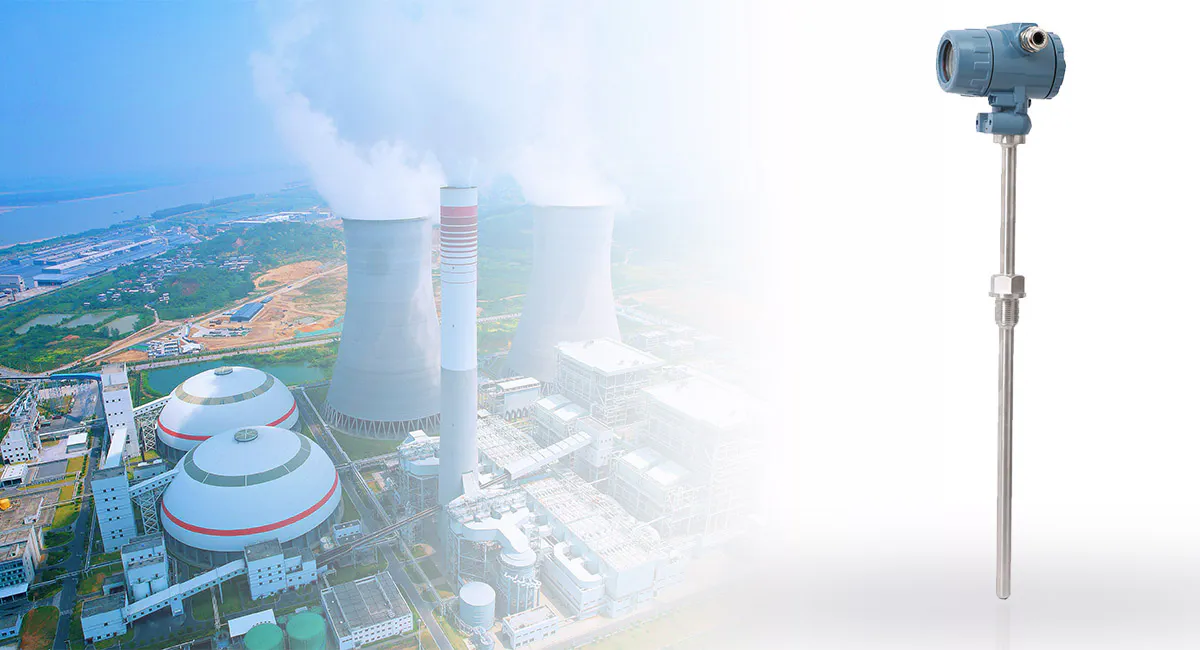
Transmitter

Turbidity Sensor for Accurate Water Quality Monitoring

Our turbidity sensor is designed for continuous and reliable turbidity measurement in industrial and environmental water applications. Based on the ISO 7027 infrared nephelometric method, it delivers stable, repeatable results while effectively eliminating the influence of sample color.

Key Highlights

  • ISO 7027 compliant infrared scattered light measurement

  • Dual-beam infrared optical detection technology

  • High repeatability and long-term stability

  • RS485 communication for seamless system integration

  • Suitable for standard, customized, and OEM applications

  Transmitters & Sensors Description  

Why This Turbidity Sensor

Unlike conventional turbidity sensors that are sensitive to color interference and signal drift, this sensor adopts a dual-beam infrared scattered light photometric design to ensure consistent performance even in complex water conditions.

For procurement teams and system integrators, this means:

  • Reduced calibration frequency

  • Lower maintenance costs over the product lifecycle

  • Stable data output for control and monitoring systems

  • Reliable operation in long-term continuous measurement scenarios

This turbidity sensor is well suited for projects where data reliability and operational stability are critical.

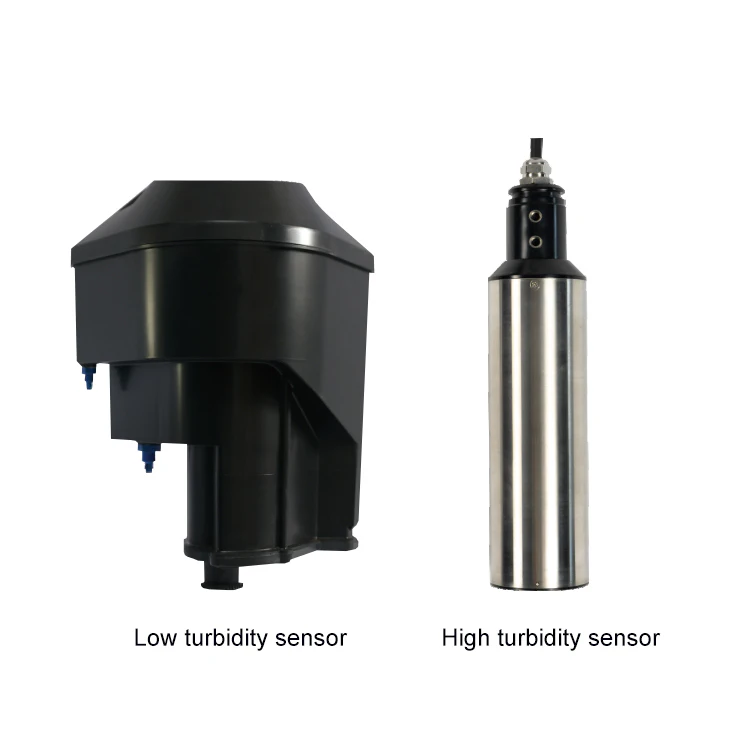
Low and high turbidity sensors
Industrial turbidity sensor for online water quality monitoring

Turbidity Sensor Measurement Technology & Performance

The sensor operates using the ISO 7027 infrared light scattering principle, which minimizes the influence of ambient light and sample color. The dual-beam optical structure enhances measurement consistency and improves resistance to optical contamination.

Performance Advantages

  • Excellent repeatability and measurement stability

  • Built-in self-diagnostic function to ensure data accuracy

  • Suitable for both low and high turbidity measurement ranges

  • Designed for continuous online monitoring

Turbidity Sensor Typical Applications & Industries

This turbidity sensor is widely used across various water-related industries:

  • Water & Wastewater Treatment
    Continuous monitoring of influent and effluent turbidity to support process control and regulatory compliance.

  • Industrial Process Water
    Turbidity measurement in cooling water, process water, and recycling systems.

  • Environmental Monitoring
    Long-term turbidity monitoring in surface water and discharge points.

  • OEM Analytical Systems
    Integration into water quality analyzers, skids, and automated monitoring stations.

Water turbidity sensor
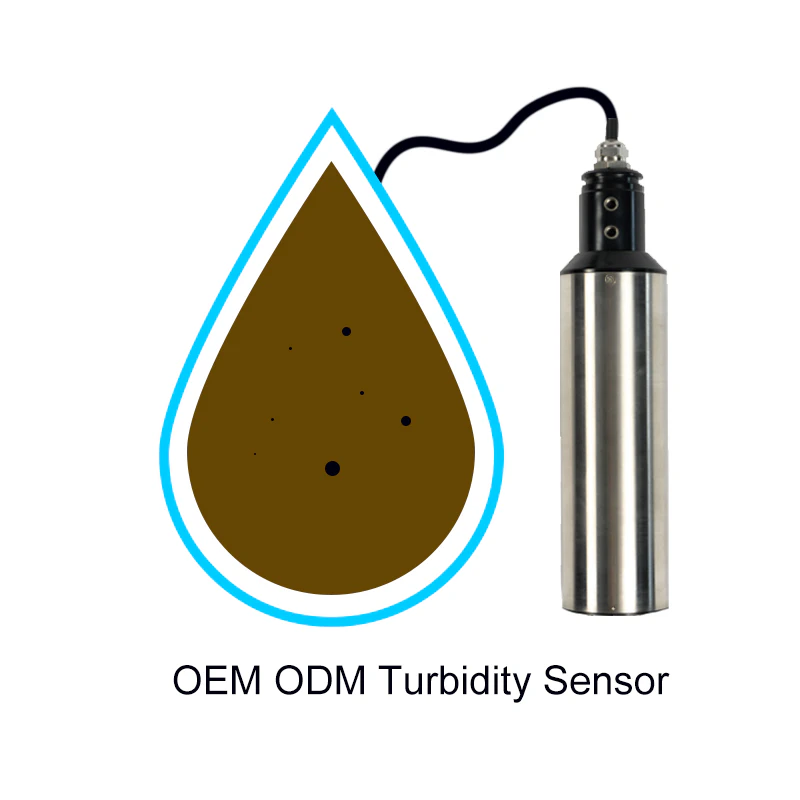
OEM ODM Turbidity sensor

Turbidity Sensor Cleaning & Maintenance Options

To reduce maintenance workload and improve measurement reliability, the sensor can be optionally equipped with an automatic wiper cleaning function. This effectively prevents fouling on the optical window and ensures stable readings in high-fouling environments.

Benefits

  • Reduced manual cleaning frequency

  • Improved long-term measurement stability

  • Suitable for unattended monitoring installations

  Transmitters & Sensors Parameter  

Measurement Range

  • 0.01–100 NTU

  • 0.01–4000 NTU

Measurement Accuracy

  • ±2% FS or ±0.1 NTU

Temperature Range (Measured Medium)

  • 0–45 °C

Flow Velocity

  • Low turbidity sensor: 300–700 ml/min

  • High turbidity sensor: ≤2.5 m/s

Pressure

  • Low turbidity sensor: Atmospheric pressure

  • High turbidity sensor: ≤0.4 MPa

Output Signal

  • RS485

Materials

  • Low turbidity sensor: ABS + 316L

  • High turbidity sensor: 316L + PVC

Ingress Protection

  • IP68 (high turbidity sensor)

Process Connection

  • Inlet: 1/4 NPT

  • Outlet: 1/2 NPT (low turbidity sensor)

Ambient Conditions

  • Temperature: 0–60 °C

  • Relative humidity: <90%

Signal Cable

  • Low turbidity sensor: 3 m (standard, extension not recommended)

  • High turbidity sensor: 10 m (standard), extendable up to 100 m

  Instrava OEM/ODM

Instrava Engineering & Customization Support

At Instrava, our instruments are developed with a strong focus on real industrial applications. Each product is designed to operate as a reliable component within measurement, control, and automation systems, rather than as a standalone device.

Our engineering team supports customers during product selection by evaluating process conditions, operating environments, and system requirements, ensuring stable and long-term performance in actual use.

In addition to standard configurations, Instrava offers flexible customization options, including measurement range, materials, output signals, communication interfaces, and installation methods. All custom solutions are engineered to meet industrial standards and application-specific demands.

We also support OEM projects and system integration, providing consistent product design, technical documentation, and long-term supply to ensure smooth integration and reliable operation throughout the project lifecycle.

symbolizing trust and the beginning of a long-term partnership

  Related Product Recommendations  

This turbidity sensor is based on the ISO 7027 infrared scattered light method, which minimizes the impact of sample color by using infrared wavelengths instead of visible light. This makes it suitable for complex water conditions where color interference is common.

Yes. The sensor is designed for continuous online measurement and offers stable output, good repeatability, and built-in self-diagnostic functions to ensure reliable long-term operation in industrial and environmental monitoring systems.

The low turbidity sensor is optimized for high sensitivity and low flow conditions, while the high turbidity sensor is designed for harsher environments with higher flow velocity and pressure. Each version uses different materials and mechanical structures to match its application range.

The sensor supports RS485 communication, making it suitable for integration with PLCs, controllers, and upper-level monitoring systems commonly used in water treatment and industrial automation applications.

An optional automatic wiper cleaning function is available to reduce fouling on the optical surface. This feature helps maintain measurement stability and significantly reduces manual maintenance requirements.

Instrava provides customization and OEM support, including measurement range selection, material options, cable length, and integration requirements. Engineering support is available to ensure compatibility with specific system designs and applications.

Why Choose Instrava

By choosing Instrava, you gain a partner with a deep understanding of industrial applications and the expertise to meet today’s operational challenges.
Our role extends beyond products—we support your success through dependable solutions and long-term commitment.

Engineering-Driven Innovation

Innovation at Instrava is guided by real industrial requirements. We continuously refine our technologies to address evolving operational challenges, ensuring practical and reliable performance in demanding environments.

Application-Specific Customization

We provide engineering-level customization to match specific process conditions. From measurement range and materials to output signals and installation options, our solutions are configured to fit real applications.

Proven Quality and Reliability

Quality and reliability are fundamental to every Instrava product. Manufactured under strict quality control and thoroughly tested, our instruments deliver accurate, stable, and long-term performance.

Global Capability with Local Support

Instrava combines global engineering expertise with responsive local support, ensuring our partners benefit from internationally aligned technology and timely regional service.

Comprehensive Product Portfolio

Our broad portfolio of measurement and control instruments enables us to address a wide range of industrial needs, providing integrated solutions from a single, reliable source.

Partner-Oriented Engineering Support

We work closely with our partners from technical consultation to after-sales support. Our focus is on delivering solutions that create lasting value and support long-term operational success.

Temperature Transmitters in Industrial Process Control

  • By Instrava
  • Feb 9, 2026

From Local Measurement to Predictive Process StabilityTemperature is one of the most fundamental variables in industrial processes.Yet in modern automated...


  • 36Min Read

Conductivity and TDS Sensors in Industrial Liquid Monitoring

  • By Instrava
  • Feb 7, 2026

From Indicator Value to Process Intelligence Conductivity and Total Dissolved Solids (TDS) are among the most frequently measured parameters in...

  • 55Min Read

Residual Chlorine and Chlorine Dioxide Sensors in Industrial Water Systems

  • By Instrava
  • Feb 7, 2026

From Compliance Monitoring to Disinfection Process Control Residual chlorine and chlorine dioxide are no longer measured solely for regulatory reporting.In...
  • 58Min Read
Home
Products
Whatsapp