เซ็นเซอร์อัลตราโซนิกแบบระดับ: หลักการการทำงาน, ประเภท และการประยุกต์ใช้ในอุตสาหกรรม
เซ็นเซอร์อัลตราโซนิกวัดระดับภาพรวม เซ็นเซอร์อัลตราโซนิกวัดระดับเป็นอุปกรณ์แบบไม่สัมผัสที่ใช้ในการวัดระดับของของเหลวหรือของแข็ง...

หน้าแรก » ผลิตภัณฑ์ » เครื่องมือวัดระดับ » เกจวัดระดับของเหลวแบบลูกลอยแม่เหล็ก


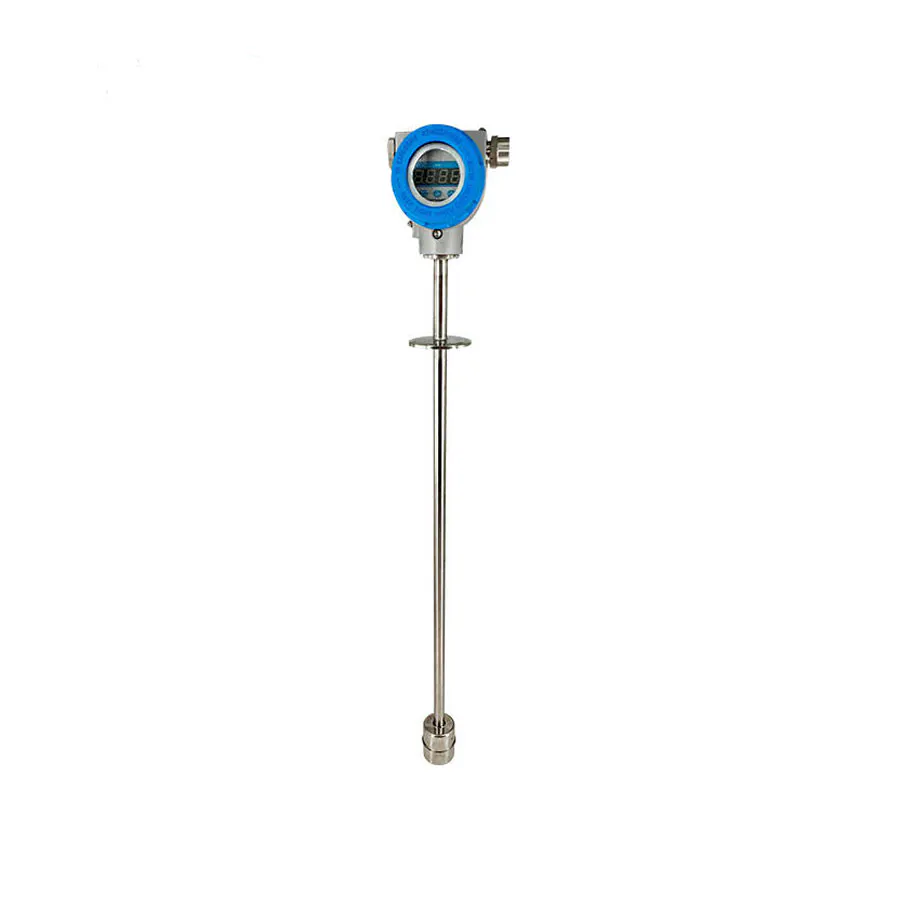
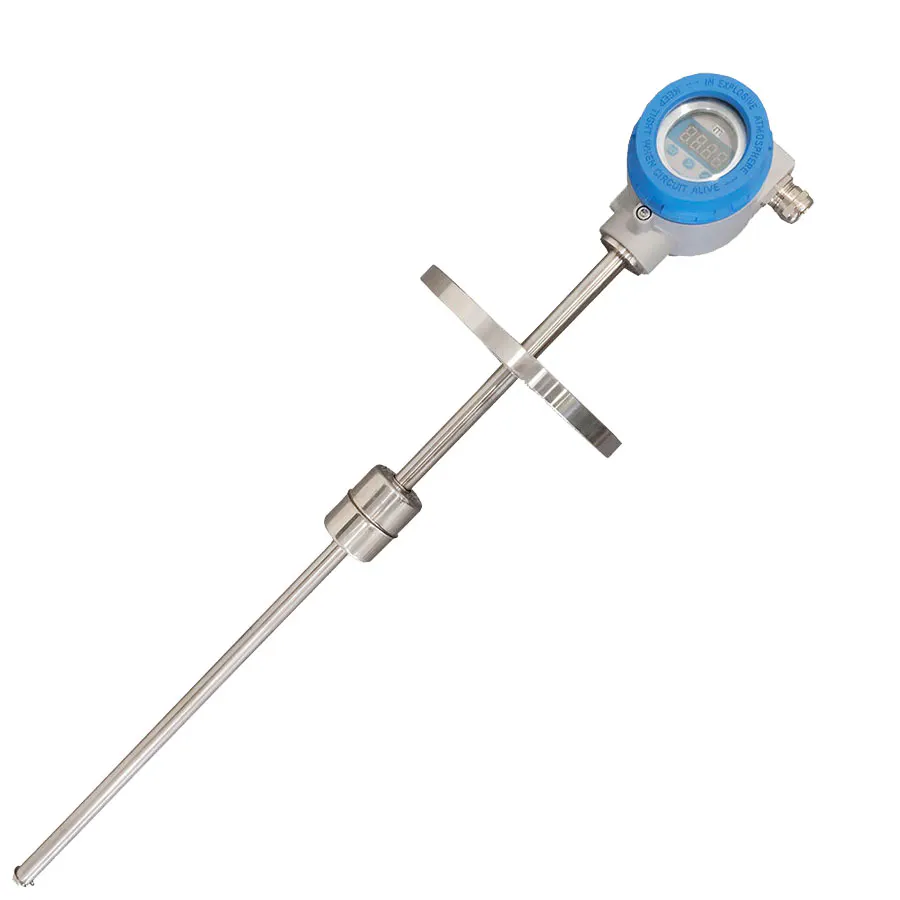
The magnetic float level gauge is an essential instrument for industrial liquid level measurement. It operates by using a magnetic float that moves along the guide tube, transferring liquid level changes to an indicator or signal output device.
Ideal for chemical, oil, water, and corrosive liquid applications, it provides reliable and continuous monitoring of tank levels. The device is designed with robust materials, ensuring excellent durability even under high pressure or harsh environments.
With both direct visual readings and remote electrical outputs, this level gauge supports integration into modern automation systems, helping industries achieve efficient process control.
เครื่องมือวัดระดับ คำอธิบาย
Magnetic Float Level Gauge-Features
Simple and Reliable Design – Compact structure ensures stable operation, easy installation, and minimal maintenance requirements.
Separated Measuring and Connection Chambers – The working cavity and transmitter chamber are independent, enhancing safety and reliability.
Wide Application for Harsh Media – Suitable for thick, dirty, flammable, explosive, and corrosive liquids, ideal for demanding industrial environments.
Dual Display Options – Equipped with a field pointer and LCD screen for clear, real-time liquid level visualization.
Intelligent Signal Processing – Automatic zero and span calibration without manual switching, simplifying commissioning and adjustments.
High Measurement Accuracy – Precise liquid level detection; minimum adjustment angle can achieve 2°.
Advanced Output Capabilities – 4–20 mA current output with HART protocol support for seamless integration into industrial automation systems.


Applications of Magnetic Float Level Gauge
The Magnetic Float Level Gauge is widely used for continuous liquid level and interface measurement in various industrial processes. Based on buoyancy principles and a robust mechanical structure, it delivers stable and reliable performance even under harsh operating conditions.
การใช้งานทั่วไปประกอบด้วย:
Chemical Industry
Used for level and interface measurement of corrosive, toxic, and high-viscosity liquids in reactors, storage tanks, and process vessels. Suitable for aggressive media where reliability and safety are critical.
Oil & Gas and Petrochemical Industry
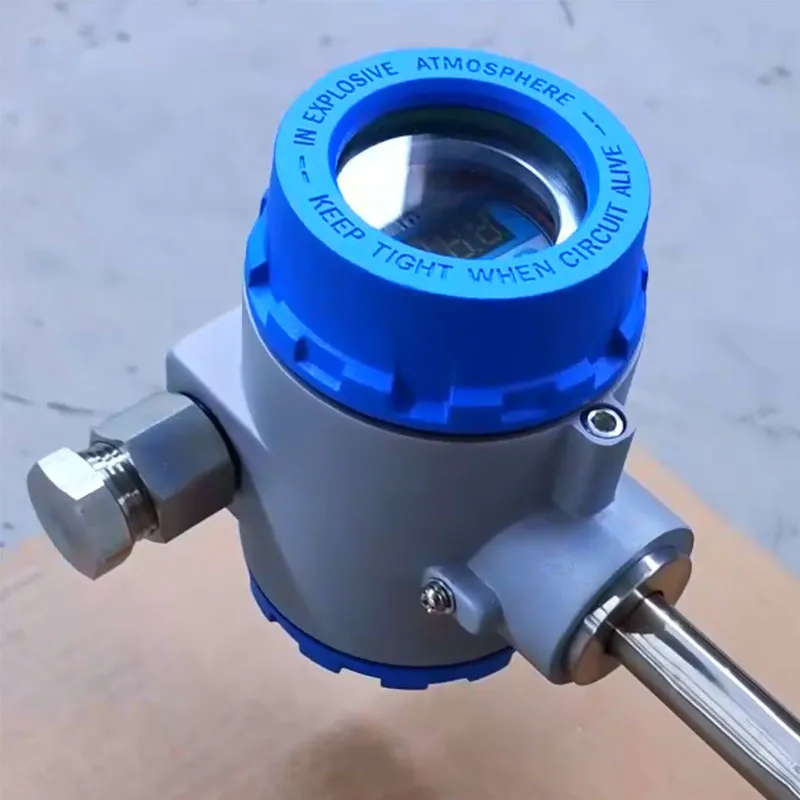
Ideal for monitoring crude oil, refined fuels, and chemical intermediates in storage tanks and separators. The all-metal construction and explosion-proof design ensure safe operation in hazardous areas.
การผลิตไฟฟ้า
Applied in boiler systems, condensate tanks, and auxiliary vessels for accurate liquid level indication under high-temperature and high-pressure conditions.
การบำบัดน้ำและน้ำเสีย
Used for level measurement in clean water tanks, sewage treatment basins, and sludge systems. Performs reliably in dirty and particle-laden liquids with minimal maintenance.
Pharmaceutical and Food Processing
Suitable for hygienic applications requiring stable and repeatable level measurement. Optional stainless steel materials support clean and controlled process environments.
Shipbuilding and Marine Engineering
Applied in ballast tanks, fuel tanks, and service tanks where vibration resistance and long-term stability are required.
With support for local indication, 4–20 mA signal output, alarm switching, and HART communication, the float level gauge can be easily integrated into PLC, DCS, and industrial automation systems, making it a reliable solution for modern process control.
Magnetic Float Level Meter-Working Principle
The float (interface) level gauge is designed based on the principles of buoyancy and Hooke’s law. The float’s length corresponds to the measurement range.
When the float is suspended on the measuring spring inside the gauge and submerged in the liquid, it is subjected to the combined forces of spring tension, buoyancy, and gravity. The upward displacement of the float is proportional to the spring’s tension, and the change in spring length reflects the liquid level.
This displacement is transmitted to an external indicator via a magnetic coupling, providing a clear and accurate local liquid level reading.
The gauge features a full-metal construction, with the indicator fully isolated from the measured medium. It supports on-site visual display, as well as 4–20 mA two-wire output, switch signals, and HART protocol for integration with industrial automation systems.


Product Structure of Magnetic Float Level Meter
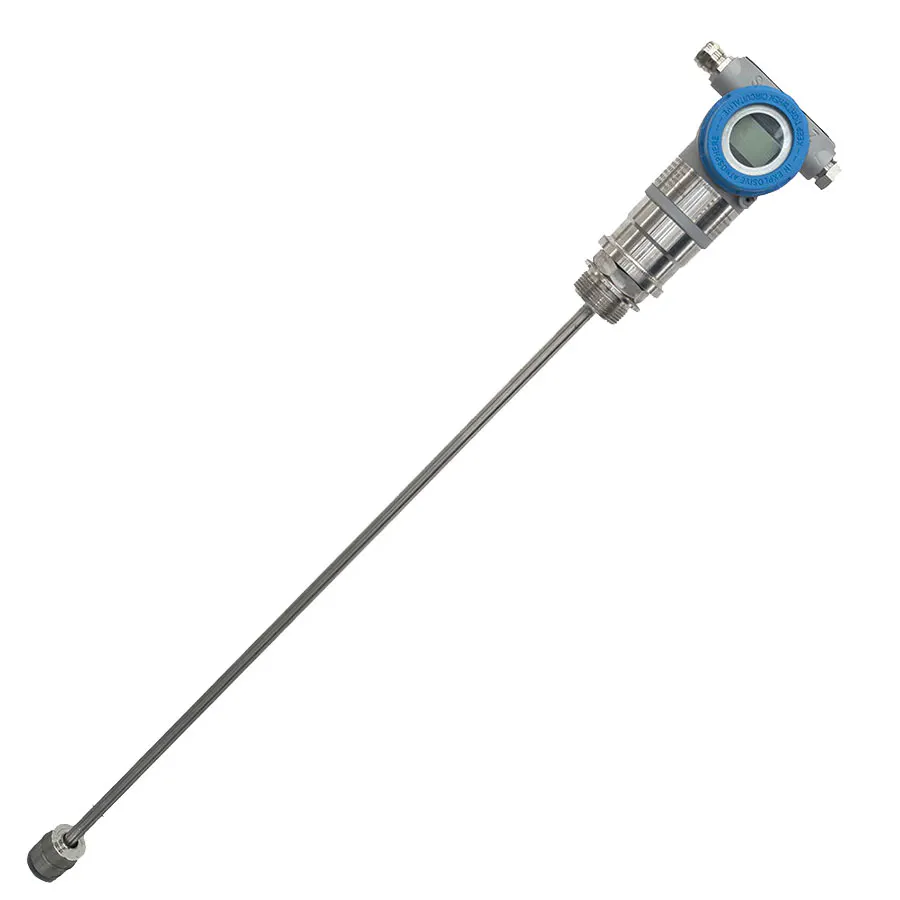
The Magnetic Float Level Meter adopts a modular all-metal structure with magnetic coupling, ensuring complete isolation between the measured medium and the indicator. According to display and safety requirements, the following configurations are available:
Basic Type
Without LED display, non-explosion-proof design. Suitable for non-hazardous areas requiring reliable local level indication.
LED Display Explosion-Proof Type
Integrated LED digital display in an explosion-proof housing, providing clear on-site indication for hazardous industrial environments.
LCD Display with HART Protocol (Explosion-Proof)
Equipped with an intelligent transmitter, LCD display, and 4–20 mA output with HART communication, enabling remote monitoring and system integration.
Structural Advantages:
Compact design, high reliability, corrosion-resistant construction, and flexible configuration to meet various industrial applications.
เครื่องมือวัดระดับ พารามิเตอร์
| พารามิเตอร์ | ข้อกำหนด |
|---|---|
| ช่วงการวัด | 300–6000 mm (customizable per user requirements) |
| ความถูกต้องของการวัด | ±1.5%, ±2.0% |
| Float Material | SS304, SS316L, HC, Ti, (customizable per user requirements) |
| ความหนาแน่นปานกลาง | ≥ 0.45 g/cm³ |
| การวัดอินเทอร์เฟซ | Density difference between two media ≥ 0.1 g/cm³ |
| อุณหภูมิปานกลาง | ≤ 80°C, ≤ 150°C, ≤ 250°C, ≤ 400°C |
| ความดันปานกลาง | Standard: ≤ 4.0 MPa; High-pressure: ≤ 42 MPa |
| Pressure Rating | Standard: DN40–DN50 / PN4.0 MPa; DN80–DN100 / PN1.6 MPa High-pressure: DN40–DN50 / PN10.0 MPa Special: per customer request |
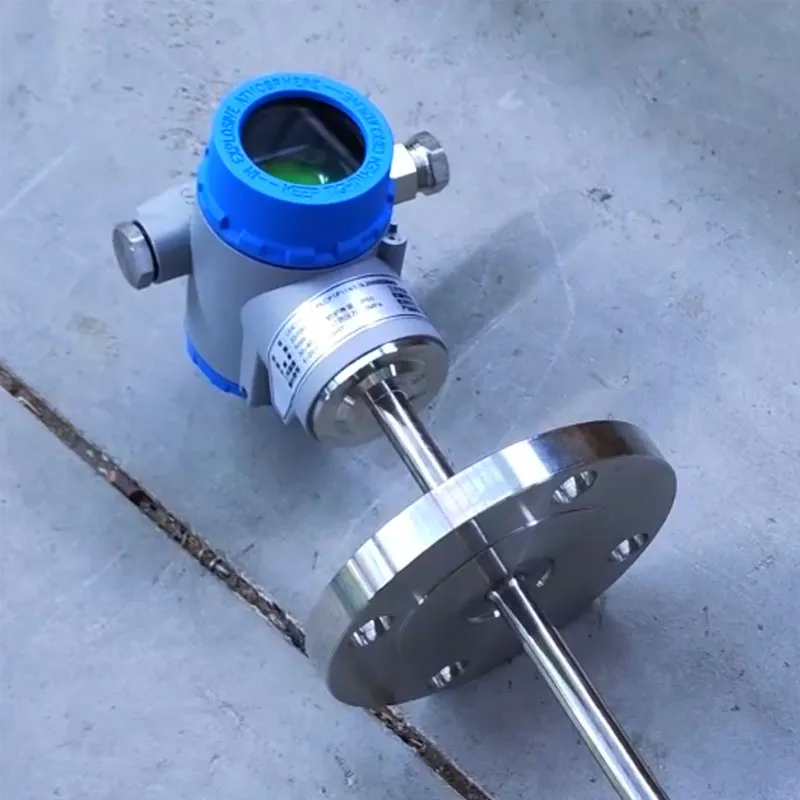
| Flange Standard | HG20592, DIN2501, ANSI, SH, GB (or per user request) |
| การเชื่อมต่อของกระบวนการ | Flange DN50, G 1.5″ threaded, or per customer requirements |
| สัญญาณขาออก | 4–20 mA DC (two-wire system) |
| ความต้านทานการโหลด | 500 Ω (powered by 24V DC) |
| Communication Protocol | HART, Modbus (RS485) |
| เอาต์พุตสัญญาณเตือน | Upper and lower limit switch isolated output |
| ความจุในการติดต่อ | Max. 400 VAC 0.05 A, 24 VDC 0.2 A |
| แหล่งจ่ายไฟ | 15–35 VDC, 220 VAC; Lithium battery 3.6 V 7.5 Ah, 220 VAC |
| อุณหภูมิแวดล้อม | -20°C ถึง +60°C |
| วัสดุที่ใช้ในการก่อสร้างที่อยู่อาศัย | SS304, SS316L, or per customer request |
| Indicator Housing | Aluminum alloy, SS304, SS316L |
| ระดับการป้องกัน | IP65, IP67 (IP68 optional upon request) |
| Explosion-proof Rating | Intrinsically safe: Ex ia IIC T6 Ga, Isolated: Ex d IIC T6 Gb |
| Pressure Test | Tested 1.2–1.5× rated pressure per standards before delivery |
อินสตราวา OEM/ODM
Instrava มุ่งเน้นในการนำเสนอโซลูชันอุตสาหกรรมที่เชื่อถือได้ ผ่านผลิตภัณฑ์ที่คัดสรรมาอย่างพิถีพิถัน การปรับแต่งให้เหมาะสมกับการใช้งาน และการปรับแต่งที่ยืดหยุ่น เราเลือกเครื่องมือที่ผ่านการพิสูจน์แล้วจากผู้ผลิตที่เชื่อถือได้ เพื่อให้มั่นใจในคุณภาพที่สม่ำเสมอ ปรับโซลูชันให้เหมาะสมตามสภาพการทำงานจริงเพื่อแก้ไขปัญหาที่เกิดขึ้นจริง และให้การกำหนดค่าที่ปรับแต่งได้เพื่อตอบสนองความต้องการเฉพาะของการใช้งาน.
ด้วยการผสานความเชี่ยวชาญในการคัดเลือกเข้ากับความเข้าใจในการประยุกต์ใช้งาน Instrava ช่วยให้ลูกค้าลดความเสี่ยง เพิ่มประสิทธิภาพ และบรรลุผลลัพธ์ที่เชื่อถือได้ในสภาพแวดล้อมอุตสาหกรรมที่ซับซ้อน.

คำแนะนำสินค้าที่เกี่ยวข้อง
What types of liquids can the Float Level Gauge measure?
The Float Level Gauge can measure water, oils, acids, alkalis, corrosive chemicals, and viscous fluids. It is suitable for a wide range of industrial applications, including chemical, petrochemical, and food processing environments.
How accurate is the Magnetic Float Level Meter?
Using precision float and guide rod design, this meter provides ±10 mm measurement accuracy. It ensures reliable and long-term stable performance for industrial liquid level measurement applications.
Can the Float Level Gauge connect to automated control systems?
Yes, models with 4–20 mA signal output can integrate with PLC and DCS systems for real-time monitoring, supporting automated control and data logging in industrial processes.
How often should the Float Level Gauge be inspected or maintained?
Routine maintenance includes checking the float and seals every 6–12 months. For aggressive or viscous media, more frequent inspections may be required to maintain measurement accuracy.
What installation considerations are necessary for optimal performance?
Install the gauge vertically and ensure the float moves freely. Avoid contact with tank walls or turbulence in the liquid to maintain accurate and stable level readings.
Is the Float Level Gauge suitable for corrosive or viscous liquids?
Yes, with appropriate material selection such as stainless steel or corrosion-resistant alloys, the gauge can reliably measure aggressive, corrosive, or viscous fluids in industrial tanks.
สร้างบนความสม่ำเสมอ ไม่ใช่คำกล่าวอ้าง
เราเชี่ยวชาญด้านการวิเคราะห์และตรวจจับในอุตสาหกรรม โดยมีความเข้าใจอย่างชัดเจนเกี่ยวกับสภาพแวดล้อมการทำงานจริงและความต้องการต่างๆ.
ทุกเครื่องมือได้รับการประเมินตามประสิทธิภาพ, ความเสถียร, และความเหมาะสมในการนำไปใช้—ไม่ใช่เพียงแค่ข้อมูลจำเพาะหรือราคา.
เราทำงานร่วมกับผู้ผลิตที่เชื่อถือได้เพื่อให้แน่ใจว่ามีปริมาณการจัดหาที่เสถียร คุณภาพที่สม่ำเสมอ และการจัดส่งที่น่าเชื่อถือ.
คำแนะนำของเราได้รับการสนับสนุนจากความเข้าใจในการใช้งานจริง ช่วยให้ลูกค้าหลีกเลี่ยงปัญหาทั่วไปและบรรลุผลลัพธ์ที่เชื่อถือได้.
Instrava ถูกสร้างขึ้นเพื่อลดความไม่แน่นอน—เพื่อให้ทุกการตัดสินใจของคุณชัดเจน ปลอดภัย และน่าเชื่อถือมากขึ้น.

เซ็นเซอร์อัลตราโซนิกวัดระดับภาพรวม เซ็นเซอร์อัลตราโซนิกวัดระดับเป็นอุปกรณ์แบบไม่สัมผัสที่ใช้ในการวัดระดับของของเหลวหรือของแข็ง...
สงครามสมัยใหม่ได้เปลี่ยนจากการเผชิญหน้าในสนามรบแบบดั้งเดิมไปสู่การโจมตีอย่างแม่นยำที่มุ่งเป้าไปที่โครงสร้างพื้นฐานอุตสาหกรรม ระบบพลังงาน และจุดเชื่อมโยงในห่วงโซ่อุปทาน...
เมื่อความขัดแย้งสิ้นสุดลง การฟื้นฟูก็เริ่มต้นขึ้น—ไม่ใช่แค่เมืองเท่านั้น แต่รวมถึงระบบต่าง ๆ ด้วย การผลิตพลังงาน น้ำ เคมีภัณฑ์ และโครงสร้างพื้นฐานต้องได้รับการฟื้นฟูอย่างรวดเร็ว,...