
- By Instrava
- 01/14/2026
- 0 Comment
Float Level Transmitter in Boiler Systems: Signal Reliability, Failure Risk, and Control Stability
Why Signal Reliability Matters More Than Accuracy in Boiler Level Measurement
In boiler systems, level measurement is not only about precision—it is about signal reliability under stress. Compared with laboratory or clean-process environments, boilers operate under high temperature, pressure fluctuation, vibration, and water quality variation.
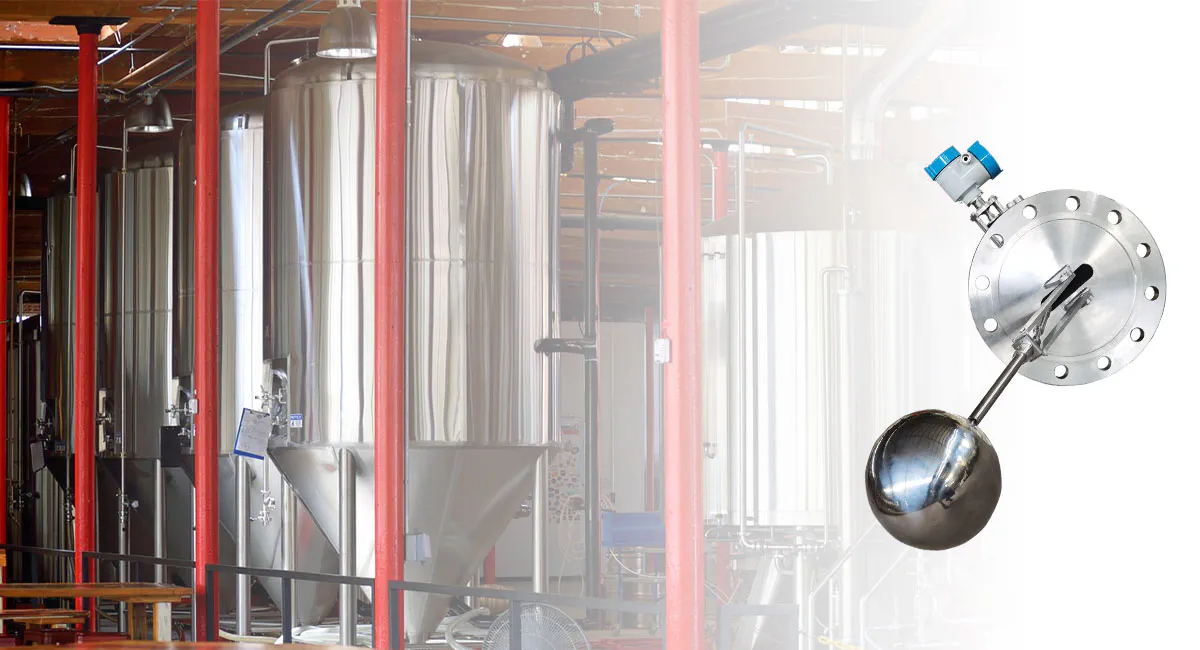
Under these conditions, the float level transmitter is widely adopted because it provides mechanically stable level detection with predictable signal behavior. For boiler operators and system designers, the value of a float level transmitter lies in its ability to deliver consistent switching or analog output, even when operating conditions deviate from ideal parameters.
Typical Boiler Scenarios Where Float Level Transmitter Performance Is Critical
In boiler applications, it performance directly impacts:
| Boiler Scenario | Impact of Level Signal |
|---|---|
| Low-water protection | Prevents dry firing |
| Feedwater control | Maintains thermal balance |
| Start-up and shutdown | Avoids false alarms |
| Alarm interlock logic | Ensures safe trip response |
| Redundant level verification | Reduces single-point failure |
In these scenarios, it is often selected not for ultra-high resolution, but for repeatability and electrical stability.
Signal Stability Under Boiler Operating Conditions
Boiler environments introduce several stress factors that affect level transmitters:
Rapid temperature change
Steam-water interface turbulence
Scale and sediment presence
Electrical noise from motors and pumps
The maintains signal stability because its measurement is based on buoyancy-driven mechanical movement, rather than signal interpretation from conductivity or pressure fluctuation.
Typical Operating Range in Boiler Applications
| Parameter | Common Range |
|---|---|
| Temperature | Up to 250°C |
| Pressure | Up to 2.5 MPa |
| Medium | Boiler water, condensate |
| Operation Mode | Continuous |
| Output Type | 4–20 mA / Switch |
These characteristics make the float level transmitter suitable for long-term boiler service with minimal signal drift.
Failure Mode Transparency Compared with Other Level Technologies
One major reason engineers continue to specify a float level transmitter in boiler systems is failure mode transparency.
Unlike electronic-only devices, common failure indicators are easier to identify:
Abnormal output fluctuation
Delayed switching response
Mechanical obstruction due to scale
Seal degradation visible during inspection
This allows maintenance teams to detect degradation early, reducing the risk of sudden boiler shutdown or unsafe operation.
Role of Float Level Transmitter in Boiler Control Architecture
In modern boiler automation, it is typically integrated into a layered control strategy.
| Control Layer | Function |
|---|---|
| Primary control | Feedwater modulation |
| Secondary protection | High/low level alarm |
| Independent backup | Mechanical or discrete signal |
| Operator verification | Signal comparison |
Rather than replacing digital instruments, the float level transmitter supports system redundancy, especially in safety-critical loops.
Long-Term Stability and Maintenance Planning
From an operational perspective, boiler operators value components that support predictable maintenance cycles.
Maintenance Characteristics
| Factor | Float Level Transmitter |
|---|---|
| Calibration frequency | Low |
| Electronic drift | Minimal |
| Mechanical wear | Gradual and observable |
| Spare part availability | High |
| Service interruption risk | Low |
This predictability is especially important in multi-boiler installations where unplanned downtime has cascading effects.
Material Considerations for Boiler-Specific Selection
Material selection plays a decisive role in float level transmitter longevity within boiler systems.
Common Material Configuration
| Component | Recommended Material |
|---|---|
| Float | Stainless Steel |
| Housing | Carbon Steel / Stainless Steel |
| Stem | Stainless Steel |
| Sealing | Graphite / High-temperature elastomer |
| Electrical Interface | IP-rated industrial connector |
This configuration supports resistance to corrosion, thermal expansion, and vibration.
Procurement Perspective: Total Cost Over Time
From a procurement standpoint, the float level transmitter demonstrates competitive lifecycle economics.
| Cost Factor | Evaluation |
|---|---|
| Initial cost | Moderate |
| Installation integration | Simple |
| Maintenance cost | Low |
| Replacement cycle | Long |
| Downtime exposure | Controlled |
For boiler OEMs and plant operators, this balance supports both budget control and operational reliability.
Why Float Level Transmitter Remains Relevant in Boiler Retrofits
In retrofit projects, replacing legacy instruments without major system redesign is often a priority. The float level transmitter offers:
Mechanical compatibility with existing nozzles
Signal compatibility with PLC or DCS
Minimal commissioning complexity
Familiar operation for maintenance teams
This makes it a practical choice for boiler upgrades and capacity expansion projects.
Selection Checklist for Boiler Applications
When specifying a float level transmitter for boiler systems, buyers typically evaluate:
Maximum allowable pressure and temperature
Output signal compatibility
Float material resistance to scale
Process connection standard
Availability of technical documentation and spares
These criteria reduce risk during long-term boiler operation.
Conclusion: Functional Reliability Over Complexity
In boiler systems, the float level transmitter is valued not for advanced analytics, but for functional reliability under harsh conditions. Its ability to deliver stable signals, transparent failure behavior, and predictable maintenance performance makes it a dependable component in both new boiler installations and retrofit projects.
For procurement teams and system designers, selecting the right float level transmitter is a strategic decision that supports boiler safety, uptime, and long-term operational consistency.