
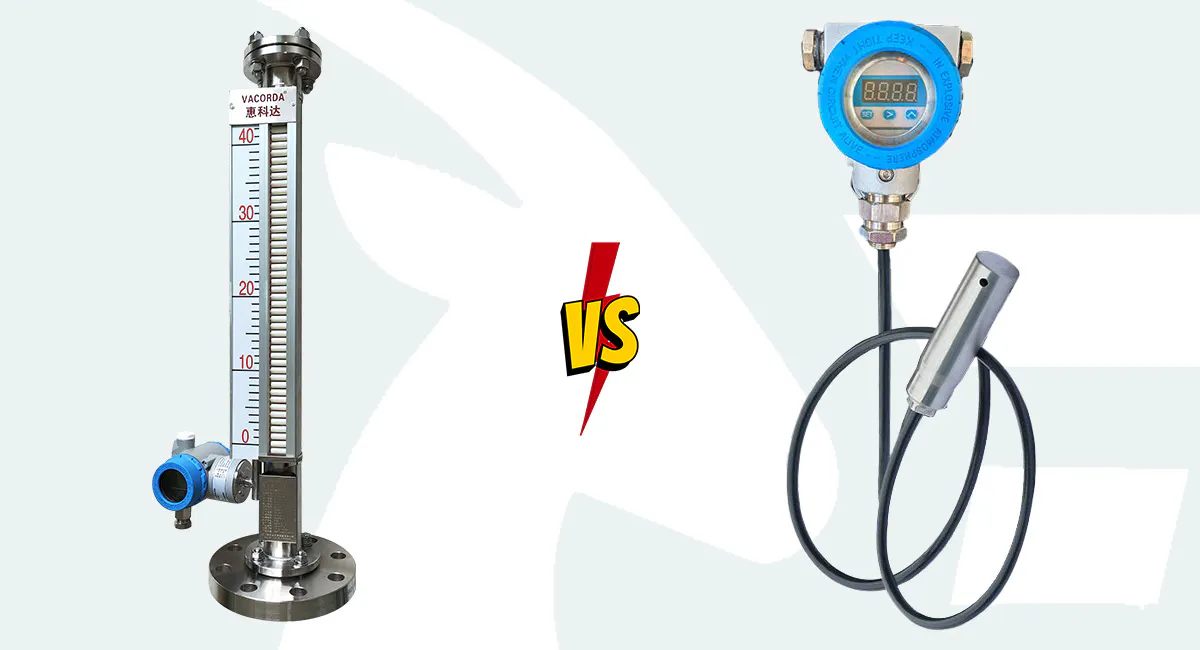
مقياس المستوى المغناطيسي مقابل مقياس المستوى الهيدروستاتيكي: دليل التكنولوجيا والاختيار
مقدمة
مقاييس المستوى المغناطيسي ومقاييس المستوى الهيدروستاتيكي هما أداتان مستخدمتان على نطاق واسع لمراقبة مستوى السائل الصناعي. كلتا التقنيتين ناضجة وموثوق بها، ولكنهما تخدمان أغراضًا مختلفة ومناسبة لظروف العمليات المختلفة.
من من منظور الشركة المصنعة للمعدات الأصلية، يعد فهم الاختلافات بين مقياس المستوى المغناطيسي ومقياس المستوى الهيدروستاتيكي أمرًا ضروريًا لاختيار حل قياس المستوى المناسب. تقارن هذه المقالة بين النوعين من حيث مبدأ العمل والأداء والتركيب وملاءمة التطبيق.
مبدأ العمل
مقياس مستوى مغناطيسي
A مقياس مستوى مغناطيسي هي أداة بصرية من نوع التلامس. وتتكون من عوامة تحتوي على مغناطيس دائم يتحرك لأعلى ولأسفل داخل حجرة محكمة الغلق مع تغير مستوى السائل. تقوم لوحات المؤشر الخارجية أو شاشة عرض مغناطيسية بتتبع موضع العوامة لإظهار المستوى في الوقت الحقيقي.
توفر مقاييس المستوى المغناطيسية مؤشرًا مباشرًا وبديهيًا للمستوى دون الحاجة إلى مصدر طاقة أو إشارات إلكترونية.
مقياس المستوى الهيدروستاتيكي
مقاييس المستوى الهيدروستاتيكي قياس مستوى السائل على أساس الضغط. يقوم الجهاز باستشعار الضغط الهيدروستاتيكي الناتج عن ارتفاع عمود السائل وتحويله إلى إشارة خرج قياسية مثل 4-20 مللي أمبير.
هذا النوع من مقاييس المستوى هو أداة قياس إلكترونية ويتطلب كثافة سائلة ثابتة لضمان دقة القراءات.
مقارنة الأداء
| البند | مقياس مستوى مغناطيسي | مقياس المستوى الهيدروستاتيكي |
|---|---|---|
| طريقة القياس | إشارة بصرية مباشرة | إلكتروني قائم على الضغط |
| مزود الطاقة | غير مطلوب | مطلوب |
| الدقة | عالية للإشارة المحلية | عالية مع كثافة مستقرة |
| إشارة الإخراج | مخرج جهاز الإرسال الاختياري | الإخراج الكهربائي القياسي |
| الصيانة | منخفضة | منخفضة |
| تأثير الكثافة | لا يوجد | نعم |
| تحمّل درجة الحرارة | جيد | محدودة في درجات الحرارة العالية |
| ملاءمة الضغط | جيد | محدودة |
| مخاطر الفشل | منخفضة جداً | منخفضة |
مقارنة التركيب
| عامل التثبيت | مقياس مستوى مغناطيسي | مقياس المستوى الهيدروستاتيكي |
|---|---|---|
| موضع التركيب | مثبتة على الجانب على الخزان | قاع أو مغمور |
| اتصال العملية | يتطلب غرفة خارجية | ملولبة أو شفة |
| اتصال متوسط | تطفو في اتصال مباشر | مستشعر في اتصال مباشر |
| الأسلاك | غير مطلوب | مطلوب |
| تأثير العوائق | لا يوجد | لا يوجد |
| الوصول إلى الصيانة | سهولة الوصول الجانبي | يلزم الوصول إلى الأسفل |
التطبيقات النموذجية
تطبيقات مقياس المستوى المغناطيسي
مقاييس المستوى المغناطيسية مثالية في:
الغلايات ذات درجة الحرارة العالية
أوعية مضغوطة
خزانات المواد الكيميائية المسببة للتآكل
الحالات التي تتطلب عرض المستوى البصري المحلي
العمليات الحرجة للسلامة دون توافر الطاقة
تُستخدم عادةً في مصانع البتروكيماويات وصهاريج التخزين وحاويات المعالجة حيث يحتاج المشغلون إلى مراقبة بديهية للمستوى.
تطبيقات مقياس المستوى الهيدروستاتيكي
تناسب مقاييس المستوى الهيدروستاتيكي:
خزانات الغلاف الجوي
أنظمة معالجة المياه
خزانات تحت الأرض
صهاريج تخزين الوقود والنفط
المراقبة عن بُعد عبر أنظمة التحكم عن بُعد
غالباً ما يتم اختيار هذه التقنية عند الحاجة إلى إخراج إلكتروني مستمر.
دليل الاختيار من وجهة نظر الشركة المصنعة
عند الاختيار بين هذين المقياسين للمستوى، عادةً ما يضع المصنعون في اعتبارهم
ما إذا كانت الإشارة المحلية المرئية مطلوبة أم لا
درجة حرارة العملية والضغط
الحاجة إلى إرسال الإشارات عن بُعد
ثبات كثافة السائل
مساحة التركيب والميزانية
تُفضل مقاييس المستوى المغناطيسية للبيئات القاسية والمؤشرات المباشرة، بينما يتم اختيار مقاييس المستوى الهيدروستاتيكي لمشاريع المراقبة الاقتصادية عن بُعد.
الخاتمة
لكل من مقاييس المستوى المغناطيسية ومقاييس المستوى الهيدروستاتيكية مزايا فريدة في قياس المستوى الصناعي. يوفر مقياس المستوى المغناطيسي مؤشرًا مرئيًا بسيطًا وآمنًا وموثوقًا للغاية. يوفر مقياس المستوى الهيدروستاتيكي مخرجات إلكترونية دقيقة وفعالة من حيث التكلفة للتطبيقات التقليدية.
من خلال فهم الاختلافات بينهما واستشارة الشركات المصنعة لمقاييس المستوى ذات الخبرة في مجال تصنيع المعدات الأصلية، يمكن للمستخدمين اختيار حل قياس المستوى الأنسب لخزاناتهم وأوعيتهم.