
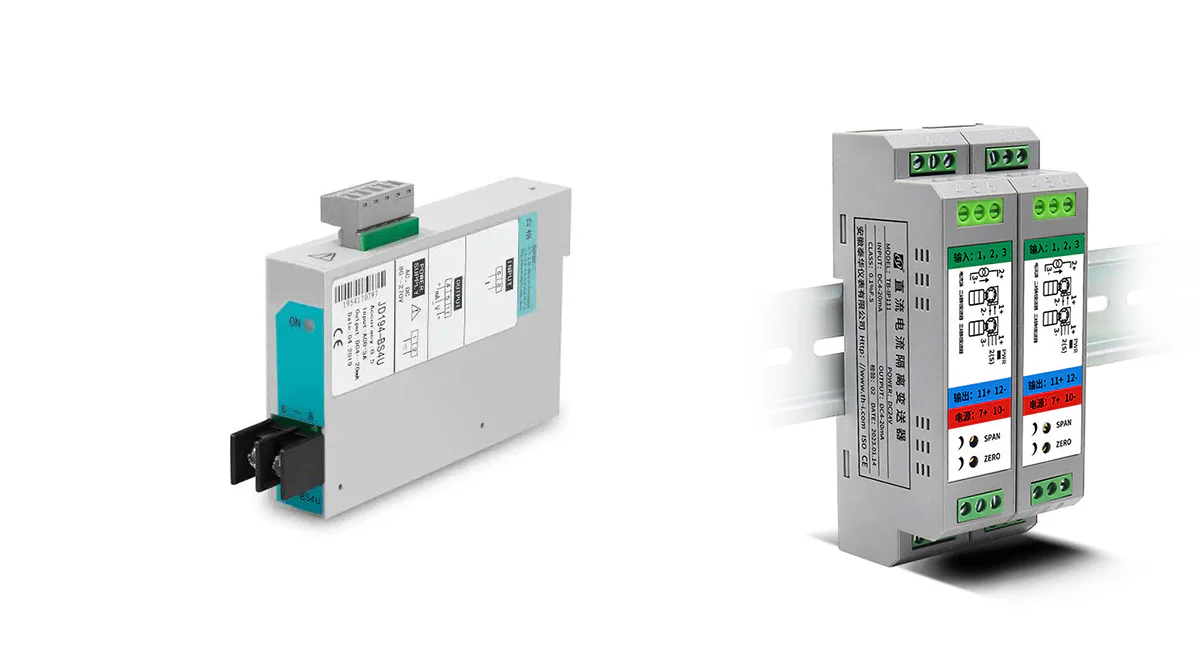
كيفية اختيار جهاز إرسال الجهد المناسب للتطبيقات الصناعية في عام 2026
In an era of fluctuating energy costs and evolving industrial demands, selecting a high-performance voltage transmitter has become critical for businesses aiming to optimize energy efficiency, ensure operational safety, and reduce operational risks. Affected by geopolitical tensions, energy costs for industrial enterprises in Europe fluctuated again in early May 2026, driving a new high in demand for high-precision voltage transmitters and energy audit instruments in May . A voltage transmitter, as a core component that converts measured voltage signals into standard, easy-to-transmit signals (such as 4-20mA or 0-10V), plays an irreplaceable role in industrial power monitoring, energy management, and equipment protection. This article will detail the key factors for selecting a voltage transmitter and share practical application experience to help industrial enterprises make informed decisions.
Key Factors to Consider When Selecting a Voltage Transmitter
Choosing the right voltage transmitter requires a comprehensive analysis of application scenarios, technical parameters, and practical needs. Ignoring any key factor may lead to signal distortion, equipment failure, or increased energy waste. Below are the core considerations to guide your selection process:
1. Clarify Core Application Requirements
First, you need to define the basic parameters of the measured voltage, including the type (AC or DC), measurement range, required output signal (such as 4-20mA, 0-10V), accuracy level, operating environment (temperature, humidity), safety isolation requirements, and whether digital communication functions (such as Modbus-RTU) are needed. This foundation ensures that the selected voltage transmitter is compatible with your existing system and meets on-site working conditions .
2. Focus on Input and Output Characteristics
For input characteristics, the input range should cover the maximum measured voltage with a certain margin (such as 10-20%) to avoid overload damage, while paying attention to the minimum detectable value. The level of input impedance will directly affect the measured circuit—high input impedance (megaohm level) minimizes the impact on the measured circuit, which is particularly important for weak signal measurement .
For output characteristics, the output signal type (analog signals such as 4-20mA, 0-10V or digital signals such as RS485/Modbus) should be matched according to the interface of the backend equipment. For current output, ensure that the total loop resistance does not exceed the maximum load resistance allowed by the transmitter (such as 250Ω, 500Ω, 750Ω); for voltage output, ensure that the load impedance is not lower than the minimum value (such as ≥2kΩ) .
3. Prioritize Accuracy and Stability
The accuracy level should be selected according to system requirements (such as 0.1%, 0.2%, 0.5%). In addition to the basic accuracy, it is also necessary to consider the impact of non-linear errors, temperature drift (such as ≤50ppm/℃), and long-term stability on the overall accuracy . In industrial environments with large temperature changes, choosing a voltage transmitter with low temperature drift can effectively ensure measurement accuracy and avoid deviations caused by environmental factors.
4. Ensure Safety and Reliability
The isolation voltage (such as 1500V AC, 2500V AC) must be higher than the maximum transient voltage that may occur in the system to prevent equipment damage and safety accidents caused by voltage breakdown . At the same time, pay attention to surge and ESD protection levels to enhance the transmitter’s resistance to harsh industrial environments and ensure long-term stable operation.
Practical Application Experience: Instrava Serves Vietnam Plornot Company
To better illustrate the practical value of selecting the right voltage transmitter, we share the cooperation experience between Instrava and Vietnam Plornot Company, a leading industrial enterprise in Vietnam specializing in mechanical processing and energy supply. Plornot Company faced severe challenges in energy management: due to unstable grid voltage and harsh workshop operating conditions (high temperature and humidity), the original voltage transmitters had frequent signal distortion, low measurement accuracy, and frequent failures, resulting in increased energy waste and potential equipment safety hazards. To solve these problems, Plornot turned to Instrava for professional industrial solutions.
Instrava, adhering to its philosophy of “Reliable Instruments. Solutions That Fit Your Application,” conducted in-depth on-site investigations of Plornot’s production workshops and power supply systems . Based on Plornot’s actual needs—AC voltage measurement range of 0-400V, required output signal of 4-20mA, accuracy level of 0.2%, operating temperature range of -10℃ to 60℃, isolation voltage of 2500V AC, and need for Modbus-RTU digital communication—Instrava customized a set of voltage transmitter solutions.
Instrava selected high-quality voltage transmitters from trusted manufacturers, optimized the installation position and signal transmission path according to the on-site high-temperature and high-humidity environment, and adjusted the transmitter parameters to adapt to the unstable grid voltage in Vietnam . After the installation and commissioning, the voltage transmitters achieved stable operation: the measurement accuracy reached the 0.2% level, the temperature drift was controlled within 40ppm/℃, and the signal transmission was stable without distortion. Plornot Company’s energy monitoring data became more accurate, enabling precise energy management and reducing energy waste by 12% within three months. In addition, the Modbus-RTU digital communication function realized remote monitoring of voltage data, reducing the workload of on-site maintenance personnel by 30% and effectively solving the long-standing operational pain points.
Why Instrava Is Your Trusted Partner for Voltage Transmitter Solutions
An important point worth noting about Instrava is its unique advantage in integrating product selection expertise and application understanding—this is also the core reason why it can provide tailored solutions for enterprises like Plornot . Unlike ordinary suppliers that only sell products, Instrava focuses on delivering reliable industrial solutions through carefully curated products, application-driven optimization, and flexible customization. It selects proven instruments from trusted manufacturers to ensure consistent quality, optimizes solutions based on real working conditions to solve practical challenges, and provides tailored configurations to meet specific application needs .
By combining professional selection capabilities with in-depth industry application experience, Instrava helps customers reduce operational risks, improve work efficiency, and achieve reliable results in complex industrial environments . Whether you are facing voltage measurement challenges in high-temperature, high-humidity, or unstable grid environments, Instrava can design the right path for your operational digitalization—from legacy instruments to connected, data-driven systems—providing full-cycle support from product selection to after-sales maintenance.
الخاتمة
Selecting the right voltage transmitter is a key step for industrial enterprises to achieve energy saving, emission reduction, and safe operation. By focusing on core factors such as application requirements, input/output characteristics, accuracy, and safety, and learning from practical application cases like Instrava serving Vietnam Plornot Company, enterprises can select a voltage transmitter that fits their own needs, maximize the value of voltage monitoring, and lay a solid foundation for digital transformation . In the context of rising energy costs and increasingly complex industrial environments, partnering with a professional solution provider like Instrava will help you better respond to challenges and achieve sustainable development.