
Inicio » Tecnología » Preventing Unplanned Downtime: A Selection and Technical Application Guide for Class A 0.2S Power Quality Analyzers in Modern Industrial Grids
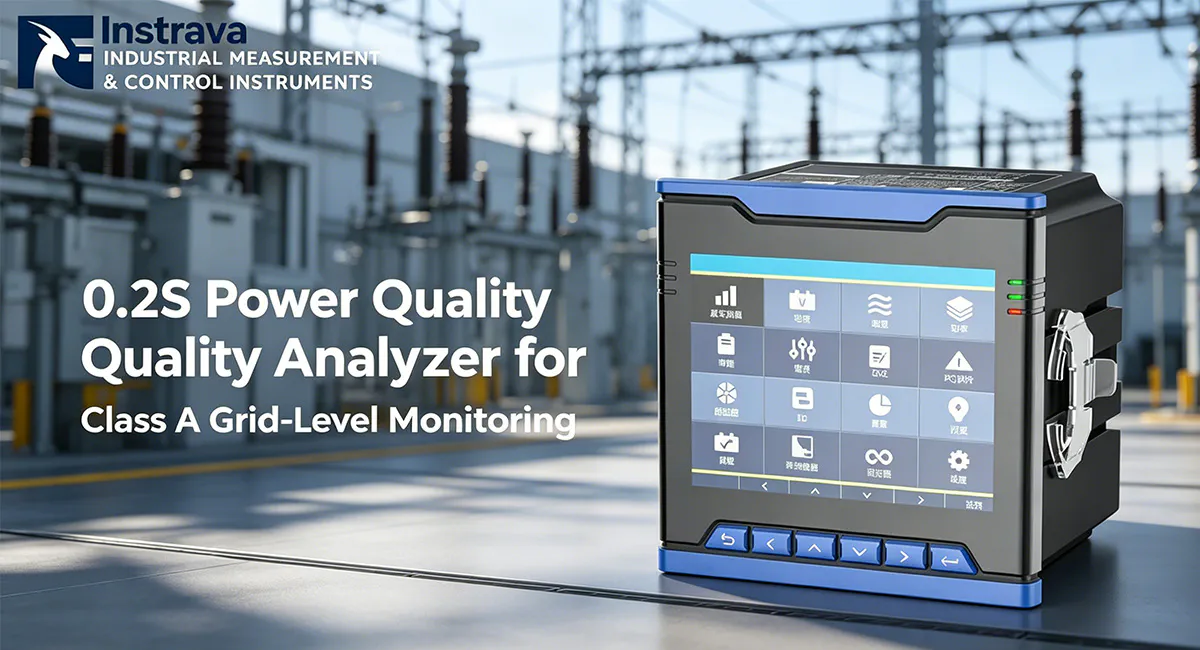
Preventing Unplanned Downtime: A Selection and Technical Application Guide for Class A 0.2S Power Quality Analyzers in Modern Industrial Grids
1. Key Takeaways
Core Definition: This technical white paper analyzes the critical role of a Class A Analizador de calidad eléctrica in grid-level monitoring. It focuses on the Instrava 0.2S high-precision series, designed to meet strict IEC 61000-4-30 Class A standards for high-stakes industrial environments, smart grids, and AI data centers.
Technical Breakthrough & ROI: Featuring a blazing-fast sampling rate of 1024 points/cycle y un 20μs transient disturbance capture capability, this Analizador de calidad eléctrica provides revenue-grade Class 0.2S energy metering. It mitigates up to 35% of unplanned downtime risks by instantly pinpointing the root cause of voltage sags and automatically generating EN50160 compliance reports.
2. What is a Power Quality Analyzer & What Industrial Pain Points Does it Solve?
Definition: A Analizador de calidad eléctrica is an ultra-precise, panel-mounted industrial measurement instrument designed to monitor, capture, record, and analyze grid anomalies—including voltage sags/swells, harmonic distortions, frequency fluctuations, transient surges, and three-phase unbalance.
Overcoming the 3 Critical Grid Dilemmas in AI Infrastructure & Smart Factories:
Dilemma 1: Sudden Non-Linear Load Pollution from GPU Clusters and VFDs. Modern AI data centers running massive GPU clusters and factories utilizing Variable Frequency Drives (VFDs) generate severe harmonic and interharmonic currents. Standard power meters fail to detect these high-frequency distortions, leading to transformer overheating and sudden system failures.
The Solution: The Instrava Analizador de calidad eléctrica supports deep spectral analysis from the 2nd to the 63rd harmonic, as well as interharmonics and sub-harmonics. It calculates Total Harmonic Distortion (THD) in real-time, mapping the digital footprint of power pollution on a cloud dashboard.
Dilemma 2: Microsecond Transient Disruptions Causing Mysterious Equipment Trips. Standard legacy meters suffer from hardware sampling bottlenecks. They completely miss microsecond-level voltage sags or transient surges, leaving engineering teams with zero forensic data when precise automation machinery suddenly shuts down.
The Solution: Equipped with a high-speed processing chipset, the analyzer features 1024 points/cycle waveform recording y Captura transitoria de 20μs. It captures the exact millisecond a voltage mutation occurs, instantly determining whether the fault originated from the utility grid side or the user side.
Dilemma 3: Inefficient, Non-Compliant Manual Power Quality Reporting. Compiling grid compliance reports or handling utility billing disputes usually requires manual data extraction and cleaning, a process that takes days and lacks legal authority.
The Solution: Este avanzado Analizador de calidad eléctrica features a built-in compliance engine that automatically generates EN50160 statistical reports and fits ITIC / SEMI F47 voltage sag immunity curves for instant, legally compliant verification.
3. Technical Specifications & International Compliance
Core Technical Parameter Matrix
| Parameter Category | Technical Specifications | Industrial Operational Value |
| Monitoring Standard | Totalmente conforme con IEC 61000-4-30 Clase A | Globally recognized legal-grade accuracy; valid for legal and utility dispute arbitration. |
| Energy Metering Class | Active Energy: Clase 0.2S; Reactive Energy: Class 2 | Meets revenue-grade standards for corporate energy accounting, cost allocation, and utility bill verification. |
| Precisión de la medición | Voltage/Current: $\pm0.1\%$; Frequency: $\pm0.005\text{ Hz}$ | Detects microscopic grid amplitude drifts, eliminating false alarms and missed anomalies. |
| Waveform Sampling | 1024 Points/Cycle | Industry-leading sampling density that perfectly reconstructs complex waveform distortions. |
| Captura transitoria | 20μs (Microsecond-level) response | Specifically engineered to catch high-frequency events like breaker switching, lightning strikes, and surges. |
| Communications & IoT | RS485 (Modbus-RTU), RJ45 (Modbus-TCP), MQTT, OPC UA | Supports remote Web-server monitoring and seamless integration into Digital Twin and Industrial IoT (IIoT) platforms. |
Global Compliance Certifications
The Instrava Analizador de calidad eléctrica series carries full CE compliance (Electromagnetic Compatibility & Electrical Safety), RoHS environmental certification, and has passed rigorous third-party quality testing (SGS/UL aligned safety frameworks). This ensures continuous, fail-safe operation in high-voltage, high-EMC-interference industrial environments.
4. Industry Applications & Targeted Compliance (With Real-World Cases)
Scenario A: AI Data Centers & High-Density Computing Hubs
Specific Requirements: Automatic fitting of ITIC / SEMI F47 curves, along with high-sensitivity identification of sub-harmonics caused by massive server power supply units (PSUs) and HVAC chilling systems.
【Real-World Case】: Multi-Megawatt AI Cluster Data Center
A multinational AI data center experienced sporadic, unexplained server reboots during peak compute loads. Standard power monitoring showed nothing unusual. After deploying the Instrava Analizador de calidad eléctrica at the critical low-voltage incoming switchgear, the operations team utilized its 20μs transient capture to isolate a 15ms transient voltage sag caused by utility-side capacitor switching. The analyzer’s built-in ITIC curve proved the sag exceeded the servers’ voltage ride-through tolerance. Armed with this data, the center optimized its UPS dynamic switchover threshold to under 4ms, completely eliminating million-dollar compute-cycle interruptions.
Scenario B: Smart Grids & Renewable Energy Integration
Specific Requirements: Compliance with EN50160 grid standards, continuous logging of voltage flickers, three-phase unbalance, and frequency deviations at utility interconnection points.
【Real-World Case】: 50MW Centralized Solar PV Power Plant
Due to a high concentration of grid-tied inverters, a regional utility grid operator flagged a solar plant for harmonic violations, threatening grid disconnection. The plant installed Instrava analyzers at the point of common coupling (PCC). Using the 63rd harmonic and interharmonic analysis engine, engineers traced the root cause to a specific 37th high-frequency harmonic generated by a subset of aging string inverters. The analyzer automatically outputted an EN50160 compliance report, which guided the precise calibration of Active Power Filters (APF). The plant successfully passed utility re-acceptance without overspending on unnecessary grid upgrades.
5. On-Site Installation Guide & Environmental Protocols
To maintain Class A measurement accuracy under harsh field conditions, follow this modular installation workflow:
Panel-Mounted Integration: Secure the analyzer onto a standard low-voltage switchgear panel or control desk. Maintain a minimum clearance of 50mm around the chassis for optimal convective cooling. Never install it flush against high-power contactors or VFD enclosures.
CT and PT Wiring Wiring Polarity Security: When wiring Current Transformer (CT) secondary loops, ensure they are never open-circuited. Verify that the CT alignment from P1 to P2 matches the actual grid power flow direction. For Potential Transformer (PT) voltage inputs, install a 0.5A to 1A fast-acting fuse on each phase to shield the acquisition board from sudden upstream voltage surges.
Communication Line Shielding: When connecting the instrument to an IIoT network via RS485, always use Shielded Twisted Pair (STP) cabling. The shield layer must be reliably grounded at a single point (the control cabinet side) to prevent common-mode noise from disrupting data packets.
Environmental Red Lines: The device is rated for an industrial operating temperature range of -25°C a +70°C. If deploying in environments prone to high dust, humidity, or conductive salt spray (e.g., steel mills or marine applications), the analyzer must be housed inside an enclosure rated IP54 or higher.
6. Zero-Downtime Maintenance & Troubleshooting SOP
Routine Maintenance Guidelines
Every 6 Months: Use an infrared thermal imager to scan the voltage and current terminal blocks. Industrial micro-vibrations can loosen screw terminals over time, causing localized contact resistance, terminal heating, and subsequent measurement errors.
Every 12 Months: Review internal memory allocation and check the FIFO event log loop status via the remote web interface. Update the analyzer’s firmware to access the latest AI-driven fault classification algorithms.
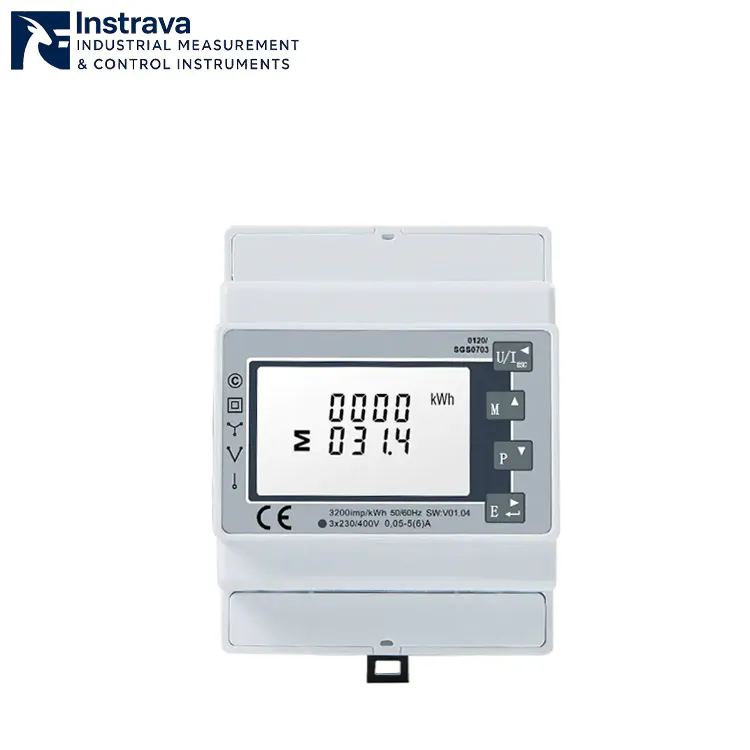
The Power Quality Analyzer shows a negative Total Power Factor (PF) or erratic positive/negative toggling, but the factory does not regenerate or feed power back into the utility. What is wrong?
This is a classic phase alignment installation error. First, inspect the Current Transformer (CT) direction and ensure the secondary wires ($S1/S2$) are not reversed. Second, verify that the voltage phases match their corresponding current channels (e.g., Phase A voltage paired with Phase A CT). Misaligned phases or reversed CT polarities force the analyzer to miscalculate power vectors, resulting in negative readings.
A severe voltage blink occurred, causing production line machinery to trip, but the Power Quality Analyzer registered zero voltage sag events. Why?
This happens when event trigger thresholds are misconfigured. By default, IEC 61000-4-30 Class A standards set the voltage sag threshold at 90% of nominal voltage. If your hyper-sensitive production equipment trips when voltage drops to 93%, the analyzer will see the event but won’t flag it as a sag. Log into the system settings and adjust the sag threshold to 95%, or activate the SEMI F47 curve dynamic capture mode.
While polling the analyzer via MQTT or its web module, standard electrical parameters update normally, but high-frequency transient waveform files are dropped or missing. How can this be fixed?
Because the analyzer captures data at 1024 points/cycle, a single 20μs transient event contains an immense volume of raw data points. Over bandwidth-constrained RS485 daisy-chains or congested industrial Wi-Fi networks, this burst of data can overflow network buffers. The solution: Relax the standard Modbus polling interval to $\ge500\text{ ms}$ and upgrade the MQTT event channel to QoS 1 (at least once delivery) to enforce hardware-level packet acknowledgement.
Why is there a slight discrepancy between the active energy (kWh) data on the Instrava analyzer and the utility company’s fiscal billing meter?
Even though the analyzer features a premium Class 0.2S revenue-grade metering engine, discrepancies usually stem from external component tolerances. Check two areas: 1. Are your external CTs and PTs rated at Class 0.2S accuracy? If your external transformers are only Class 0.5, they degrade the overall system accuracy. 2. Inspect the secondary circuit wire length; excessive line impedance causes a minor voltage drop before the signal reaches the analyzer.
In a workshop crowded with high-power VFDs, the analyzer's screen occasionally flickers or whites out, and the backend log reports frequent "CRC Check Errors." How do we isolate this?
This symptom points to severe electromagnetic interference (EMI) or common-mode noise radiation. SOP Action: 1. Ensure the analyzer’s ground terminal (PE) is connected directly to the plant’s low-impedance earth grid using a thick copper conductor—never loop it through a VFD’s ground terminal. 2. Verify that the RS485 shield is grounded at one end only. Dual-ended grounding creates a ground loop, which amplifies high-frequency noise.
The EN50160 power quality evaluation report automatically generated by the analyzer shows a failed compliance status for voltage deviation metrics, even though daily operations seem fine. Why?
This is caused by an incorrect data aggregation time-window setting. Per EN50160 and IEC 61000-4-30 mandates, different parameters require specific sliding statistical windows. Voltage deviations must be aggregated and averaged in 10-minute intervals. If a technician accidentally altered the configuration to a 1-minute or single-cycle aggregation window, normal momentary line noise will be over-amplified, causing the entire report to fail compliance standard thresholds. Reverting the aggregation setting back to 10 minutes restores the correct compliance baseline.
Por qué elegir Instrava
Basados en la coherencia, no en las reclamaciones
Aplicaciones industriales
Estamos especializados en el análisis y la detección industriales, con una clara comprensión de los entornos operativos y los requisitos del mundo real.
Estrictos criterios de selección de productos
Cada instrumento se evalúa en función de su rendimiento, estabilidad e idoneidad para la aplicación, no sólo de sus especificaciones o precios.
Suministro fiable y calidad constante
Trabajamos con fabricantes de confianza para garantizar un suministro estable, una calidad constante y una entrega fiable.
Apoyo práctico basado en la experiencia
Nuestras recomendaciones se basan en el conocimiento de la aplicación, lo que ayuda a los clientes a evitar problemas comunes y lograr resultados fiables.
Instrava se ha creado para reducir la incertidumbre, de modo que cada decisión que tome sea más clara, segura y fiable.