





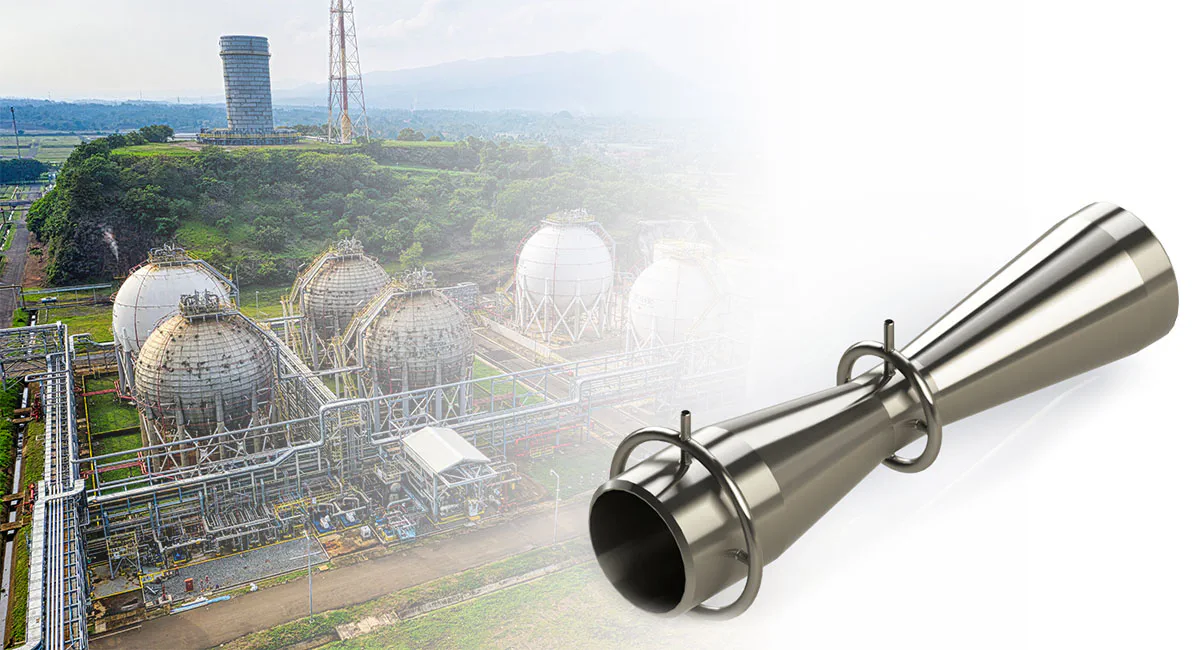
- Por Instrava
- 01/21/2026
- 0 Comentario
Venturi vs Orifice vs Vortex: An Engineering Selection Perspective
In industrial flow measurement, Venturi tubes, orifice plates, and vortex flow meters are often grouped together because they are commonly used in large-scale processes. However, selecting between them is rarely a matter of accuracy alone.
From an engineering perspective, the real differences emerge when considering pressure loss, long-term operating cost, maintenance behavior, and how each technology reacts to real-world process conditions.
This article compares Venturi, orifice, and vortex flow meters from a selection standpoint—focusing on where each technology performs best and where it introduces hidden trade-offs.
Why Engineering Selection Goes Beyond Specifications
Datasheets tend to emphasize accuracy and repeatability. In practice, engineers evaluate flow meters based on broader questions:
How much energy does this meter consume indirectly?
How stable is the signal over time?
How sensitive is it to process disturbances?
What happens after years of operation?
Venturi, orifice, and vortex meters answer these questions very differently.
Orifice Plate: Simplicity with Ongoing Cost
En orifice plate is often the first choice due to its low initial cost and standardized design. From an installation standpoint, it is straightforward and widely accepted across industries.
However, the engineering trade-off becomes clear during operation.
Key Engineering Considerations
High permanent pressure loss
Sensitivity to wear and erosion
Regular inspection and replacement requirements
While the orifice plate itself is inexpensive, the energy cost associated with pressure loss can be significant over the lifetime of the system. In high-flow or continuous-duty applications, this cost often outweighs the low purchase price.
Venturi Tube: Efficiency at a Higher Entry Cost
Venturi flow meters are frequently selected when pressure recovery is a priority. Their streamlined design minimizes energy loss compared to orifice plates.
From an engineering standpoint, Venturi meters are often viewed as long-term assets rather than consumable components.
Key Engineering Considerations
Low permanent pressure loss
Excellent long-term stability
Larger size and higher manufacturing cost
Venturi meters perform well in applications where flow conditions are stable and energy efficiency is critical. Their robustness makes them suitable for large pipelines and high-flow services, particularly in utilities and water management.
Vortex Flow Meter: Signal-Based Measurement Trade-Offs
Vortex flow meters operate on flow-induced frequency detection rather than differential pressure. This fundamental difference introduces unique strengths and limitations.
Engineers often consider vortex meters when dealing with steam, gases, or clean liquids at moderate to high velocities.
Key Engineering Considerations
No permanent pressure tap requirements
Sensitivity to vibration and flow disturbances
Minimum flow velocity limitations
Unlike orifice and Venturi meters, vortex meters rely on stable flow profiles. In systems with fluctuating flow or mechanical vibration, signal quality can degrade.
Pressure Loss as a Long-Term Design Factor
Pressure loss is often underestimated during initial selection. Over years of operation, it directly impacts pump sizing, energy consumption, and operational cost.
From this perspective:
Orifice plates impose the highest energy penalty
Venturi meters offer the best pressure recovery
Vortex meters fall somewhere in between
In energy-intensive systems, this single factor can dominate the selection decision.
Maintenance Behavior Over Time
Maintenance is not only about frequency—it is also about predictability.
Orifice plates wear gradually and require scheduled inspection
Venturi meters typically require minimal intervention
Vortex meters depend heavily on sensor condition and signal stability
In remote or difficult-to-access installations, Venturi meters are often favored due to their passive nature and durability.
Sensitivity to Real-World Process Conditions
No industrial process operates under ideal conditions. Flow disturbances, contamination, and mechanical stress all influence measurement performance.
Engineering experience shows:
Orifice plates are sensitive to edge damage and fouling
Venturi meters tolerate dirty fluids better
Vortex meters are sensitive to vibration and low Reynolds numbers
Understanding these sensitivities helps avoid performance degradation that does not appear in specifications.
Installation Footprint and System Integration
Physical constraints also play a role in selection.
Orifice plates have compact installation but require straight pipe runs
Venturi meters require more space due to their length
Vortex meters need stable upstream and downstream conditions
In retrofit projects, available space often dictates which technology is feasible.
Cost Evaluation: CAPEX vs OPEX
Engineering selection should balance initial investment and long-term cost.
| Technology | Coste inicial | Operating Cost | Typical Lifecycle |
|---|---|---|---|
| Orifice | Low | Alta | Medio |
| Venturi | Alta | Low | Largo |
| Vortex | Medio | Medio | Medio |
This comparison highlights why orifice plates remain common despite higher operating costs, while Venturi meters are favored in energy-conscious designs.
Application-Driven Selection Logic
From an engineering standpoint, each technology fits a specific application profile:
Orifice plates are suitable for short-term projects or cost-sensitive installations
Venturi meters excel in continuous, high-flow, energy-critical systems
Vortex meters perform well in steam and clean gas applications with stable flow
No single solution is universally superior—context defines the best choice.
Regional Engineering Preferences
Engineering selection trends vary by region:
In Europe, energy efficiency drives Venturi adoption
In the United States, orifice plates remain common due to standardization
In the Middle East, robustness and long-term stability influence Venturi and vortex selection
These preferences reflect operational priorities rather than technology limitations.
Conclusion: Engineering Judgment Over Technology Ranking
Venturi, orifice, and vortex flow meters represent different engineering philosophies.
Orifice plates prioritize simplicity and low upfront cost
Venturi meters prioritize efficiency and longevity
Vortex meters balance performance with versatility
Effective engineering selection is not about choosing the most advanced technology, but about aligning measurement behavior with process realities.
When selection is driven by long-term system performance rather than initial cost alone, flow measurement becomes a strategic design decision—not just a component choice.