
Industrial facilities operate in environments where hazardous gases may be present due to routine processes, equipment failures, or unexpected leaks. Selecting the right gas detection approach is not simply a matter of preference—it directly affects personnel safety, operational continuity, and regulatory compliance.
This article compares fixed gas detectors and portable gas detectors from an application-driven perspective, helping engineers, safety managers, and plant operators understand where each solution delivers the most value and how they complement each other in a complete gas detection strategy.
Understanding Fixed Gas Detectors
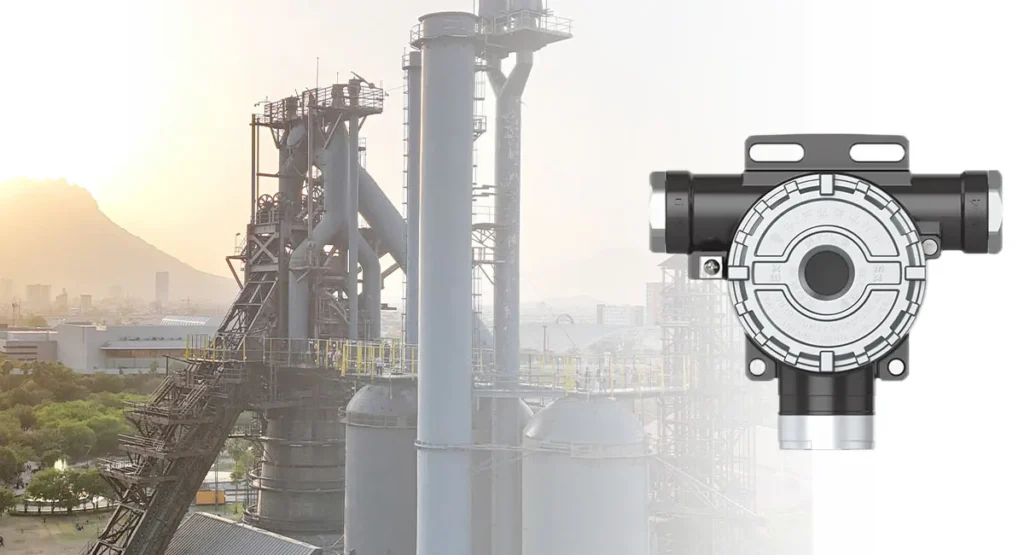
Detectores de gas fijos are permanently installed devices designed for continuous, unattended monitoring of specific areas. They are typically integrated into a broader safety system that includes controllers, alarms, ventilation controls, and emergency shutdown logic.
Typical Installation Locations
-
Compressor rooms and pump stations
-
LNG / LPG storage and transfer areas
-
Unidades de procesamiento químico
-
Boiler rooms and utility corridors
-
Confined or semi-confined industrial spaces
Key Functional Characteristics
-
Continuous 24/7 monitoring
-
Fixed detection points near potential leak sources
-
Integration with alarm and control systems
-
Diseñado para entornos industriales difíciles
Fixed gas detectors are essential where gas release could occur without human presence, such as during night shifts or automated operations.
Understanding Portable Gas Detectors
Detectores de gas portátiles are compact, mobile devices carried by personnel to provide real-time personal exposure monitoring. They are widely used during inspections, maintenance activities, and confined space entry.
Typical Use Scenarios
-
Confined space entry and permit-to-work activities
-
Maintenance and repair operations
-
Pruebas atmosféricas previas a la entrada
-
Emergency response and incident investigation
Key Functional Characteristics
-
Personal safety monitoring
-
Funciona con pilas y es ligero
-
Rapid deployment without installation
-
Suitable for temporary or changing work locations
Portable gas detectors offer flexibility and immediate feedback to workers operating in dynamic environments.
Fixed vs Portable Gas Detectors: Practical Comparison
| Aspecto | Detector de gas fijo | Detector de gas portátil |
|---|---|---|
| Monitoring Mode | Vigilancia continua de la zona | Personal, task-based monitoring |
| Instalación | Permanently mounted | De mano o para llevar puesto |
| Fuente de alimentación | Wired or loop-powered | Battery-powered |
| System Integration | High (alarms, PLC, DCS) | Limited or standalone |
| Cobertura | Defined detection zones | Individual worker zone |
| Typical Lifetime | Long-term installation | Shorter lifecycle |
This comparison highlights that the two technologies serve fundamentally different purposes rather than competing roles.
Application-Based Selection Strategy
Oil & Gas and LNG Facilities
Fixed gas detectors provide early warning near valves, flanges, and compressors, while portable gas detectors protect personnel during inspection and maintenance activities.
Plantas de procesamiento químico
Fixed systems monitor process units continuously, while portable detectors are essential during cleaning, shutdowns, and confined space work.
Utilities and Energy Infrastructure
Fixed detectors ensure unattended safety, while portable units support mobile teams and temporary operations.
A layered approach that combines both detector types is widely regarded as best practice in safety-critical industries.
Reducing Safety Gaps Through System Integration
Modern gas detection strategies increasingly focus on integration rather than isolated devices. Fixed gas detectors connected to centralized controllers can trigger alarms, ventilation, or shutdown systems, while portable detectors ensure individual worker awareness.
Instrava supports industrial measurement and safety applications by helping facilities design gas detection architectures that balance fixed monitoring with portable protection, improving overall risk management without unnecessary complexity.
Regulatory and Operational Considerations
-
Safety standards often require fixed gas detection in classified areas
-
Portable detectors are commonly mandated for confined space entry
-
Redundancy and coverage mapping are critical for compliance audits
-
Maintenance, calibration, and testing procedures must be defined for both systems
Choosing the right combination supports compliance while improving operational efficiency.
Conclusión
Fixed gas detectors and portable gas detectors are not interchangeable solutions. Each addresses distinct safety challenges, and together they form a comprehensive defense against gas-related hazards.
By evaluating process risks, work patterns, and regulatory requirements, industrial facilities can deploy gas detection systems that protect both people and assets effectively.