







- By Instrava
- 01/14/2026
- 0 Comment
Float Level Transmitter: Reliable Liquid Level Measurement for Industrial Applications
Accurate and stable level measurement is essential for maintaining safety, efficiency, and process continuity in industrial systems. Among various level sensing technologies, the float level transmitter remains one of the most widely adopted solutions due to its mechanical reliability, simple structure, and long-term performance in demanding environments.
A float level transmitter provides continuous level measurement by converting liquid level changes into electrical signals. Its proven design makes it suitable for a wide range of industrial tanks, vessels, and process systems across global markets.
This article explores level transmitter float technology from a practical and application-driven perspective, focusing on performance characteristics, materials, customization, quality control, and long-term operational value.
What Is a Float Level Transmitter?
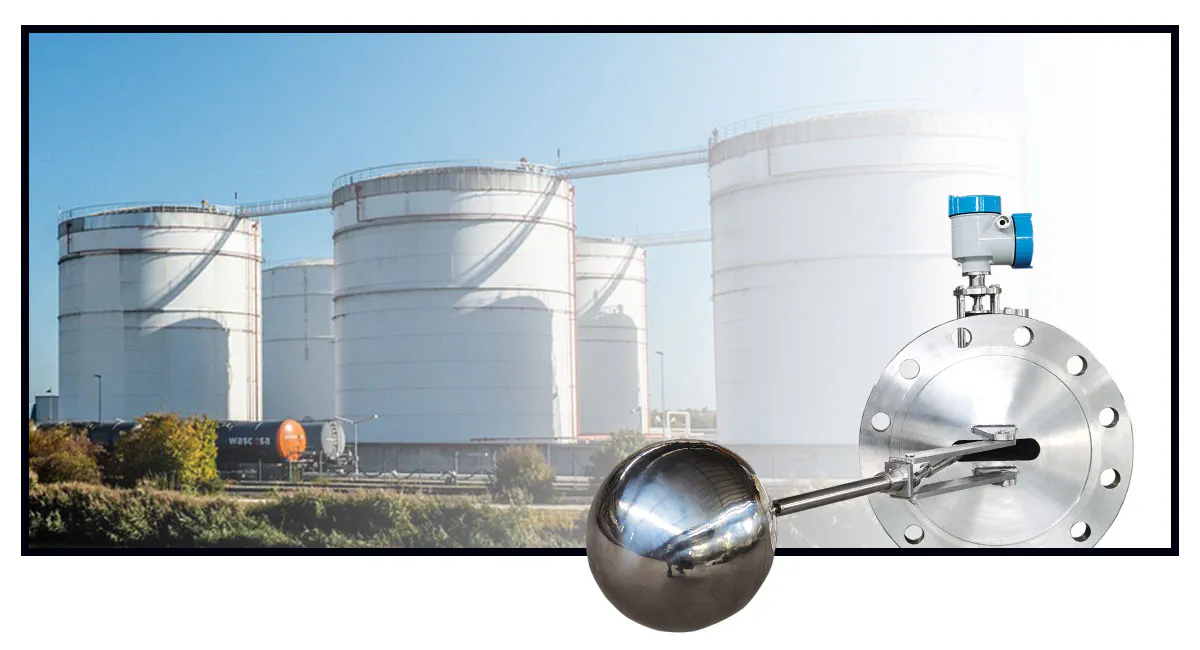
A float level transmitter is a level measurement device that uses a buoyant float to detect liquid level changes and transmit them as standardized output signals, such as 4–20 mA.
As the liquid level rises or falls, the float moves accordingly. This movement is transferred through a mechanical linkage or magnetic coupling to the transmitter mechanism, generating a continuous and stable level signal for monitoring and control systems.
Because it does not rely on complex electronics inside the process medium, it is well suited for harsh industrial conditions.
Why Float Level Transmitter Technology Remains Widely Used
Despite the availability of advanced electronic sensors, float level transmitter solutions continue to be selected for many industrial projects due to their inherent advantages:
Stable and repeatable measurement
Minimal signal drift over time
High resistance to electrical noise
Suitable for dirty or opaque liquids
Long service life with low maintenance requirements
These characteristics make the float type level transmitter a preferred choice for applications where reliability is more important than ultra-high measurement resolution.
Common Industrial Applications
A float level transmitter is commonly applied in industries where direct, mechanical level detection provides dependable results.
Typical applications include:
Chemical processing tanks
Oil and fuel storage systems
Water and wastewater treatment
Power plant auxiliary systems
Industrial lubrication systems
Process vessels and sumps
In many facilities, the float type level transmitter is used as a primary level sensor or as a redundant measurement device alongside radar or ultrasonic instruments.
Materials and Construction Options
Material selection directly affects the durability and compatibility of a float level transmitter with different process media.
Common Wetted Materials
| Material | Typical Media |
|---|---|
| Stainless Steel 304 | Water, light chemicals |
| Stainless Steel 316 | Corrosive liquids |
| Carbon Steel | Oil, fuel, non-corrosive fluids |
| PP / PTFE | Strong acids and alkalis |
The float itself can be manufactured in various shapes and materials to optimize buoyancy and chemical resistance.
Measurement Performance and Output Signals
A float level transmitter is designed to provide stable and linear output over its measurement range.
| Parameter | Typical Range |
|---|---|
| Measurement Range | Up to 6 meters |
| Output Signal | 4–20 mA |
| Accuracy | ±1% FS |
| Operating Temperature | -40°C to 200°C |
| Process Pressure | Up to 16 MPa |
Performance specifications may vary depending on float design, transmitter type, and application conditions.
Customization and OEM Capabilities
Customization is a key advantage of float type level transmitter solutions, especially for projects with non-standard tank dimensions or operating conditions.
Common customization options include:
Measurement range and probe length
Float size and material
Process connection standards (ANSI, DIN, JIS)
Output signal configuration
Mounting orientation (top, side, or bottom)
Electrical housing options
Instrava works closely with OEM partners to deliver customized float level transmitter solutions that integrate seamlessly into existing systems and control architectures.
Quality Control and Manufacturing Reliability
Consistent manufacturing quality is essential for long-term transmitter stability.
Standard quality control processes include:
Raw material inspection
Float buoyancy testing
Signal calibration verification
Pressure and leakage testing
Final functional testing
Production Capability Example
| Item | Value |
|---|---|
| Monthly Capacity | 2,500+ units |
| Calibration Coverage | 100% |
| Standard Lead Time | 2–4 weeks |
| Customized Orders | 4–6 weeks |
These controls ensure that each float type level transmitter meets design and performance requirements before delivery.
Certifications and Global Compliance
For international projects, compliance with recognized standards is critical.
Typical certifications include:
ISO 9001
CE
ATEX (for hazardous areas)
Material traceability documentation
These certifications support acceptance of float type level transmitter products in the US, Europe, the Middle East, and global markets.
Comparing Float Level Transmitter with Other Level Sensors
| Feature | Float Level Transmitter | Radar Level Sensor | Ultrasonic Level Sensor |
|---|---|---|---|
| Reliability | High | High | Medium |
| Media Sensitivity | Low | Low | High |
| Maintenance | Low | Low | Medium |
| Cost | Moderate | High | Moderate |
| Suitability for Dirty Media | Excellent | Good | Limited |
This comparison highlights why float level transmitter solutions remain relevant in many industrial environments.
Long-Term Value and Operational Considerations
When evaluating a float type level transmitter, buyers increasingly focus on long-term operational value rather than initial purchase price alone.
Key value factors include:
Measurement stability over years of operation
Reduced recalibration requirements
Lower replacement frequency
Simple troubleshooting
Compatibility with standard control systems
These benefits contribute to lower total cost of ownership across the equipment lifecycle.
Why Choose Instrava for Float Level Transmitter Solutions
Instrava is a partner focused on providing equipment, solutions, and services for industrial measurement and control instruments used in safety-critical and process control applications.
With a commitment to trust, communication, and collaboration, Instrava supports global customers and wholesale OEM partners in China by delivering reliable float level transmitter solutions designed for long-term performance, customization flexibility, and consistent quality.
Conclusion
The float level transmitter remains a dependable and practical solution for continuous liquid level measurement in industrial environments. Its mechanical simplicity, stable performance, and adaptability to various process conditions make it a valuable component in modern level measurement systems.
By selecting a properly engineered float type level transmitter and a reliable manufacturing partner, industrial users can achieve accurate monitoring, operational stability, and long-term cost efficiency.