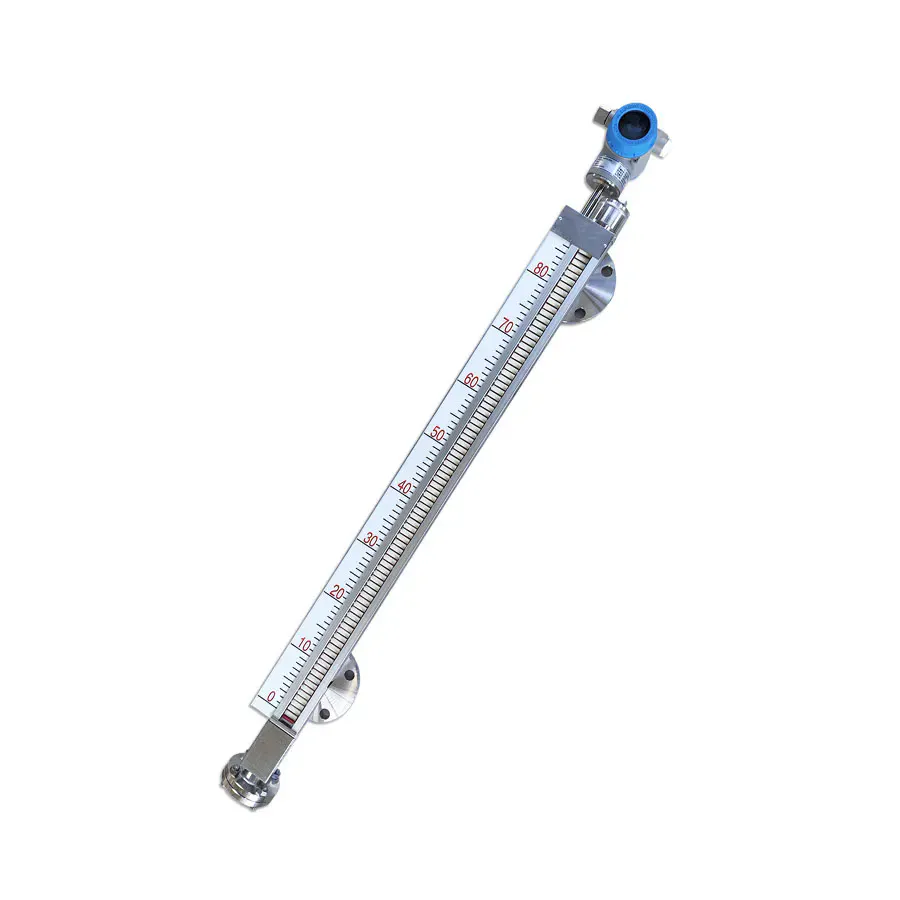
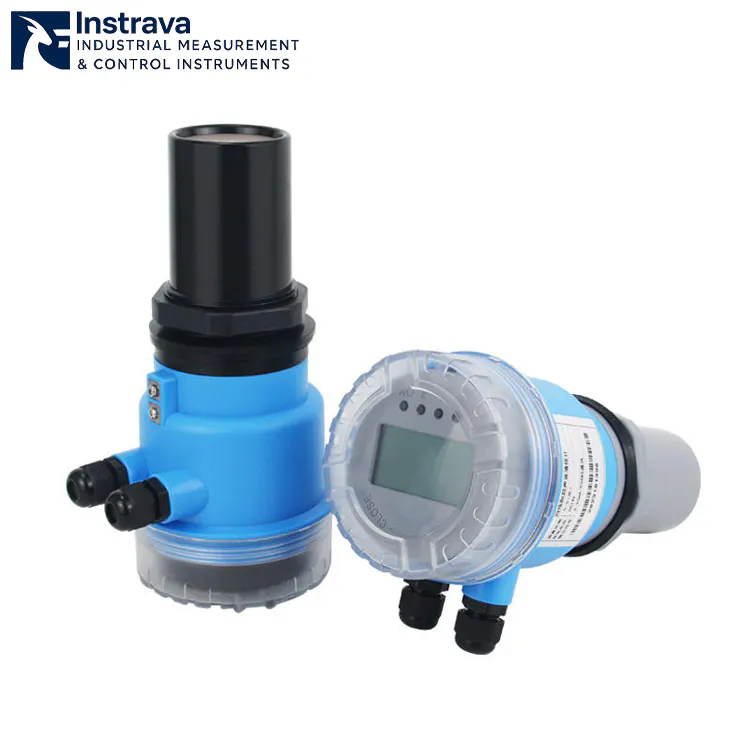
เซ็นเซอร์อัลตราโซนิกแบบระดับ: หลักการการทำงาน, ประเภท และการประยุกต์ใช้ในอุตสาหกรรม
เซ็นเซอร์อัลตราโซนิกวัดระดับภาพรวม เซ็นเซอร์อัลตราโซนิกวัดระดับเป็นอุปกรณ์แบบไม่สัมผัสที่ใช้ในการวัดระดับของของเหลวหรือของแข็ง...

หน้าแรก » ผลิตภัณฑ์ » เครื่องมือวัดระดับ » เซ็นเซอร์วัดระดับแบบความจุ

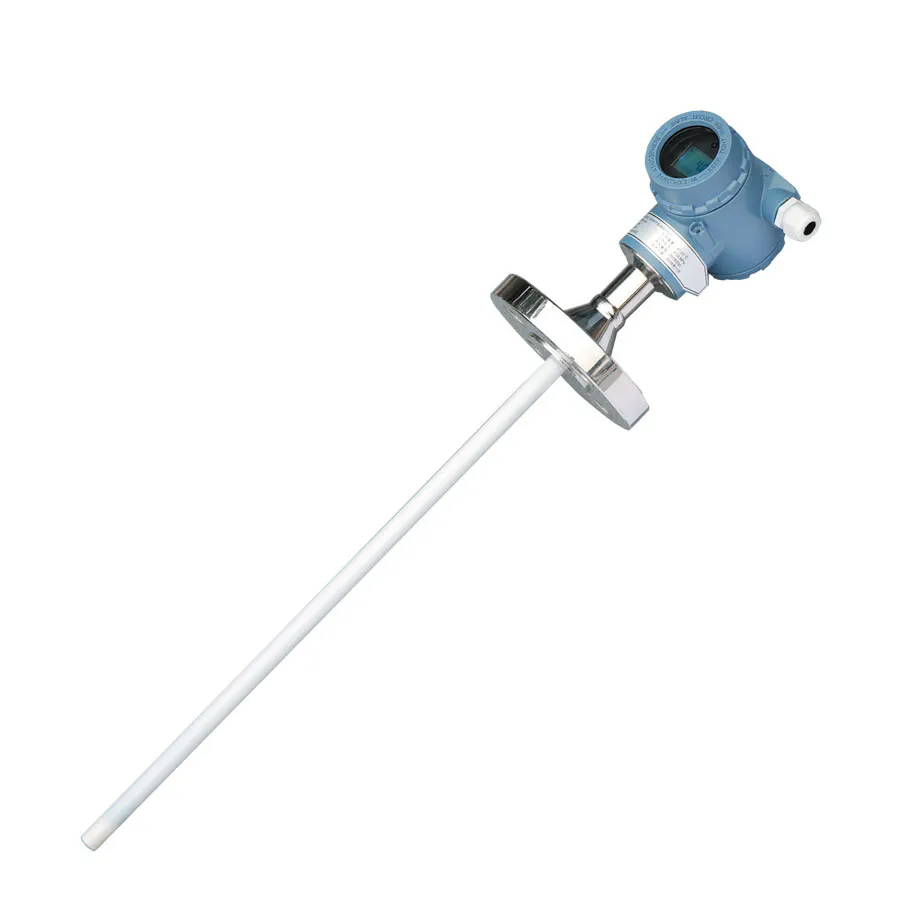
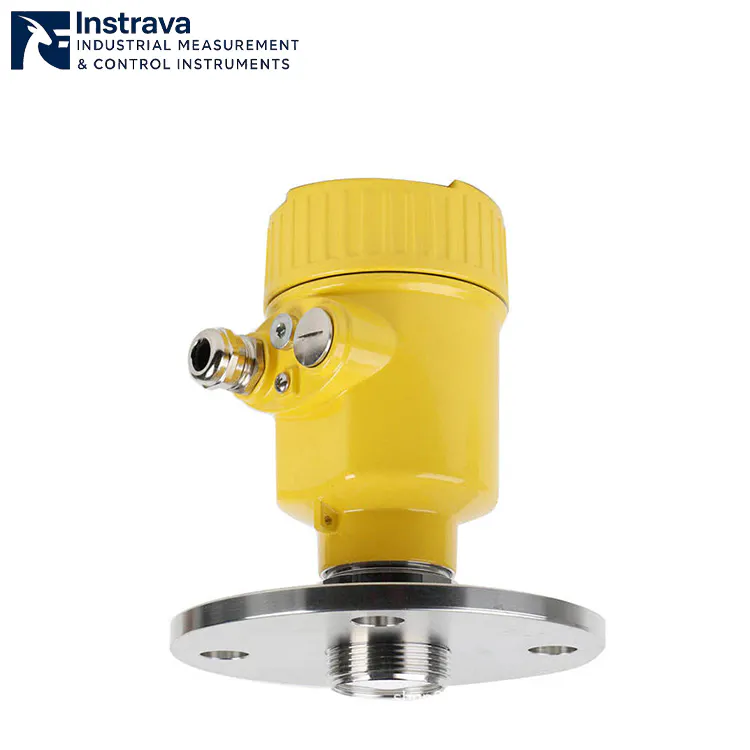
The เซ็นเซอร์วัดระดับแบบความจุ is a high-precision industrial instrument designed for continuous liquid level measurement in a wide range of applications, including chemical, petroleum, food, and pharmaceutical industries. Utilizing the principle of capacitance, the sensor detects changes in liquid level accurately, providing reliable real-time monitoring for both simple and complex liquid media.
This sensor is ideal for measuring water, oil, acids, alkalis, and other conductive or non-conductive liquids. Its robust design ensures long-term stability and corrosion resistance, making it suitable for harsh industrial environments. With flexible installation options—top-mount or side-mount—and customizable measurement range and output signals, it adapts easily to specific industrial requirements.
Key Benefits:
High Accuracy: Ensures precise liquid level readings with minimal error.
Versatile Compatibility: Works with a wide variety of liquids and interfaces.
Durable & Corrosion-Resistant: Long-lasting performance in harsh conditions.
Easy Installation: Flexible mounting options reduce installation time and costs.
Customizable: Range, output, and configuration can be tailored for each application.
The capacitive level sensor provides a cost-effective, low-maintenance solution for real-time level monitoring, improving operational efficiency and process safety across industries.
เครื่องมือวัดระดับ คำอธิบาย
Capacitive Level Sensor – Key Features
Continuous Level Measurement – Accurately monitors the level of almost all corrosive and non-corrosive liquids.
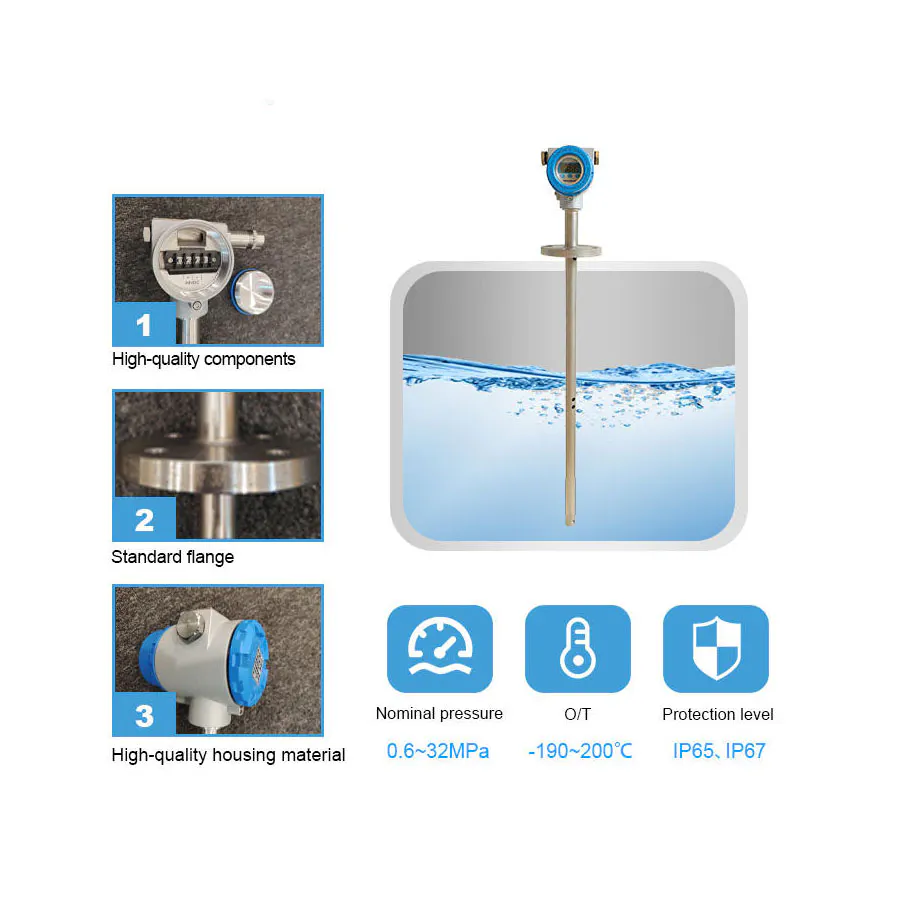
Wide Operating Temperature – Performs reliably in extreme conditions from -190°C to +200°C.
High Pressure Tolerance – Supports operating pressures from -0.1 MPa to 32 MPa.
Minimal Environmental Impact – Measurement remains stable despite variations in pressure, temperature, or humidity.
High Stability & Anti-Interference – Ensures reliable and precise readings even in electrically noisy environments.
Explosion-Proof Design – Certified for safe operation in hazardous environments.
Customizable Solutions – Range, electrode type, output signal, and process connections can be tailored to specific applications.


Applications of Capacitive Liquid Level Sensor
The capacitive liquid level sensor is widely used in industrial and process control applications where accurate, continuous liquid level measurement is required. Its robust design and high precision make it suitable for a variety of challenging environments.
การใช้งานทั่วไป:
Chemical Industry – Monitoring and controlling the level of corrosive acids, alkalis, and other chemical solutions in storage tanks and reactors.
Petroleum & Oil Storage – Level measurement in oil tanks, fuel depots, and petrochemical processing units.
Food & Beverage Industry – Accurate monitoring of liquids such as water, juice, milk, and other food-grade fluids.
อุตสาหกรรมยา – Ensures precise liquid level control in pharmaceutical production and storage tanks.
การบำบัดน้ำและน้ำเสีย – Monitoring water levels in reservoirs, treatment tanks, and pipelines.
Energy & Power Plants – Tank level measurement for fuel, cooling water, or other industrial fluids.
Non-Metallic or Specialty Tanks – Works effectively in plastic, fiberglass, or other non-metallic containers with dual electrode configurations.
Advantages in Applications:
ให้บริการ continuous and high-precision level monitoring.
Operates reliably under extreme temperatures and pressures.
ทนต่อการกัดกร่อน and suitable for harsh chemical environments.
ใช้งานร่วมกับ automation and process control systems สำหรับการตรวจสอบแบบเรียลไทม์.
Capacitive Level Gauge – Measuring Principle
A capacitive level gauge is an instrument designed to measure the height of a liquid and convert it into an electrical signal for display, monitoring, recording, or process control.
The device typically consists of a single probe that acts as an immersed electrode inside the tank. This probe forms a capacitor with an opposing electrode, which is often the tank wall. The liquid inside the tank serves as the dielectric medium, affecting the capacitance between the two electrodes.
As the liquid level rises or falls, the capacitance changes proportionally. This variation is measured by applying an alternating voltage to the electrodes, usually at a radio frequency (RF). The measured capacitance is then converted into an electrical signal that accurately represents the liquid level, allowing precise and reliable level monitoring in a wide range of industrial applications.


Capacitance Level Meter-Structure
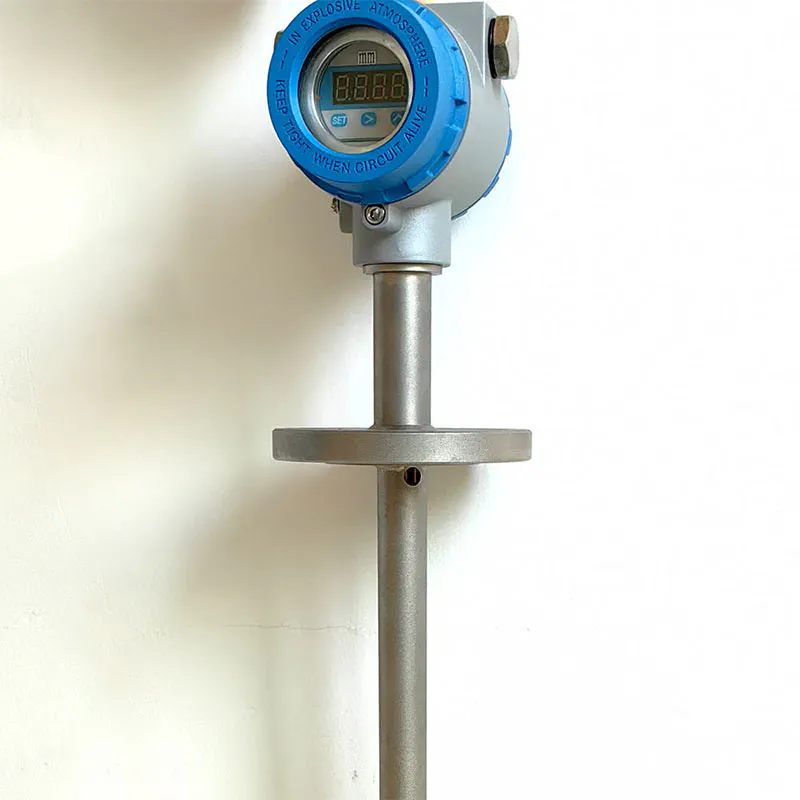
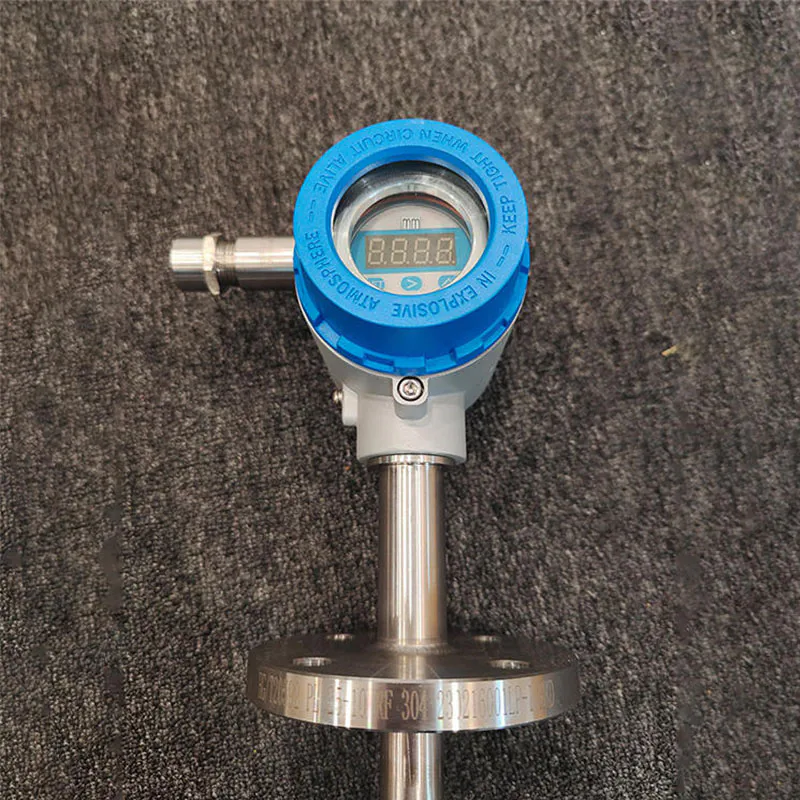
A typical capacitive level sensor consists of the following main components:
Electrode Probe
The primary sensing element, immersed in the liquid.
Can be rigid or flexible, made of steel or PTFE-coated material.
Forms a capacitor with the opposing electrode (often the tank wall).
Opposing Electrode / Reference Electrode
Usually the tank wall for metallic tanks or a secondary electrode for non-metallic tanks.
Works together with the probe to create the capacitance that varies with liquid level.
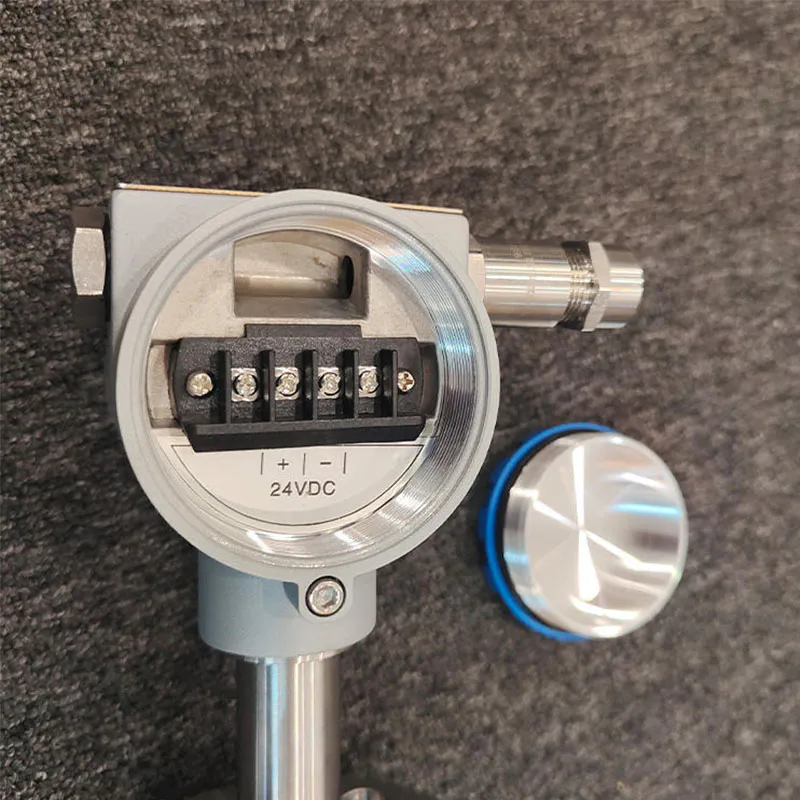
Electronics Housing / Signal Converter
Converts changes in capacitance into an electrical signal (typically 4–20 mA or voltage output).
Contains signal processing circuits, RF excitation, and sometimes explosion-proof protection.
การเชื่อมต่อของกระบวนการ
Flanges, threaded connections, or customized mounting options.
Ensures secure installation in the tank while maintaining proper sensor alignment.
การเชื่อมต่อไฟฟ้า
Standard M20×1.5 female thread or customized cable entries.
Provides connection to monitoring, display, or control systems.
Protective Coating / Housing
PTFE or other corrosion-resistant materials for electrodes and housing.
Ensures durability in harsh or corrosive environments.
Optional Components:
Display module for local level reading.
Explosion-proof enclosure for hazardous areas.
Remote signal transmission module for long-distance monitoring.
เครื่องมือวัดระดับ พารามิเตอร์
| พารามิเตอร์ | ข้อกำหนด |
|---|---|
| Electrode Type | Single electrode (metallic tanks); Double electrode (non-metallic tanks) |
| Electrode Material / Style | 1. Steel, rigid2. Steel, flexible3. PTFE-coated, rigid4. PTFE-coated, flexible |
| ช่วงการวัด | Rigid electrode: 0~3m (customizable)Flexible electrode: 0~60m (customizable) |
| Accuracy Class | 0.5, 1.0, 1.5, 2.0 |
| Transmission Distance | >1000m |
| สัญญาณเอาต์พุต | 2-wire 4–20 mA DC |
| ความต้านทานการโหลด | 0–600 Ω |
| Pressure Rating | 6, 10, 25, 64, up to 320 bar |
| อุณหภูมิการทำงาน | -190 ~ 200 °C |
| อุณหภูมิแวดล้อม | -50 ~ +80 °C |
| ความชื้นสัมพัทธ์ | ≤85% |
| Maximum Particle Size | ≤2 mm |
| การเชื่อมต่อของกระบวนการ | 1. Flange: DN20–DN1502. Thread: M27×23. Customizable options |
| การเชื่อมต่อไฟฟ้า | M20×1.5 female thread |
| กันระเบิด | Ex d IIC T6 Gb |
อินสตราวา OEM/ODM
Instrava มุ่งเน้นในการนำเสนอโซลูชันอุตสาหกรรมที่เชื่อถือได้ ผ่านผลิตภัณฑ์ที่คัดสรรมาอย่างพิถีพิถัน การปรับแต่งให้เหมาะสมกับการใช้งาน และการปรับแต่งที่ยืดหยุ่น เราเลือกเครื่องมือที่ผ่านการพิสูจน์แล้วจากผู้ผลิตที่เชื่อถือได้ เพื่อให้มั่นใจในคุณภาพที่สม่ำเสมอ ปรับโซลูชันให้เหมาะสมตามสภาพการทำงานจริงเพื่อแก้ไขปัญหาที่เกิดขึ้นจริง และให้การกำหนดค่าที่ปรับแต่งได้เพื่อตอบสนองความต้องการเฉพาะของการใช้งาน.
ด้วยการผสานความเชี่ยวชาญในการคัดเลือกเข้ากับความเข้าใจในการประยุกต์ใช้งาน Instrava ช่วยให้ลูกค้าลดความเสี่ยง เพิ่มประสิทธิภาพ และบรรลุผลลัพธ์ที่เชื่อถือได้ในสภาพแวดล้อมอุตสาหกรรมที่ซับซ้อน.

คำแนะนำสินค้าที่เกี่ยวข้อง
How does a capacitive liquid level sensor measure liquid level, and how accurate is it?
A capacitive level sensor forms a capacitor between its probe and an opposing electrode, with the liquid acting as the dielectric. Changes in liquid height alter the capacitance, which is converted into an electrical signal (typically 4–20 mA or voltage output).
ความถูกต้องขึ้นอยู่กับ:
| ประเภทเซ็นเซอร์ | ช่วงการวัด | Typical Accuracy | Notes |
|---|---|---|---|
| Rigid Electrode | 0–3 m | ±1% FS | Short-range, high-stability |
| Flexible Electrode | 0–60 m | ±1.5% FS | Suitable for deep tanks or irregular shapes |
Capacitive sensors can detect level changes as small as 1–2 mm in optimal conditions. Accuracy is influenced minimally by pressure, temperature, and humidity due to the dielectric-based principle.
Can capacitive sensors be used with corrosive or multi-phase liquids?
Yes. Sensors can be equipped with PTFE or other corrosion-resistant coatings. They are compatible with strong acids, alkalis, and aggressive chemical media.
Considerations for multi-phase liquids:
For stratified liquids (e.g., oil-water), the sensor may detect interface layers if configured with multiple electrodes.
Dielectric constants of the media affect capacitance; calibration may be needed for accurate measurements.
ตัวอย่าง:
| ระดับกลาง | Dielectric Constant (εr) | Recommendation |
|---|---|---|
| น้ำ | 80 | Standard calibration |
| Oil | 2–4 | Use flexible PTFE-coated probe |
| Acid (HCl) | 25 | PTFE or corrosion-resistant electrodes |
Which tank types are compatible with capacitive level sensors?
Metal Tanks: Single-electrode probe works, tank wall acts as opposing electrode.
Non-metallic Tanks (Plastic, Fiberglass): Dual-electrode setup needed.
Complex Shapes / Large Tanks: Flexible electrodes or multiple probes improve measurement coverage.
ข้อมูลเชิงลึก: Using multiple probes in large tanks allows redundancy and reduces the effect of liquid turbulence or sloshing on accuracy.
How do environmental factors affect performance?
Capacitive sensors are largely immune to environmental influences:
| ปัจจัย | Effect on Measurement | Mitigation / Notes |
|---|---|---|
| ความกดดัน | Negligible, up to 32 MPa | Ensure electrode and sealing materials rated for tank pressure |
| อุณหภูมิ | Minimal within -190 ~ 200°C | Use PTFE or high-temperature materials for extreme conditions |
| ความชื้น | ไม่มี | Electronics are sealed in IP65/IP67 housing |
| Viscosity / Particles | Minor signal damping | Use flexible probes for slurries or max particle size ≤2 mm |
ข้อมูลเชิงลึก: Compared to ultrasonic or radar level sensors, capacitive sensors are less affected by foam, vapor, or condensate layers.
What customization options are available for OEM/ODM projects?
We offer extensive customization to match specific industrial needs:
| Customizable Feature | Options / Range |
|---|---|
| Electrode Type | Rigid / Flexible, Steel / PTFE-coated |
| ช่วงการวัด | 0–3 m (rigid), 0–60 m (flexible) |
| สัญญาณเอาต์พุต | 4–20 mA, 0–10 V, RS485 |
| การเชื่อมต่อของกระบวนการ | Flange DN20–DN150, M27×2, custom designs |
| การป้องกันการระเบิด | Ex d IIC T6 Gb, custom certifications |
| สภาพแวดล้อมในการดำเนินงาน | Temperature, pressure, chemical resistance tailored |
ข้อมูลเชิงลึก: Proper customization ensures long-term reliability, reduces maintenance, and optimizes ROI by matching the sensor to the specific liquid and tank conditions.
Can capacitive sensors integrate with industrial control systems?
Yes. The output signal (typically 4–20 mA or RS485) allows seamless integration with PLCs, SCADA, DCS, or other monitoring systems.
Example Integration:
| ประเภทสัญญาณ | Compatible System | Notes |
|---|---|---|
| 4–20 มิลลิแอมแปร์ | PLC, DCS | Most common; easy wiring, analog signal |
| RS485 Modbus | SCADA, Industrial PCs | Supports remote monitoring, multi-sensor networks |
| Voltage (0–10 V) | Data loggers, Display Panels | Short-range applications, low-power systems |
ข้อมูลเชิงลึก: Capacitive sensors can provide real-time alerts, automated level control, and remote diagnostics. Compared to float or ultrasonic sensors, they offer higher reliability in extreme environments and corrosive media.
สร้างบนความสม่ำเสมอ ไม่ใช่คำกล่าวอ้าง
เราเชี่ยวชาญด้านการวิเคราะห์และตรวจจับในอุตสาหกรรม โดยมีความเข้าใจอย่างชัดเจนเกี่ยวกับสภาพแวดล้อมการทำงานจริงและความต้องการต่างๆ.
ทุกเครื่องมือได้รับการประเมินตามประสิทธิภาพ, ความเสถียร, และความเหมาะสมในการนำไปใช้—ไม่ใช่เพียงแค่ข้อมูลจำเพาะหรือราคา.
เราทำงานร่วมกับผู้ผลิตที่เชื่อถือได้เพื่อให้แน่ใจว่ามีปริมาณการจัดหาที่เสถียร คุณภาพที่สม่ำเสมอ และการจัดส่งที่น่าเชื่อถือ.
คำแนะนำของเราได้รับการสนับสนุนจากความเข้าใจในการใช้งานจริง ช่วยให้ลูกค้าหลีกเลี่ยงปัญหาทั่วไปและบรรลุผลลัพธ์ที่เชื่อถือได้.
Instrava ถูกสร้างขึ้นเพื่อลดความไม่แน่นอน—เพื่อให้ทุกการตัดสินใจของคุณชัดเจน ปลอดภัย และน่าเชื่อถือมากขึ้น.

เซ็นเซอร์อัลตราโซนิกวัดระดับภาพรวม เซ็นเซอร์อัลตราโซนิกวัดระดับเป็นอุปกรณ์แบบไม่สัมผัสที่ใช้ในการวัดระดับของของเหลวหรือของแข็ง...

สงครามสมัยใหม่ได้เปลี่ยนจากการเผชิญหน้าในสนามรบแบบดั้งเดิมไปสู่การโจมตีอย่างแม่นยำที่มุ่งเป้าไปที่โครงสร้างพื้นฐานอุตสาหกรรม ระบบพลังงาน และจุดเชื่อมโยงในห่วงโซ่อุปทาน...
เมื่อความขัดแย้งสิ้นสุดลง การฟื้นฟูก็เริ่มต้นขึ้น—ไม่ใช่แค่เมืองเท่านั้น แต่รวมถึงระบบต่าง ๆ ด้วย การผลิตพลังงาน น้ำ เคมีภัณฑ์ และโครงสร้างพื้นฐานต้องได้รับการฟื้นฟูอย่างรวดเร็ว,...