
Home » Products » Level Measuring Instruments » Capacitive Level Gauge for Explosion-proof Design


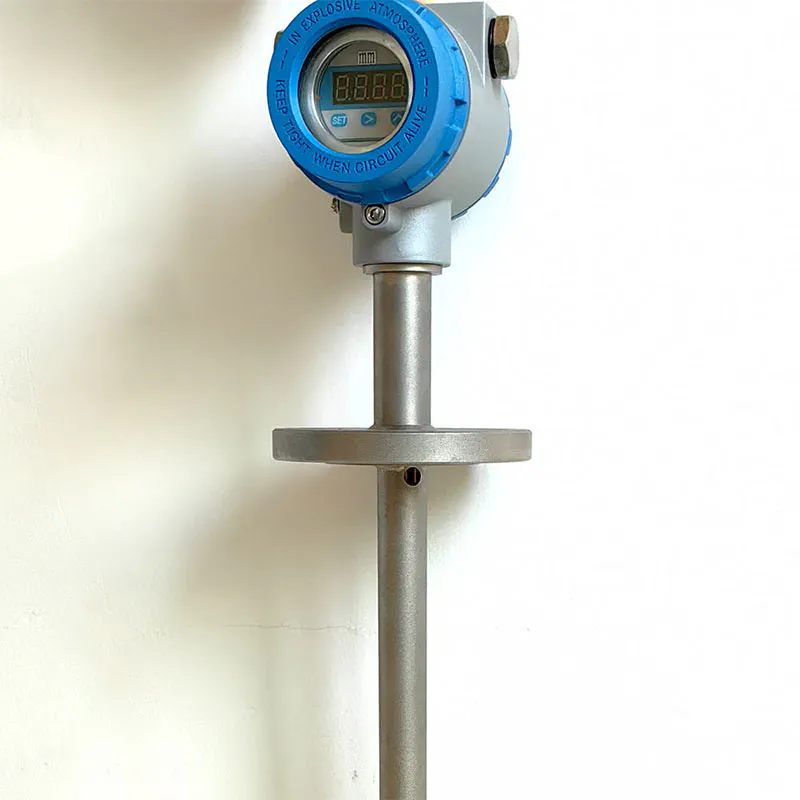
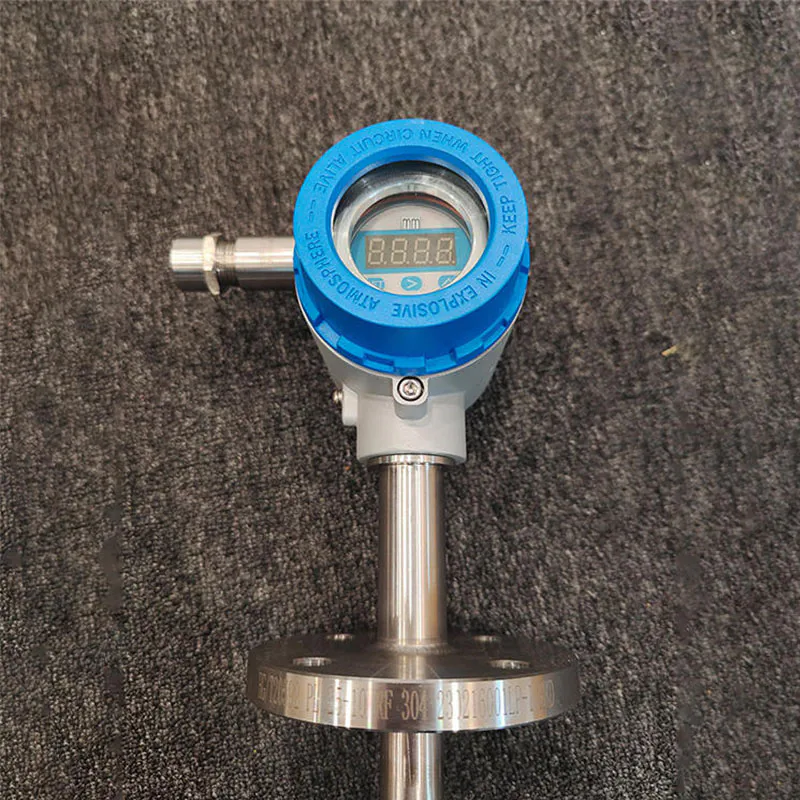
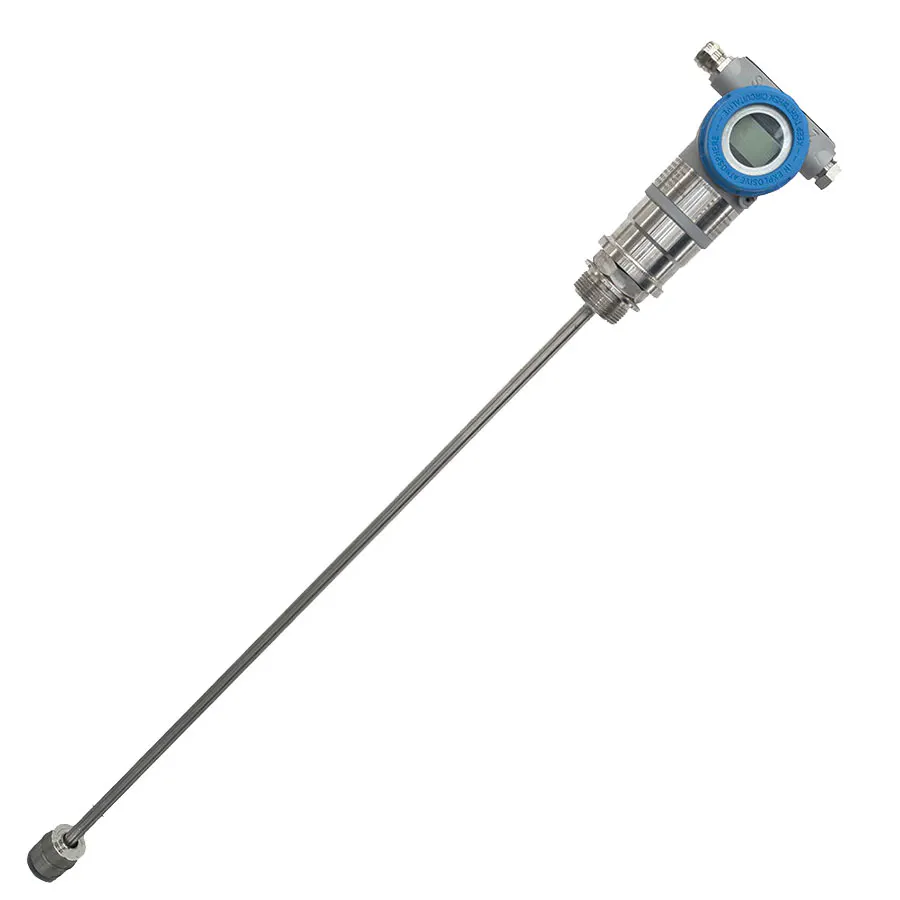
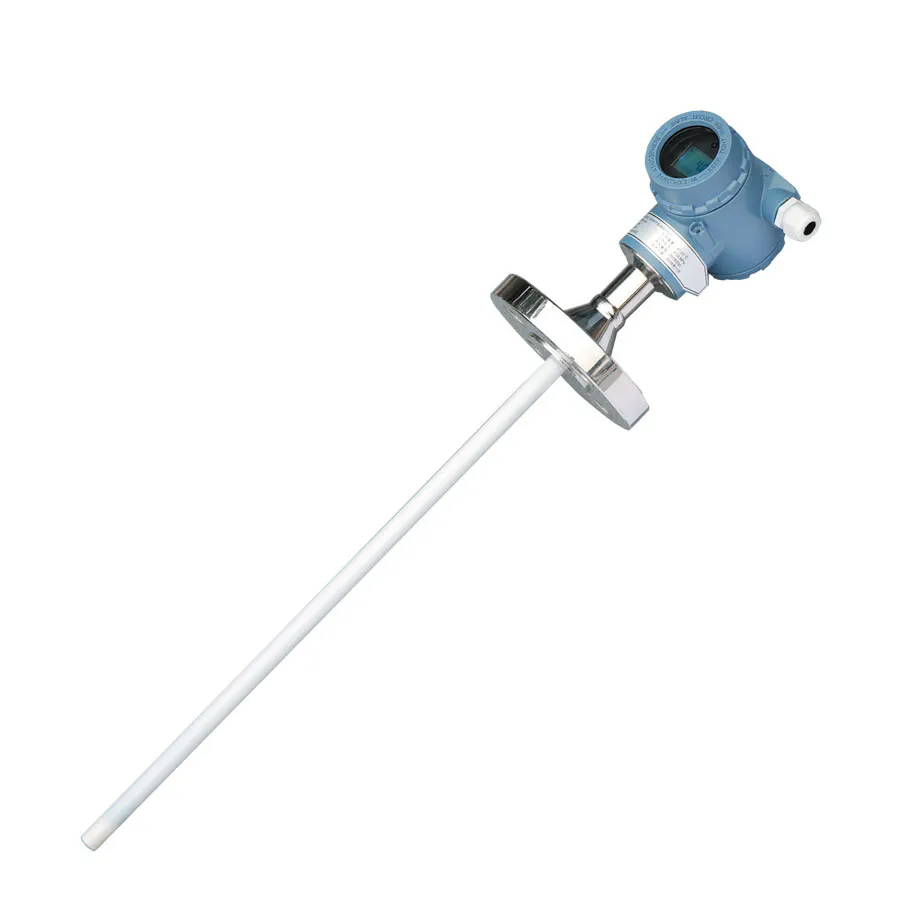
The type capacitance liquid level gauge utilizes capacitance gotten from physical changes provided by the probe and the container to present a linear variation pattern as the content (liquid) level changes, then convert the variation into 4 ~20mADC standard output signal. This type adopts the design of radio frequency with stable amplitude and is featured with good anti-interference and reliability, so it becomes easy and simple to measure the liquid level of the mediums under complex environments.
The series capacitance liquid level gauge could continuously measure all strong or weak corrosive medium or non corrosive medium. This series products have been extensively and successfully used in many fields, such as petroleum, chemical industry, fertilizer, metallurgy, nature gas, generate electricity, Sewage treatment and food etc.
| Electrode: | Single electrode(metal tank); double electrode(nonmetallic tank) |
| Type of electrode: | 1. Steel less rigid electrode |
| 2. Steel less flexible electrode | |
| 3. PTFE jacket rigid electrode | |
| 4.PTFE jacket flexible electrode | |
| Measuring range: | rigid electrode:0~3m ( or customize) |
| Flexible electrode:0~60m (or customize) | |
| Accuracy class: | 0.5, 1.0, 1.5, 2.0 |
| Transmitting: | >1000m |
| Signal output: | 2 wire 4~20mADC |
| Loading resistance: | 0~600 Ω |
| Pressure(bar): | 6, 10, 25, 64,~320 |
| Operating temperature: | -190 ~ 200 °C |
| Environment temperature: | -50~ +80 °C |
| Relative Humidity: | ≤85% |
| Maximum grain: | ≤2mm |
| Process connection: | 1. Flange: DN20~DN150
2. M27*2 thread 3. Customize |
| Electrical connection: | M20*1.5 female thread |
| Explosion-proof: | ExbIICT6Gb |
How does a capacitive liquid level sensor measure liquid level, and how accurate is it?
A capacitive level sensor forms a capacitor between its probe and an opposing electrode, with the liquid acting as the dielectric. Changes in liquid height alter the capacitance, which is converted into an electrical signal (typically 4–20 mA or voltage output).
Accuracy depends on:
| Sensor Type | Measuring Range | Typical Accuracy | Notes |
|---|---|---|---|
| Rigid Electrode | 0–3 m | ±1% FS | Short-range, high-stability |
| Flexible Electrode | 0–60 m | ±1.5% FS | Suitable for deep tanks or irregular shapes |
Capacitive sensors can detect level changes as small as 1–2 mm in optimal conditions. Accuracy is influenced minimally by pressure, temperature, and humidity due to the dielectric-based principle.
Can capacitive sensors be used with corrosive or multi-phase liquids?
Yes. Sensors can be equipped with PTFE or other corrosion-resistant coatings. They are compatible with strong acids, alkalis, and aggressive chemical media.
Considerations for multi-phase liquids:
For stratified liquids (e.g., oil-water), the sensor may detect interface layers if configured with multiple electrodes.
Dielectric constants of the media affect capacitance; calibration may be needed for accurate measurements.
Example:
| Medium | Dielectric Constant (εr) | Recommendation |
|---|---|---|
| Water | 80 | Standard calibration |
| Oil | 2–4 | Use flexible PTFE-coated probe |
| Acid (HCl) | 25 | PTFE or corrosion-resistant electrodes |
Which tank types are compatible with capacitive level sensors?
Metal Tanks: Single-electrode probe works, tank wall acts as opposing electrode.
Non-metallic Tanks (Plastic, Fiberglass): Dual-electrode setup needed.
Complex Shapes / Large Tanks: Flexible electrodes or multiple probes improve measurement coverage.
Insight: Using multiple probes in large tanks allows redundancy and reduces the effect of liquid turbulence or sloshing on accuracy.
How do environmental factors affect performance?
Capacitive sensors are largely immune to environmental influences:
| Factor | Effect on Measurement | Mitigation / Notes |
|---|---|---|
| Pressure | Negligible, up to 32 MPa | Ensure electrode and sealing materials rated for tank pressure |
| Temperature | Minimal within -190 ~ 200°C | Use PTFE or high-temperature materials for extreme conditions |
| Humidity | None | Electronics are sealed in IP65/IP67 housing |
| Viscosity / Particles | Minor signal damping | Use flexible probes for slurries or max particle size ≤2 mm |
Insight: Compared to ultrasonic or radar level sensors, capacitive sensors are less affected by foam, vapor, or condensate layers.
What customization options are available for OEM/ODM projects?
We offer extensive customization to match specific industrial needs:
| Customizable Feature | Options / Range |
|---|---|
| Electrode Type | Rigid / Flexible, Steel / PTFE-coated |
| Measuring Range | 0–3 m (rigid), 0–60 m (flexible) |
| Signal Output | 4–20 mA, 0–10 V, RS485 |
| Process Connection | Flange DN20–DN150, M27×2, custom designs |
| Explosion Protection | Ex d IIC T6 Gb, custom certifications |
| Operating Environment | Temperature, pressure, chemical resistance tailored |
Insight: Proper customization ensures long-term reliability, reduces maintenance, and optimizes ROI by matching the sensor to the specific liquid and tank conditions.
Can capacitive sensors integrate with industrial control systems?
Yes. The output signal (typically 4–20 mA or RS485) allows seamless integration with PLCs, SCADA, DCS, or other monitoring systems.
Example Integration:
| Signal Type | Compatible System | Notes |
|---|---|---|
| 4–20 mA | PLC, DCS | Most common; easy wiring, analog signal |
| RS485 Modbus | SCADA, Industrial PCs | Supports remote monitoring, multi-sensor networks |
| Voltage (0–10 V) | Data loggers, Display Panels | Short-range applications, low-power systems |
Insight: Capacitive sensors can provide real-time alerts, automated level control, and remote diagnostics. Compared to float or ultrasonic sensors, they offer higher reliability in extreme environments and corrosive media.
Submit your manufacturing requirements, and our team will get back to you with professional solutions within 24 hours.