
Sensor Ultrasonik Level: Prinsip Kerja, Jenis & Aplikasi Industri
Ikhtisar Sensor Ultrasonik Level Sensor ultrasonik level adalah perangkat non-kontak yang digunakan untuk mengukur level cairan atau padatan...
Beranda » Produk » Instrumen Pengukuran Level » Sensor Level Kapasitif

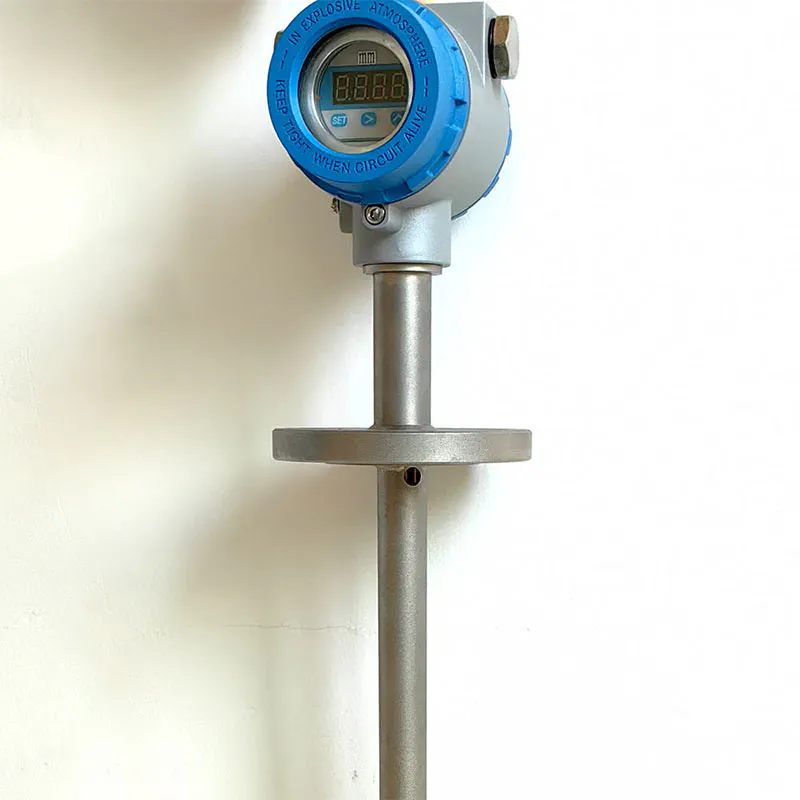
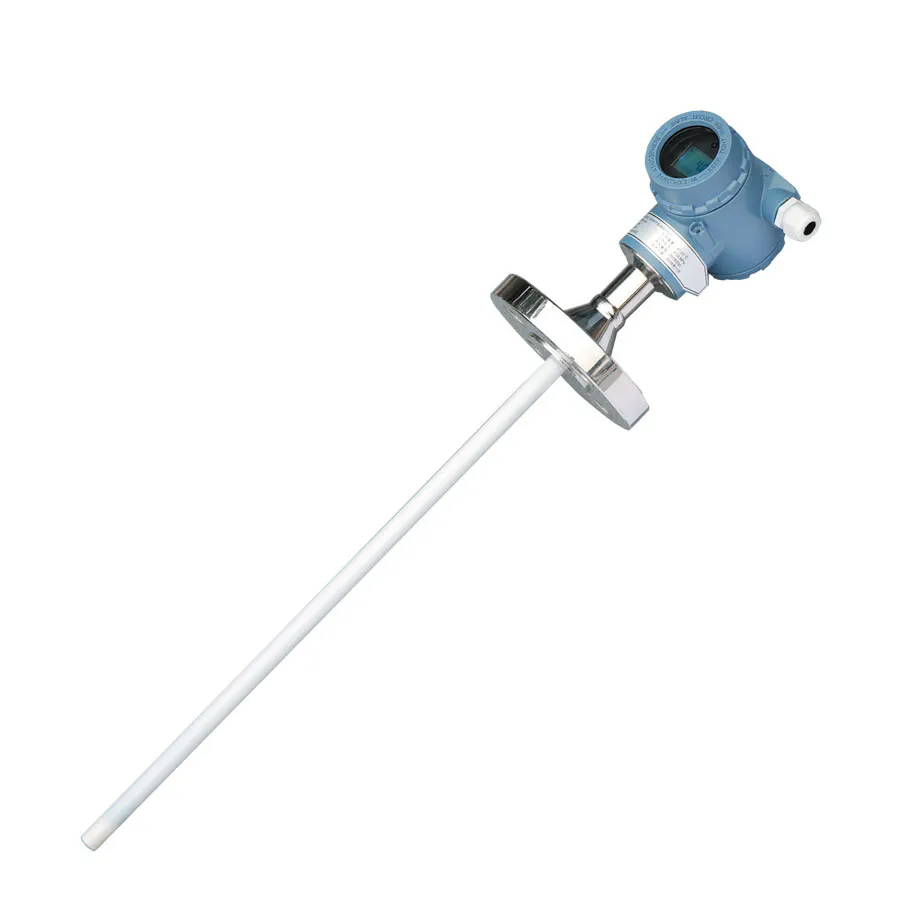
The Sensor Level Kapasitif is a high-precision industrial instrument designed for continuous liquid level measurement in a wide range of applications, including chemical, petroleum, food, and pharmaceutical industries. Utilizing the principle of capacitance, the sensor detects changes in liquid level accurately, providing reliable real-time monitoring for both simple and complex liquid media.
This sensor is ideal for measuring water, oil, acids, alkalis, and other conductive or non-conductive liquids. Its robust design ensures long-term stability and corrosion resistance, making it suitable for harsh industrial environments. With flexible installation options—top-mount or side-mount—and customizable measurement range and output signals, it adapts easily to specific industrial requirements.
Key Benefits:
Akurasi Tinggi: Ensures precise liquid level readings with minimal error.
Versatile Compatibility: Works with a wide variety of liquids and interfaces.
Durable & Corrosion-Resistant: Long-lasting performance in harsh conditions.
Easy Installation: Flexible mounting options reduce installation time and costs.
Customizable: Range, output, and configuration can be tailored for each application.
The capacitive level sensor provides a cost-effective, low-maintenance solution for real-time level monitoring, improving operational efficiency and process safety across industries.
Deskripsi Alat Ukur Level Deskripsi
Capacitive Level Sensor – Key Features
Continuous Level Measurement – Accurately monitors the level of almost all corrosive and non-corrosive liquids.
Wide Operating Temperature – Performs reliably in extreme conditions from -190°C to +200°C.
High Pressure Tolerance – Supports operating pressures from -0.1 MPa to 32 MPa.
Minimal Environmental Impact – Measurement remains stable despite variations in pressure, temperature, or humidity.
High Stability & Anti-Interference – Ensures reliable and precise readings even in electrically noisy environments.
Explosion-Proof Design – Certified for safe operation in hazardous environments.
Customizable Solutions – Range, electrode type, output signal, and process connections can be tailored to specific applications.


Applications of Capacitive Liquid Level Sensor
The capacitive liquid level sensor is widely used in industrial and process control applications where accurate, continuous liquid level measurement is required. Its robust design and high precision make it suitable for a variety of challenging environments.
Typical Applications:
Industri Kimia – Monitoring and controlling the level of corrosive acids, alkalis, and other chemical solutions in storage tanks and reactors.
Petroleum & Oil Storage – Level measurement in oil tanks, fuel depots, and petrochemical processing units.
Food & Beverage Industry – Accurate monitoring of liquids such as water, juice, milk, and other food-grade fluids.
Pharmaceutical Industry – Ensures precise liquid level control in pharmaceutical production and storage tanks.
Pengolahan Air & Air Limbah – Monitoring water levels in reservoirs, treatment tanks, and pipelines.
Energy & Power Plants – Tank level measurement for fuel, cooling water, or other industrial fluids.
Non-Metallic or Specialty Tanks – Works effectively in plastic, fiberglass, or other non-metallic containers with dual electrode configurations.
Advantages in Applications:
Menyediakan continuous and high-precision level monitoring.
Operates reliably under extreme temperatures and pressures.
Corrosion-resistant and suitable for harsh chemical environments.
Kompatibel dengan automation and process control systems for real-time monitoring.
Capacitive Level Gauge – Measuring Principle
A capacitive level gauge is an instrument designed to measure the height of a liquid and convert it into an electrical signal for display, monitoring, recording, or process control.
The device typically consists of a single probe that acts as an immersed electrode inside the tank. This probe forms a capacitor with an opposing electrode, which is often the tank wall. The liquid inside the tank serves as the dielectric medium, affecting the capacitance between the two electrodes.
As the liquid level rises or falls, the capacitance changes proportionally. This variation is measured by applying an alternating voltage to the electrodes, usually at a radio frequency (RF). The measured capacitance is then converted into an electrical signal that accurately represents the liquid level, allowing precise and reliable level monitoring in a wide range of industrial applications.


Capacitance Level Meter-Structure
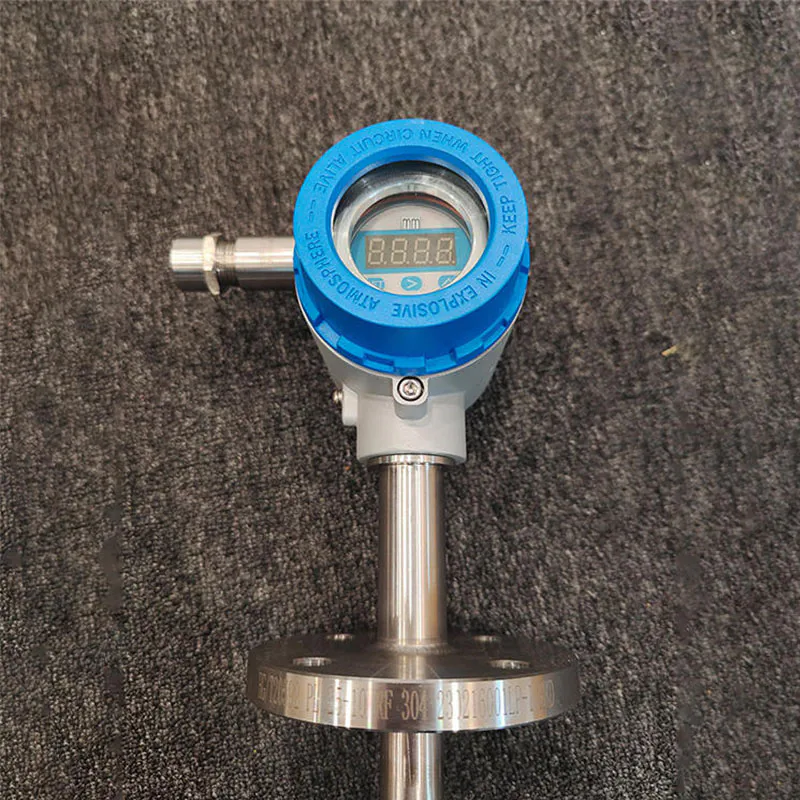
A typical capacitive level sensor consists of the following main components:
Electrode Probe
The primary sensing element, immersed in the liquid.
Can be rigid or flexible, made of steel or PTFE-coated material.
Forms a capacitor with the opposing electrode (often the tank wall).
Opposing Electrode / Reference Electrode
Usually the tank wall for metallic tanks or a secondary electrode for non-metallic tanks.
Works together with the probe to create the capacitance that varies with liquid level.
Electronics Housing / Signal Converter
Converts changes in capacitance into an electrical signal (typically 4–20 mA or voltage output).
Contains signal processing circuits, RF excitation, and sometimes explosion-proof protection.
Koneksi Proses
Flanges, threaded connections, or customized mounting options.
Ensures secure installation in the tank while maintaining proper sensor alignment.
Sambungan Listrik
Standard M20×1.5 female thread or customized cable entries.
Provides connection to monitoring, display, or control systems.
Protective Coating / Housing
PTFE or other corrosion-resistant materials for electrodes and housing.
Ensures durability in harsh or corrosive environments.
Optional Components:
Display module for local level reading.
Explosion-proof enclosure for hazardous areas.
Remote signal transmission module for long-distance monitoring.
Parameter Alat Ukur Level Parameter
| Parameter | Spesifikasi |
|---|---|
| Jenis Elektroda | Single electrode (metallic tanks); Double electrode (non-metallic tanks) |
| Electrode Material / Style | 1. Steel, rigid2. Steel, flexible3. PTFE-coated, rigid4. PTFE-coated, flexible |
| Rentang Pengukuran | Rigid electrode: 0~3m (customizable)Flexible electrode: 0~60m (customizable) |
| Kelas Akurasi | 0.5, 1.0, 1.5, 2.0 |
| Transmission Distance | >1000m |
| Keluaran Sinyal | 2-wire 4–20 mA DC |
| Resistensi Beban | 0–600 Ω |
| Peringkat Tekanan | 6, 10, 25, 64, up to 320 bar |
| Suhu Pengoperasian | -190 ~ 200 °C |
| Suhu Sekitar | -50 ~ +80 °C |
| Kelembaban Relatif | ≤85% |
| Maximum Particle Size | ≤2 mm |
| Koneksi Proses | 1. Flange: DN20–DN1502. Thread: M27×23. Customizable options |
| Sambungan Listrik | M20×1.5 female thread |
| Bukti Ledakan | Ex d IIC T6 Gb |
Instrava OEM / ODM
Instrava berfokus untuk memberikan solusi industri yang andal melalui produk yang dipilih dengan cermat, pengoptimalan berbasis aplikasi, dan penyesuaian yang fleksibel. Kami memilih instrumen yang telah terbukti dari produsen tepercaya untuk memastikan kualitas yang konsisten, mengoptimalkan solusi berdasarkan kondisi kerja nyata untuk memecahkan tantangan praktis, dan menyediakan konfigurasi yang disesuaikan untuk memenuhi kebutuhan aplikasi tertentu.
Dengan menggabungkan keahlian pemilihan dengan pemahaman aplikasi, Instrava membantu pelanggan mengurangi risiko, meningkatkan efisiensi, dan mencapai hasil yang dapat diandalkan dalam lingkungan industri yang kompleks.

How does a capacitive liquid level sensor measure liquid level, and how accurate is it?
A capacitive level sensor forms a capacitor between its probe and an opposing electrode, with the liquid acting as the dielectric. Changes in liquid height alter the capacitance, which is converted into an electrical signal (typically 4–20 mA or voltage output).
Akurasi tergantung pada:
| Jenis Sensor | Rentang Pengukuran | Akurasi Khas | Catatan |
|---|---|---|---|
| Rigid Electrode | 0–3 m | ±1% FS | Short-range, high-stability |
| Flexible Electrode | 0–60 m | ±1.5% FS | Suitable for deep tanks or irregular shapes |
Capacitive sensors can detect level changes as small as 1–2 mm in optimal conditions. Accuracy is influenced minimally by pressure, temperature, and humidity due to the dielectric-based principle.
Can capacitive sensors be used with corrosive or multi-phase liquids?
Yes. Sensors can be equipped with PTFE or other corrosion-resistant coatings. They are compatible with strong acids, alkalis, and aggressive chemical media.
Considerations for multi-phase liquids:
For stratified liquids (e.g., oil-water), the sensor may detect interface layers if configured with multiple electrodes.
Dielectric constants of the media affect capacitance; calibration may be needed for accurate measurements.
Contoh:
| Sedang | Dielectric Constant (εr) | Recommendation |
|---|---|---|
| Water | 80 | Standard calibration |
| Oil | 2–4 | Use flexible PTFE-coated probe |
| Acid (HCl) | 25 | PTFE or corrosion-resistant electrodes |
Which tank types are compatible with capacitive level sensors?
Metal Tanks: Single-electrode probe works, tank wall acts as opposing electrode.
Non-metallic Tanks (Plastic, Fiberglass): Dual-electrode setup needed.
Complex Shapes / Large Tanks: Flexible electrodes or multiple probes improve measurement coverage.
Wawasan: Using multiple probes in large tanks allows redundancy and reduces the effect of liquid turbulence or sloshing on accuracy.
How do environmental factors affect performance?
Capacitive sensors are largely immune to environmental influences:
| Faktor | Effect on Measurement | Mitigation / Notes |
|---|---|---|
| Tekanan | Negligible, up to 32 MPa | Ensure electrode and sealing materials rated for tank pressure |
| Suhu | Minimal within -190 ~ 200°C | Use PTFE or high-temperature materials for extreme conditions |
| Kelembaban | Tidak ada | Electronics are sealed in IP65/IP67 housing |
| Viscosity / Particles | Minor signal damping | Use flexible probes for slurries or max particle size ≤2 mm |
Wawasan: Compared to ultrasonic or radar level sensors, capacitive sensors are less affected by foam, vapor, or condensate layers.
What customization options are available for OEM/ODM projects?
We offer extensive customization to match specific industrial needs:
| Customizable Feature | Options / Range |
|---|---|
| Jenis Elektroda | Rigid / Flexible, Steel / PTFE-coated |
| Rentang Pengukuran | 0–3 m (rigid), 0–60 m (flexible) |
| Keluaran Sinyal | 4–20 mA, 0–10 V, RS485 |
| Koneksi Proses | Flange DN20–DN150, M27×2, custom designs |
| Perlindungan Ledakan | Ex d IIC T6 Gb, custom certifications |
| Lingkungan Operasi | Temperature, pressure, chemical resistance tailored |
Wawasan: Proper customization ensures long-term reliability, reduces maintenance, and optimizes ROI by matching the sensor to the specific liquid and tank conditions.
Can capacitive sensors integrate with industrial control systems?
Yes. The output signal (typically 4–20 mA or RS485) allows seamless integration with PLCs, SCADA, DCS, or other monitoring systems.
Example Integration:
| Signal Type | Compatible System | Catatan |
|---|---|---|
| 4-20 mA | PLC, DCS | Most common; easy wiring, analog signal |
| RS485 Modbus | SCADA, Industrial PCs | Supports remote monitoring, multi-sensor networks |
| Voltage (0–10 V) | Data loggers, Display Panels | Short-range applications, low-power systems |
Wawasan: Capacitive sensors can provide real-time alerts, automated level control, and remote diagnostics. Compared to float or ultrasonic sensors, they offer higher reliability in extreme environments and corrosive media.
Dibangun di atas Konsistensi, Bukan Klaim
Kami mengkhususkan diri dalam analisis dan deteksi industri, dengan pemahaman yang jelas tentang lingkungan dan persyaratan operasi dunia nyata.
Setiap instrumen dievaluasi berdasarkan performa, stabilitas, dan kesesuaian aplikasi-bukan hanya spesifikasi atau harga.
Kami bekerja sama dengan produsen tepercaya untuk memastikan pasokan yang stabil, kualitas yang konsisten, dan pengiriman yang dapat diandalkan.
Rekomendasi kami didasarkan pada pemahaman aplikasi, membantu pelanggan menghindari masalah umum dan mencapai hasil yang dapat diandalkan.
Instrava dibuat untuk mengurangi ketidakpastian-sehingga setiap keputusan yang Anda buat menjadi lebih jelas, aman, dan dapat diandalkan.

Ikhtisar Sensor Ultrasonik Level Sensor ultrasonik level adalah perangkat non-kontak yang digunakan untuk mengukur level cairan atau padatan...
Perang modern telah bergeser dari konfrontasi medan perang tradisional menjadi serangan presisi yang menargetkan infrastruktur industri, sistem energi, dan simpul rantai pasokan....
Ketika konflik berakhir, pembangunan kembali dimulai-bukan hanya kota, tetapi juga sistem. Energi, air, produksi bahan kimia, dan infrastruktur harus dipulihkan dengan cepat,...