
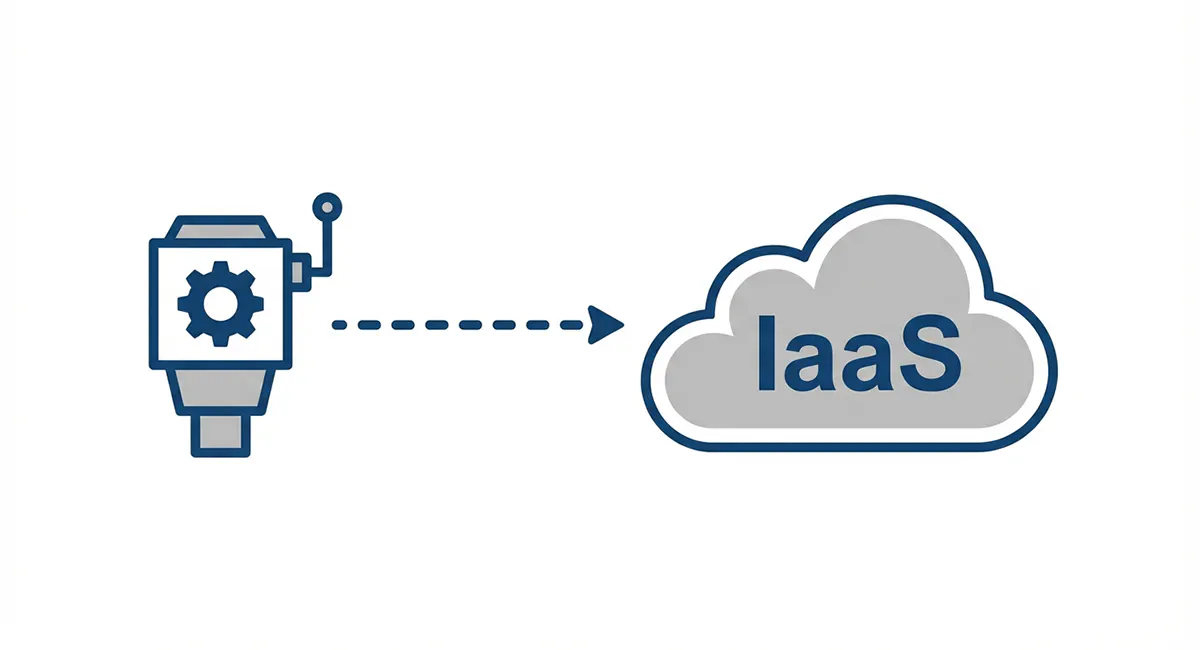
What is “Instrument-as-a-Service” in Industrial Automation?
Industrial instrumentation is undergoing a fundamental transformation. Traditionally, instruments were typically deployed as standalone hardware devices—installed, calibrated, and maintained to provide measurement signals that quantify specific process parameters and render them actionable.
Today, a brand-new paradigm is emerging: Instrument-as-a-Service (IaaS).
This shift marks a transition in industrial architecture from a hardware-centric model toward a data-centric, service-oriented approach. Under this architecture, instruments are no longer passive devices; instead, they become active providers of data, diagnostic information, and operational intelligence.
From Device to Service: A Structural Transformation
In traditional systems:
- Instruments generate signals (e.g., 4–20 mA current signals).
- Control systems interpret these signals.
- Data is primarily confined within systems at the plant level.
In the “Instrument-as-a-Service” model:
- Instruments expose their data via digital interfaces (APIs).
- Various systems can request, analyze, and act upon this data in real time.
- The device becomes an integral link within a connected ecosystem of services.
Key Transformational Comparison
| Traditional Instrument | Instrument-as-a-Service |
|---|---|
| Signal output | Data service |
| Local operation | Network-connected |
| Reactive maintenance | Predictive service |
| Limited diagnostics | Full lifecycle insight |
Core Components of “Instrument-as-a-Service”
1. API-Enabled Architecture
Instruments expose structured data and functional interfaces, allowing control systems, cloud platforms, or analytics tools to access and invoke them.
2. Continuous Data Availability
Instruments no longer provide merely periodic readings; instead, they deliver continuous, high-resolution data streams (requiring accompanying systems capable of high-speed transmission and rapid analysis).
3. Embedded Intelligence
Devices possess capabilities for self-diagnostics, health status monitoring, and predictive analytics.
4. Secure Connectivity
Communication processes are safeguarded through encryption and authentication mechanisms, thereby ensuring data integrity and security.
Why is this model gaining momentum now?
Insights Beyond the Obvious
The transition to the “Instrument-as-a-Service” model is not driven solely by hardware innovation; its core driving force lies in the ever-increasing value of industrial data.
Key Drivers:
- Widespread adoption of the Industrial Internet of Things (IIoT)
- Growing demand for predictive maintenance
- Deep integration with cloud platforms and Artificial Intelligence (AI) systems
- Urgent need for real-time operational visibility
Insights and Interpretation
As industrial systems increasingly evolve toward data-driven models, the role played by instrumentation has expanded accordingly. Today, instruments are no longer confined merely to measuring variables; they actively participate in—and contribute to—process optimization, safety assurance, and decision-making support.
Instrava facilitates this transformation by aligning instrumentation solutions with modern communication architectures, thereby enabling customers to extract greater value from their data.
Practical Impact on Industrial Operations
1. Real-time Decision-Making
Operators can access real-time data from any connected system at any time, thereby enhancing responsiveness.
2. Predictive Maintenance
Continuous diagnostic capabilities facilitate early fault detection, thereby reducing downtime.
3. Remote Operations
Instrumentation devices can be configured, monitored, and maintained remotely.
4. System Integration
Seamless integration with ERP, MES, and cloud platforms.
Implications for Business Models
The “Instrument-as-a-Service” model has also given rise to entirely new business models:
- Equipment + Data Subscription Services
- Performance-Based Service Contracts
- Remote Monitoring and Diagnostic Services
This shift moves the focal point of value creation from one-off hardware sales to long-term service partnerships.
China’s continued investment in fields such as intelligent manufacturing, the Internet of Things (IoT), and Artificial Intelligence (AI) provides robust technological support for the instrumentation manufacturing industry. For instance, the rapid advancement of smart sensor technology has significantly enhanced the data acquisition and processing capabilities of instrumentation, while the application of IoT technology has enabled remote device monitoring and predictive maintenance.
Conclusion
“Instrument-as-a-Service” marks a fundamental evolution within the realm of industrial automation. It signals the end of the era of closed, proprietary software systems. It enables a unified AI “orchestrator” to simultaneously manage clusters of instruments from various brands, thereby realizing “Autonomous Labs” capable of operating 24/7 without any human intervention.
By transforming instrumentation devices into connected, intelligent service providers, this model achieves new heights in terms of visibility, operational efficiency, and control capabilities.
Instrava is dedicated to providing instrumentation solutions that support this transformation—empowering industrial users to advance toward smarter, more connected, and more reliable systems.