
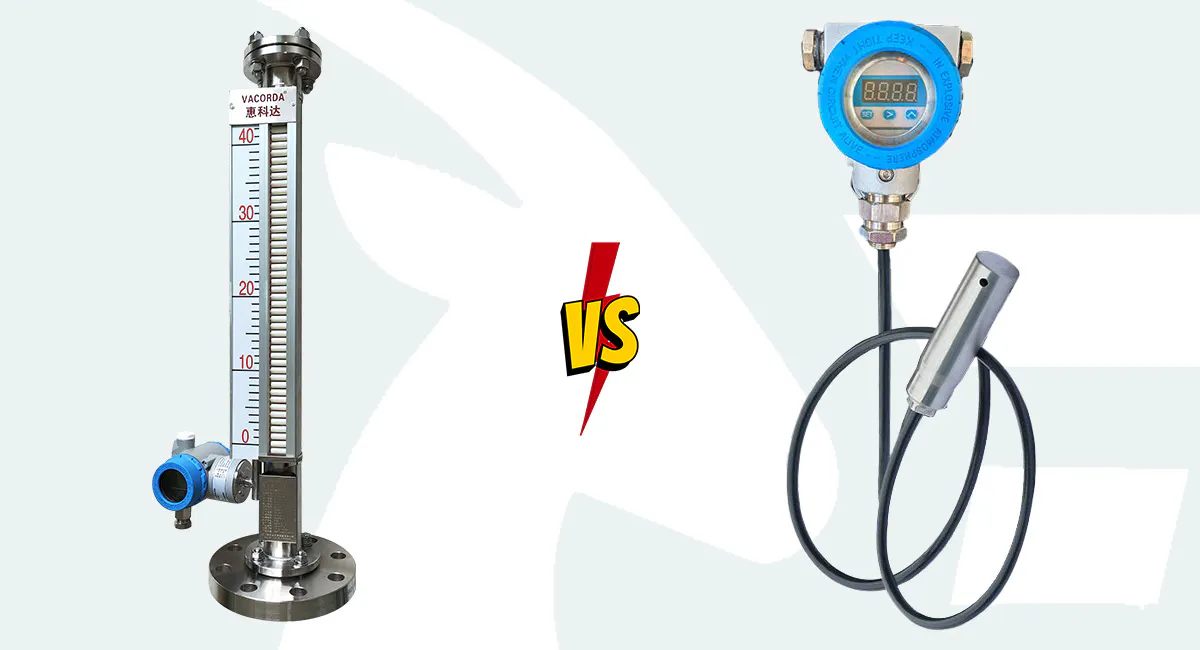
Indicador de nivel magnético frente a indicador de nivel hidrostático: Tecnología y guía de selección
Introducción
Los indicadores de nivel magnéticos y los indicadores de nivel hidrostáticos son dos instrumentos muy utilizados para controlar el nivel de líquidos en la industria. Ambas tecnologías son maduras y fiables, pero sirven para fines distintos y se adaptan a condiciones de proceso diferentes.
Desde la perspectiva de un fabricante OEM, comprender las diferencias entre un indicador de nivel magnético y un indicador de nivel hidrostático es esencial para seleccionar la solución de medición de nivel adecuada. Este artículo compara los dos tipos en términos de principio de funcionamiento, rendimiento, instalación e idoneidad de la aplicación.
Principio de funcionamiento
Medidor de nivel magnético
A indicador magnético de nivel es un instrumento visual de contacto. Consiste en un flotador que contiene un imán permanente que se mueve hacia arriba y hacia abajo dentro de una cámara sellada a medida que cambia el nivel del líquido. Unas aletas indicadoras externas o una pantalla magnética siguen la posición del flotador para mostrar el nivel en tiempo real.
Los indicadores de nivel magnéticos proporcionan una indicación de nivel directa e intuitiva sin necesidad de alimentación eléctrica ni señales electrónicas.
Indicador de nivel hidrostático
Indicadores de nivel hidrostático medir el nivel de líquido en función de la presión. El dispositivo detecta la presión hidrostática generada por la altura de la columna de líquido y la convierte en una señal de salida estándar como 4-20 mA.
Este tipo de indicador de nivel es un instrumento de medición electrónico y requiere una densidad de líquido estable para garantizar lecturas precisas.
Comparación de resultados
| Artículo | Medidor de nivel magnético | Indicador de nivel hidrostático |
|---|---|---|
| Método de medición | Indicación visual directa | Electrónica basada en la presión |
| Fuente de alimentación | No es necesario | Requerido |
| Precisión | Alta para indicación local | Alta con densidad estable |
| Señal de salida | Salida de transmisor opcional | Salida eléctrica estándar |
| Mantenimiento | Bajo | Bajo |
| Influencia de la densidad | No | Sí |
| Tolerancia térmica | Bien | Limitado a alta temperatura |
| Adecuación a la presión | Bien | Limitado |
| Riesgo de fracaso | Muy bajo | Bajo |
Comparación de instalaciones
| Factor de instalación | Medidor de nivel magnético | Indicador de nivel hidrostático |
|---|---|---|
| Posición de montaje | Montaje lateral en el depósito | Fondo o sumergido |
| Conexión a proceso | Requiere cámara externa | Roscado o brida |
| Contacto medio | Flotador en contacto directo | Sensor en contacto directo |
| Cableado | No es necesario | Necesario |
| Influencia de la obstrucción | Ninguno | Ninguno |
| Acceso para mantenimiento | Fácil acceso lateral | Acceso inferior necesario |
Aplicaciones típicas
Aplicaciones del medidor de nivel magnético
Los indicadores de nivel magnéticos son ideales para:
Calderas de alta temperatura
Recipientes presurizados
Depósitos de productos químicos corrosivos
Situaciones que requieren una visualización local del nivel
Procesos críticos para la seguridad sin disponibilidad de energía
Se utilizan habitualmente en plantas petroquímicas, tanques de almacenamiento y recipientes de proceso en los que los operarios necesitan una supervisión intuitiva del nivel.
Aplicaciones del medidor de nivel hidrostático
Los medidores de nivel hidrostáticos son adecuados para:
Depósitos atmosféricos
Sistemas de tratamiento del agua
Depósitos subterráneos
Depósitos de combustible y aceite
Supervisión remota mediante sistemas de control
Esta tecnología suele seleccionarse cuando se requiere una salida electrónica continua.
Guía de selección desde la perspectiva del fabricante
A la hora de elegir entre estos dos medidores de nivel, los fabricantes suelen tener en cuenta:
Si se requiere indicación visual local
Temperatura y presión del proceso
Necesidad de transmisión de señales a distancia
Estabilidad de la densidad del líquido
Espacio de instalación y presupuesto
Los indicadores de nivel magnéticos son los preferidos para entornos difíciles e indicación directa, mientras que los indicadores de nivel hidrostáticos se eligen para proyectos económicos de monitorización remota.
Conclusión
Los indicadores de nivel magnéticos y los indicadores de nivel hidrostáticos tienen ventajas únicas en la medición de nivel industrial. El indicador de nivel magnético ofrece una indicación visual sencilla, segura y muy fiable. El indicador de nivel hidrostático proporciona una salida electrónica precisa y rentable para aplicaciones convencionales.
Comprendiendo sus diferencias y consultando a fabricantes de indicadores de nivel OEM experimentados, los usuarios pueden seleccionar la solución de medición de nivel más adecuada para sus depósitos y recipientes.