
-
Por Instrava
-
02/10/2026
- 0 Comentario
Cómo elegir un interruptor de nivel para polvos y sólidos a granel
La detección del nivel de sólidos a granel suele fallar no por el sensor en sí, sino porque se selecciona la tecnología equivocada para el comportamiento del material.
En las aplicaciones de polvo y sólidos a granel, los interruptores de nivel están expuestos con frecuencia al polvo, las acumulaciones, la densidad variable del producto a granel y los patrones de flujo impredecibles. Cuando se ignoran estas realidades durante la selección, incluso un dispositivo técnicamente sólido puede convertirse en una fuente de falsas alarmas, tiempos de inactividad y costes de mantenimiento.
Por tanto, la elección del interruptor de nivel adecuado no depende tanto de la marca o el precio como de la comprensión del comportamiento real de los sólidos en entornos de proceso reales.
Problemas técnicos comunes en la detección de nivel de sólidos a granel
Los ingenieros que trabajan con polvos y sólidos a granel se enfrentan a menudo a problemas recurrentes que no son obvios en las hojas de datos:
Falsas alarmas causadas por la acumulación de polvo o material, especialmente en silos y tolvas.
Avería del motor o de la caja de cambios por bloqueo de material o carga mecánica excesiva.
Desajuste de la sensibilidad cuando la densidad aparente cambia entre lotes o temporadas
Elevada frecuencia de mantenimiento, sobre todo cuando el acceso al punto de instalación es limitado
Estos problemas rara vez se resuelven con instrumentos “más sensibles”. En muchos casos, la causa fundamental es un desajuste entre el principio de detección y el comportamiento del material.
Causas principales de fallo del interruptor de nivel en sólidos a granel
No se han encontrado datos
Esta distribución pone de manifiesto que la mayoría de los fallos se deben a factores relacionados con el proceso, no con la electrónica. Cualquier estrategia de selección eficaz debe dar prioridad a la interacción mecánica con el material.
Criterios clave para la selección de interruptores de nivel de polvo y sólidos a granel
En lugar de empezar con modelos de sensores, la selección eficaz comienza con condiciones del proceso. Los siguientes criterios determinan sistemáticamente los resultados a largo plazo:
1. Tipo de material y tamaño de las partículas
Los polvos finos, los gránulos y los sólidos irregulares se comportan de forma muy diferente. Los materiales cohesivos tienden a formar puentes y acumulaciones, mientras que los sólidos que fluyen libremente pueden ejercer grandes fuerzas de impacto durante el llenado.
2. Densidad aparente y comportamiento de flujo
La densidad aparente rara vez es constante. La humedad, la compactación y el origen del material pueden afectar a la fuerza que experimenta el interruptor de nivel a la misma altura de llenado.
3. Ubicación de la instalación
Las instalaciones de montaje superior y lateral experimentan diferentes patrones de carga. Los dispositivos de montaje lateral deben soportar la presión lateral y la posible compactación.
4. Acceso de mantenimiento y riesgo de obstrucción
En muchos silos, el acceso es limitado. Los dispositivos que requieren una limpieza o recalibración frecuentes aumentan el riesgo operativo y el coste de mantenimiento.
Estos criterios constituyen la base para seleccionar una tecnología que se ajuste a cómo se comporta el material, no como se describe en el papel.
Dónde encajan naturalmente los interruptores de nivel de paleta giratoria
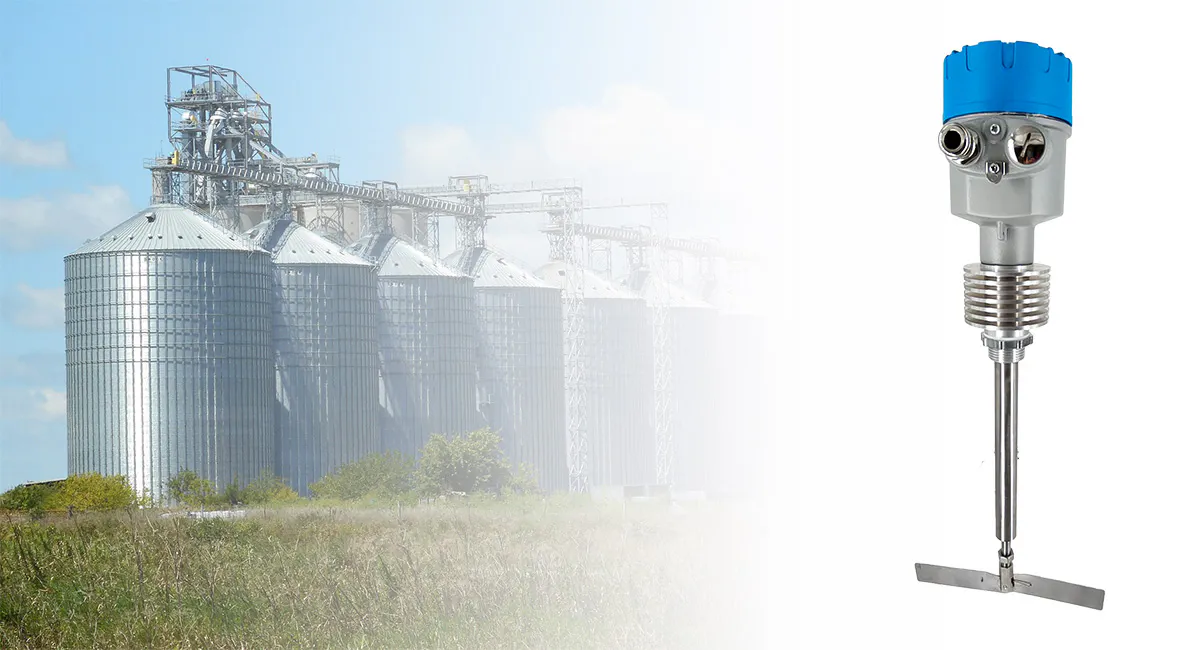
Para muchas aplicaciones de polvo y sólidos a granel, los interruptores de nivel de paleta giratoria siguen siendo una opción práctica y probada cuando el bloqueo de material y la variación de densidad son habituales.
Su idoneidad proviene de cómo interactúan mecánicamente con el material:
Detección basada en el par responde directamente a la resistencia de los sólidos
Sensibilidad ajustable permite la adaptación a diferentes densidades aparentes
Protección contra sobrecargas evita daños en el motor durante la compactación o el bloqueo
Estructura sencilla y robusta minimiza el mantenimiento a largo plazo
En lugar de basarse en sutiles cambios de señal, los interruptores de paletas giratorias toman una decisión clara basada en la interacción física, una ventaja en entornos polvorientos y variables.
Fiabilidad de la detección frente a la variación de la densidad aparente
No se han encontrado datos
La tendencia muestra que la detección basada en el par se mantiene comparativamente estable a medida que varía la densidad aparente, mientras que las tecnologías dependientes de la señal experimentan un descenso más acusado de la fiabilidad.
Comprender los límites de la aplicación genera confianza
Los interruptores de nivel de paleta giratoria son no es la mejor solución para todas las aplicaciones, y reconocer sus límites es esencial para una correcta selección.
Las aplicaciones más adecuadas son:
Polvos y sólidos granulados
Tasas de llenado de lentas a moderadas
Detección de nivel en silos, contenedores y tolvas
Aplicaciones en las que la densidad varía con el tiempo
Las aplicaciones menos adecuadas son:
Sólidos muy fluidificados con una resistencia mínima
Llenado a muy alta velocidad con fuerte impacto del material
Aplicaciones con materiales extremadamente abrasivos sin protección
Tener claros estos límites evita la sobreaplicación y mejora la fiabilidad del sistema.
Escenarios típicos de aplicación en la manipulación de sólidos a granel
En las aplicaciones de silos que manipulan cemento, grano o pellets de plástico, los interruptores de nivel de paleta giratoria se instalan habitualmente para protección de alto nivel para evitar el sobrellenado y la tensión estructural.
En los silos de alimentación y las tolvas intermedias, se utilizan con frecuencia para detección de bajo nivel, La disponibilidad de los materiales está garantizada, al tiempo que se evita que los equipos posteriores se queden vacíos.
Estos casos de uso no se rigen por las especificaciones del producto, sino por interacción mecánica predecible entre la paleta y el material almacenado.
Tomar una decisión de selección segura
La selección de un interruptor de nivel para polvos y sólidos a granel consiste en última instancia en control de riesgos-reducir las falsas alarmas, evitar daños en los equipos y minimizar la intervención de mantenimiento.
Para la detección estable de nivel puntual en sólidos a granel, los interruptores de nivel de paleta giratoria con protección contra sobrecarga y par ajustable se adoptan ampliamente en sistemas industriales donde el comportamiento del material es incierto y las condiciones del proceso varían.
👉 Más información sobre los interruptores de nivel de paleta giratoria Instrava