Qué es un medidor de nivel y cómo elegir el adecuado para aplicaciones industriales
Introducción: Por qué la medición de niveles es más importante de lo que cree
En entornos industriales, la medición imprecisa del nivel no es sólo una cuestión técnica, sino que afecta directamente a la seguridad, la eficacia y los costes operativos. Ya sea en plantas de tratamiento de agua, tanques de almacenamiento de productos químicos o terminales petrolíferas, conocer el nivel exacto de líquido es esencial para el control de procesos y la prevención de riesgos.
Un indicador de nivel es un dispositivo utilizado para medir el nivel de líquidos o sólidos dentro de un recipiente. Sin embargo, elegir el tipo adecuado de indicador de nivel es mucho más complejo que simplemente seleccionar un producto de un catálogo.
En escenarios industriales reales, factores como la temperatura, la presión, el vapor y la estructura de la instalación influyen significativamente en el rendimiento de las mediciones.
¿Qué es un indicador de nivel? (Más allá de la definición básica)
A indicador de nivel es un instrumento diseñado para controlar el nivel de líquidos o materiales a granel en el interior de tanques, recipientes o silos.
Pero en la práctica, no es sólo un dispositivo de medición: forma parte de un sistema de control que afecta directamente:
- Estabilidad del proceso
- Protección del equipo (prevención del funcionamiento en seco de la bomba)
- Exactitud del inventario
- Cumplimiento de las normas de seguridad
En múltiples proyectos industriales, la medición incorrecta del nivel ha provocado incidentes de desbordamiento, un control inestable del proceso y tiempos de inactividad inesperados, la mayoría de los cuales podrían haberse evitado con una selección adecuada del sensor.
Tipos de indicadores de nivel y sus aplicaciones
Las distintas tecnologías están diseñadas para diferentes condiciones de funcionamiento. Entender sus puntos fuertes y sus limitaciones es esencial antes de tomar una decisión.
Tecnologías comunes de los indicadores de nivel
| Tipo | Principio de medición | Aplicaciones típicas |
|---|---|---|
| Medidor de nivel de radar | Reflexión de microondas | Depósitos sellados de alta presión |
| Sensor ultrasónico | Reflexión de las ondas sonoras | Depósitos abiertos, tratamiento de aguas |
| Medidor de nivel de flotador | Flotabilidad mecánica | Depósitos sencillos, sistemas de bajo coste |
| Presión diferencial | Diferencia de presión | Líquidos estables en depósitos cerrados |
| Sensor capacitivo | Variación de la capacitancia | Líquidos químicos o viscosos |
Cada tecnología funciona de forma diferente en función de las condiciones ambientales y de proceso.
Rendimiento de los sensores de nivel ultrasónicos en condiciones industriales reales
Sensores de nivel ultrasónicos son muy utilizados porque son fáciles de instalar, no requieren contacto y no se ven afectados por la viscosidad o densidad del líquido. Son especialmente comunes en aplicaciones de tratamiento de aguas y petroquímicas por su escaso mantenimiento y su fiabilidad en el funcionamiento diario.
Sin embargo, en entornos químicos e industriales prácticos, surgen con frecuencia varios problemas que afectan directamente a la precisión y la estabilidad de las mediciones.
Desafíos comunes de la medición ultrasónica
| Tipo de problema | Impacto en la medición |
|---|---|
| Fluctuación del suministro eléctrico | Causa lecturas inestables o pérdida de señal |
| Limitación de la zona ciega | Reduce el alcance efectivo de la medición |
| Burbujas de gas / espuma | Provoca dispersión y atenuación de la señal |
| Superficie irregular o contaminada | Conduce a reflexiones débiles o falsas |
| Desviación del ángulo de instalación | La reflexión de la señal no llega al sensor |
Comprender estas limitaciones del mundo real es fundamental a la hora de seleccionar la tecnología ultrasónica.
Conocimientos prácticos de ingeniería a partir de aplicaciones de campo
En varios proyectos de plantas químicas, observamos que la inestabilidad de la fuente de alimentación afectaba directamente al rendimiento del sensor ultrasónico. Cuando la tensión de excitación era demasiado alta, la zona ciega aumentaba, reduciendo el rango de medición efectivo. Cuando la tensión bajaba, la señal de retorno se volvía demasiado débil, provocando errores de medición o la pérdida total de la señal.
Otro problema habitual es la selección incorrecta del alcance. Dado que las ondas ultrasónicas se atenúan con la distancia y tienen una zona ciega fija, seleccionar un sensor con un alcance inadecuado suele dar lugar a lecturas imprecisas o datos inutilizables.
Las burbujas de gas y el vapor también son importantes fuentes de error en las mediciones. En entornos con burbujas, sobre todo en regiones frías, las señales ultrasónicas se dispersan y absorben, lo que provoca lecturas erróneas. Cuando las burbujas se acumulan en la superficie del sensor, el problema se agrava y, a veces, incluso daña la sonda con el tiempo.
Las condiciones de la superficie también desempeñan un papel fundamental. Si la superficie del líquido es turbulenta o contiene impurezas, es posible que las señales reflejadas no vuelvan directamente al sensor, lo que provocaría mediciones inestables o perdidas.
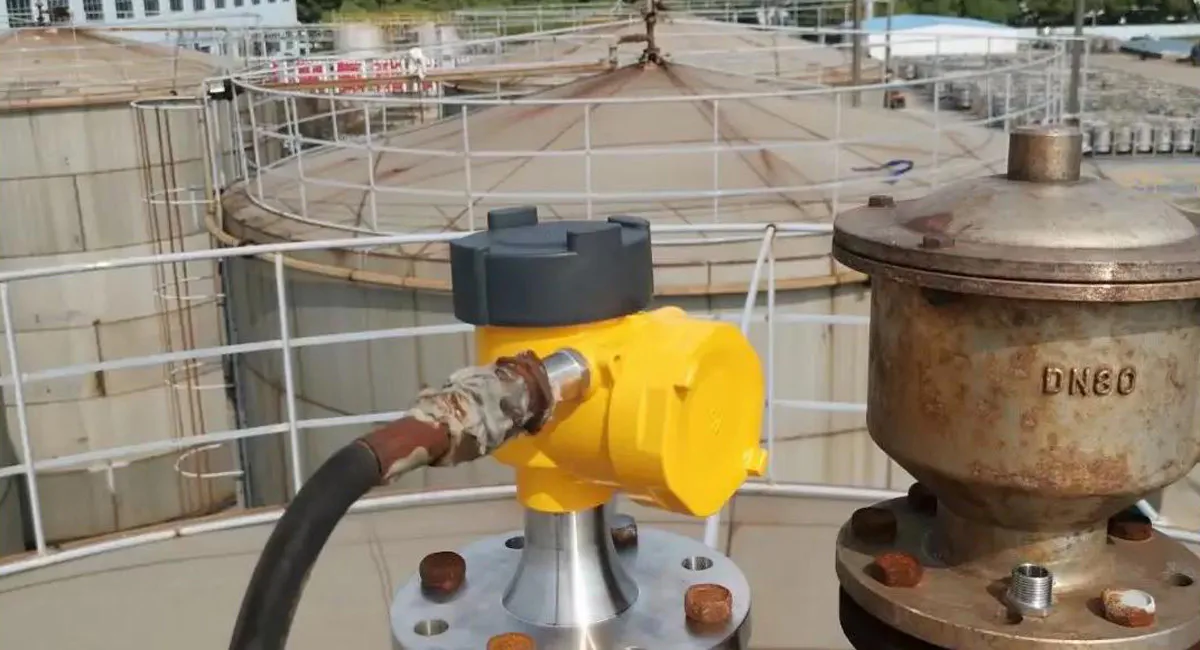
La instalación es otro factor crítico. Los sensores ultrasónicos deben montarse en vertical y siempre hay que tener en cuenta la zona ciega. En la mayoría de las aplicaciones industriales, la zona ciega suele oscilar entre 30 y 50 cm. Si el sensor se instala demasiado cerca de la superficie del líquido o en ángulo, es muy probable que se produzcan fallos en la medición.
En aplicaciones con limitaciones de espacio, pueden utilizarse pequeños sensores ultrasónicos de zona ciega, pero suelen tener un alcance de medición limitado (a menudo inferior a 0,6 metros), lo que restringe su aplicabilidad.
Cómo elegir el indicador de nivel adecuado
Seleccionar un indicador de nivel no consiste en elegir la tecnología más avanzada, sino la más adecuada para sus condiciones de trabajo específicas.
Factores clave de selección
| Factor | Por qué es importante |
|---|---|
| Tipo de líquido | Los líquidos corrosivos, viscosos o limpios se comportan de forma diferente |
| Temperatura y presión | Límites de las tecnologías aplicables |
| Tipo de depósito | Los depósitos abiertos y los sellados requieren sensores diferentes |
| Condiciones de la superficie | La espuma, el vapor o las turbulencias afectan a las señales |
| Restricciones de instalación | El espacio y el ángulo de montaje influyen en el rendimiento |
Ignorar estos factores suele conducir a un rendimiento inestable o al fallo del sistema.
Comparación práctica: Cuándo elegir cada tecnología
La selección en el mundo real depende más de las condiciones que de las especificaciones.
| Escenario | Solución recomendada | Razón |
|---|---|---|
| Depósito sellado de alta presión | Indicador de nivel radar | No se ve afectado por la presión y el vapor |
| Depósito de agua abierto | Sensor ultrasónico | Rentabilidad y facilidad de instalación |
| Entorno de espuma o vapor | Indicador de nivel radar | Señal más estable |
| Detección simple de encendido/apagado | Interruptor de nivel de flotador | Fiabilidad y bajo coste |
En aplicaciones de aguas residuales y tanques abiertos, a menudo se prefieren los sensores ultrasónicos por razones de coste. Sin embargo, en entornos con condensación, vapor o superficies inestables, los medidores de nivel por radar proporcionan sistemáticamente resultados más fiables.
Modelo de selección paso a paso (enfoque de ingeniería)
Un enfoque estructurado reduce el riesgo y mejora la fiabilidad a largo plazo.
| Paso | Acción | Resultado |
|---|---|---|
| 1 | Definir las condiciones del proceso | Requisitos básicos claros |
| 2 | Identificar el intervalo de medida | Eliminar los sensores inadecuados |
| 3 | Evaluar los factores medioambientales | Evitar riesgos de fracaso |
| 4 | Comparar tecnologías | Equilibrio entre coste y rendimiento |
| 5 | Validar con escenarios reales | Garantizar la estabilidad a largo plazo |
Este método se utiliza mucho en proyectos industriales para garantizar una selección correcta desde el principio.
Errores comunes en la selección de indicadores de nivel
Muchos fallos en la selección se deben a que no se tienen en cuenta las condiciones del mundo real.
Errores típicos
- Uso de sensores ultrasónicos en entornos de alta condensación o vapor
- Ignorar las limitaciones de las zonas ciegas durante la instalación
- Selección de un rango de medición incorrecto
- No tiene en cuenta las burbujas o la espuma del líquido
- Instalación de sensores en ángulos incorrectos
En múltiples proyectos, la sustitución de un sensor de nivel inadecuado dio lugar a costes superiores a los del sistema original, lo que pone de relieve la importancia de una selección inicial adecuada.
Por qué la experiencia es importante en la medición de niveles
Las especificaciones técnicas por sí solas no bastan: la experiencia en el mundo real determina el éxito.
En un proyecto de almacenamiento de productos químicos, se seleccionó inicialmente un sensor ultrasónico por su menor coste y facilidad de instalación. Sin embargo, debido a la inestabilidad del vapor y de la superficie, los resultados de las mediciones eran incoherentes. Tras cambiar a un indicador de nivel por radar, el sistema consiguió lecturas estables y precisas con un mantenimiento mínimo.
Esto demuestra un principio crítico:
la mejor solución no es la más sencilla ni la más barata, sino la que se adapta a las condiciones de la aplicación.
Conclusión: Elegir el medidor de nivel adecuado es cuestión de ajuste, no de complejidad
No existe una solución universal para la medición de nivel. Cada aplicación requiere un equilibrio entre rendimiento, coste y compatibilidad medioambiental.
El indicador de nivel adecuado depende de:
- Condiciones del proceso
- Retos medioambientales
- Limitaciones de instalación
- Fiabilidad a largo plazo
Instrava es un socio centrado en el suministro de equipos, soluciones y servicios para instrumentos industriales de medición y control utilizados en aplicaciones críticas de seguridad y control de procesos. Apoyamos a los clientes con soluciones de medición de nivel personalizadas, combinando experiencia en ingeniería, calidad de producto fiable y capacidades OEM/ODM flexibles para garantizar un rendimiento óptimo en aplicaciones del mundo real.