







- Por Instrava
- 01/07/2026
- 0 Comentario
Transmisor de presión frente a sensor de presión: Principales diferencias, aplicaciones y guía de selección
Pressure Transmitter vs Pressure Sensor | Key Differences & Industrial Applications
In modern industrial processes, accurate pressure measurement is essential for safe and efficient operation. Two commonly discussed instruments are pressure transmitters and pressure sensors. While they are often mentioned together, they serve different purposes in industrial systems. Understanding the distinction between these two devices is crucial for engineers, system designers, and operators in sectors like oil & gas, chemical processing, water treatment, and power generation.
This guide provides a detailed comparison of pressure transmitters and pressure sensors, their working principles, applications, and selection considerations for industrial processes.
What Is a Pressure Sensor?
A pressure sensor is a device that detects the pressure of a liquid or gas and converts it into a readable signal, often an electrical voltage. It consists of a sensing element that deforms under pressure, generating a signal proportional to the applied pressure.
Key characteristics of pressure sensors:
Direct measurement of pressure (gauge, absolute, or differential)
Typically outputs a low-level analog signal (millivolt or voltage)
Requires external electronics for signal conditioning if integration into a control system is needed
Common Applications:
Detecting pressure in pipelines
Monitoring pumps and compressors
Laboratory and R&D pressure measurement
What Is a Pressure Transmitter?
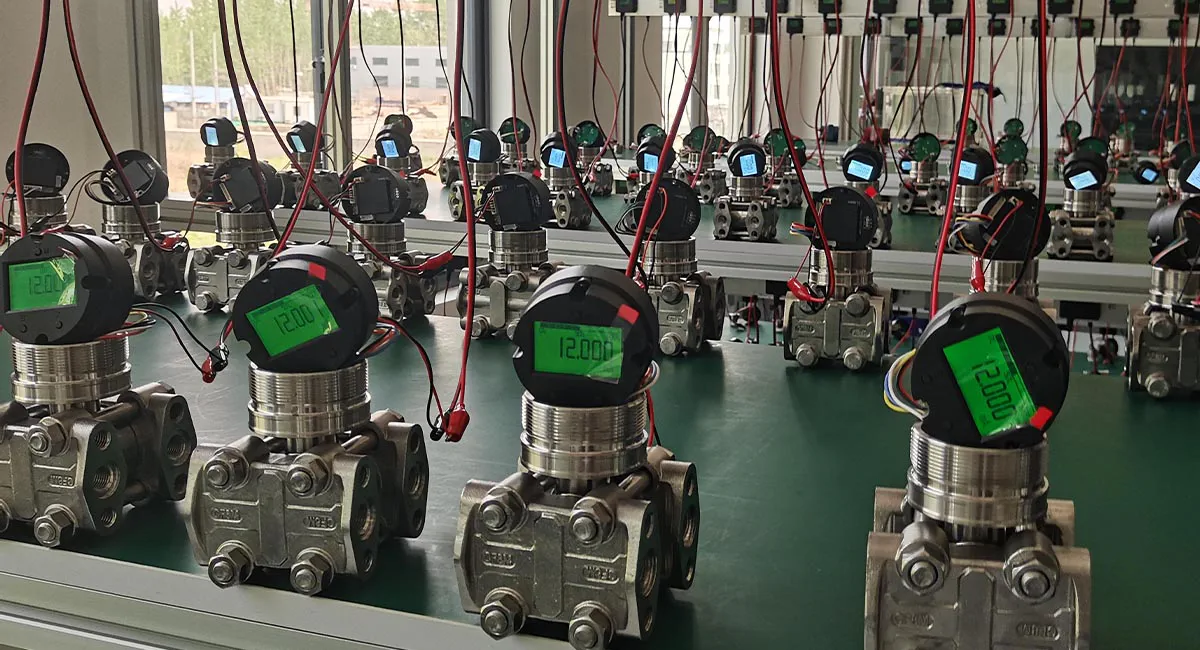
A transmisor de presión, on the other hand, is an industrial-grade device that includes both the sensing element and the electronics to convert the signal into a standardized output like 4–20 mA or digital protocols (HART, Modbus). This makes it directly suitable for integration into control systems and industrial automation platforms.
Key characteristics of pressure transmitters:
Converts sensor signal to standard industrial output
Often includes temperature compensation and linearization
Can support remote monitoring and diagnostics
Certified for hazardous environments (ATEX, IECEx)
Common Applications:
Oil & gas pipeline monitoring
LPG/LNG storage tanks
Chemical reactor pressure control
Water treatment and distribution systems
Pressure Transmitter vs Pressure Sensor: Core Differences
| Característica | Pressure Sensor | Pressure Transmitter |
|---|---|---|
| Función | Measures pressure only | Measures and transmits standardized signal |
| Salida | Voltage, mV, or resistance | 4–20 mA, HART, Modbus, or other digital outputs |
| Electronics | Often requires external signal conditioning | Integrated signal conditioning and amplification |
| Industrial Integration | Limited, may need additional hardware | Ready for PLC/DCS/SCADA integration |
| Accuracy & Stability | Moderado | High, with temperature compensation |
| Environment Suitability | Usually lab/benchtop or controlled environment | Designed for harsh industrial environments |
| Hazardous Area Certification | Rare | Often certified (ATEX, IECEx) |
| Uso típico | Measurement and testing | Process control and automation |
Perspicacia: A pressure sensor is ideal for local or low-cost measurement, testing, and research. Pressure transmitters are essential for industrial automation and process control, where signal standardization, long-distance transmission, and reliability are critical.
How Pressure Transmitters and Sensors Work
Pressure Sensor Operation
A pressure sensor converts mechanical deformation from applied pressure into an electrical signal. Common sensing technologies include:
Strain gauge: Deformation of a diaphragm generates a change in resistance
Capacitive: Pressure changes the capacitance of a sensor element
Piezoresistive: Pressure-induced resistance changes in silicon elements
Pressure Transmitter Operation
A pressure transmitter combines the sensing element with electronics that:
Amplify and filter the raw signal
Compensate for temperature variations
Convert it to a standardized output for industrial control systems
Applications by Device Type
Typical Applications for Sensors and Transmitters
| Industria | Pressure Sensor | Pressure Transmitter |
|---|---|---|
| Petróleo y gas | Lab testing, small pipeline monitoring | Wellhead, storage tanks, process automation |
| Procesado químico | Reactor lab measurement | Continuous process control, safety monitoring |
| Agua y aguas residuales | Pump and pipeline monitoring | System integration for automation, SCADA feedback |
| Energy / Power | Instrumentation and testing | Steam pressure, fuel lines, boiler systems |
Selection Guidelines
Choosing between a pressure sensor and a pressure transmitter depends on several factors:
Process Requirements: High-accuracy automation systems generally require transmitters.
Signal Transmission: Long-distance or remote monitoring favors transmitters.
Environmental Conditions: Harsh conditions (temperature, vibration, pressure spikes) require robust transmitters.
Integration Needs: If data is to be fed into PLCs, DCS, or SCADA, transmitters are usually necessary.
Budget: Sensors can be lower-cost options for lab or non-critical measurements.
Advantages of Pressure Transmitters
High measurement accuracy and stability
Ready for industrial automation integration
Remote monitoring capability
Certified for hazardous areas
Reduced signal noise over long distances
Advantages of Pressure Sensors
Lower cost for small-scale or lab applications
Simple installation and maintenance
Suitable for local measurement or testing
Installation and Maintenance Considerations
Proper installation ensures optimal performance:
Avoid vibration and pulsation in mounting points
Use proper impulse lines for differential measurements
Regular calibration maintains accuracy
Temperature compensation ensures long-term stability
Frequently Asked Questions
Q1: Can a pressure sensor be converted to a transmitter?
A: Yes, by adding external electronics for signal conditioning and output standardization, a sensor can function like a transmitter.
Q2: What industries benefit most from pressure transmitters?
A: Oil & gas, chemical processing, water treatment, and energy facilities with automated control systems.
Q3: Are pressure transmitters more expensive than sensors?
A: Typically yes, due to built-in electronics, industrial-grade housing, and certifications.
Q4: Can a pressure transmitter work without a PLC?
A: Yes, many transmitters provide local display options and 4–20 mA output for monitoring without full automation integration.
Conclusión
Understanding the differences between pressure transmitters y pressure sensors is essential for selecting the right device for your process. Sensors are ideal for local measurements, lab testing, or budget-limited projects, while transmitters provide industrial-grade accuracy, signal standardization, and remote integration necessary for automated process control.
By evaluating process conditions, signal requirements, and environmental factors, engineers can ensure reliable pressure measurement and safe operation across industrial applications.