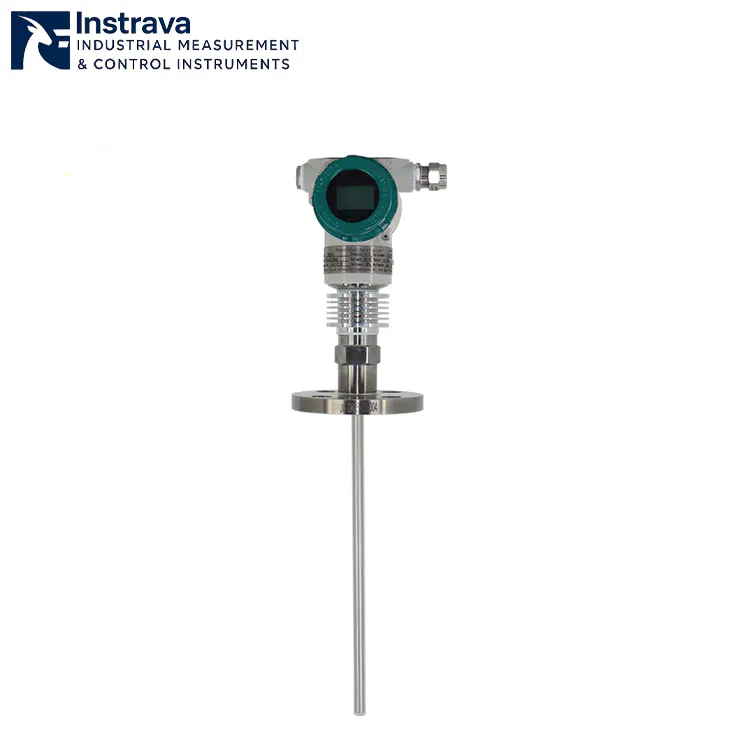
Level Ultrasonic Sensor: Working Principle, Types & Industrial Applications
Level Ultrasonic Sensor Overview A level ultrasonic sensor is a non-contact device used to measure liquid or solid levels...

Home » Products » Level Measuring Instruments » Electrode Level Sensor

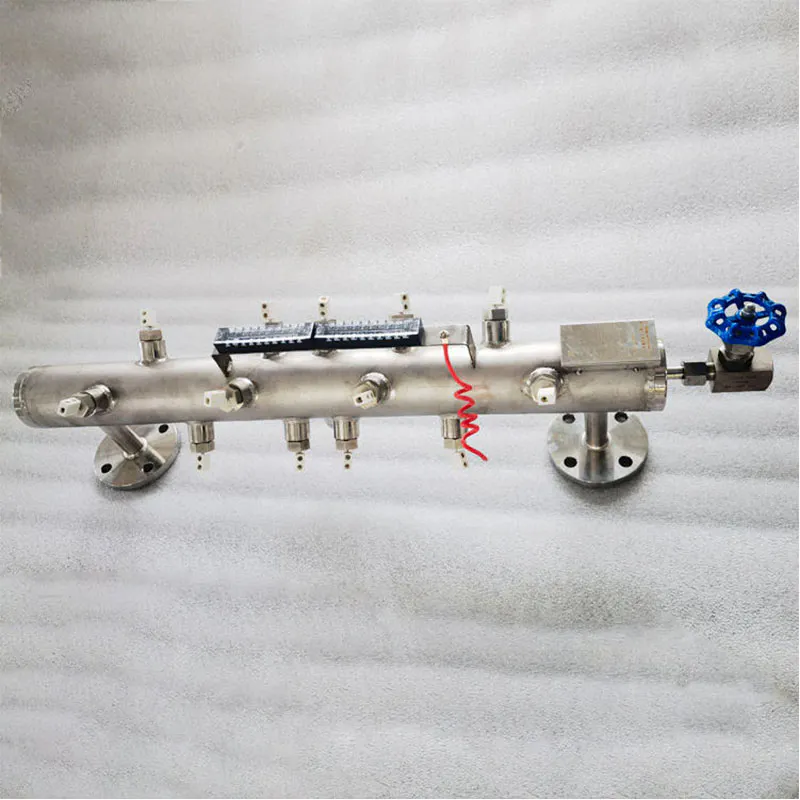
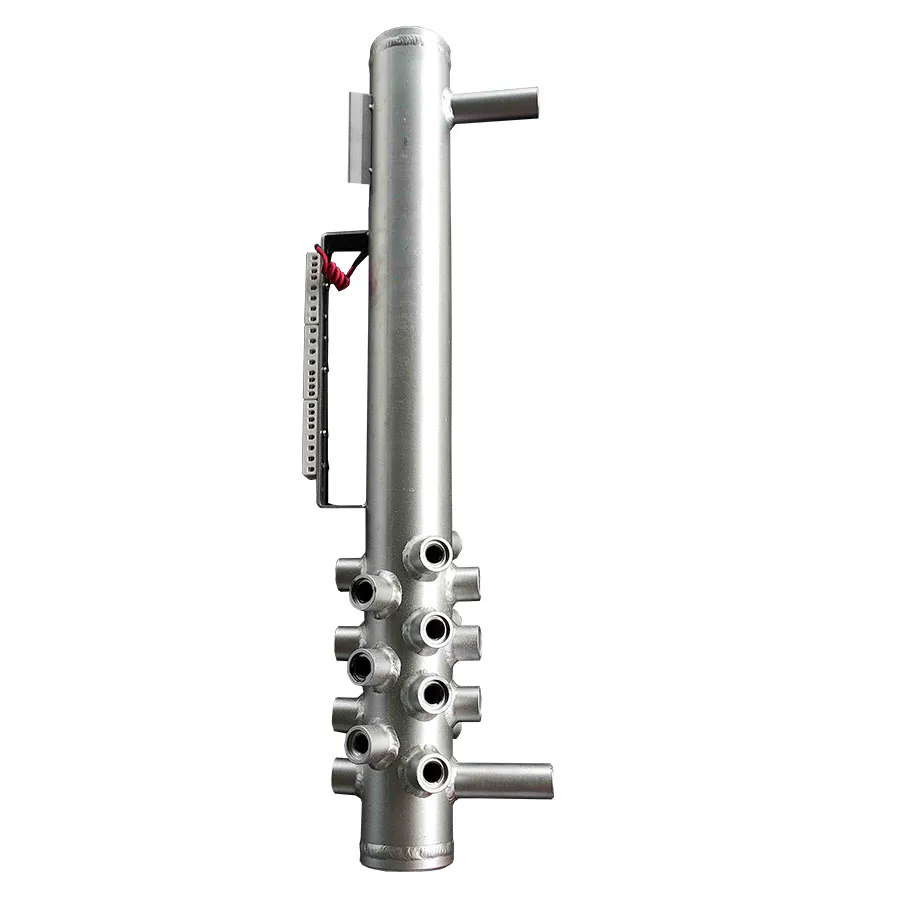
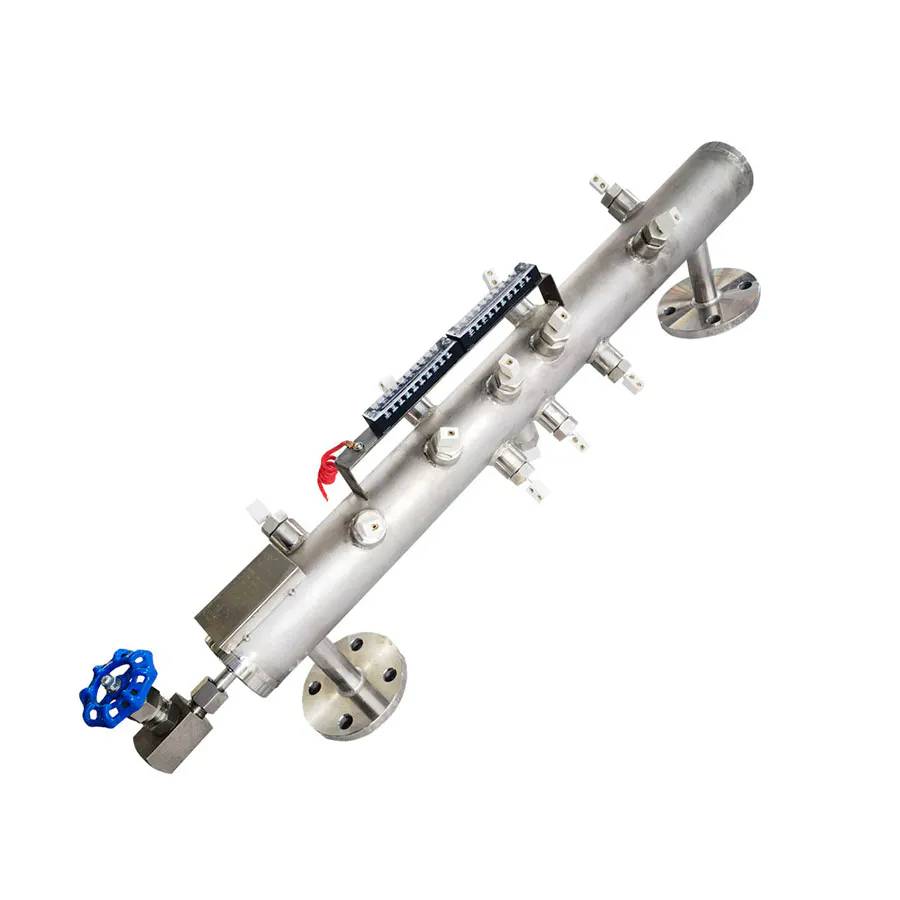
The electrode level gauge is a reliable, cost-effective solution for precise liquid level measurement across various industries. It utilizes a series of high-quality electrodes to detect liquid levels in tanks, vessels, or containers, ensuring accurate and consistent readings for water, oil, chemicals, and corrosive liquids. Explosion-proof models are available, making it ideal for hazardous environments.
The intelligent universal electric contact liquid level monitor is an advanced instrument combining a measuring cylinder, ultra-pure ceramic electrodes, and a display unit. It features red and green LED indicators to simulate steam (red) and water (green), clearly showing the liquid level position in the container. The device also offers over-limit alarms and output signals for remote monitoring and control.
This side-mounted electrode level gauge, with 4–20 mA output, is especially suitable for boiler water tanks, providing reliable and continuous liquid level measurement in demanding applications.
Level Measuring Instruments Description
Electrode Level Sensor-Features
This electrode level gauge combines advanced electric contact measurement technology with a side-mounted structure and 4–20 mA output, providing stable and reliable liquid level measurement for industrial applications such as boilers, water tanks, and process vessels.
The instrument supports dual display modes, integrating analog simulation and digital indication to clearly present real-time liquid level conditions. The display system allows flexible configuration of 6 to 19 measuring points, with each scale value adjustable through panel operation, enabling precise calibration according to site requirements.
Equipped with configurable sound and light alarm functions, the electrode level gauge provides multiple alarm modes for high and low level limits. Alarm points can be freely set within the full measurement range, supporting safe operation and timely response in critical processes.
The integrated 4–20 mA output ensures seamless signal transmission to PLC, DCS, or SCADA systems, enabling reliable remote monitoring and control. The side-mounted installation design simplifies mounting and maintenance, especially in limited space or existing tank and boiler systems.
With automatic judgment and tracking of water resistance, the electrode level sensor maintains accurate measurement even under changing medium conductivity. High fault tolerance and strong anti-interference capability effectively prevent false alarms caused by transient electrical disturbances.
Explosion-proof versions are available for hazardous and flammable environments, ensuring safe and stable operation in chemical, petrochemical, and power generation industries.


Electrode Water Level Sensor-Applications
Used for water level monitoring in industrial boilers and steam drums. The electrode level gauge accurately detects steam and water phases, helping prevent dry-burning and overfilling. With side-mounted installation, configurable alarms, and 4–20 mA output, it integrates easily with boiler control systems.
Suitable for water tanks and storage vessels for clean or industrial water. Multiple measuring points and adjustable alarm settings support pump control and level alarms. The side-mounted design allows easy installation and reliable operation with PLC or SCADA systems.
Applied in chemical and process tanks containing conductive liquids. Corrosion-resistant electrodes and optional explosion-proof versions ensure safe operation in harsh environments. Strong anti-interference performance and 4–20 mA output enable stable, long-distance signal transmission.
Electrode Water Level Gauge-Working Principle
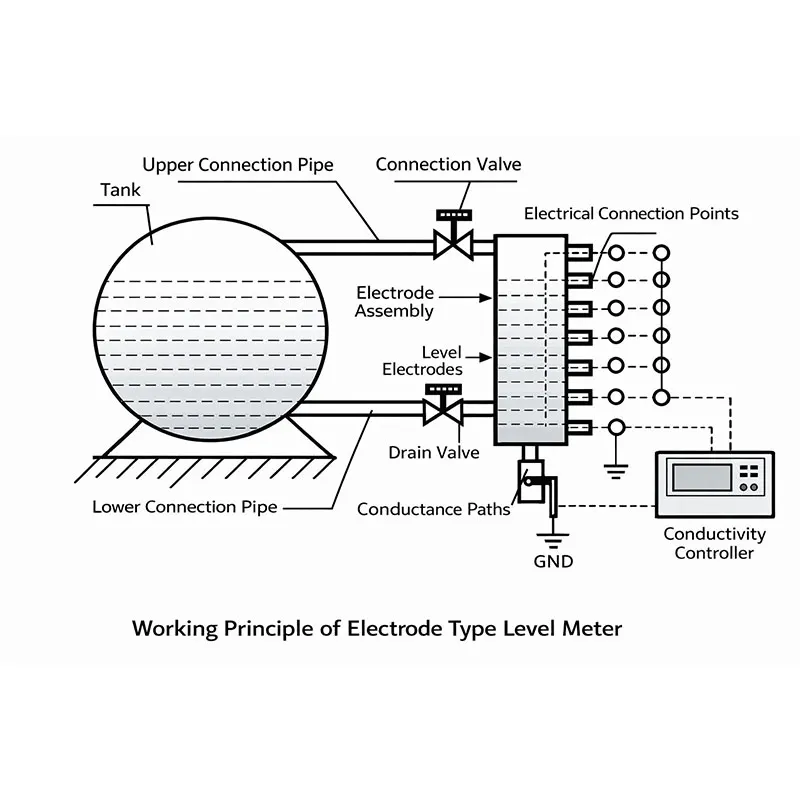
The electrode level gauge operates based on the significant difference in electrical conductivity between water and steam. The measuring cylinder detects liquid level changes by monitoring variations in electrical contact resistance.
When the electrodes are immersed in liquid, the medium’s low resistivity allows a relatively large current to flow once a voltage is applied. When the electrodes are above the liquid surface, the resistivity is much higher, resulting in a much smaller current. This clear current difference is used as a reliable level detection signal.
The detected signal is transmitted to the secondary instrument, where it is amplified, processed, and converted into display, alarm, and control outputs, enabling accurate liquid level indication and long-distance monitoring.


Level Electrode Sensor-Structure
Electrode rod or probe made from stainless steel or other corrosion-resistant materials to ensure long-term stability in different liquid media.
High-performance insulating material separates each electrode, preventing signal interference and ensuring accurate liquid level measurement.
Measuring cylinder design provides stable electrode positioning and reliable contact detection under varying process conditions.
Housing options include standard, explosion-proof, or customized configurations to meet different installation and safety requirements.
Supports various probe lengths, diameters, and mounting structures, allowing flexible adaptation to different tank sizes, boiler systems, and application environments.
Level Measuring Instruments Parameter
| Parameter | Specification |
|---|---|
| Liquid water resistance range | 0–500 kΩ, automatic resistance tracking |
| Output signal | 0–10 mA (RL < 1 kΩ) / 4–20 mA (RL < 500 Ω), linear, isolated |
| Alarm output contact | AC 220 V, 1 A |
| Backup power supply | Built-in DC battery, ≥ 1 hour operation |
| Power supply | AC 220 V ±10%, 50 Hz ±1 Hz |
| Ambient temperature | –10 °C to +45 °C |
| Relative humidity | ≤ 85% |
| Panel cutout dimensions | 152 +1 × 76 +1 mm or 152 +1 × 152 +1 mm |
| Instrument dimensions | 173 × 225 × 80 mm |
Instrava OEM/ODM
Instrava is focused on delivering reliable industrial solutions through carefully curated products, application-driven optimization, and flexible customization. We select proven instruments from trusted manufacturers to ensure consistent quality, optimize solutions based on real working conditions to solve practical challenges, and provide tailored configurations to meet specific application needs.
By combining selection expertise with application understanding, Instrava helps customers reduce risk, improve efficiency, and achieve dependable results in complex industrial environments.

How does an electrode level gauge measure liquid levels, and what makes it different from other sensors?
The electrode level gauge detects liquid level based on the difference in electrical conductivity between liquid and air/steam. When electrodes are immersed in liquid, they complete an electrical circuit, sending a signal to the display or control system. Compared with ultrasonic or radar sensors, electrode liquid level sensors are simpler, cost-effective, and ideal for conductive liquids such as water, boiler water, and chemical solutions. Non-contact technologies may suit corrosive or high-temperature media but are generally more expensive.
How do I choose the right electrode liquid level sensor for my tank or boiler application?
Selecting the appropriate electrode level gauge involves:
Measurement range & electrode count: More electrodes allow finer resolution.
Tank/boiler dimensions & mounting: Side-mounted sensors are ideal for retrofits.
Medium type: Choose corrosion-resistant electrode materials for chemical liquids.
Output signal: Standard 4–20 mA for PLC/DCS integration, optional 0–10 mA or relay alarms.
Safety: Explosion-proof electrode level sensors are required for flammable or hazardous environments.
| Application | Recommended Sensor | Key Features |
|---|---|---|
| Boiler water | Boiler-specific electrode level gauge | Steam/water phase detection, LED indicators, alarms |
| Water tank | Standard electrode liquid level sensor | Multi-point measurement, 4–20 mA output, side mount |
| Chemical tank | Explosion-proof electrode level sensor | Corrosion-resistant, anti-interference, certified housing |
Can electrode liquid level sensors operate in high-temperature or corrosive conditions?
Yes. Explosion-proof and high-temperature electrode level gauges are available. Electrode materials like stainless steel, Hastelloy, or titanium can resist corrosion. High-performance insulation ensures accurate measurement in challenging environments. For high-temperature or chemical media, ceramic electrodes or specialized housing designs are recommended, ensuring long-term reliability.
What is the measurement accuracy and reliability of an electrode level gauge?
Typical accuracy is ±5–10 mm, depending on electrode spacing and installation. Reliability factors include medium conductivity, electrode spacing, turbulence, and electrical interference. Advanced models feature automatic water resistance tracking, strong anti-interference design, and fault tolerance to maintain stable and accurate readings in boilers, water tanks, or chemical tanks.
| Factor | Impact | Mitigation |
|---|---|---|
| Low conductivity | Weak signal, possible misreading | Use higher voltage or sensitive electronics |
| Foam or vapor | False electrode contact | Proper electrode type and mounting |
| Electrical interference | False alarms | Shielding and filtering circuits |
What output and integration options are available for electrode level sensors?
Electrode level gauges offer flexible output options:
Analog: 4–20 mA standard for PLC/DCS/SCADA integration
0–10 mA or 0–5 V for specialized control systems
Relay contacts for alarms or interlocks
Optional digital communication for smart instrumentation
This allows seamless integration into monitoring and process control systems while maintaining real-time accuracy.
What OEM / ODM customization services are offered for electrode level sensors?
We provide full OEM and ODM services for electrode liquid level sensors, including:
Custom measurement ranges, number of electrodes, probe length, and spacing
Material selection for corrosive, high-temperature, or specialized media
Standard or explosion-proof enclosures for hazardous environments
Output customization: 4–20 mA, 0–10 mA, relay, or alarm logic
Display and panel configuration: LED/LCD, analog + digital display, remote monitoring
Our factory supports prototype development and batch production, ensuring stable performance, high reliability, and full technical support across all industrial applications.
Built on Consistency, Not Claims
We specialize in industrial analysis and detection, with a clear understanding of real-world operating environments and requirements.
Every instrument is evaluated based on performance, stability, and application suitability—not just specifications or pricing.
We work with trusted manufacturers to ensure stable supply, consistent quality, and dependable delivery.
Our recommendations are grounded in application understanding, helping customers avoid common issues and achieve reliable results.
Instrava is built to reduce uncertainty—so every decision you make is clearer, safer, and more reliable.

Level Ultrasonic Sensor Overview A level ultrasonic sensor is a non-contact device used to measure liquid or solid levels...
Modern warfare has shifted from traditional battlefield confrontations to precision strikes targeting industrial infrastructure, energy systems, and supply chain nodes....
When a conflict ends, rebuilding begins—not just cities, but systems. Energy, water, chemical production, and infrastructure must be restored quickly,...