Ultrasonic Flow Meter-Wall-mounted

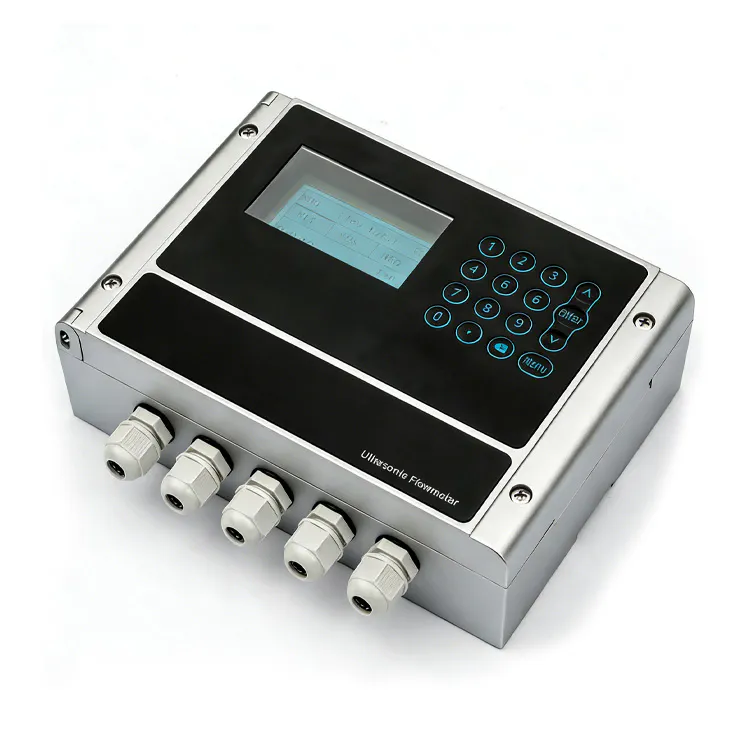
The UF 201 is a wall-mounted, clamp-on ultrasonic flow meter based on the transit-time measurement principle. Designed with an advanced FPGA chip and low-voltage broadband pulse transmission technology, it delivers accurate and stable flow measurement without pipe cutting or process interruption. Both clamp-on and insertion-type sensors are available to suit different installation requirements.

It features a 240 × 128 backlit LCD with a four-line menu display. The intuitive, user-friendly interface allows quick configuration and convenient operation. The meter supports daily, monthly, and yearly flow totalization, as well as simultaneous positive, negative, and net flow measurement. Pulse and frequency outputs are available via relay and open collector for easy system integration.

By adding RTD and temperature sensors, It can be upgraded to an energy meter for thermal energy monitoring. This enables users to analyze energy consumption, optimize system efficiency, and support energy-saving initiatives.

Flow Meter Description  

Ultrasonic Flow Meter Features

  • Easy installation with minimal downtime
    Clamp-on design allows installation without pipe cutting or process shutdown, significantly reducing installation time and overall system cost.

  • No pressure loss and maintenance-free operation
    Non-intrusive measurement introduces no pressure head loss and has no moving parts, eliminating mechanical wear and routine maintenance.

  • Optional BTU / energy measurement function
    With RTD and temperature sensors, the UF 201 can be configured as a portable ultrasonic energy meter for heating and cooling energy monitoring.

  • Advanced data storage and analysis capability
    Supports large-capacity data storage and is compatible with data logging and analysis software, enabling detailed flow and energy consumption evaluation.

Ultrasonic flow meter controller supplier
Ultrasonic flow meter manufacturer factory production

Ultrasonic Flowmeter Applications

Ultrasonic flow meters are widely used across industries where non-contact or low-maintenance flow measurement is required:

  • Water supply and wastewater treatment

  • HVAC and energy management systems

  • Power plant cooling water and condensate

  • Chemical and pharmaceutical processes

  • Oil & gas liquid measurement

  • Large-diameter pipeline flow monitoring

  • Portable and temporary flow measurement

Ultrasonic Flowmeters Working Principle

Ultrasonic flow meters operate based on the transit-time principle. Two ultrasonic transducers alternately transmit and receive signals upstream and downstream. When fluid flows, the ultrasonic signal traveling in the flow direction moves faster than the signal traveling against the flow.

The time difference between upstream and downstream signals is proportional to the flow velocity. By calculating this time difference, the flow meter accurately determines the volumetric flow rate of the liquid.

Ultrasonic flow meter working principle manufacturer
Ultrasonic flowmeter manufacturer display unit

Flow Meter Ultrasonic Structure & Interface Design

The UF 201 ultrasonic flow meter features a 240 × 128 backlit LCD with a clear four-line menu display, providing excellent readability in industrial environments. The intuitive, user-friendly menu structure allows fast parameter setup and simple operation, reducing commissioning time.

The instrument supports daily, monthly, and yearly flow totalization, with simultaneous calculation of positive flow, negative flow, and net flow. Scale factor (span) adjustment and BTU capacity calculation are available to meet different measurement and energy monitoring requirements.

For system integration, the UF 201 provides totalized pulse output and frequency output, transmitted via relay and open-collector interfaces, enabling flexible connection to PLC, DCS, and data acquisition systems.

Flow Meter Parameter  

CategoryParameterSpecification
ModelUF 201
PerformanceFlow Velocity Range±0.09 ft/s ~ ±16 ft/s (±0.03 m/s ~ ±5 m/s)
Accuracy±1% of measured value
Repeatability0.2% of measured value
Linearity±1%
Pipe Size1″ ~ 48″ (25 mm ~ 1200 mm); sizes below 1″ available as option
Applicable FluidWater
FunctionAnalog Output4–20 mA, max load 750 Ω
Pulse Output0 ~ 10 kHz
CommunicationRS232 / RS485 (Modbus)
Power Supply10 ~ 36 V DC, 1 A
Display240 × 128 backlit LCD
EnvironmentalTransmitter Temperature-14 °F ~ 140 °F (-20 °C ~ 60 °C)
Transducer Temperature-40 °F ~ 176 °F (-40 °C ~ 80 °C, standard)
HumidityUp to 99% RH, non-condensing
PhysicalTransmitter EnclosurePC / ABS, IP65
Transducer EnclosureABS, IP68
DesignEncapsulated design
Transducer CableDouble-shielded cable
Cable LengthStandard 30 ft (9 m); maximum 900 ft (274 m)

Instrava OEM/ODM

Reliable Instruments. Solutions That Fit Your Application.

Instrava is focused on delivering reliable industrial solutions through carefully curated products, application-driven optimization, and flexible customization. We select proven instruments from trusted manufacturers to ensure consistent quality, optimize solutions based on real working conditions to solve practical challenges, and provide tailored configurations to meet specific application needs.

By combining selection expertise with application understanding, Instrava helps customers reduce risk, improve efficiency, and achieve dependable results in complex industrial environments.

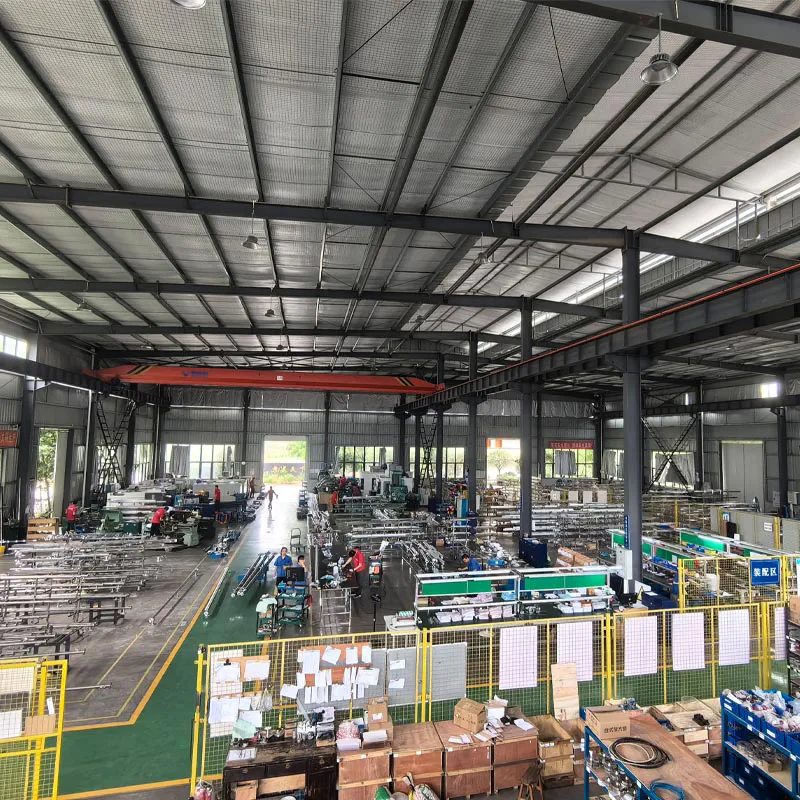
Industrial instrument manufacturer production workshop showing large-scale manufacturing of level gauges and process instruments

Related Product Recommendations  

Ultrasonic flow meters can tolerate a limited amount of entrained air or microbubbles. However, excessive air content may attenuate the ultrasonic signal. Proper sensor positioning and sufficient straight pipe sections help maintain stable measurement in bubble-prone applications.

Yes. Ultrasonic flow meters are particularly suitable for large-diameter pipes where traditional flow meters become difficult or expensive to install. Clamp-on ultrasonic sensors allow non-intrusive measurement on pipes up to several meters in diameter.

At very low flow velocities, the transit-time difference becomes smaller, which may affect measurement resolution. Selecting appropriate sensor spacing and ensuring good acoustic coupling improves accuracy in low-flow applications.

No. Clamp-on ultrasonic flow meters are installed externally on the pipe and do not require pipe cutting, welding, or process interruption, making them ideal for retrofit and temporary measurement tasks.

Ultrasonic flow meters are designed for full-pipe flow conditions. For partially filled or open-channel applications, alternative ultrasonic level or flow measurement technologies should be considered.

Yes. Pipe material, wall thickness, and lining can influence ultrasonic signal transmission. Most metallic and plastic pipes are supported, but proper parameter configuration is required to ensure reliable measurement.

Why Choose Instrava

Built on Consistency, Not Claims

Focused on Industrial Applications

We specialize in industrial analysis and detection, with a clear understanding of real-world operating environments and requirements.

Strict Product Selection Criteria

Every instrument is evaluated based on performance, stability, and application suitability—not just specifications or pricing.

Reliable Supply & Quality Consistency

We work with trusted manufacturers to ensure stable supply, consistent quality, and dependable delivery.

Practical, Experience-Based Support

Our recommendations are grounded in application understanding, helping customers avoid common issues and achieve reliable results.

Instrava is built to reduce uncertainty—so every decision you make is clearer, safer, and more reliable.

Industrial measurement scene showing a worker using a precision measuring instrument to measure and mark material on a workbench, demonstrating the practical application of measuring instruments in manufacturing and processing.

Instrumentation is Shifting Toward Orchestration Platforms: What It Means for Industrial Systems

  • By Instrava
  • Apr 3, 2026

Introduction Industrial instrumentation is undergoing a fundamental transformation. Traditionally, instruments such as sensors, transmitters, and analyzers operated as independent devices...

  • 2Min Read

What is “Instrument-as-a-Service” in Industrial Automation?

  • By Instrava
  • Apr 3, 2026

Industrial instrumentation is undergoing a fundamental transformation. Traditionally, instruments were typically deployed as standalone hardware devices—installed, calibrated, and maintained to...

  • 1Min Read

Thermal vs Vortex vs Differential Pressure: How to Choose the Right Flow Measurement Technology

  • By Instrava
  • Feb 25, 2026

Selecting a flow meter is rarely about accuracy alone. In industrial applications, the real challenges include: Variable flow rates Pressure...

  • 1Min Read
Home
Products
Whatsapp
Contact
To use reCAPTCHA V3, you need to add the API Key and complete the setup process in Dashboard > Elementor > Settings > Integrations > reCAPTCHA V3.