







- By Instrava
- 01/21/2026
- 0 Comment
Venturi vs Orifice vs Vortex: How Engineers Choose Under Real Constraints
Why Flow Meter Selection Is Rarely About Accuracy
In engineering discussions, flow meter selection is often framed as a technical comparison of accuracy, rangeability, or pressure rating. In reality, engineers rarely choose between venturi, orifice, and vortex flow meters based on catalog specifications alone.
Actual selection decisions are shaped by constraints: pressure loss budgets, system stability, maintenance philosophy, energy cost over decades, and how measurement behavior interacts with the surrounding process. This is why venturi flow meters, orifice plates, and vortex flow meters continue to coexist across industrial facilities worldwide.
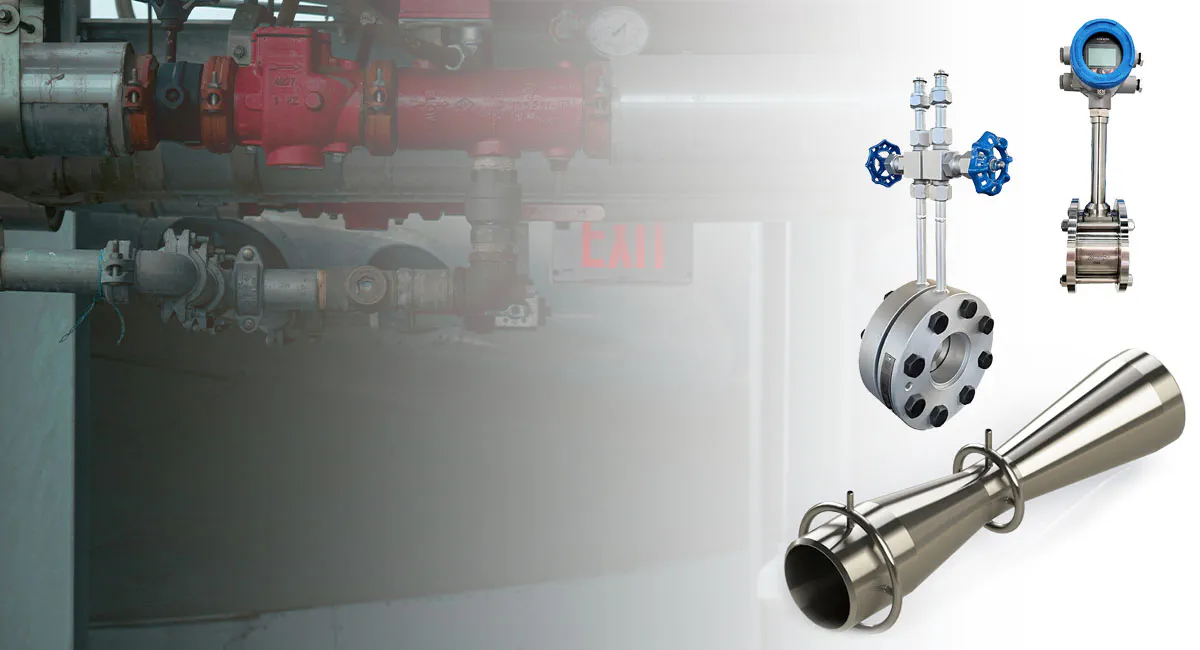
This article examines venturi vs orifice vs vortex flow meters from a constraint-driven engineering perspective, focusing on how experienced engineers make trade-offs in real systems rather than idealized conditions.
The Constraint-Based Mindset Behind Flow Meter Selection
Before comparing technologies, it is important to understand how engineers frame the problem.
Engineers do not ask, “Which flow meter is the most accurate?”
They ask:
Where can pressure loss be tolerated?
How stable is the flow profile over time?
How much maintenance intervention is acceptable?
What happens when operating conditions drift from design values?
Flow measurement devices are selected as part of a system, not in isolation. The surrounding piping, control loops, energy consumption, and maintenance practices all influence the final choice.
Why Venturi Flow Meters Are Chosen for Stability-Oriented Systems
Venturi flow meters are often viewed as conservative or oversized solutions, yet they remain dominant in large-scale and long-life installations. The reason lies in how venturi geometry conditions flow.
The gradual convergence and divergence inside a venturi flow meter reduces sensitivity to upstream disturbances such as elbows, valves, and partially developed velocity profiles. This conditioning effect translates into predictable differential pressure behavior.
Engineers tend to favor venturi flow meters when:
Permanent pressure loss must be minimized
Flow conditions vary with load or seasonal demand
Measurement stability outweighs compactness
Long-term operational cost matters more than installation cost
In applications such as water transmission, power plant cooling systems, and energy infrastructure, the pressure recovery of venturi flow meters directly reduces pumping energy over decades of operation. This cumulative effect often justifies the larger footprint.
From a control perspective, the smooth signal response of venturi flow meters supports stable control loops, particularly in systems where flow is a manipulated variable.
Orifice Plates: Simplicity, Standardization, and Trade-Offs
Despite known inefficiencies, orifice plates remain one of the most widely installed flow measurement devices. Their persistence is not accidental.
Orifice flow meters align well with standardized engineering practices. International standards, calculation methods, and installation guidelines are well understood across industries. This familiarity lowers engineering risk.
Orifice plates are commonly selected when:
Capital expenditure must be minimized
System pressure loss is already acceptable
Maintenance teams are experienced with plate replacement
Existing installations favor continuity
However, engineers recognize that orifice plates impose high permanent pressure loss. In systems with continuous operation, this translates directly into energy cost. Over time, the cumulative operating expense often exceeds the initial savings.
Additionally, orifice plates are sensitive to edge wear, fouling, and flow profile distortion. These factors introduce gradual measurement drift that may go unnoticed without regular inspection.
Vortex Flow Meters: Compact Design with Conditional Reliability
Vortex flow meters offer a compact alternative, particularly attractive where space constraints exist. Their operation relies on stable vortex shedding, which requires maintaining sufficient Reynolds numbers and flow velocity.
Engineers typically deploy vortex flow meters in applications such as:
Steam distribution networks
Clean gas systems
Compressed air measurement
In these environments, flow conditions tend to be stable, and fluid properties are predictable. Under such conditions, vortex meters deliver repeatable performance with minimal maintenance.
However, vortex flow meters are less forgiving when conditions deviate. Low flow rates, vibration, or unstable upstream profiles can introduce signal noise. In control systems, this noise manifests as oscillation or erratic response.
As a result, engineers often restrict vortex flow meter use to applications where operating envelopes are well controlled.
Pressure Loss as a Long-Term Engineering Constraint
One of the most underestimated factors in flow meter selection is permanent pressure loss.
Venturi flow meters recover most of the pressure differential, resulting in low permanent loss. Orifice plates convert pressure loss directly into heat, while vortex flow meters sit between these extremes.
In energy-intensive systems, pressure loss translates into:
Higher pumping power
Increased operating cost
Reduced system efficiency
When evaluated over a 20- or 30-year lifecycle, the energy cost associated with pressure loss often outweighs the initial cost difference between technologies. This explains why venturi flow meters dominate in applications where energy efficiency is critical.
Flow Profile Sensitivity and Installation Reality
Ideal installation conditions rarely exist in real plants. Space limitations, existing piping layouts, and last-minute design changes often compromise recommended straight pipe lengths.
Venturi flow meters tolerate disturbed flow profiles better than orifice and vortex meters. Orifice plates, while standardized, are sensitive to upstream disturbances unless additional flow conditioning is applied.
Vortex flow meters require stable velocity profiles to maintain consistent vortex shedding. In cramped installations, achieving this stability can be challenging.
Experienced engineers account for these realities during selection, often favoring devices that degrade gracefully under non-ideal conditions.
Maintenance Philosophy and Operational Risk
Maintenance strategies vary widely across facilities. Some plants prioritize frequent inspection, while others aim to minimize intervention.
Orifice plates require periodic inspection and replacement due to edge wear and fouling. Venturi flow meters, with no sharp edges, typically demand minimal maintenance.
Vortex flow meters have few moving parts but rely on sensor integrity and signal processing. Failures may be less frequent but harder to diagnose.
The choice reflects how much operational risk a facility is willing to manage and how accessible the measurement point is.
Why These Technologies Continue to Coexist
The continued use of venturi, orifice, and vortex flow meters reflects engineering pragmatism rather than technological inertia.
Each technology occupies a different position in the constraint space defined by:
Energy efficiency
Installation flexibility
Maintenance burden
Signal stability
Lifecycle cost
Rather than converging on a single “best” solution, industries maintain multiple options to match diverse operating realities.
Engineering Judgment Over Specification Comparison
Flow meter datasheets present accuracy, rangeability, and pressure ratings as primary differentiators. Engineers know these metrics describe performance under controlled conditions.
Real-world selection prioritizes predictable behavior, manageable risk, and long-term reliability. In this context, venturi, orifice, and vortex flow meters remain relevant because they solve different constraint equations.
The persistence of these technologies is a reminder that engineering decisions are shaped by systems, not specifications.