







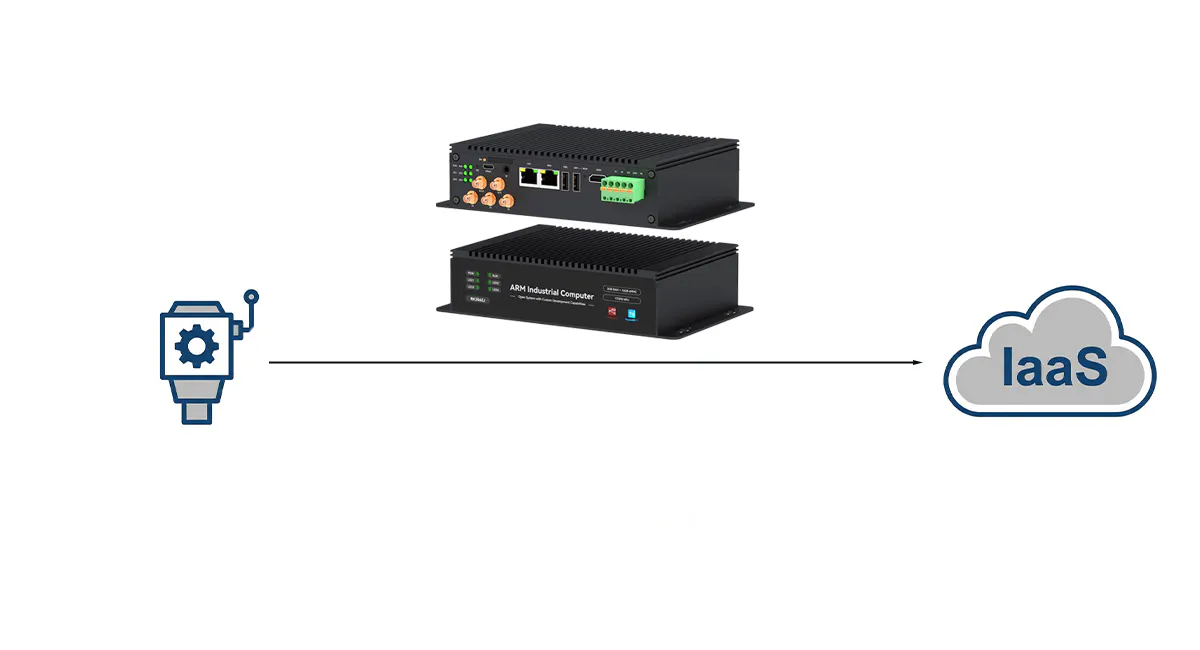
Edge Gateway Solutions: Enabling Seamless Instrument to Cloud Connectivity for Industrial Systems
Introduction: The Missing Link in Industrial IoT
Industrial companies are investing heavily in digital transformation, yet a major challenge remains:
👉 Most field instruments cannot connect directly to cloud platforms.
Legacy devices—such as 4–20mA transmitters, HART instruments, and Modbus equipment—were designed for control systems, not for Industrial IoT (IIoT) connectivity.
This is where Edge Gateway Solutions become essential.
They act as the bridge between field-level data and cloud-based intelligence, enabling seamless Instrument to Cloud integration without replacing existing assets.
What Is an Edge Gateway in Industrial IoT?
An Edge Gateway is a hardware and software system deployed at the industrial edge to:
- Collect data from field instruments
- Convert industrial protocols into cloud protocols
- Process and structure data locally
- Securely transmit data to IIoT platforms
Core Function
👉 Transform legacy industrial signals into cloud-ready data streams
Why Edge Gateways Are Critical for Brownfield Digitalization
Most industrial environments are brownfield systems with:
- Decades-old instrumentation
- Mixed communication standards
- Limited digital connectivity
Key challenges:
- No Ethernet/IP communication
- No MQTT / OPC UA support
- Data locked in isolated systems
- High cost of replacing equipment
Edge Gateway Advantage:
- No device replacement required
- Minimal installation impact
- Fast deployment across existing infrastructure
👉 Edge gateways enable incremental digitalization instead of full system overhaul.
How Edge Gateway Solutions Enable Instrument to Cloud Connectivity
1. Data Acquisition
Edge gateways connect to:
- 4–20mA analog signals
- HART-enabled devices
- Modbus RTU / RS485 systems
They capture both:
- Real-time process values
- Device diagnostics
2. Protocol Conversion
Edge gateways translate industrial protocols into cloud-compatible formats:
| Field Protocol | Cloud Protocol |
|---|---|
| HART | MQTT |
| Modbus RTU | OPC UA |
| Analog signals | JSON / API |
👉 This removes the need for custom cloud integration.
3. Data Processing at the Edge
Instead of sending raw data, edge gateways perform:
- Signal scaling and normalization
- Data filtering and aggregation
- Event detection and alerting
Benefit:
- Reduced bandwidth usage
- Improved data quality
- Faster response time
4. Secure Edge-to-Cloud Communication
Industrial environments require robust security.
Edge gateway solutions include:
- TLS encryption
- Device authentication (certificates)
- Secure firmware updates
- Network isolation mechanisms
5. Reliability and Offline Operation
Edge gateways ensure data integrity through:
- Store-and-forward buffering
- Timestamp synchronization
- Automatic reconnection
👉 No data loss during network interruptions.
Edge Gateway Architecture Overview
A typical deployment follows a three-layer model:
Field Layer
- Sensors, transmitters, controllers
Edge Gateway Layer
- Data acquisition
- Protocol conversion
- Local processing
Cloud Layer
- IIoT platforms (AWS, Azure, private cloud)
- Data analytics and visualization
👉 The edge gateway acts as the central integration point.
Key Features of Industrial Edge Gateway Solutions
Multi-Protocol Support
- 4–20mA, HART, Modbus, RS485
Cloud Connectivity
- MQTT, HTTPS, OPC UA
Scalable Deployment
- Single device → multi-site architecture
Plug-and-Play Integration
- Minimal configuration required
Benefits of Edge Gateway Solutions
Operational Benefits
- No downtime required
- Fast deployment
- Real-time monitoring
Technical Benefits
- Standardized data models
- Interoperability across vendors
- Simplified system integration
Business Benefits
- Reduced CAPEX
- Improved asset utilization
- Faster ROI
Edge Gateway vs Direct Cloud Connectivity
| Aspect | Edge Gateway | Direct Cloud |
|---|---|---|
| Legacy support | ✔ Yes | ✖ No |
| Protocol conversion | ✔ Built-in | ✖ Not supported |
| Deployment complexity | Low | High |
| Flexibility | High | Limited |
👉 For brownfield systems, edge gateways are not optional—they are essential.
Industrial Use Cases
Oil & Gas
- Pipeline monitoring
- Remote asset visibility
Chemical Plants
- Process optimization
- Safety system integration
Water & Utilities
- Distributed sensor networks
- Remote infrastructure monitoring
Manufacturing
- Machine performance monitoring
- Energy management
Instrava Edge Gateway Solution
Instrava provides industrial-grade edge gateway solutions designed for brownfield environments:
- Non-intrusive integration with existing instruments
- Multi-protocol compatibility
- Built-in protocol conversion to cloud standards
- Structured data modeling
- Secure and scalable connectivity
Result
👉 Legacy industrial systems become connected, intelligent, and cloud-ready.
Conclusion: Edge Gateways as the Backbone of Industrial IoT
Edge Gateway Solutions are the foundation of Instrument to Cloud connectivity.
They enable industrial companies to:
- Connect legacy systems to modern platforms
- Unlock valuable operational data
- Implement IIoT without disruption
👉 In brownfield environments, the path to digital transformation starts at the edge.