
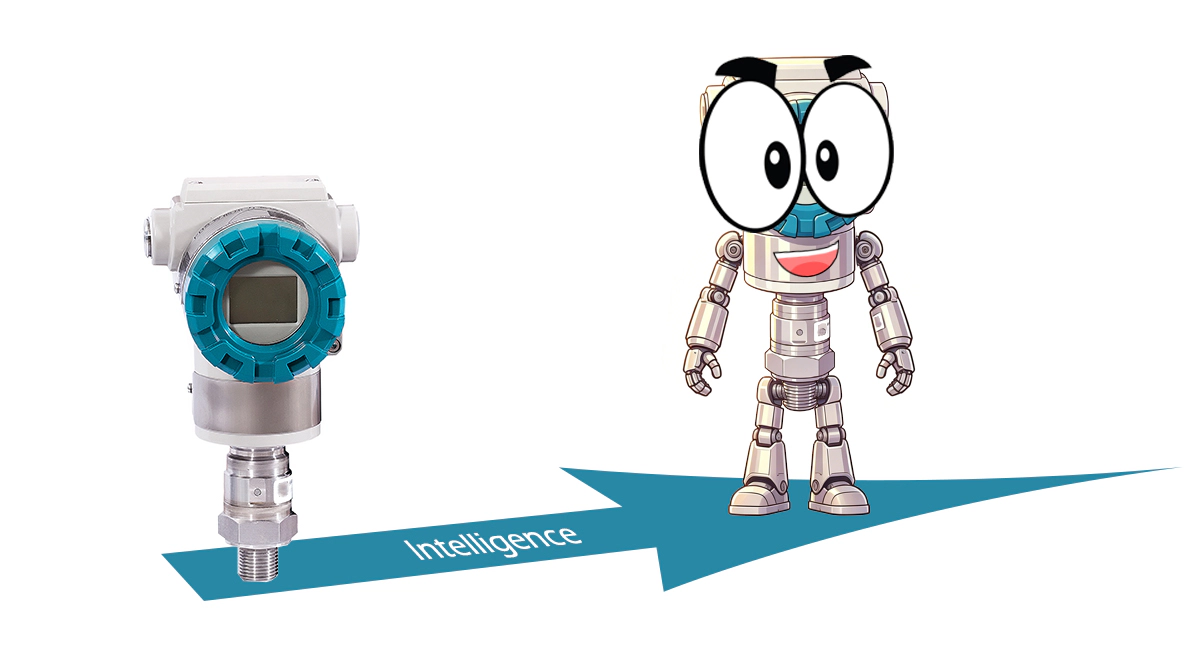
De l'expérimentation à l'exécution : Pourquoi avril 2026 marque un tournant pour l'instrumentation industrielle
Avril 2026 n'est pas un simple jalon - il marque le moment où l'instrumentation industrielle passe de l'expérimentation à l'exécution.
Pendant des années, l'industrie a exploré :
- Pilotes de l'IIoT
- Concepts d'informatique en périphérie
- Jumeaux numériques
- Optimisation basée sur l'informatique en nuage
Mais la plupart des initiatives sont restées bloquées dans preuve de concept (POC) cycles.
Cette phase est terminée.
Ce qui le remplace est un nouveau paradigme :
Instrumentation définie par logiciel + nœuds de précision au niveau quantique
Cette évolution redéfinit fondamentalement ce qu'est un “instrument” et le rôle qu'il joue dans les systèmes industriels.
La fin des instruments isolés
Les instruments traditionnels ont été conçus comme dispositifs autonomes:
- Un débitmètre mesure le débit
- Un capteur de niveau mesure le niveau
- Un analyseur de pH mesure la chimie
Chaque dispositif fonctionne comme un système fermé.
Les données ont été déplacées dans un sens :
→ Capteur → PLC → DCS
Il n'y avait pas de boucle de rétroaction entre le logiciel et l'appareil.
Cette architecture a été créée :
- Silos de données
- Extensibilité limitée
- Coût d'intégration élevé
- Verrouillage des fournisseurs
En 2026, ce modèle n'est plus viable.
L'essor de l'instrumentation définie par logiciel (IDL)
L'instrumentation définie par logiciel transforme le matériel en un système de gestion de l'information. nœud programmable.
Au lieu d'une fonctionnalité fixe :
- Le matériel devient universel
- La fonctionnalité devient définie par logiciel
- Le comportement peut être mis à jour à distance
Un instrument n'est plus un “dispositif”.”
Il devient un point d'extrémité informatique dans un réseau industriel.
Évolution de l'architecture de l'instrumentation
L'instrumentation a évolué, passant de dispositifs à fonction fixe à des nœuds de réseau entièrement programmables.
| Protocole | Type de données | Signification sémantique | Télécommande | Évolutivité |
|---|---|---|---|---|
| 4-20mA | Analogique | Aucun | Non | Faible |
| HART | Hybride | Limitée | Partiel | Faible |
| Modbus RTU | Basé sur le registre | Aucun | Oui | Moyen |
| OPC UA + PA-DIM | Basé sur l'objet | Complet | Oui | Haut |
La percée clé n'est pas la connectivité, mais l'utilisation de l'Internet. contrôle du comportement par le biais d'un logiciel. Cela permet le réglage à distance, la mise à jour des algorithmes et l'optimisation de l'ensemble du système.
Pourquoi avril 2026 est le point d'inflexion
Cette transition est le résultat d'une convergence de forces :
1. Pression sur la chaîne d'approvisionnement → Simplification du matériel
La hausse des coûts des semi-conducteurs a contraint les fabricants à les adopter :
- SoC hautement intégrés
- Architectures numériques
Cela a involontairement accéléré les capacités définies par le logiciel.
2. Application de la réglementation → Responsabilité des données
Les politiques telles que le suivi des émissions de carbone et le respect de l'environnement exigent désormais :
- Données traçables
- Enregistrements inviolables
- Rapports prêts pour l'audit
Les instruments isolés ne peuvent pas répondre à ces exigences.
3. IA et systèmes autonomes → Contrôle en temps réel
Les systèmes d'IA ne sont plus consultatifs, ils sont exécutif:
- Réglage des paramètres du processus
- Fermer les boucles de contrôle
- Optimiser l'efficacité en temps réel
Cela nécessite des instruments qui peuvent être réglage à distance via l'API.
Nœuds de précision quantique : Redéfinir les limites de mesure
Les capteurs traditionnels souffrent de :
- Dérive
- Dépendance à l'égard de l'étalonnage
- Bruit environnemental
Les technologies de détection quantique changent la donne.
- Références de mesure au niveau atomique
- Dérive proche de zéro
- Fonctionnement sans étalonnage
Ces capteurs passent aujourd'hui des systèmes de laboratoire aux systèmes de surveillance. nœuds industriels déployables.
Comparaison de la stabilité des mesures
La détection quantique réduit considérablement la dérive à long terme.
Aucune donnée trouvée
L'avantage n'est pas seulement la précision, mais la stabilité dans le temps, L'IA est un outil qui permet d'éliminer les recalibrages fréquents et d'améliorer la confiance dans les données.(AI Predictions)
Des appareils de mesure aux nœuds intelligents
Pour prendre en charge les opérations définies par logiciel, les instruments doivent évoluer en.. :
1. Appareils en réseau (couche de connectivité)
- Communication basée sur Ethernet (par exemple, APL)
- Instruments adressables par IP
- Connectivité directe au nuage
2. Dispositifs sémantiques (couche d'information)
C'est ici que PA-DIM (Process Automation Device Information Model) devient critique.
Le PA-DIM normalise la manière dont les appareils se décrivent :
- Paramètres de mesure
- Diagnostics
- Configuration
- Capacités
Il permet de s'assurer que tous les instruments parlent le même “langage”.”
Ce que le PA-DIM résout réellement
Sans PA-DIM :
- Chaque fournisseur définit ses propres paramètres de dénomination
- Le logiciel doit s'adapter à chaque appareil
Avec PA-DIM :
- Tous les appareils suivent un modèle de données unifié
- Les API deviennent universelles
Comparaison de la complexité de l'intégration
Les modèles d'information normalisés réduisent considérablement la complexité de l'intégration.
| Méthode d'intégration | Effort d'ingénierie | Évolutivité |
|---|---|---|
| Pilotes spécifiques aux fournisseurs | Haut | Faible |
| Intégration basée sur l'IDE | Moyen | Moyen |
| Normalisation du PA-DIM | Faible | Haut |
PA-DIM élimine le besoin de pilotes personnalisés, ce qui permet un contrôle évolutif basé sur l'API dans des environnements multifournisseurs.
Comment fonctionne réellement le réglage à distance basé sur l'API
Le logiciel API joue le rôle de cerveau nuageux de l'instrumentation.
Il n'est pas codé manuellement à partir de zéro - il l'est :
Piloté par un modèle
- Lire le modèle de l'appareil (PA-DIM / FDI)
- Générer automatiquement des points d'extrémité d'API
- Associer les paramètres à la logique de contrôle
Exemple :
PUT /device/parameters/damping
Cet appel d'API unique fonctionne pour toutes les marques parce que :
- Le paramètre est normalisé
- Le dispositif comprend la signification sémantique
Ce que les instruments d'infrastructure doivent avoir
Pour prendre en charge le contrôle basé sur l'API, les instruments doivent inclure :
✔ Couche physique
- Ethernet (APL ou IP industriel)
- Communication bidirectionnelle fiable
✔ Couche protocole
- OPC UA (pour les données structurées et les méthodes)
- MQTT (pour le flux de données)
✔ Couche de calcul
- Processeurs embarqués (ARM / RISC-V)
- Capacité de calcul en périphérie
Couche de sécurité
- Base de confiance matérielle
- Identité sécurisée (cryptographie au niveau de l'appareil)
Comment les “empreintes digitales” de chaque goutte d'eau deviennent possibles
Le concept de “empreintes digitales numériques” assure :
- Authenticité des données
- Traçabilité
- Conformité réglementaire
Il repose sur trois éléments essentiels :
1. Identité de l'appareil (Ancre de confiance)
Chaque instrument contient :
- Clé cryptographique sécurisée
- Identité unique
Chaque mesure est signée numériquement.
2. Synchronisation du temps
Utilisation d'une synchronisation de haute précision :
- Tous les appareils partagent la même ligne de temps
- Les données peuvent être corrélées entre les différentes étapes du processus
3. Stockage immuable
Les données sont stockées dans :
- Grands livres distribués
- Systèmes inviolables
Niveau de confiance dans les données selon les architectures
La confiance dans les données augmente considérablement avec les mécanismes de vérification distribués.
Aucune donnée trouvée
Les signatures numériques et le stockage immuable garantissent que les données de mesure sont non seulement exactes, mais aussi vérifiables sur le plan juridique.
Dernier aperçu : L'instrument n'est plus le produit
Le changement le plus important est d'ordre conceptuel :
L'instrument n'est plus le produit.
Les données - et leur fiabilité - sont le produit.
Dans l'ère de l'exécution :
- Le matériel devient standardisé
- Le logiciel définit la fonctionnalité
- Les données définissent la valeur
Conclusion : L'ère des exécutions a commencé
Le mois d'avril 2026 marquera la transition de :
- Test → Déploiement
- Appareils → Nœuds
- Mesure → Intelligence
L'instrumentation industrielle ne consiste plus à lire des valeurs.
Il s'agit de :
- Permettre les systèmes autonomes
- Garantir l'intégrité des données
- Soutenir la conformité réglementaire
- Optimisation en temps réel
Instrava En intégrant l'instrumentation aux architectures définies par logiciel, aux modèles de données normalisés et aux exigences de fiabilité à long terme, nous donnons aux systèmes industriels les moyens de passer de la “phase expérimentale” à la “phase d'exécution”.”