L'instrumentation évolue vers des plates-formes d'orchestration : Ce que cela signifie pour les systèmes industriels
Introduction
Industrial instrumentation is undergoing a fundamental transformation. Traditionally, instruments such as sensors, transmitters, and analyzers operated as independent devices within control systems. Today, however, the industry is rapidly moving toward orchestration platforms—integrated environments where devices, data, and control logic are unified and intelligently managed.
At major trade shows held in the first quarter of 2026—such as SLAS and Pittcon—a significant industry consensus emerged: instrumentation is no longer an “isolated black box,” but rather a node within an orchestrated platform.
Trend: Leading manufacturers—including Agilent, Waters, and Bosch—have begun releasing “API-first” instruments. This signifies that these devices are designed from the ground up to be directly invoked by third-party AI software.
Why It Matters: This marks the end of the era of closed, proprietary software. It enables a unified AI “orchestrator” to simultaneously manage clusters of instruments from different brands, thereby realizing the vision of “Autonomous Labs” capable of operating 24/7 with absolutely no human intervention.
This shift is not just a technological upgrade; it represents a change in how industrial systems are designed, deployed, and optimized.
What Are Orchestration Platforms?
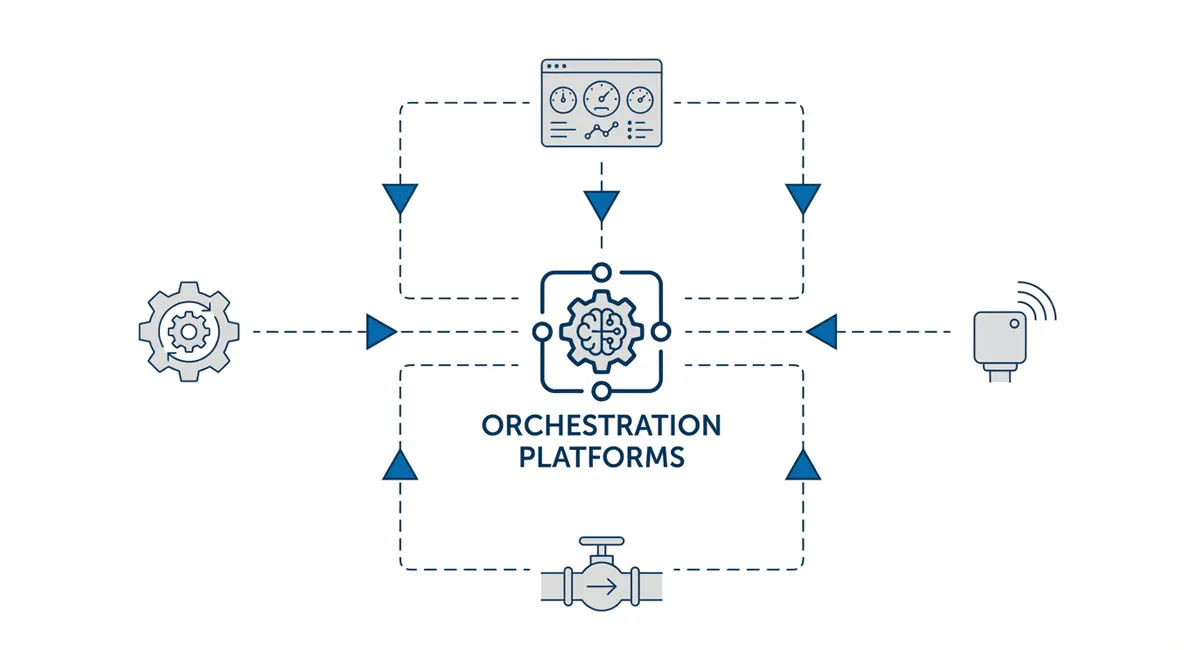
Orchestration platforms are centralized or distributed software frameworks that coordinate multiple devices, data streams, and processes into a unified system.
In the context of industrial instrumentation, an orchestration platform:
- Connects sensors, transmitters, and analyzers
- Aggregates and standardizes data
- Enables real-time monitoring and control
- Supports automation, analytics, and remote management
Rather than treating each instrument as an isolated unit, orchestration platforms allow systems to function as a cohesive, intelligent network.
2026 is poised to mark the year of mass deployment for Ethernet-APL (Advanced Physical Layer Ethernet). This technology enables high-speed, power-over-Ethernet signals to extend directly to field instrumentation located within hazardous areas—such as chemical plants and oil and gas fields—where explosion-proof environments are required.
It effectively brings an end to the long-standing dominance of 4–20 mA analog signals. Instrumentation devices now possess their own unique IP addresses, enabling them to exchange real-time health data directly with cloud-based AI systems, thereby bypassing the need for cumbersome gateways. This represents the final technical piece of the puzzle required to fully realize the vision of “Industry 4.0” and “Digital Twins.”
Why Instrumentation Is Moving in This Direction
Increasing System Complexity
Modern industrial environments involve a growing number of measurement points, devices, and processes. Managing them individually is inefficient and error-prone.
Orchestration platforms simplify this complexity by providing a unified control layer.
Demand for Real-Time Data and Decisions
Industries such as water treatment, energy, and chemical processing require faster and more accurate decision-making.
Orchestration platforms enable:
- Real-time data visualization
- Instant alerts and diagnostics
- Automated responses to changing conditions
Integration with IoT and Digitalization
The rise of Industrial IoT (IIoT) has accelerated the need for connected systems.
Orchestration platforms act as the bridge between field instruments and digital systems such as:
- Plateformes en nuage
- Systèmes SCADA
- Data analytics tools
Optimization Over Hardware Expansion
Instead of continuously adding new instruments, companies are focusing on optimizing existing systems.
Orchestration platforms allow better utilization of current assets through:
- Data-driven insights
- Maintenance prédictive
- Optimisation des processus
Key Features of Modern Instrumentation Orchestration Platforms
Device Interoperability
Support for multiple communication protocols such as Modbus, HART, and OPC UA ensures seamless integration across different brands and devices.
Data Normalization and Management
Raw data from various instruments is standardized, making it easier to analyze and use across systems.
Surveillance et contrôle à distance
Engineers can access system status, configure devices, and troubleshoot issues remotely, reducing downtime and operational costs.
Intelligent Analytics
Advanced platforms incorporate AI and machine learning to detect anomalies, predict failures, and optimize performance.
Impact on Industrial Instrumentation Selection
The shift toward orchestration platforms is changing how companies select instruments.
Instead of focusing only on individual device performance, selection now considers:
- Communication compatibility
- Integration capability
- Data reliability
- Scalability within a system
This aligns with a growing trend: selecting instruments based on system-level performance rather than standalone specifications.
Challenges and Considerations
While orchestration platforms offer significant benefits, they also introduce challenges:
- Integration complexity with legacy systems
- Cybersecurity risks in connected environments
- Initial investment in platform infrastructure
- Need for skilled personnel to manage systems
A balanced approach is required to ensure successful implementation.
The Role of Solution Providers
As orchestration platforms become more prevalent, the role of instrumentation suppliers is evolving.
Companies are no longer just product providers—they are becoming solution partners who:
- Help select compatible instruments
n- Optimize system architecture - Provide integration guidance
- Support long-term system performance
This shift emphasizes the importance of application-driven selection and system-level thinking.
Conclusion
The transition from standalone instruments to orchestration platforms marks a major step in industrial digitalization.
For companies, the key is not just adopting new technology, but understanding how to integrate and optimize it within real-world applications.
Organizations that embrace this shift will benefit from improved efficiency, better decision-making, and more resilient industrial systems.
About Our Approach
We focus on industrial instrumentation selection and system optimization. Instead of simply supplying products, we help customers choose and integrate the right instruments based on real application conditions.
As orchestration platforms become more important, we support customers in building systems that are not only functional, but scalable and future-ready.