How Ethernet-APL Enables Industrial IoT and Smart Instrumentation
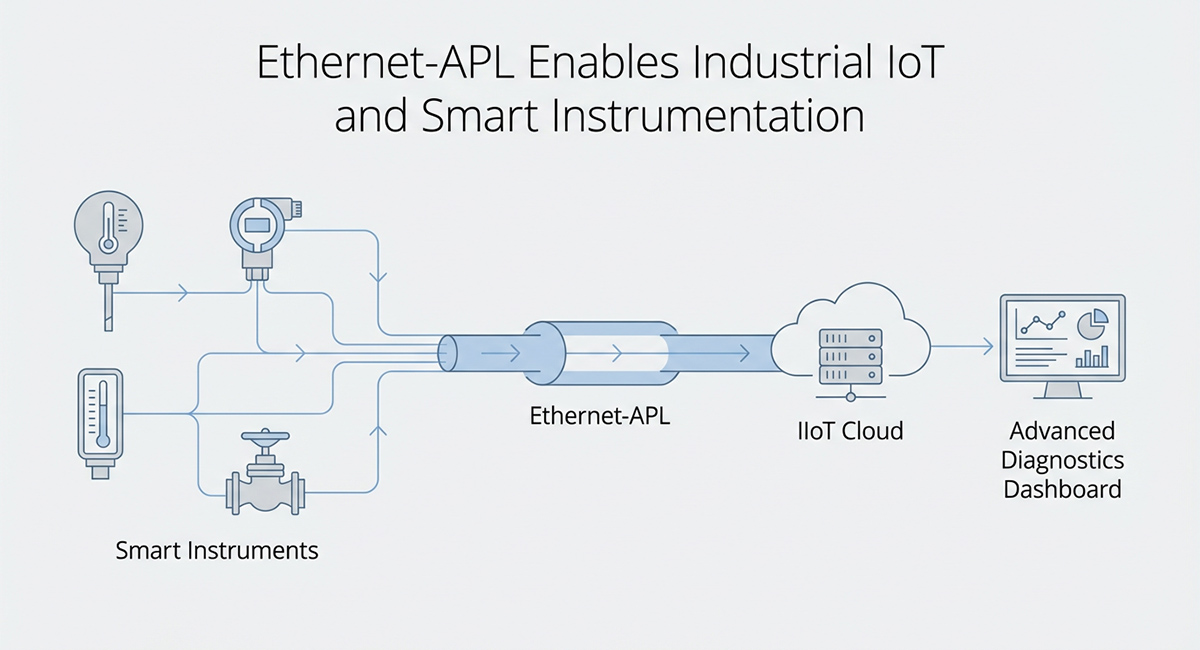
Industrial systems are rapidly evolving from isolated control environments into fully connected, data-driven ecosystems. At the center of this transformation...

Home » Products » Transmitters » Radar Level Transmitter for Stable Measurement in Complex Process Conditions

In many industrial processes, level measurement is affected by high temperature, pressure fluctuations, vapor, dust, foam, and complex tank structures. Conventional contact or ultrasonic sensors may experience unstable signals or frequent maintenance under these conditions.
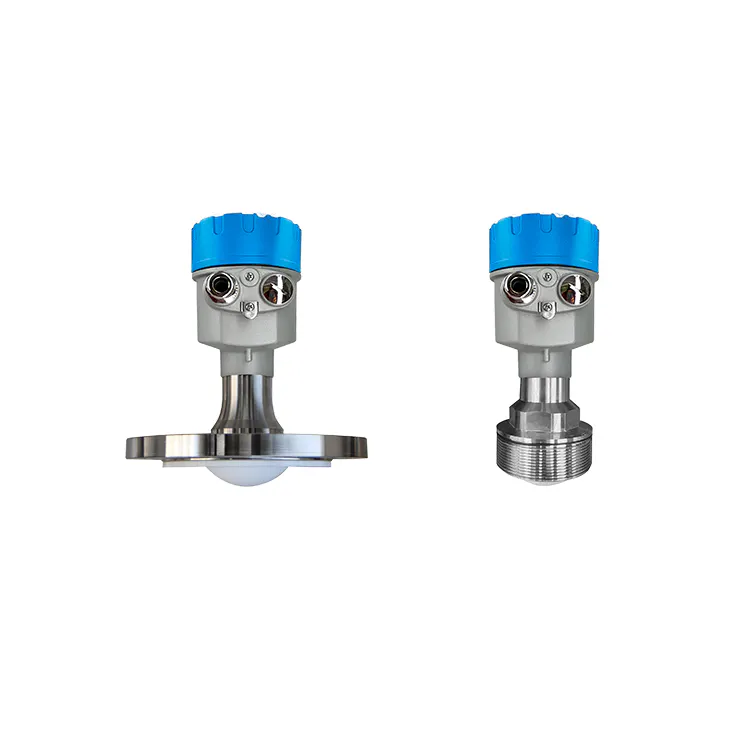
The INRLT115 radar level transmitter is developed to address these challenges by using non-contact microwave technology, ensuring stable and accurate level measurement even in harsh and variable process environments.
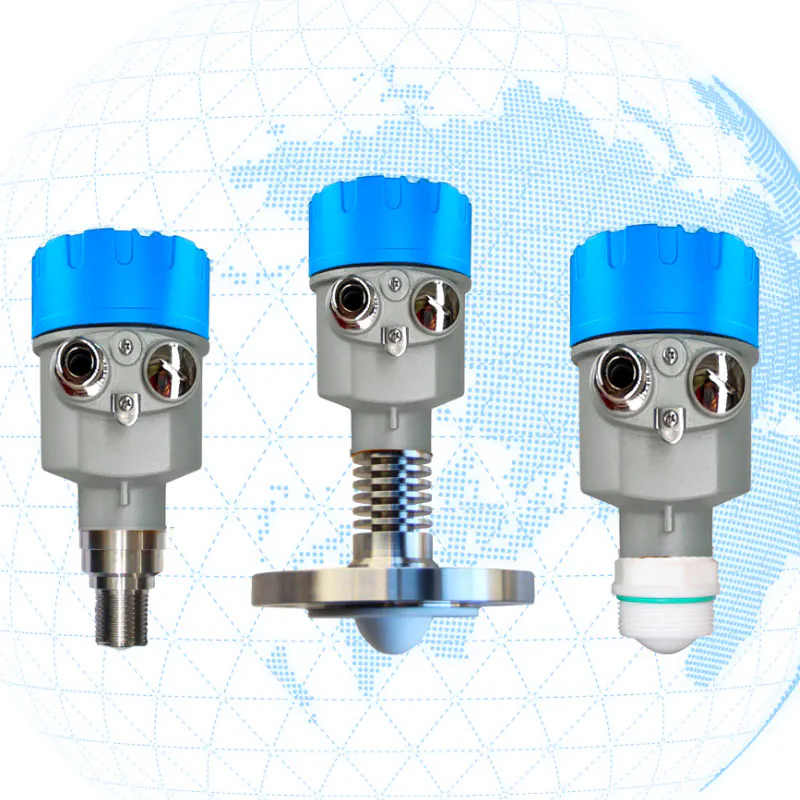
Transmitters & Sensors Description
Core Measurement Advantage of FMCW Radar Technology
In the INRLT115 radar level transmitter, the measurement core is not based on directly resolving time-of-flight, but on detecting the frequency difference (δf) between the transmitted and received radar signals.
The FMCW measurement logic follows this process:
Frequency difference → Distance → Level
Instead of relying on extremely fine time resolution, the transmitter analyzes the frequency offset generated by the propagation delay of the radar wave. This approach avoids the physical limitations associated with time-based resolution and enables more stable and precise distance calculation.
As a result, FMCW radar technology provides significant advantages in high-accuracy level measurement applications, especially in environments involving long measuring distances, high temperature, pressure fluctuations, vapor, dust, or foam.
This is the fundamental reason why FMCW radar level transmitters are widely adopted for demanding industrial level measurement tasks.


Where Radar Level Measurement Is the Right Choice
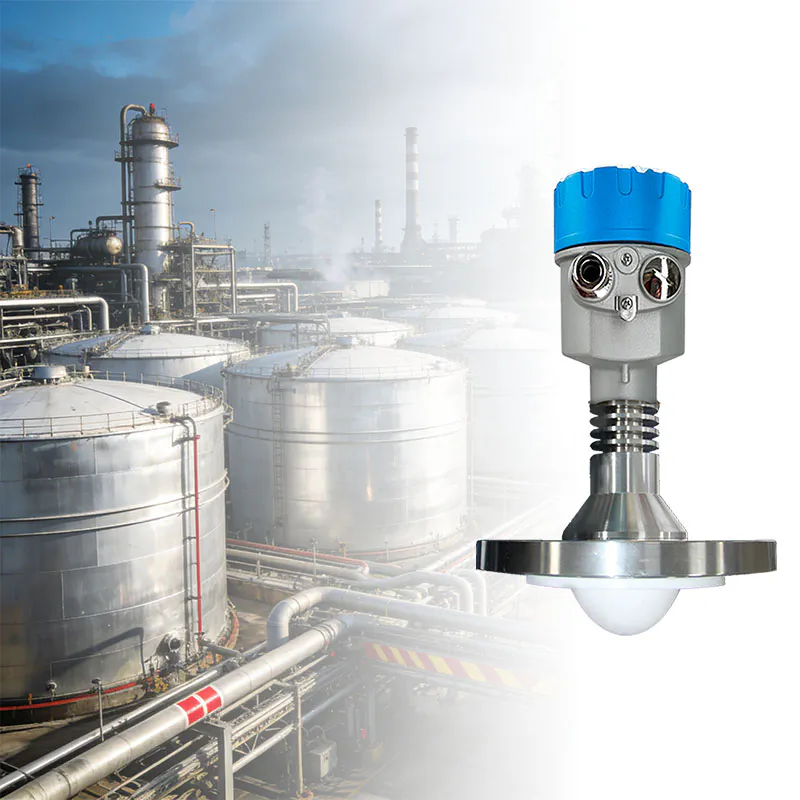
The INRLT115 radar level transmitter is particularly suitable for applications where other level technologies reach their limits:
High-temperature or high-pressure vessels
Tanks with strong vapor or dust formation
Foam-covered liquid surfaces
Large storage tanks or tall silos
Processes requiring continuous, non-contact measurement
Working Principle of Radar Level Transmitter (FMCW Technology)
The INRLT115 radar level transmitter operates based on FMCW (Frequency Modulated Continuous Wave) radar technology, which enables highly accurate non-contact level measurement.
The transmitter continuously emits a linearly frequency-modulated radar wave toward the surface of the measured medium.
This transmitted signal increases linearly in frequency over time.
When the radar wave reaches the liquid or material surface, it is reflected back to the antenna as an echo signal.
The received echo carries information related to the distance between the transmitter and the material surface.
Because the transmitted and received signals travel different paths, a delay occurs between them. This delay generates:
Time difference (δt) between transmission and reception
Frequency difference (δf) between the transmitted and received signals
The relationships are defined as:
δt = 2R / C
δf = K · δt
Where:
R = distance between radar antenna and material surface
C = propagation speed of electromagnetic waves
K = frequency modulation slope
By combining these equations, the distance can be calculated as:
R = C · δf / (2K)
Once the distance R is determined, the transmitter converts it into a level value based on the installation reference point. The calculated level is then output as a continuous standard signal proportional to the actual material level inside the tank or vessel.
This FMCW-based measurement principle ensures high accuracy and stable performance, even in applications involving high temperature, high pressure, vapor, dust, or foam.


Structure & Reliability Design of INRLT115
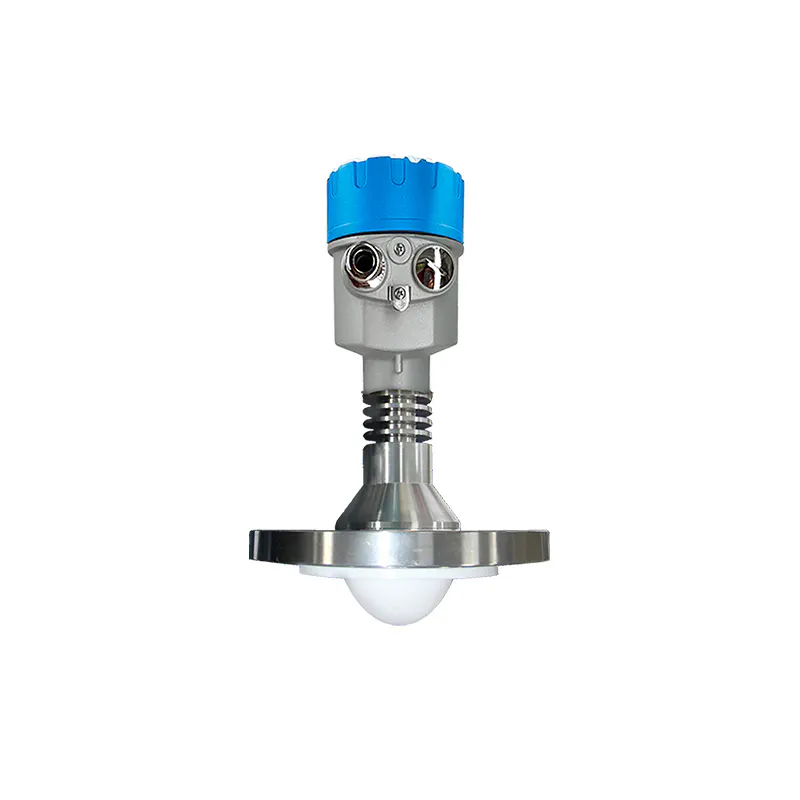
The INRLT115 radar level transmitter is structurally designed to ensure stable and reliable measurement under complex industrial conditions.
The integrated antenna structure provides controlled beam focusing, reducing false echoes from tank walls, internals, or buildup, which directly improves signal stability. The sealed industrial housing protects internal electronics from dust, moisture, and corrosive environments, ensuring long-term operational reliability.
A rigid process connection maintains accurate beam alignment even under vibration or pressure fluctuation, preventing measurement drift. As a non-contact device with no moving or wetted parts, the INRLT115 eliminates mechanical wear and process contamination, significantly reducing maintenance requirements.
Overall, the structural design directly stabilizes the radar signal path, enabling FMCW frequency-based measurement to deliver consistent and accurate level results over time.
Transmitters & Sensors Parameter
| Item | Specification |
|---|---|
| Measuring Medium | Liquid |
| Measuring Range | 0.2 m ~ 30 m ;0.3 m ~ 150 m (depending on antenna and application) |
| Process Connection | Flange ≥ DN80 ;Thread G3 A |
| Process Temperature | -40 ~ 120 °C (flange connection) -40 ~ 110 °C (thread connection) |
| Process Pressure | -0.1 ~ 1.0 MPa |
| Antenna Type | 76 mm lens antenna |
| Antenna Material | PTFE |
| Measurement Accuracy | ±2 mm |
| Launch Angle | 3° |
| Protection Class | IP67 |
| Power Supply | Two-wire system: DC 24 V Four-wire system: AC 220 V Six-wire system: DC 12–24 V |
| Signal Output | Two-wire system: 4–20 mA + HART Four-wire system: 4–20 mA + HART Six-wire system: 4–20 mA + HART |
| Housing Material | Aluminum / Plastic / Stainless Steel |
Instrava OEM/ODM
Reliable Instruments. Solutions That Fit Your Application.
Instrava is focused on delivering reliable industrial solutions through carefully curated products, application-driven optimization, and flexible customization. We select proven instruments from trusted manufacturers to ensure consistent quality, optimize solutions based on real working conditions to solve practical challenges, and provide tailored configurations to meet specific application needs.
By combining selection expertise with application understanding, Instrava helps customers reduce risk, improve efficiency, and achieve dependable results in complex industrial environments.

Why is the INRLT115 radar level transmitter suitable for high-temperature and high-pressure applications?
The INRLT115 radar level transmitter uses microwave radar technology, which is minimally affected by temperature and pressure changes. Unlike contact or ultrasonic sensors, radar signals remain stable in high-temperature and high-pressure environments, ensuring reliable level measurement.
Can the INRLT115 measure level accurately in tanks with heavy vapor or dust?
Yes. Radar signals are largely unaffected by vapor, dust, or condensation. The INRLT115 radar level transmitter is designed to maintain stable echo detection even in environments with strong vapor formation or dust clouds.
How does the INRLT115 handle foam on the liquid surface?
Foam can absorb or scatter acoustic signals, causing ultrasonic measurement errors. Radar signals, however, penetrate foam more effectively. This allows the INRLT115 to accurately detect the actual liquid surface beneath foam layers in many applications.
Is the INRLT115 suitable for tanks with internal structures or agitators?
Yes. The INRLT115 features advanced signal processing algorithms that filter out false echoes caused by internal structures such as agitators, ladders, or heating coils, allowing accurate level measurement in complex tank geometries.
When should radar level transmitters be preferred over ultrasonic level transmitters?
Radar level transmitters like the INRLT115 should be preferred when applications involve high temperature, high pressure, vapor, foam, dust, or when measurement reliability is critical under changing process conditions.
Can the INRLT115 be used for bulk solid level measurement?
Yes. The INRLT115 radar level transmitter is suitable for both liquid and bulk solid level measurement, especially in silos or bins where dust and uneven material surfaces are present.
Built on Consistency, Not Claims
We specialize in industrial analysis and detection, with a clear understanding of real-world operating environments and requirements.
Every instrument is evaluated based on performance, stability, and application suitability—not just specifications or pricing.
We work with trusted manufacturers to ensure stable supply, consistent quality, and dependable delivery.
Our recommendations are grounded in application understanding, helping customers avoid common issues and achieve reliable results.
Instrava is built to reduce uncertainty—so every decision you make is clearer, safer, and more reliable.

Industrial systems are rapidly evolving from isolated control environments into fully connected, data-driven ecosystems. At the center of this transformation...
Industrial communication technologies have evolved significantly over the past decades. Traditional fieldbus systems such as PROFIBUS and Modbus have long...
As industrial systems move toward digitalization and intelligent automation, traditional field communication technologies are increasingly unable to meet the demands...