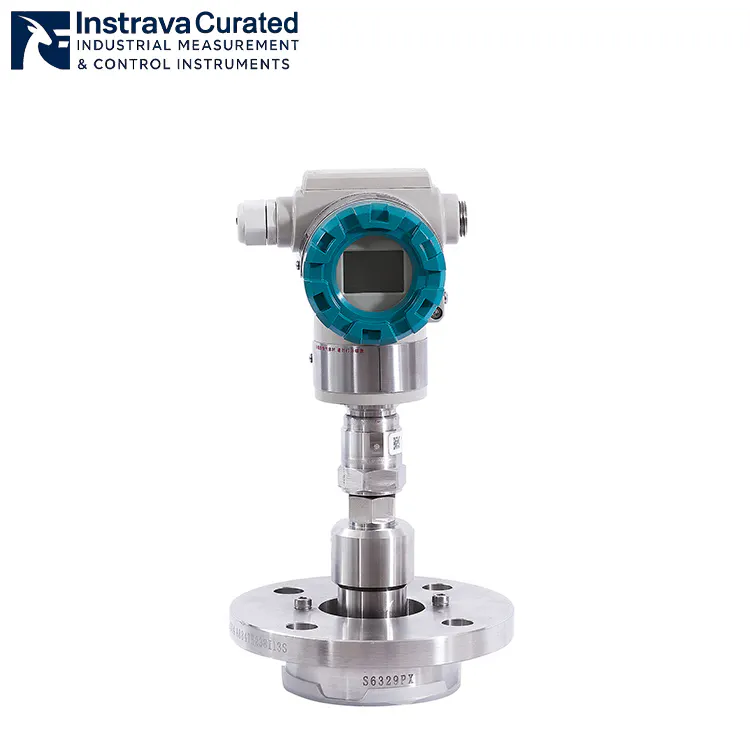

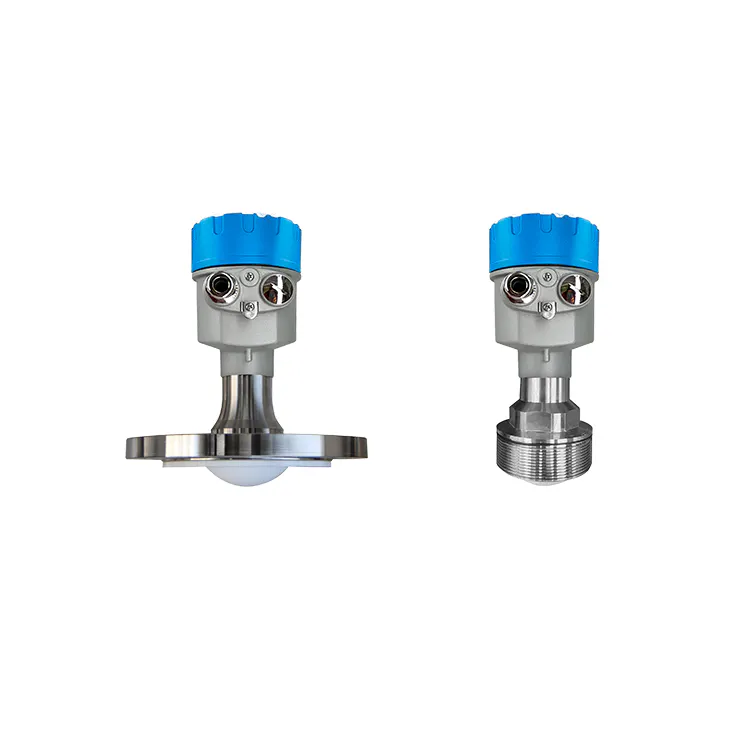
Pemancar Level Radar untuk Pengukuran yang Stabil dalam Kondisi Proses yang Kompleks
In many industrial processes, level measurement is affected by high temperature, pressure fluctuations, vapor, dust, foam, and complex tank structures. Conventional contact or ultrasonic sensors may experience unstable signals or frequent maintenance under these conditions.
The INRLT115 radar level transmitter is developed to address these challenges by using non-contact microwave technology, ensuring stable and accurate level measurement even in harsh and variable process environments.


Deskripsi Pemancar & Sensor
Core Measurement Advantage of FMCW Radar Technology
In the INRLT115 radar level transmitter, the measurement core is not based on directly resolving time-of-flight, but on detecting the frequency difference (δf) between the transmitted and received radar signals.
The FMCW measurement logic follows this process:
Frequency difference → Distance → Level
Instead of relying on extremely fine time resolution, the transmitter analyzes the frequency offset generated by the propagation delay of the radar wave. This approach avoids the physical limitations associated with time-based resolution and enables more stable and precise distance calculation.
As a result, FMCW radar technology provides significant advantages in high-accuracy level measurement applications, especially in environments involving long measuring distances, high temperature, pressure fluctuations, vapor, dust, or foam.
This is the fundamental reason why FMCW radar level transmitters are widely adopted for demanding industrial level measurement tasks.
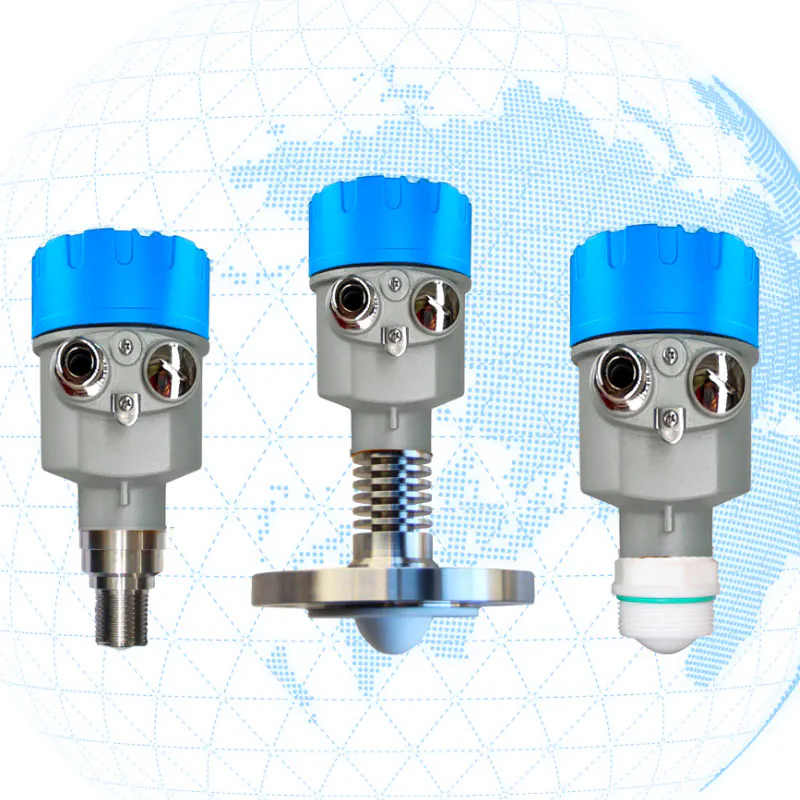
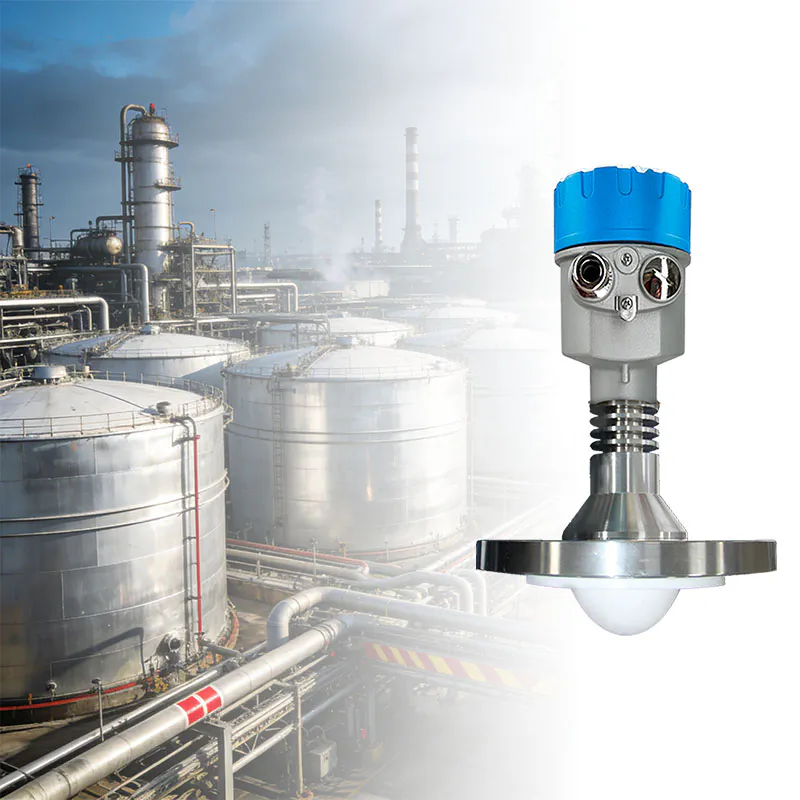
Where Radar Level Measurement Is the Right Choice
The INRLT115 radar level transmitter is particularly suitable for applications where other level technologies reach their limits:
-
High-temperature or high-pressure vessels
-
Tanks with strong vapor or dust formation
-
Foam-covered liquid surfaces
-
Large storage tanks or tall silos
-
Processes requiring continuous, non-contact measurement
Parameter Pemancar & Sensor
Model: INRLT115
| Item | Spesifikasi |
|---|---|
| Mengukur Media | Liquid |
| Rentang Pengukuran | 0.2 m ~ 30 m ;0.3 m ~ 150 m (depending on antenna and application) |
| Koneksi Proses | Flange ≥ DN80 ;Thread G3 A |
| Suhu Proses | -40 ~ 120 °C (flange connection) -40 ~ 110 °C (thread connection) |
| Tekanan Proses | -0.1 ~ 1.0 MPa |
| Jenis Antena | 76 mm lens antenna |
| Antenna Material | PTFE |
| Akurasi Pengukuran | ±2 mm |
| Launch Angle | 3° |
| Kelas Perlindungan | IP67 |
| Catu Daya | Two-wire system: DC 24 V Four-wire system: AC 220 V Six-wire system: DC 12–24 V |
| Keluaran Sinyal | Two-wire system: 4–20 mA + HART Four-wire system: 4–20 mA + HART Six-wire system: 4–20 mA + HART |
| Bahan Perumahan | Aluminium / Plastik / Baja Tahan Karat |
Instrava OEM / ODM
Pencarian Pemasok dan Penyesuaian Sesuai Kebutuhan: Memberikan Produk yang Tepat Sesuai Kebutuhan Anda
Sebagai pemasok dan mitra pengadaan terpercaya Anda, kami menjembatani kesenjangan antara kebutuhan khusus Anda dan kemampuan manufaktur Tiongkok yang sangat besar.
Menemukan produk yang tepat dalam rantai pasokan yang sangat besar bisa menjadi tantangan tersendiri. Di situlah kami berperan.
Sebagai penyedia produk industri yang terkurasi, nilai inti kami sangat sederhana: Kami menempatkan diri pada posisi Anda untuk membantu Anda mendapatkan produk yang paling sesuai. Apakah Anda seorang Kontraktor EPC yang memerlukan kepatuhan teknis khusus, sebuah Produsen peralatan OEM sedang mencari branding khusus, atau sebuah distributor/pedagang industri Untuk mendapatkan keunggulan kompetitif, kami menyesuaikan dan merancang produk secara khusus agar sesuai dengan kebutuhan pengadaan Anda.
Bagaimana Kami Menyesuaikan Layanan Kami Sesuai Kebutuhan Pengadaan Anda
Untuk Kontraktor dan Insinyur EPC: Kami mengonfigurasi instrumen dan perangkat secara khusus agar sesuai dengan spesifikasi teknis Anda—mulai dari menyesuaikan sambungan proses, bahan khusus, protokol sinyal, hingga mengelola kalibrasi dan pengujian oleh pihak ketiga—sehingga Anda mendapatkan solusi yang siap diterapkan dalam proyek.
Bagi Produsen Peralatan Asli (OEM): Kami menyediakan layanan kustomisasi OEM/ODM yang komprehensif, termasuk desain casing khusus, pelabelan, branding (merek pribadi), serta spesifikasi teknis yang disesuaikan agar dapat terintegrasi dengan mulus ke dalam mesin Anda.
Untuk Distributor dan Pedagang Industri: Kami menawarkan fleksibilitas dalam penyesuaian kemasan, ragam produk, dan parameter teknis, yang akan membantu Anda membedakan portofolio produk Anda dan memenangkan lebih banyak tender lokal.
Mengapa Memilih Kami sebagai Mitra untuk Pengadaan Barang Sesuai Pesanan?
Layanan Penyelarasan Teknik Terpadu: Anda tidak perlu berurusan dengan banyak pabrik. Kami menerjemahkan persyaratan teknis Anda menjadi gambar kerja pabrikan yang akurat.
Jaminan Kualitas & Kepatuhan yang Ketat: Kami mengawasi seluruh proses penyesuaian dan produksi di Tiongkok, guna memastikan produk akhir yang disesuaikan tersebut memenuhi standar dan sertifikasi lokal Anda.
Nilai Utama Kami: Kami tidak hanya menjual barang yang ada di rak. Kami mencari, menyesuaikan, dan mengirimkan produk yang paling sesuai dan hemat biaya untuk kebutuhan khusus Anda.

Mengapa pemancar level radar INRLT115 cocok untuk aplikasi bersuhu tinggi dan bertekanan tinggi?
Transmiter level radar INRLT115 menggunakan teknologi radar gelombang mikro, yang hanya sedikit terpengaruh oleh perubahan suhu dan tekanan. Berbeda dengan sensor kontak atau ultrasonik, sinyal radar tetap stabil di lingkungan bersuhu dan bertekanan tinggi, sehingga memastikan pengukuran level yang andal.
Apakah INRLT115 dapat mengukur tingkat isi secara akurat pada tangki yang dipenuhi uap atau debu?
Ya. Sinyal radar pada dasarnya tidak terpengaruh oleh uap, debu, atau kondensasi. Transmitter level radar INRLT115 dirancang untuk tetap mendeteksi gema secara stabil bahkan di lingkungan dengan pembentukan uap yang kuat atau awan debu.
Bagaimana cara INRLT115 menangani busa di permukaan cairan?
Busa dapat menyerap atau memantulkan sinyal akustik, sehingga menyebabkan kesalahan pengukuran ultrasonik. Namun, sinyal radar mampu menembus busa dengan lebih efektif. Hal ini memungkinkan INRLT115 untuk mendeteksi permukaan cairan yang sebenarnya di bawah lapisan busa secara akurat dalam berbagai aplikasi.
Apakah INRLT115 cocok untuk tangki yang memiliki struktur internal atau pengaduk?
Ya. INRLT115 dilengkapi dengan algoritma pemrosesan sinyal canggih yang menyaring gema palsu yang disebabkan oleh struktur internal seperti pengaduk, tangga, atau kumparan pemanas, sehingga memungkinkan pengukuran tingkat yang akurat pada tangki dengan geometri yang kompleks.
Kapan pengukur level radar sebaiknya dipilih daripada pengukur level ultrasonik?
Radar level transmitters like the INRLT115 should be preferred when applications involve high temperature, high pressure, vapor, foam, dust, or when measurement reliability is critical under changing process conditions.
Can the INRLT115 be used for bulk solid level measurement?
Yes. The INRLT115 radar level transmitter is suitable for both liquid and bulk solid level measurement, especially in silos or bins where dust and uneven material surfaces are present.
Mengapa Mempercayai Instrava?
Kami memilih produsen dari sudut pandang yang netral dan tidak memihak, dengan selalu mengutamakan kepentingan terbaik Anda.
Keberadaan kami bergantung pada upaya kami dalam membantu Anda menemukan produk yang paling sesuai dengan kebutuhan Anda.
Berbasis di Tiongkok, kami dapat melakukan inspeksi langsung di lokasi terhadap lingkungan produksi dan kualitas produk.
Kami membantu Anda menghindari perantara yang menyamar sebagai pabrik.
Kami memudahkan layanan purna jual yang lebih lancar, sehingga menghilangkan kendala perbedaan zona waktu dan keterlambatan yang sering terjadi saat berurusan langsung dengan pabrik.
Tim multibahasa kami memastikan komunikasi yang efektif.
Bagi sebuah perusahaan rintisan di bidang perdagangan, setiap interaksi dengan klien merupakan kesempatan yang berharga—sebagai tanda bahwa Anda bersedia mempercayai kami dan memberi kami kesempatan untuk membuktikan diri.
Di era digital, meskipun informasi mudah diakses, kesalahpahaman sering kali mengaburkan rasa saling percaya di antara sesama manusia.
Instrava sepenuhnya bertumpu pada kepercayaan; hal ini merupakan filosofi inti kami dan landasan keberadaan kami di masyarakat. Inilah landasan utama bagi pertumbuhan jangka panjang kami serta komitmen kami untuk melayani masyarakat.
Mohon percayalah kepada kami.