
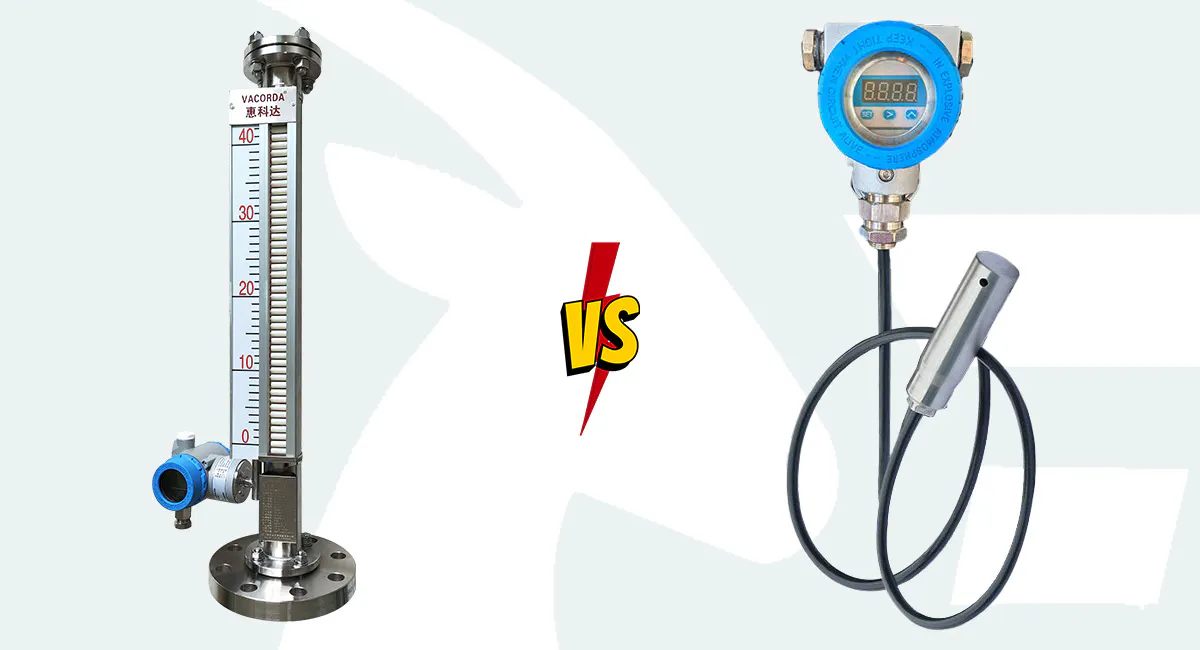
มาตรวัดระดับแม่เหล็กเทียบกับมาตรวัดระดับไฮโดรสแตติก: เทคโนโลยีและคู่มือการเลือกใช้
บทนำ
มาตรวัดระดับแม่เหล็กและมาตรวัดระดับไฮโดรสแตติกเป็นเครื่องมือสองประเภทที่ใช้กันอย่างแพร่หลายสำหรับการตรวจสอบระดับของเหลวในอุตสาหกรรม ทั้งสองเทคโนโลยีมีความสมบูรณ์และเชื่อถือได้ แต่มีวัตถุประสงค์การใช้งานที่แตกต่างกันและเหมาะสมกับสภาวะกระบวนการที่แตกต่างกัน.
จากมุมมองของผู้ผลิต OEM การเข้าใจความแตกต่างระหว่างมาตรวัดระดับแม่เหล็กและมาตรวัดระดับไฮโดรสแตติกเป็นสิ่งสำคัญสำหรับการเลือกโซลูชันการวัดระดับที่เหมาะสม บทความนี้จะเปรียบเทียบทั้งสองประเภทในแง่ของหลักการการทำงาน ประสิทธิภาพ การติดตั้ง และความเหมาะสมในการใช้งาน.
หลักการการทำงาน
มาตรวัดระดับแม่เหล็ก
A มาตรวัดระดับแม่เหล็ก เป็นเครื่องมือประเภทสัมผัสทางสายตา ประกอบด้วยลูกลอยที่มีแม่เหล็กถาวรอยู่ภายใน ซึ่งจะเคลื่อนขึ้นลงภายในห้องปิดผนึกเมื่อระดับของเหลวเปลี่ยนแปลง แผ่นแสดงผลภายนอกหรือแทร็กแสดงผลแม่เหล็กจะติดตามตำแหน่งของลูกลอยเพื่อแสดงระดับในเวลาจริง.
มาตรวัดระดับแม่เหล็กให้การแสดงระดับโดยตรงและเข้าใจง่ายโดยไม่ต้องใช้แหล่งจ่ายไฟหรือสัญญาณอิเล็กทรอนิกส์.
มาตรวัดระดับไฮโดรสแตติก
เครื่องวัดระดับไฮโดรสแตติก วัดระดับของเหลวตามความดัน. อุปกรณ์ตรวจจับความดันไฮโดรสแตติกที่เกิดจากระดับความสูงของคอลัมน์ของเหลว และแปลงเป็นสัญญาณเอาต์พุตมาตรฐาน เช่น 4–20 mA.
เกจวัดระดับชนิดนี้เป็นเครื่องมือวัดอิเล็กทรอนิกส์และต้องการความหนาแน่นของของเหลวที่คงที่เพื่อให้ได้ค่าที่แม่นยำ.
การเปรียบเทียบประสิทธิภาพ
| รายการ | มาตรวัดระดับแม่เหล็ก | มาตรวัดระดับไฮโดรสแตติก |
|---|---|---|
| วิธีการวัด | การแสดงผลด้วยภาพโดยตรง | อิเล็กทรอนิกส์ที่ใช้แรงดัน |
| แหล่งจ่ายไฟ | ไม่จำเป็น | จำเป็น |
| ความถูกต้อง | สูงสำหรับการบ่งชี้ในท้องถิ่น | สูงด้วยความหนาแน่นที่คงที่ |
| สัญญาณขาออก | เอาต์พุตเครื่องส่งสัญญาณแบบเลือกได้ | กำลังไฟฟ้าขาออกมาตรฐาน |
| การบำรุงรักษา | ต่ำ | ต่ำ |
| อิทธิพลของความหนาแน่น | ไม่ | ใช่ |
| ความทนต่ออุณหภูมิ | ดี | จำกัดที่อุณหภูมิสูง |
| ความเหมาะสมของแรงดัน | ดี | จำกัด |
| ความเสี่ยงจากความล้มเหลว | ต่ำมาก | ต่ำ |
การเปรียบเทียบการติดตั้ง
| ปัจจัยการติดตั้ง | มาตรวัดระดับแม่เหล็ก | มาตรวัดระดับไฮโดรสแตติก |
|---|---|---|
| ตำแหน่งการติดตั้ง | ติดตั้งด้านข้างถัง | ก้นหรือจมอยู่ใต้น้ำ |
| การเชื่อมต่อของกระบวนการ | ต้องใช้ห้องภายนอก | เกลียวหรือหน้าแปลน |
| การติดต่อปานกลาง | ลอยตัวสัมผัสโดยตรง | เซ็นเซอร์สัมผัสโดยตรง |
| การเดินสายไฟ | ไม่จำเป็น | ต้องการ |
| การขัดขวางอิทธิพล | ไม่มี | ไม่มี |
| การเข้าถึงเพื่อการบำรุงรักษา | ทางเข้าด้านข้างที่สะดวก | จำเป็นต้องเข้าถึงจากด้านล่าง |
การใช้งานทั่วไป
การประยุกต์ใช้มาตรวัดระดับแม่เหล็ก
มาตรวัดระดับแม่เหล็กเหมาะสำหรับ:
หม้อไอน้ำอุณหภูมิสูง
ภาชนะที่มีแรงดัน
ถังสารเคมีกัดกร่อน
สถานการณ์ที่ต้องการการแสดงระดับด้วยสายตาในบริเวณนั้น
กระบวนการที่มีความสำคัญด้านความปลอดภัยโดยไม่มีแหล่งจ่ายพลังงาน
พวกมันถูกใช้กันอย่างแพร่หลายในโรงงานปิโตรเคมี ถังเก็บ และภาชนะกระบวนการที่ต้องการการตรวจสอบระดับที่เข้าใจง่ายสำหรับผู้ปฏิบัติงาน.
การประยุกต์ใช้มาตรวัดระดับไฮโดรสแตติก
มาตรวัดระดับไฮโดรสแตติกเหมาะสำหรับ:
ถังบรรยากาศ
ระบบบำบัดน้ำ
อ่างเก็บน้ำใต้ดิน
ถังเก็บน้ำมันเชื้อเพลิงและน้ำมันหล่อลื่น
การตรวจสอบระยะไกลผ่านระบบควบคุม
เทคโนโลยีนี้มักถูกเลือกใช้เมื่อต้องการเอาต์พุตอิเล็กทรอนิกส์อย่างต่อเนื่อง.
คู่มือการเลือกจากมุมมองของผู้ผลิต
เมื่อเลือกเกจวัดระดับทั้งสองนี้ ผู้ผลิตมักจะพิจารณา:
จำเป็นต้องมีการแสดงตำแหน่งแบบภาพหรือไม่
อุณหภูมิและแรงดันของกระบวนการ
ความจำเป็นในการส่งสัญญาณระยะไกล
ความเสถียรของน้ำหนักของเหลว
พื้นที่ติดตั้งและงบประมาณ
เกจวัดระดับแม่เหล็กเป็นที่นิยมสำหรับสภาพแวดล้อมที่รุนแรงและการแสดงผลโดยตรง ในขณะที่เกจวัดระดับไฮโดรสแตติกถูกเลือกใช้สำหรับโครงการตรวจสอบระยะไกลที่ประหยัดค่าใช้จ่าย.
สรุป
มาตรวัดระดับแม่เหล็กและมาตรวัดระดับไฮโดรสแตติกต่างก็มีข้อดีเฉพาะตัวในการวัดระดับในอุตสาหกรรม มาตรวัดระดับแม่เหล็กให้การแสดงผลที่ง่าย ปลอดภัย และเชื่อถือได้สูง มาตรวัดระดับไฮโดรสแตติกให้ผลลัพธ์ทางอิเล็กทรอนิกส์ที่แม่นยำและคุ้มค่าสำหรับการใช้งานทั่วไป.
โดยการเข้าใจถึงความแตกต่างของพวกเขาและปรึกษาผู้เชี่ยวชาญจากผู้ผลิตเกจวัดระดับระดับ OEM ผู้ใช้สามารถเลือกโซลูชันการวัดระดับที่เหมาะสมที่สุดสำหรับถังและภาชนะของพวกเขาได้.