







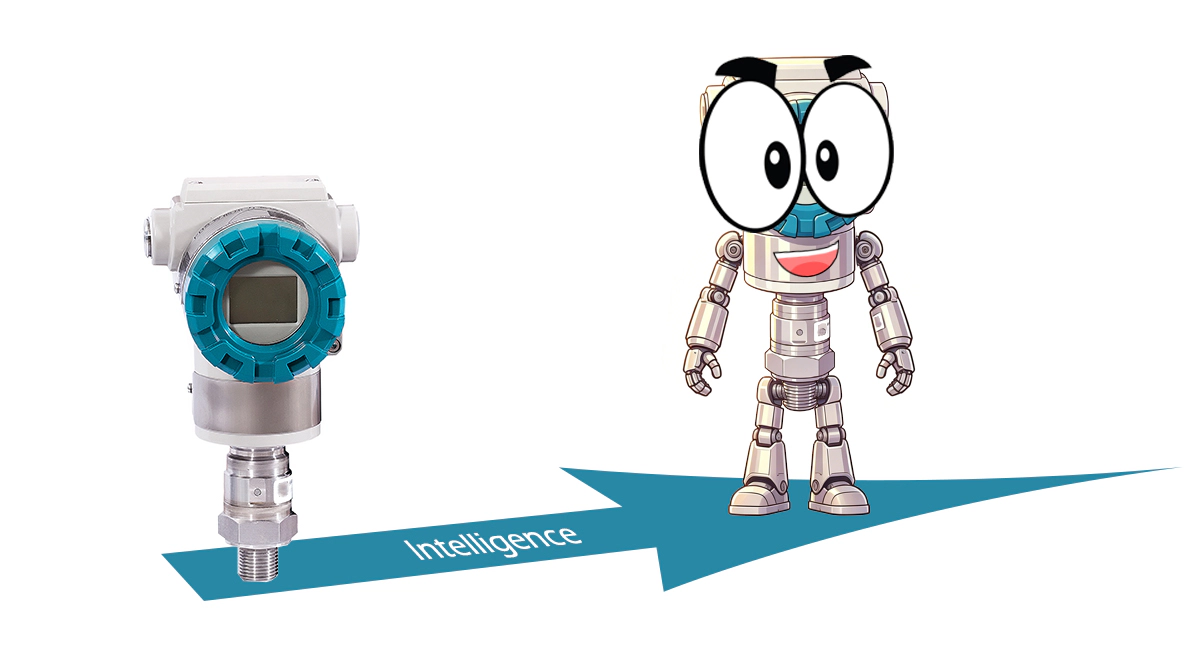
- โดย อินสตราวา
- 04/11/2026
- 0 ความคิดเห็น
จากการทดลองสู่การปฏิบัติ: เหตุใดเดือนเมษายน 2026 จึงเป็นจุดเปลี่ยนสำคัญสำหรับเครื่องมือวัดอุตสาหกรรม
April 2026 is not just another milestone—it marks the moment when industrial instrumentation shifts from experimentation to execution.
For years, the industry has explored:
- IIoT pilots
- Edge computing concepts
- Digital twins
- Cloud-based optimization
But most initiatives remained trapped in proof-of-concept (POC) cycles.
That phase is over.
What replaces it is a new paradigm:
Software-defined instrumentation + quantum-level precision nodes
This shift fundamentally redefines what an “instrument” is—and what role it plays in industrial systems.
The End of Isolated Instruments
Traditional instruments were designed as standalone devices:
- A flow meter measures flow
- A level sensor measures level
- A pH analyzer measures chemistry
Each device operated as a closed system.
Data moved one way:
→ Sensor → PLC → DCS
There was no feedback loop from software to device.
This architecture created:
- Data silos
- Limited scalability
- High integration cost
- Vendor lock-in
In 2026, this model is no longer viable.
The Rise of Software-Defined Instrumentation (SDI)
Software-defined instrumentation transforms hardware into a programmable node.
Instead of fixed functionality:
- Hardware becomes universal
- Functionality becomes software-defined
- Behavior can be updated remotely
An instrument is no longer a “device.”
It becomes a computing endpoint in an industrial network.
Evolution of Instrumentation Architecture
Instrumentation has evolved from fixed-function devices to fully programmable network nodes.
| Architecture Stage | Flexibility | Connectivity | Upgradability |
|---|---|---|---|
| Analog Instruments | ต่ำ | ต่ำ | ไม่มี |
| Digital (Fieldbus) | ระดับกลาง | ระดับกลาง | จำกัด |
| IIoT (POC Phase) | ระดับกลาง | สูง | บางส่วน |
| Software-Defined (2026) | สูง | สูง | เต็ม |
The key breakthrough is not connectivity—but control over behavior through software. This enables remote tuning, algorithm updates, and system-wide optimization.
Why April 2026 Is the Inflection Point
This transition is driven by a convergence of forces:
1. Supply Chain Pressure → Hardware Simplification
Rising semiconductor costs forced manufacturers to adopt:
- Highly integrated SoCs
- Digital-first architectures
This unintentionally accelerated software-defined capabilities.
2. Regulatory Enforcement → Data Accountability
Policies such as carbon tracking and environmental compliance now require:
- Traceable data
- Tamper-proof records
- Audit-ready reporting
Isolated instruments cannot meet these requirements.
3. AI & Autonomous Systems → Real-Time Control
AI systems are no longer advisory—they are executive:
- Adjusting process parameters
- Closing control loops
- Optimizing efficiency in real time
This requires instruments that can be remotely tuned via API.
Quantum Precision Nodes: Redefining Measurement Limits
Traditional sensors suffer from:
- Drift
- Calibration dependency
- Environmental noise
Quantum sensing technologies change this.
- Atomic-level measurement references
- Near-zero drift
- Calibration-free operation
These sensors are now transitioning from laboratory systems to deployable industrial nodes.
Measurement Stability Comparison
Quantum-based sensing significantly reduces long-term drift.
ไม่พบข้อมูล
The advantage is not just accuracy—but stability over time, eliminating frequent recalibration and improving trust in data.(AI Predictions)
From Measurement Devices to Intelligent Nodes
To support software-defined operation, instruments must evolve into:
1. Networked Devices (Connectivity Layer)
- Ethernet-based communication (e.g., APL)
- IP-addressable instruments
- Direct cloud connectivity
2. Semantic Devices (Information Layer)
This is where PA-DIM (Process Automation Device Information Model) becomes critical.
PA-DIM standardizes how devices describe themselves:
- Measurement parameters
- การวินิจฉัย
- การกำหนดค่า
- Capabilities
It ensures all instruments speak the same “language.”
What PA-DIM Actually Solves
Without PA-DIM:
- Each vendor defines its own parameter naming
- Software must adapt to each device
With PA-DIM:
- All devices follow a unified data model
- APIs become universal
Integration Complexity Comparison
Standardized information models dramatically reduce integration complexity.
| Integration Method | Engineering Effort | ความสามารถในการขยายขนาด |
|---|---|---|
| Vendor-Specific Drivers | สูง | ต่ำ |
| FDI-Based Integration | ระดับกลาง | ระดับกลาง |
| PA-DIM Standardization | ต่ำ | สูง |
PA-DIM eliminates the need for custom drivers, enabling scalable API-based control across multi-vendor environments.
How API-Based Remote Tuning Actually Works
API software acts as the cloud brain of instrumentation.
It is not manually coded from scratch—it is:
Model-Driven
- Read device model (PA-DIM / FDI)
- Auto-generate API endpoints
- Map parameters to control logic
ตัวอย่าง:
This single API call works across brands because:
- The parameter is standardized
- The device understands the semantic meaning
What Infrastructure Instruments Must Have
To support API-based control, instruments must include:
✔ Physical Layer
- Ethernet (APL or industrial IP)
- Reliable two-way communication
✔ Protocol Layer
- OPC UA (for structured data + methods)
- MQTT (for data streaming)
✔ Compute Layer
- Embedded processors (ARM / RISC-V)
- Edge computing capability
✔ Security Layer
- Hardware Root of Trust
- Secure identity (device-level cryptography)
How “Digital Fingerprints” for Every Drop of Water Become Possible
The concept of “digital fingerprinting” ensures:
- Data authenticity
- การตรวจสอบย้อนกลับ
- การปฏิบัติตามข้อกำหนดทางกฎหมาย
It relies on three core elements:
1. Device Identity (Trust Anchor)
Each instrument contains:
- Secure cryptographic key
- Unique identity
Every measurement is digitally signed.
2. Time Synchronization
Using high-precision timing:
- All devices share the same timeline
- Data can be correlated across process stages
3. Immutable Storage
Data is stored in:
- Distributed ledgers
- Tamper-proof systems
Data Trust Level Across Architectures
Data trust increases significantly with distributed verification mechanisms.
ไม่พบข้อมูล
Digital signatures and immutable storage ensure that measurement data is not only accurate—but also legally verifiable.
Final Insight: The Instrument Is No Longer the Product
The most important shift is conceptual:
The instrument is no longer the product.
The data—and its trustworthiness—is the product.
In the execution era:
- Hardware becomes standardized
- Software defines functionality
- Data defines value
Conclusion: The Execution Era Has Begun
April 2026 marks the transition from:
- Testing → Deployment
- Devices → Nodes
- Measurement → Intelligence
Industrial instrumentation is no longer about reading values.
It is about:
- Enabling autonomous systems
- Guaranteeing data integrity
- Supporting regulatory compliance
- Powering real-time optimization
อินสตราวา is dedicated to embracing the transformation of the instrumentation industry; by integrating instrumentation with software-defined architectures, standardized data models, and requirements for long-term reliability, we empower industrial systems to bridge the gap from the “experimental phase” to the “execution phase.”