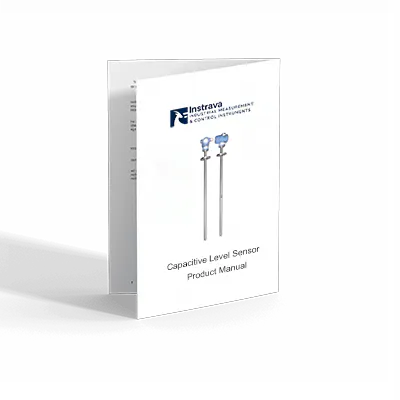
Capacitive Level Sensor

The Capacitive Level Sensor is a high-precision industrial instrument designed for continuous liquid level measurement in a wide range of applications, including chemical, petroleum, food, and pharmaceutical industries. Utilizing the principle of capacitance, the sensor detects changes in liquid level accurately, providing reliable real-time monitoring for both simple and complex liquid media.

This sensor is ideal for measuring water, oil, acids, alkalis, and other conductive or non-conductive liquids. Its robust design ensures long-term stability and corrosion resistance, making it suitable for harsh industrial environments. With flexible installation options—top-mount or side-mount—and customizable measurement range and output signals, it adapts easily to specific industrial requirements.

Key Benefits:

  • High Accuracy: Ensures precise liquid level readings with minimal error.

  • Versatile Compatibility: Works with a wide variety of liquids and interfaces.

  • Durable & Corrosion-Resistant: Long-lasting performance in harsh conditions.

  • Easy Installation: Flexible mounting options reduce installation time and costs.

  • Customizable: Range, output, and configuration can be tailored for each application.

The capacitive level sensor provides a cost-effective, low-maintenance solution for real-time level monitoring, improving operational efficiency and process safety across industries.

Level Measuring Instruments Description  

Capacitive Level Sensor – Key Features

  • Continuous Level Measurement – Accurately monitors the level of almost all corrosive and non-corrosive liquids.

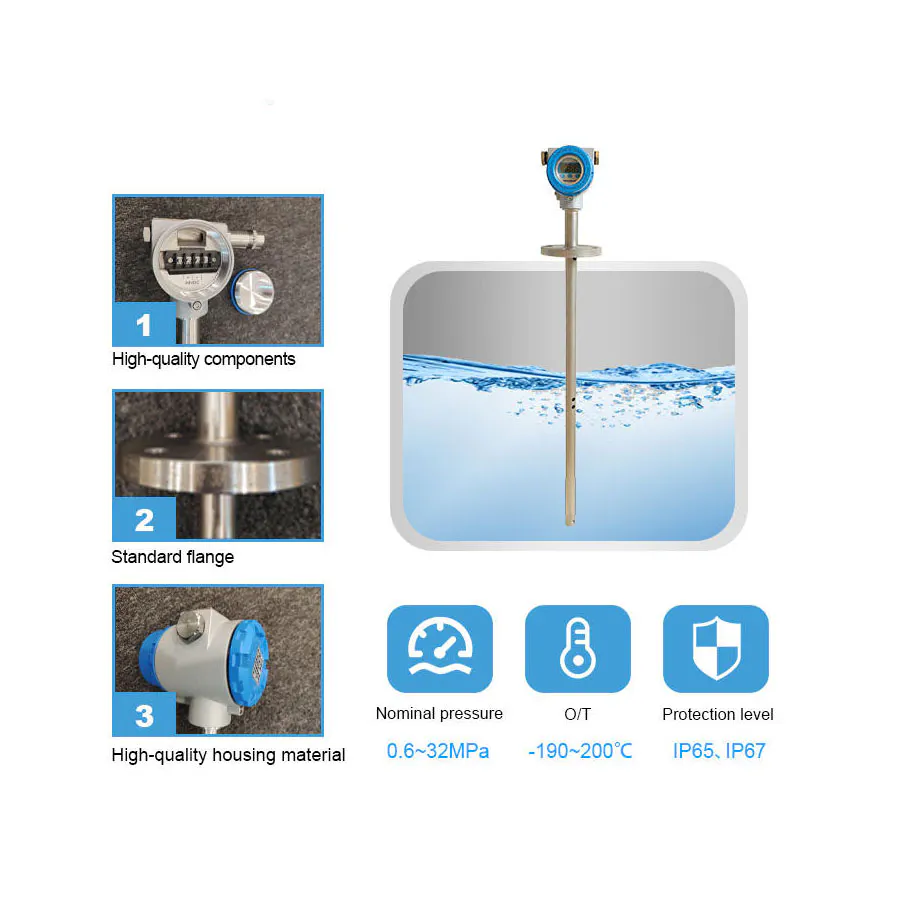
  • Wide Operating Temperature – Performs reliably in extreme conditions from -190°C to +200°C.

  • High Pressure Tolerance – Supports operating pressures from -0.1 MPa to 32 MPa.

  • Minimal Environmental Impact – Measurement remains stable despite variations in pressure, temperature, or humidity.

  • High Stability & Anti-Interference – Ensures reliable and precise readings even in electrically noisy environments.

  • Explosion-Proof Design – Certified for safe operation in hazardous environments.

  • Customizable Solutions – Range, electrode type, output signal, and process connections can be tailored to specific applications.

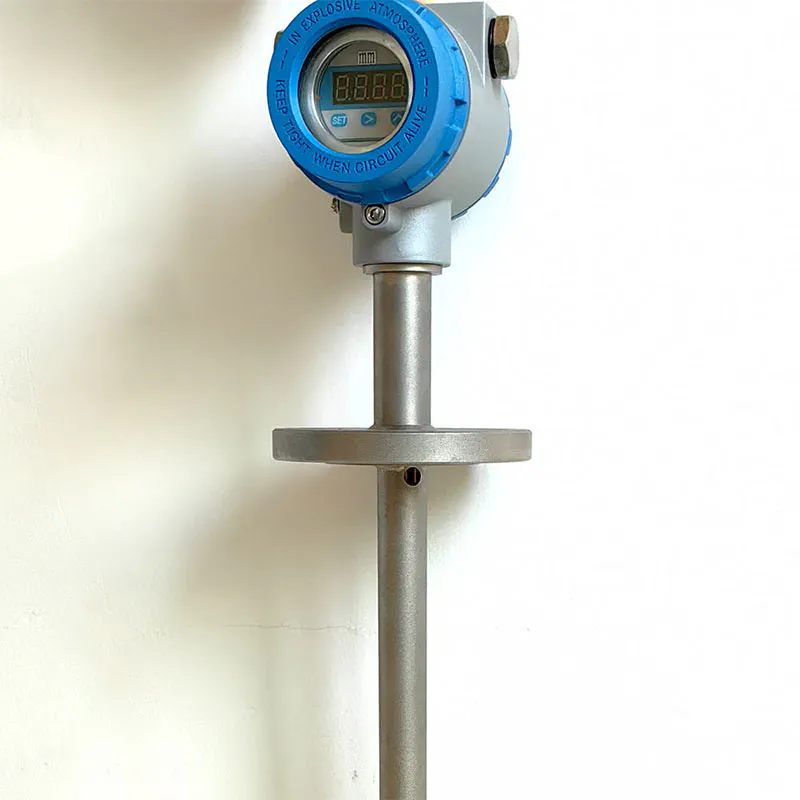
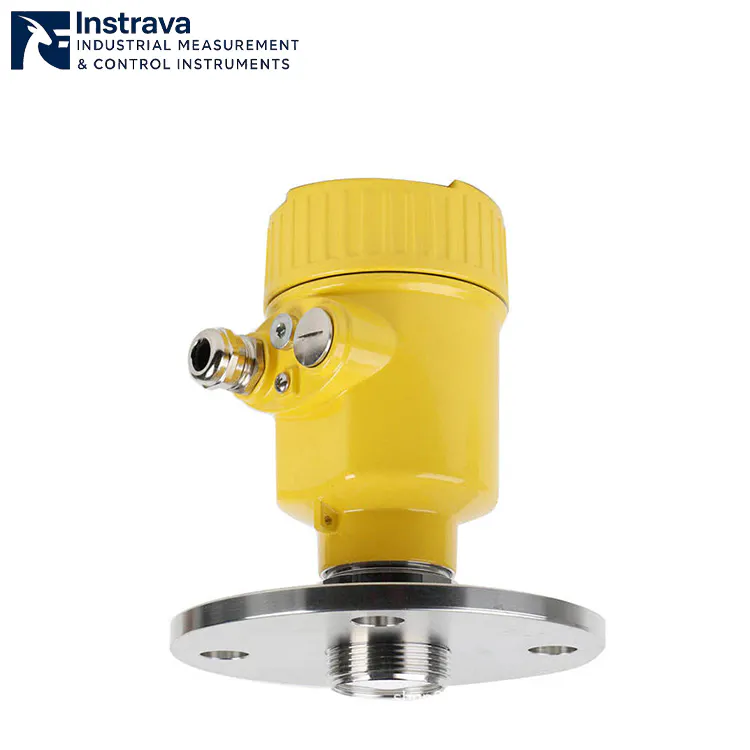
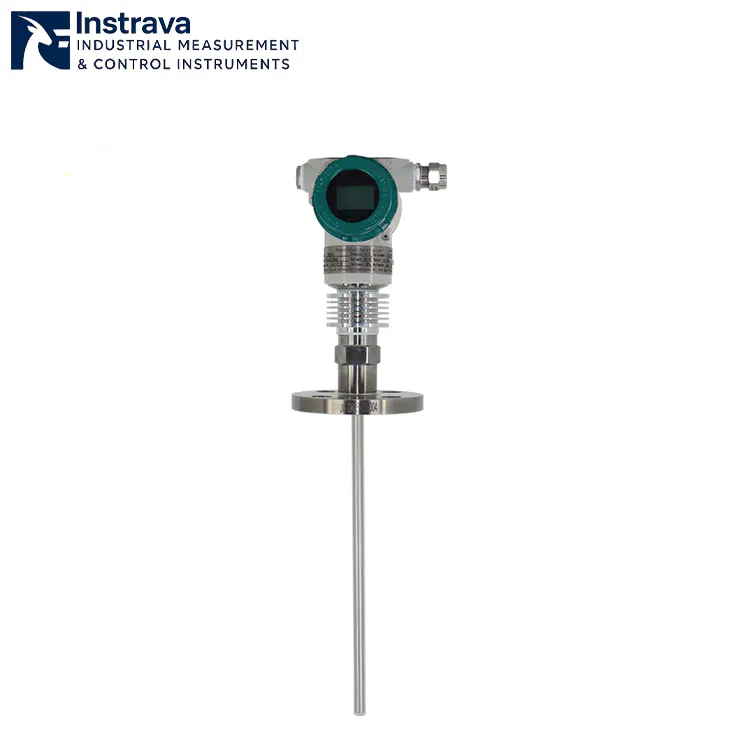
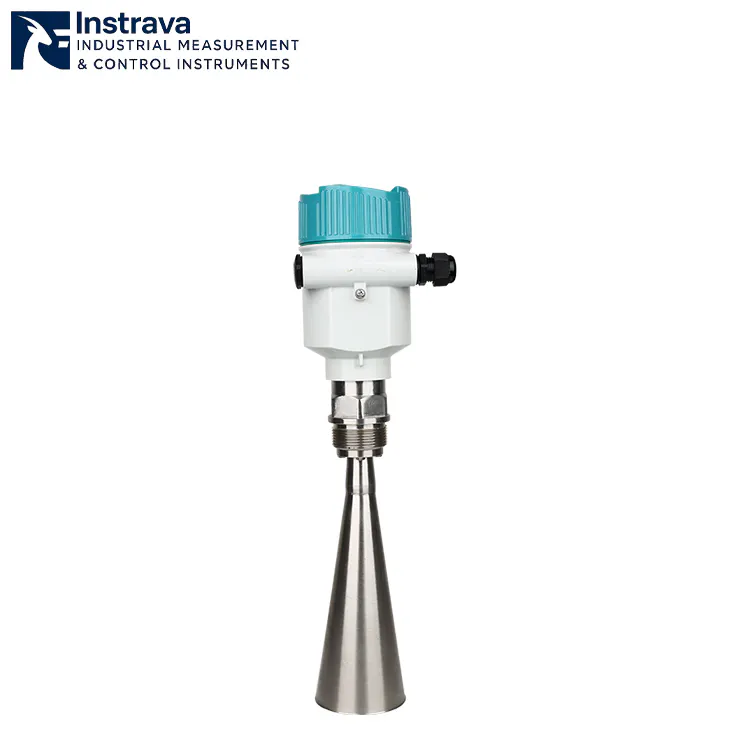
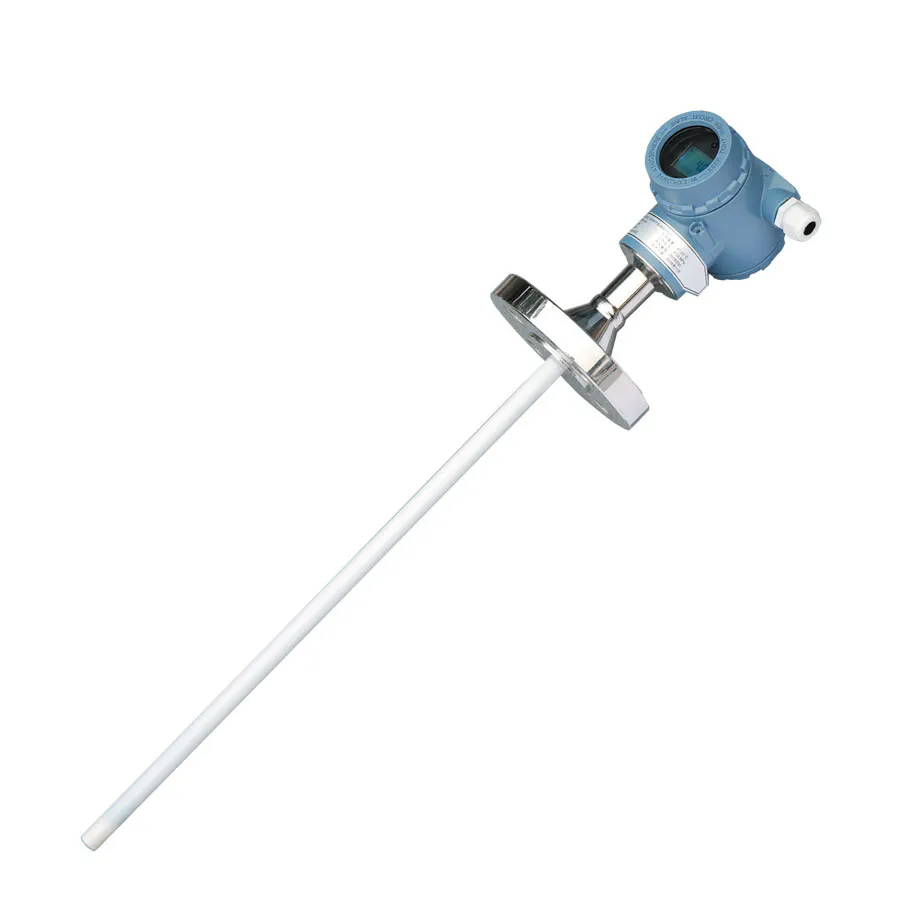
Industrial capacitive level meter with flange mounting, designed for continuous liquid level measurement in tanks and pressure vessels, suitable for chemical, petroleum, and water treatment industries.
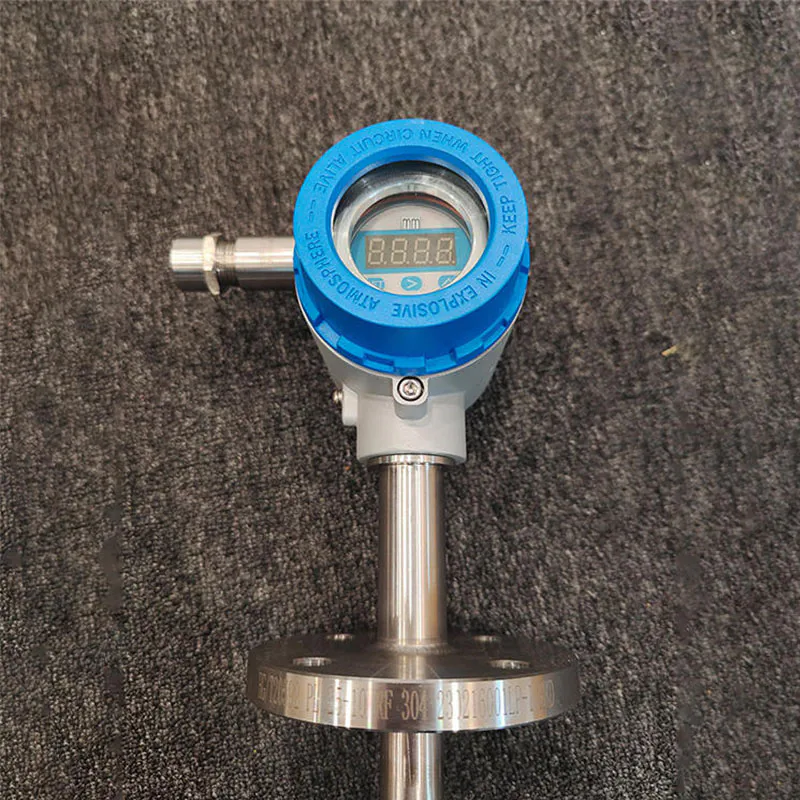
This image shows a capacitive water level sensor, suitable for water level measurement, with a digital display and stainless steel housing.

Applications of Capacitive Liquid Level Sensor

The capacitive liquid level sensor is widely used in industrial and process control applications where accurate, continuous liquid level measurement is required. Its robust design and high precision make it suitable for a variety of challenging environments.

Typical Applications:

  1. Chemical Industry – Monitoring and controlling the level of corrosive acids, alkalis, and other chemical solutions in storage tanks and reactors.

  2. Petroleum & Oil Storage – Level measurement in oil tanks, fuel depots, and petrochemical processing units.

  3. Food & Beverage Industry – Accurate monitoring of liquids such as water, juice, milk, and other food-grade fluids.

  4. Pharmaceutical Industry – Ensures precise liquid level control in pharmaceutical production and storage tanks.

  5. Water & Wastewater Treatment – Monitoring water levels in reservoirs, treatment tanks, and pipelines.

  6. Energy & Power Plants – Tank level measurement for fuel, cooling water, or other industrial fluids.

  7. Non-Metallic or Specialty Tanks – Works effectively in plastic, fiberglass, or other non-metallic containers with dual electrode configurations.

Advantages in Applications:

  • Provides continuous and high-precision level monitoring.

  • Operates reliably under extreme temperatures and pressures.

  • Corrosion-resistant and suitable for harsh chemical environments.

  • Compatible with automation and process control systems for real-time monitoring.

Capacitive Level Gauge – Measuring Principle

A capacitive level gauge is an instrument designed to measure the height of a liquid and convert it into an electrical signal for display, monitoring, recording, or process control.

The device typically consists of a single probe that acts as an immersed electrode inside the tank. This probe forms a capacitor with an opposing electrode, which is often the tank wall. The liquid inside the tank serves as the dielectric medium, affecting the capacitance between the two electrodes.

As the liquid level rises or falls, the capacitance changes proportionally. This variation is measured by applying an alternating voltage to the electrodes, usually at a radio frequency (RF). The measured capacitance is then converted into an electrical signal that accurately represents the liquid level, allowing precise and reliable level monitoring in a wide range of industrial applications.

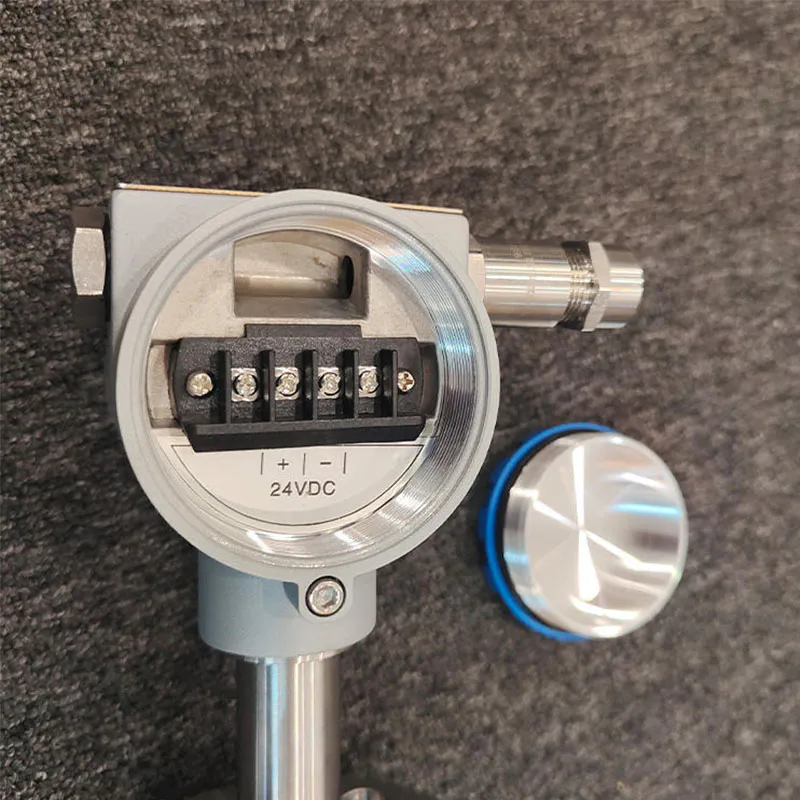
This image shows a capacitive liquid level meter, featuring terminal blocks, a 24VDC power supply connection, and a precision sensor for liquid level measurement.
Capacitive level meter installation diagram showing continuous liquid level measurement inside a storage tank.

Capacitance Level Meter-Structure

A typical capacitive level sensor consists of the following main components:

  1. Electrode Probe

    • The primary sensing element, immersed in the liquid.

    • Can be rigid or flexible, made of steel or PTFE-coated material.

    • Forms a capacitor with the opposing electrode (often the tank wall).

  2. Opposing Electrode / Reference Electrode

    • Usually the tank wall for metallic tanks or a secondary electrode for non-metallic tanks.

    • Works together with the probe to create the capacitance that varies with liquid level.

  3. Electronics Housing / Signal Converter

    • Converts changes in capacitance into an electrical signal (typically 4–20 mA or voltage output).

    • Contains signal processing circuits, RF excitation, and sometimes explosion-proof protection.

  4. Process Connection

    • Flanges, threaded connections, or customized mounting options.

    • Ensures secure installation in the tank while maintaining proper sensor alignment.

  5. Electrical Connection

    • Standard M20×1.5 female thread or customized cable entries.

    • Provides connection to monitoring, display, or control systems.

  6. Protective Coating / Housing

    • PTFE or other corrosion-resistant materials for electrodes and housing.

    • Ensures durability in harsh or corrosive environments.

Optional Components:

  • Display module for local level reading.

  • Explosion-proof enclosure for hazardous areas.

  • Remote signal transmission module for long-distance monitoring.

Level Measuring Instruments Parameter  

ParameterSpecification
Electrode TypeSingle electrode (metallic tanks); Double electrode (non-metallic tanks)
Electrode Material / Style1. Steel, rigid2. Steel, flexible3. PTFE-coated, rigid4. PTFE-coated, flexible
Measuring RangeRigid electrode: 0~3m (customizable)Flexible electrode: 0~60m (customizable)
Accuracy Class0.5, 1.0, 1.5, 2.0
Transmission Distance>1000m
Signal Output2-wire 4–20 mA DC
Load Resistance0–600 Ω
Pressure Rating6, 10, 25, 64, up to 320 bar
Operating Temperature-190 ~ 200 °C
Ambient Temperature-50 ~ +80 °C
Relative Humidity≤85%
Maximum Particle Size≤2 mm
Process Connection1. Flange: DN20–DN1502. Thread: M27×23. Customizable options
Electrical ConnectionM20×1.5 female thread
Explosion ProofEx d IIC T6 Gb

Instrava OEM/ODM

Reliable Instruments. Solutions That Fit Your Application.

Instrava is focused on delivering reliable industrial solutions through carefully curated products, application-driven optimization, and flexible customization. We select proven instruments from trusted manufacturers to ensure consistent quality, optimize solutions based on real working conditions to solve practical challenges, and provide tailored configurations to meet specific application needs.

By combining selection expertise with application understanding, Instrava helps customers reduce risk, improve efficiency, and achieve dependable results in complex industrial environments.

symbolizing trust and the beginning of a long-term partnership

Related Product Recommendations  

A capacitive level sensor forms a capacitor between its probe and an opposing electrode, with the liquid acting as the dielectric. Changes in liquid height alter the capacitance, which is converted into an electrical signal (typically 4–20 mA or voltage output).

Accuracy depends on:

Sensor TypeMeasuring RangeTypical AccuracyNotes
Rigid Electrode0–3 m±1% FSShort-range, high-stability
Flexible Electrode0–60 m±1.5% FSSuitable for deep tanks or irregular shapes

Capacitive sensors can detect level changes as small as 1–2 mm in optimal conditions. Accuracy is influenced minimally by pressure, temperature, and humidity due to the dielectric-based principle.

Yes. Sensors can be equipped with PTFE or other corrosion-resistant coatings. They are compatible with strong acids, alkalis, and aggressive chemical media.

Considerations for multi-phase liquids:

  • For stratified liquids (e.g., oil-water), the sensor may detect interface layers if configured with multiple electrodes.

  • Dielectric constants of the media affect capacitance; calibration may be needed for accurate measurements.

Example:

MediumDielectric Constant (εr)Recommendation
Water80Standard calibration
Oil2–4Use flexible PTFE-coated probe
Acid (HCl)25PTFE or corrosion-resistant electrodes
  • Metal Tanks: Single-electrode probe works, tank wall acts as opposing electrode.

  • Non-metallic Tanks (Plastic, Fiberglass): Dual-electrode setup needed.

  • Complex Shapes / Large Tanks: Flexible electrodes or multiple probes improve measurement coverage.

Insight: Using multiple probes in large tanks allows redundancy and reduces the effect of liquid turbulence or sloshing on accuracy.

Capacitive sensors are largely immune to environmental influences:

FactorEffect on MeasurementMitigation / Notes
PressureNegligible, up to 32 MPaEnsure electrode and sealing materials rated for tank pressure
TemperatureMinimal within -190 ~ 200°CUse PTFE or high-temperature materials for extreme conditions
HumidityNoneElectronics are sealed in IP65/IP67 housing
Viscosity / ParticlesMinor signal dampingUse flexible probes for slurries or max particle size ≤2 mm

Insight: Compared to ultrasonic or radar level sensors, capacitive sensors are less affected by foam, vapor, or condensate layers.

We offer extensive customization to match specific industrial needs:

Customizable FeatureOptions / Range
Electrode TypeRigid / Flexible, Steel / PTFE-coated
Measuring Range0–3 m (rigid), 0–60 m (flexible)
Signal Output4–20 mA, 0–10 V, RS485
Process ConnectionFlange DN20–DN150, M27×2, custom designs
Explosion ProtectionEx d IIC T6 Gb, custom certifications
Operating EnvironmentTemperature, pressure, chemical resistance tailored

Insight: Proper customization ensures long-term reliability, reduces maintenance, and optimizes ROI by matching the sensor to the specific liquid and tank conditions.

Yes. The output signal (typically 4–20 mA or RS485) allows seamless integration with PLCs, SCADA, DCS, or other monitoring systems.

Example Integration:

Signal TypeCompatible SystemNotes
4–20 mAPLC, DCSMost common; easy wiring, analog signal
RS485 ModbusSCADA, Industrial PCsSupports remote monitoring, multi-sensor networks
Voltage (0–10 V)Data loggers, Display PanelsShort-range applications, low-power systems

Insight: Capacitive sensors can provide real-time alerts, automated level control, and remote diagnostics. Compared to float or ultrasonic sensors, they offer higher reliability in extreme environments and corrosive media.

Why Choose Instrava

Built on Consistency, Not Claims

Focused on Industrial Applications

We specialize in industrial analysis and detection, with a clear understanding of real-world operating environments and requirements.

Strict Product Selection Criteria

Every instrument is evaluated based on performance, stability, and application suitability—not just specifications or pricing.

Reliable Supply & Quality Consistency

We work with trusted manufacturers to ensure stable supply, consistent quality, and dependable delivery.

Practical, Experience-Based Support

Our recommendations are grounded in application understanding, helping customers avoid common issues and achieve reliable results.

Instrava is built to reduce uncertainty—so every decision you make is clearer, safer, and more reliable.

Industrial measurement scene showing a worker using a precision measuring instrument to measure and mark material on a workbench, demonstrating the practical application of measuring instruments in manufacturing and processing.

Level Ultrasonic Sensor: Working Principle, Types & Industrial Applications

  • By Instrava
  • Mar 31, 2026

  Level Ultrasonic Sensor Overview A level ultrasonic sensor is a non-contact device used to measure liquid or solid levels...

  • 2Min Read

The Strategic Role of Industrial Instrumentation in Post-War Reconstruction

  • By Instrava
  • Mar 26, 2026

Modern warfare has shifted from traditional battlefield confrontations to precision strikes targeting industrial infrastructure, energy systems, and supply chain nodes....

  • 2Min Read

Industrial Instrumentation in Post-Conflict Reconstruction: The Hidden Backbone of National Recovery

  • By Instrava
  • Mar 25, 2026

When a conflict ends, rebuilding begins—not just cities, but systems. Energy, water, chemical production, and infrastructure must be restored quickly,...

  • 1Min Read
Home
Products
Whatsapp
Contact
To use reCAPTCHA V3, you need to add the API Key and complete the setup process in Dashboard > Elementor > Settings > Integrations > reCAPTCHA V3.