
Moisture Behind Wall Panels: Causes, Risks, and Prevention
موردون موثوقون و
مقدمو خدمات التوريد
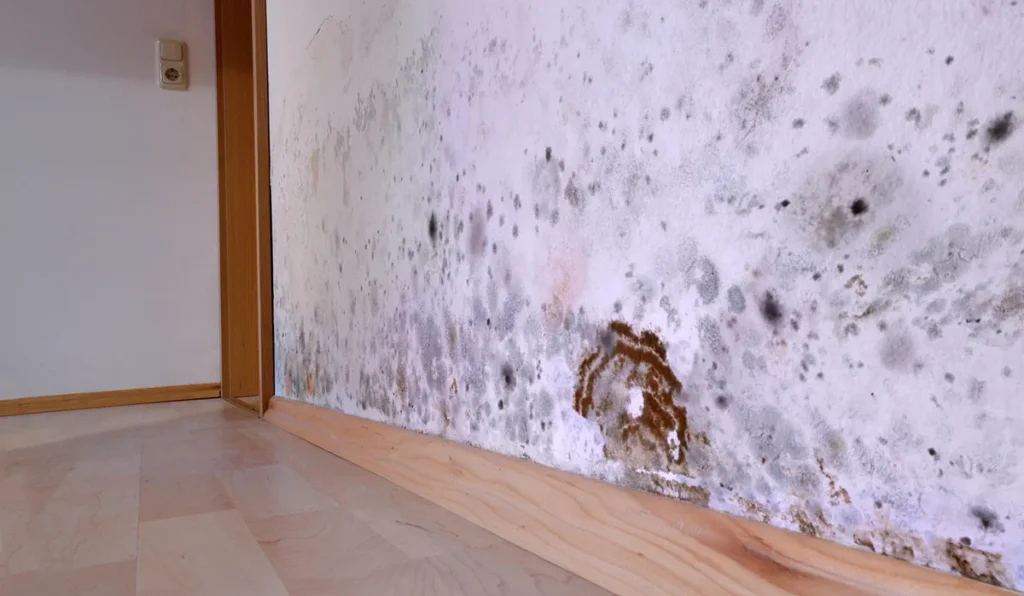
Excessive indoor moisture creates favorable conditions for mold growth on walls, ceilings, furniture, and other building materials. Mold spores can become airborne and trigger allergic reactions, including sneezing, nasal congestion, eye irritation, coughing, and asthma symptoms in sensitive individuals. Research has established an association between exposure to damp and moldy indoor environments and an increased risk of respiratory health problems. Maintaining dry indoor conditions and selecting moisture-resistant building materials can help reduce the risk of mold growth and contribute to a healthier living environment.1 2
As modern interior construction increasingly adopts prefabricated wall panel systems, managing moisture behind wall assemblies has become a critical engineering and environmental requirement. Although high-performance panels (such as WPC, Carbon Crystal, SPC, and aluminum composites) are inherently moisture-proof, water accumulation behind panels—whether caused by structural leaks, vapor migration, or thermal condensation—poses severe risks to building safety, indoor health, and interior aesthetics.
1. Why Does Moisture Accumulate Behind ألواح الجدران?
1.1 Infiltration of External Moisture
When the exterior envelope of a building suffers from aging waterproof layers, structural cracks, or inadequate sealing:
-
Rainwater Ingress: Rainwater penetrates through micro-cracks in exterior walls, window perimeters, or structural expansion joints.
-
Groundwater Seepage: Sub-grade moisture from surrounding soil migrates inward through basement retaining walls.
-
Vapor Trapping: Liquid water gradually saturates the interior masonry or concrete structure. When non-porous interior wall panels are installed directly over these surfaces, they prevent the wall from drying inward into the room, causing moisture to accumulate continuously behind the panels.
1.2 Infiltration of Indoor Water Vapor
Daily residential and commercial activities generate substantial volumes of airborne water vapor:
-
Steam generated from showers and baths.
-
Moisture released during high-temperature cooking.
-
Indoor laundry drying and washing activities.
-
Respiration and perspiration from occupants.
Driven by vapor pressure differentials, ambient water vapor migrates through seams, perimeter joints, unsealed penetrations, and porous substrate materials into the concealed wall assembly.
1.3 Condensation Due to Temperature Differences
Thermal variation between ambient indoor air, wall surfaces, and the concealed cavity behind wall panels is a primary catalyst for condensation and sub-surface mold growth.
In conditioned residential environments, indoor relative humidity and temperature levels often contrast sharply with wall assembly temperatures during cooler months:
-
Thermal Dynamics: When warm, moisture-laden indoor air infiltrates cooler unventilated spaces behind a wall panel, it comes into contact with substrate surfaces that fall below the dew point temperature.
-
Dew Point Calculation Example:
-
Indoor Temperature: $20^\circ\text{C}$
-
Relative Humidity: $62\%$
-
Calculated Dew Point: Approximately $12.5^\circ\text{C}$
-
Risk Assessment: If any surface or framing element behind the wall panel drops below $12.5^\circ\text{C}$ while humid air is present, moisture vapor condenses into liquid water droplets.
-
1.4 Improper Installation Creating Concealed Damp Spaces
Wall panel installation methods (direct adhesion, batten framing, or dry-hanging systems) can inadvertently create moisture traps if executed incorrectly:
-
Installing panels over uncured or damp masonry substrates (moisture content exceeding $8\%\text{–}10\%$).
-
Creating unmanaged, non-draining cavities behind panels.
-
Trapping cold air pockets between wall panels and cold exterior walls.
-
Blocking natural substrate drying pathways following minor exterior water ingress.
-
Inadequate sealing around utility penetrations (electrical boxes, piping, conduit runs).
Important Installation Note: Incorporating an unstudied ventilation gap behind wall panels can be counterproductive. Incorrectly designed air cavities can draw warm, humid indoor air directly across cold exterior surfaces, accelerating condensation risk rather than mitigating it.
| Wall Panel Material | Moisture-Related Risks | Key Characteristics |
| PVC Wall Panels | Panel surface generally does not absorb much water; moisture may accumulate behind the panel | Low water absorption, but concealed wall moisture remains a concern |
| ألواح الجدران المصنوعة من مادة WPC | Prolonged moisture exposure may affect some formulations and exposed edges | Generally moisture-resistant, but not all products are waterproof |
| MDF Wall Panels | Can absorb moisture, swell, and develop mold on organic surfaces | Requires effective moisture protection |
| Natural Wood Panels | May absorb moisture, warp, crack, or support mold growth | Requires suitable sealing and environmental control |
| Gypsum Boards | Paper facings can support mold growth when persistently damp | Moisture-resistant grades are available, but they are not waterproof |
| Fiber Cement Boards | Generally more resistant to moisture-related deterioration | Can still absorb water; joints and installation details matter |
| HPL Panels | Surface is relatively moisture-resistant | Core material and exposed edges determine overall performance |
2. Risks to the Living Environment Caused by Moisture
When high relative humidity ($>70\%$), suitable ambient temperatures ($20\text{–}30^\circ\text{C}$), and organic nutrients (dust, paper backings, adhesives) coincide behind wall panels, mold species (such as Aspergillus, Penicillium, و Stachybotrys chartarum) proliferate rapidly within concealed spaces.
2.1 Health and Environmental Risks
-
Airway Irritation: Microscopic mold spores and volatile organic compounds (VOCs) leak into indoor spaces through panel joints, perimeter baseboards, and outlet cutouts.6
-
Health Impacts: Continuous exposure can trigger allergic rhinitis, asthma exacerbation, skin irritation, chronic fatigue, and sleep disturbances.
2.2 Structural and Physical Integrity Risks
-
Differential Stress & Bowing: Persistent moisture absorption on the back of panels creates an uneven stress gradient between the front finish layer and the rear substrate. This differential causes bowing, arching, or buckling across large-format panels.
-
Adhesive Degradation: Structural adhesives, liquid nails, and mounting tapes undergo hydrolytic degradation in humid conditions, leading to bond failure and risk of sudden panel detachment.
-
Substrate & Framing Rot: Wooden battens, plywood backing sheets, or paper-faced gypsum substrates absorb moisture, leading to structural rot, loss of fastener holding power, and assembly collapse.
2.3 Aesthetic and Surface Damage
-
Delamination & Blistering: Vapor pressure building up behind non-porous surface films (such as PVC, PET, or PUR-laminated veneers) causes surface blistering, bubbling, and film peeling.
-
Discoloration: Water migration leads to irreversible yellowing, efflorescence, or dark water stains along panel margins and light-colored finishes.
-
Baseboard Decay: Moisture accumulation drains downward under gravity, rotting baseboards, warping adjacent wood flooring, or saturating carpet edges.
2.4 Maintenance and Financial Challenges
Because wall panel systems are modular or adhesive-bonded, localized spot repairs are rarely feasible once moisture damage occurs behind the wall:
-
Destructive Removal: Remediating sub-surface mold typically requires dismantling entire wall sections.
-
High Secondary Costs: Property owners must remove degraded substrates, apply professional waterproofing, repair leaking structural envelopes, and source new matching replacement panels, incurring significant material and labor expenses.
3. Preventive Engineering & Installation Measures
To ensure long-term durability and indoor environmental quality, wall panel installations must incorporate systemic moisture management strategies.
3.1 Substrate Waterproofing and Vapor Barriers
-
Prior to installing wall panels, treat all original masonry surfaces—especially basement walls, exterior wall interiors, and walls adjacent to bathrooms/plumbing chases—with a high-performance moisture-resistant primer, cementitious waterproofing slurry, or liquid-applied vapor barrier.
3.2 Substrate Moisture Testing
-
Strict moisture thresholds must be verified prior to installation. Substrates must achieve a moisture content of below $8\%\text{–}10\%$ before any battens, adhesives, or wall panels are applied.
3.3 Engineered Elevated Installation & Cavity Management
In high-humidity applications (such as basements, coastal construction, or subterranean commercial spaces):
-
Avoid Direct Adhesion: Replace direct glue-down methods with elevated dry-hanging systems using anti-corrosive light-gauge steel framing or anodized aluminum alloy mounting clips.
-
Managed Cavity Ventilation: Incorporate concealed, narrow ventilation slots at the baseboard and ceiling perimeter lines to promote continuous micro-ventilation and prevent static air entrapment behind the panels.
ملخص
Wall panels rated as “moisture-resistant” or “100% waterproof” prevent liquid damage to the panel itself, but they do not eliminate the thermodynamic causes of condensation within wall cavities. Successful interior wall design requires evaluating the entire wall assembly—ensuring dry substrates, controlled vapor migration, and effective thermal isolation—to maintain a healthy, durable, and aesthetically refined living environment.
References
- World Health Organization (WHO) — WHO Guidelines for Indoor Air Quality: Dampness and Mould (2009). ↑
- Fisk, W. J., Lei-Gomez, Q., & Mendell, M. J. — Meta-analyses of the associations of respiratory health effects with dampness and mold in homes (Indoor Air, 2007). ↑
- WHO guidelines for indoor air quality : dampness and mould. ↑
- Moisture Control Guidance for Building Design, Construction and Maintenance. ↑
- Building America Solution Center – Moisture Management. ↑
- A Brief Guide to Mold, Moisture and Your Home. ↑
- Mold. ↑
الصفحة 1 / 1
مقياس التدفق
كاشف الغازات
مستشعر المستوى
أجهزة الإرسال
أجهزة التحكم في إنذار الغاز
مفاتيح تبديل المستوى
محول إيثرنت-APL Ethernet-APL
بوابات الحافة
تحليل السوائل
التحليل البصري
مراقبة الطاقة والتحكم فيها
محول الطاقة
آلة التشكيل على البارد
بطارية LiFePO4
محول هجين
مولد كهربائي مزود بمحول ترددي
مفصلات الخزائن
لوحة حائطية
أجهزة استشعار جودة المياه